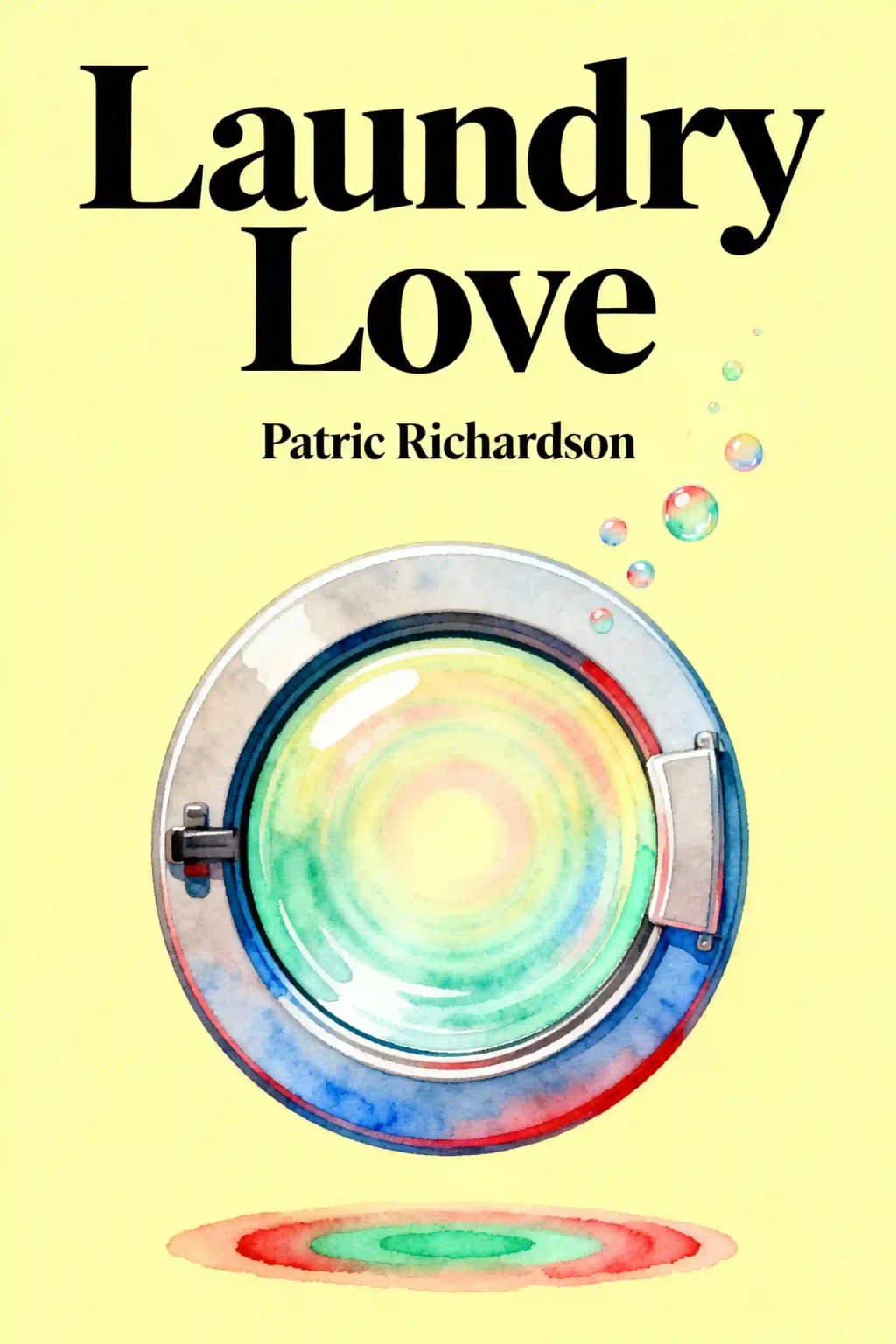
Patric Richardson's "Laundry Love" transforms a dreaded chore into joyful ritual. Now in its fourth printing, this sensation has the New York Times calling Richardson "the Ina Garten of laundry." Discover why his vodka-freshening technique and sustainable alternatives to dry cleaning have sparked a nationwide movement.
Patric Richardson, author of Laundry Love: A Guide to Caring for Your Clothes and renowned laundry evangelist, blends his expertise in textile care with a passion for sustainable living.
A University of Kentucky graduate in fashion merchandising and textiles, Richardson honed his skills at luxury retailers like Neiman Marcus and Nordstrom before founding Mona Williams, a curated vintage store at the Mall of America.
His innovative approach to home laundry—emphasizing efficiency, affordability, and eco-friendly practices—led to sold-out "Laundry Camps" and his HGTV series The Laundry Guy. Richardson’s methods, featured in The New York Times, Wall Street Journal, and on NBC Nightly News, empower readers to ditch dry cleaning and embrace confidence in garment care.
His follow-up book, House Love, expands on his philosophy of joyful home maintenance. Laundry Love became a national bestseller, now in its fourth printing, and inspired a dedicated fanbase calling themselves "laundry revolutionaries."
Laundry Love reimagines laundry as a joyful, eco-conscious practice through innovative techniques like warm-water express cycles, homemade stain solutions, and eliminating dry cleaning. Patric Richardson, a fashion expert and "Laundry Evangelist," blends memoir elements with practical advice to help readers save time, money, and the environment while caring for clothing.
This book is ideal for eco-conscious homeowners, fashion enthusiasts, and anyone seeking to simplify laundry routines. Its tips on fabric care, stain removal, and sustainable practices appeal to DIYers, thrifty families, and individuals tired of expensive dry-cleaning bills.
Yes, reviewers praise its actionable advice, such as using vodka to freshen clothes and wool dryer balls to reduce static. Readers appreciate Richardson’s engaging tone and methods that extend garment life, though some may find his optimism about ironing overly enthusiastic.
Richardson advocates washing all fabrics on a warm express cycle to optimize cleaning and reduce wear. He discourages fabric softeners, recommends line-drying to preserve textiles, and uses aluminum foil balls in dryers to eliminate static. Ironing is presented as a mindful ritual with spray starch for crisp finishes.
The book promotes eco-friendly practices like avoiding single-use plastic detergent jugs, repurposing household items (e.g., vinegar, baking soda) for cleaning, and air-drying clothes. Richardson also critiques fast fashion, encouraging investment in durable garments to reduce waste.
For smelly but clean clothes, Richardson recommends spraying a vodka-water mixture (1:3 ratio) to neutralize odors without washing. He also advises using rubbing alcohol for stubborn smells and airing out garments instead of over-washing.
Yes, Richardson shares methods like pre-treating stains with diluted dish soap, using hydrogen peroxide for bloodstains, and applying lemon juice to brighten whites. He emphasizes prompt treatment and avoiding harsh chemicals like bleach.
The book disputes cold-water washing myths, advocating warm water for better detergent activation. It also rejects dry cleaning, teaching readers to hand-wash delicate items like silk and wool at home using gentle techniques.
Richardson has decades of expertise from roles at Neiman Marcus, Nordstrom, and his Mall of America store, Mona Williams. He holds a fashion merchandising degree and hosts Laundry Camp workshops, blending Appalachian resourcefulness with high-fashion textile knowledge.
Richardson frames ironing as a therapeutic activity, recommending steam-generating irons for efficiency. He details techniques for crisp collars and creases, using spray starch to repel stains and maintain polished looks.
Some readers may find Richardson’s enthusiasm for laundry unrealistic or overly niche. The book focuses heavily on clothing care, offering less guidance for household linens or bulk laundry challenges.
Unlike generic manuals, Laundry Love merges memoir, sustainability advocacy, and pro-grade fabric care tips. Its emphasis on mindset shifts (e.g., finding joy in chores) and avoidance of mainstream products set it apart.
저자의 목소리로 책을 느껴보세요
지식을 흥미롭고 예시가 풍부한 인사이트로 전환
핵심 아이디어를 빠르게 캡처하여 신속하게 학습
재미있고 매력적인 방식으로 책을 즐기세요
Caring for clothes is a language of love.
These extra loads are often signs of a life well lived.
Anything-yes, anything-can be washed at home.
My family loves color, especially my mom who stands out beautifully in any room.
Laundry has been my passion.
Laundry Love의 핵심 아이디어를 이해하기 쉬운 포인트로 분해하여 혁신적인 팀이 어떻게 창조하고, 협력하고, 성장하는지 이해합니다.
생생한 스토리텔링을 통해 Laundry Love을 경험하고, 혁신 교훈을 기억에 남고 적용할 수 있는 순간으로 바꿉니다.
무엇이든 묻고, 학습 스타일을 선택하고, 나에게 맞는 인사이트를 함께 만들어보세요.

샌프란시스코에서 컬럼비아 대학교 동문들이 만들었습니다
"Instead of endless scrolling, I just hit play on BeFreed. It saves me so much time."
"I never knew where to start with nonfiction—BeFreed’s book lists turned into podcasts gave me a clear path."
"Perfect balance between learning and entertainment. Finished ‘Thinking, Fast and Slow’ on my commute this week."
"Crazy how much I learned while walking the dog. BeFreed = small habits → big gains."
"Reading used to feel like a chore. Now it’s just part of my lifestyle."
"Feels effortless compared to reading. I’ve finished 6 books this month already."
"BeFreed turned my guilty doomscrolling into something that feels productive and inspiring."
"BeFreed turned my commute into learning time. 20-min podcasts are perfect for finishing books I never had time for."
"BeFreed replaced my podcast queue. Imagine Spotify for books — that’s it. 🙌"
"It is great for me to learn something from the book without reading it."
"The themed book list podcasts help me connect ideas across authors—like a guided audio journey."
"Makes me feel smarter every time before going to work"
샌프란시스코에서 컬럼비아 대학교 동문들이 만들었습니다

Laundry Love 요약을 무료 PDF 또는 EPUB으로 받으세요. 인쇄하거나 오프라인에서 언제든 읽을 수 있습니다.
What if the most mundane task in your life - the one you dread every week - could become an act of devotion? Picture a two-year-old boy, mesmerized by the swirling clothes in his mother's washing machine, who grows up to fill auditoriums at the Mall of America with people desperate to learn his secrets. This isn't about cleanliness. It's about reclaiming a lost art that connects us to the people we love and the planet we inhabit. Every time you toss a "dry clean only" garment into the donation pile or replace a shirt ruined by mysterious yellow stains, you're surrendering power to an industry that profits from your confusion. But here's the truth: almost everything you own can be washed at home, and doing so properly isn't just economical - it's transformative. Those tiny tags sewn into your clothes? They're lying to you. Not maliciously, but protectively - manufacturers print the absolute minimum care instructions that won't land them in court, not what's actually best for your garments. "Dry clean only" often means "we don't want to get sued if you mess this up." Consider cashmere - that luxurious fiber comes from goats living in harsh mountain climates, regularly exposed to rain and snow. Yet we're told it can't handle water? The truth is, gentle washing extends cashmere's life far beyond what dry cleaning can offer.
Clear out your laundry arsenal. Those "fresh mountain breeze" detergents contain volatile organic compounds that irritate lungs and eyes. Fabric softeners coat textiles with silicone, reducing towel absorbency by 80%. Laundry pods cram five loads' worth of chemicals into one, causing rashes and environmental harm. Replace this toxic collection with plant-based soap, sodium percarbonate (a non-toxic bleach alternative), washing soda, and a horsehair brush. Dry cleaning deserves particular scrutiny. Despite "eco-friendly" claims, the industry relies on perchloroethylene - a likely carcinogen linked to cancers and neurological problems. The solution? Stop dry cleaning entirely. That cashmere coat, silk blouse, wool suit - all can be washed at home with proper technique.
That whites-lights-darks sorting system? Obsolete for forty years. It originated with wringer washers that reused the same water sequentially. Modern machines use fresh water each cycle, and textile dyes have vastly improved. Yet we're still sorting like it's 1950. The better approach: sort into four categories-whites (including creams and pale yellows), blacks, cool colors (blues, greens, purples, grays), and warm colors (reds, yellows, browns, oranges). Add a fifth pile for technical activewear if needed. This prevents subtle color transfers like navy jeans bleeding onto rust-colored shirts. For multicolored items, ask which color dominates from a distance. Now for the radical part: wash almost everything in warm water on the express cycle. Yes, even delicates and colors. Cold water in most homes hovers around 53F-too cold to activate detergent properly. This leaves soap residue and dirt embedded in fibers, creating that dingy look we blame on age when it's actually inadequate cleaning. Warm water (58-62F) gets clothes genuinely clean without fading or shrinking. The express cycle-typically 28 minutes-provides ample cleaning while being gentler on fabrics than longer cycles.
Machine drying devastates fabrics. High-quality garments survive just fifty washer-dryer cycles but gain seventy more wears when air-dried-extending a shirt's life from one year to three. Hang woven items like shirts and trousers; lay knits flat; reserve the dryer for T-shirts, socks, underwear, sheets, and towels. Use wool balls instead of dryer sheets for natural static control. Fabric softeners and dryer sheets coat textiles with silicone, making towels absorb 80% less water and reducing clothing breathability. They contain phthalates-endocrine disruptors especially dangerous for children and pregnant women-and animal fat derivatives masked by petrochemical fragrances. Line drying reconnects us with rhythms our grandparents knew-the satisfaction of sun-dried sheets, the meditative quality of hanging clothes, fabrics that smell of fresh air rather than synthetic fragrance. It's slower, but that slowness is the point.
Every stain tells a story - barbecue sauce speaks of outdoor gatherings, red wine recalls laughter with friends. The tragedy isn't the stain itself but discarding the garment because we don't know how to save it. Understanding stain categories transforms panic into confidence. Oily stains (grease, makeup) require solvents. Organic stains (blood, wine) need oxygen-based treatments. Inorganic stains (ink, mascara) demand targeted approaches. Combination stains like foundation require multiple steps: address the oil first, then tackle the pigment. For lipstick, place a white washcloth underneath, spray with vinegar-water solution, blot with cotton, then scrub with a soaped horsehair brush. For red wine, sprinkle sodium percarbonate on the stain and pour hot water through it. Phantom stains appear after drying when sugar residue caramelizes in the dryer's heat. Remove them by applying oil-based stain solution, sprinkling with sodium percarbonate, letting sit thirty minutes, then pouring nearly boiling water through the fabric before rewashing. Each solved stain preserves a memory.
Every synthetic garment releases hundreds of thousands of microscopic plastic fibers into waterways with each wash-fibers that marine animals ingest and that persist for centuries. The solution isn't perfection but consciousness: choose natural fibers when possible, use shorter wash cycles, employ microfiber-catching devices. Most garments need refreshing, not cleaning, after a single wear. Steam out wrinkles and odors between washes. Spot-treat stains rather than laundering entire outfits. Line-dry whenever possible, saving energy while extending garment life. When clothes finally wear out, donate or repurpose them. There's profound satisfaction in this approach-a feeling of alignment between actions and values. When you care for clothes properly, you're simultaneously caring for the planet, your budget, your health, and your sense of competence. You're choosing stewardship over consumption, mindfulness over convenience.
Laundry is never just about laundry. When you wash someone's clothes, you're saying: I see you. I care about how you present yourself to the world. This understanding transforms obligation into devotion. Teaching children to do laundry - not just their own clothes, but the entire family's - fosters empathy and service. They learn that love manifests in mundane acts, that caring for possessions shows respect for people, that competence brings satisfaction. The same principle applies to your own wardrobe. When you properly maintain clothes, you honor past decisions and future possibilities. That dress you've been saving? Wear it now - life is the special occasion. Knowing you can clean anything liberates you from artificial restrictions. In a culture obsessed with productivity hacks, laundry offers something countercultural: the satisfaction of work done well, the meditative quality of repetitive tasks, the tangible results of effort invested. Your grandmother understood this. She knew that caring for textiles - those intimate second skins we wear daily - is ultimately about caring for people. You don't "have to" do laundry. You "get to" do laundry. When you do it with knowledge, intention, and love, it becomes a practice of devotion, a quiet rebellion against disposability, a way of saying that people and things matter enough to care for properly.