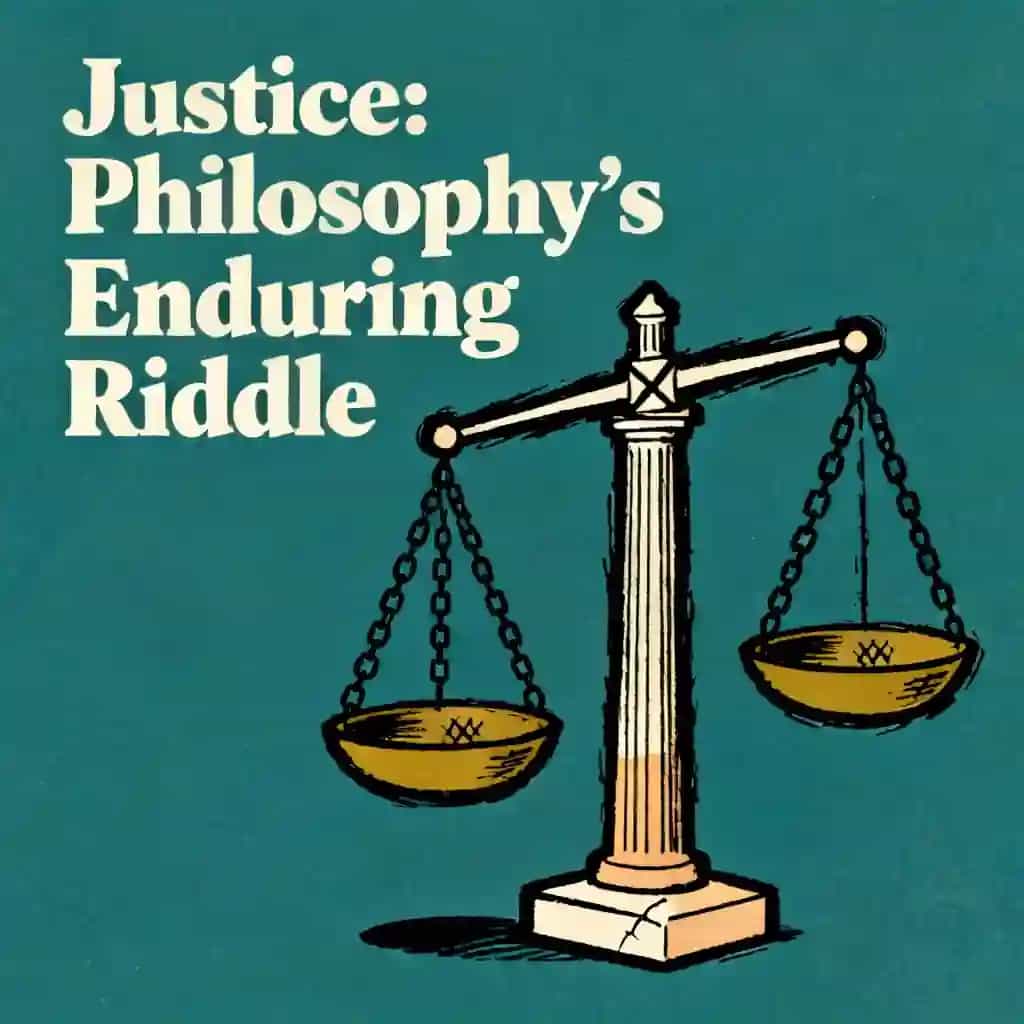
Rawls' groundbreaking masterpiece revolutionized political philosophy by asking: What would truly fair social rules look like if designed behind a "veil of ignorance"? This 1971 classic shaped generations of thinkers and remains the philosophical cornerstone of modern justice debates worldwide.
저자의 목소리로 책을 느껴보세요
지식을 흥미롭고 예시가 풍부한 인사이트로 전환
핵심 아이디어를 빠르게 캡처하여 신속하게 학습
재미있고 매력적인 방식으로 책을 즐기세요
Here's a question that might keep you up at night: If you could design society's rules from scratch, but had no idea whether you'd be born rich or poor, healthy or disabled, brilliant or ordinary-what kind of world would you create? This isn't just philosophical musing. It's the revolutionary thought experiment that John Rawls used to transform how we think about fairness. His 1971 masterwork didn't just shake up academic philosophy-it rewired our entire conversation about justice, influencing everyone from Supreme Court justices to policy makers debating healthcare reform. The genius lies in its simplicity: strip away all the advantages and prejudices that cloud our judgment, and suddenly we see what fairness really looks like. Picture yourself in a room with others, tasked with creating the rules for a new society. The catch? You know absolutely nothing about who you'll be once you enter it. You don't know your race, gender, wealth, abilities, or even your values. This is what Rawls calls the "original position," and the ignorance that blinds you is deliberate-it's the only way to eliminate bias. When you can't rig the game in your favor because you don't know which player you'll be, something remarkable happens: you start thinking differently. Would you create a society where the wealthy get all the advantages if you might be born poor? Would you deny healthcare to the disabled if you might become one of them? Suddenly, the utilitarian calculus-sacrificing a few for the greater good-feels far too risky. You wouldn't gamble with someone else's suffering when that someone might be you. This isn't about being altruistic; it's about being rational under uncertainty.
A Theory of Justice의 핵심 아이디어를 이해하기 쉬운 포인트로 분해하여 혁신적인 팀이 어떻게 창조하고, 협력하고, 성장하는지 이해합니다.
A Theory of Justice을 빠른 기억 단서로 압축하여 솔직함, 팀워크, 창의적 회복력의 핵심 원칙을 강조합니다.

생생한 스토리텔링을 통해 A Theory of Justice을 경험하고, 혁신 교훈을 기억에 남고 적용할 수 있는 순간으로 바꿉니다.
무엇이든 물어보고, 목소리를 선택하고, 진정으로 공감되는 인사이트를 함께 만들어보세요.

샌프란시스코에서 컬럼비아 대학교 동문들이 만들었습니다
"Instead of endless scrolling, I just hit play on BeFreed. It saves me so much time."
"I never knew where to start with nonfiction—BeFreed’s book lists turned into podcasts gave me a clear path."
"Perfect balance between learning and entertainment. Finished ‘Thinking, Fast and Slow’ on my commute this week."
"Crazy how much I learned while walking the dog. BeFreed = small habits → big gains."
"Reading used to feel like a chore. Now it’s just part of my lifestyle."
"Feels effortless compared to reading. I’ve finished 6 books this month already."
"BeFreed turned my guilty doomscrolling into something that feels productive and inspiring."
"BeFreed turned my commute into learning time. 20-min podcasts are perfect for finishing books I never had time for."
"BeFreed replaced my podcast queue. Imagine Spotify for books — that’s it. 🙌"
"It is great for me to learn something from the book without reading it."
"The themed book list podcasts help me connect ideas across authors—like a guided audio journey."
"Makes me feel smarter every time before going to work"
샌프란시스코에서 컬럼비아 대학교 동문들이 만들었습니다

A Theory of Justice 요약을 무료 PDF 또는 EPUB으로 받으세요. 인쇄하거나 오프라인에서 언제든 읽을 수 있습니다.