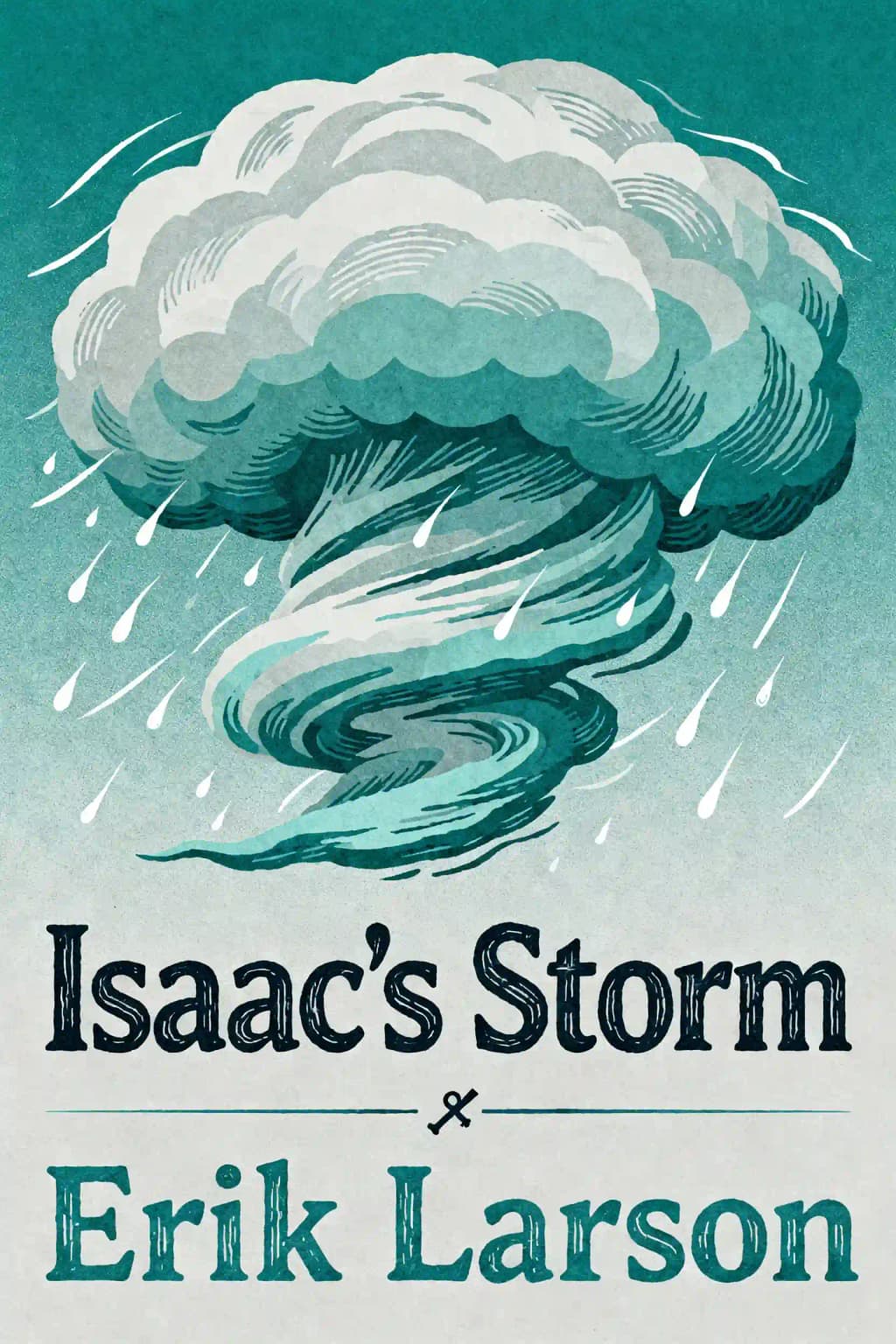
4장
The Rivalry Between American and Cuban Meteorologists
The Weather Bureau under Willis Moore faced a significant challenge from Cuban meteorologists, who had developed sophisticated hurricane prediction techniques since 1870. Moore and the bureau were openly disdainful of Cuban meteorologists, yet secretly feared they might be better at predicting hurricanes. Through Colonel Dunwoody, Moore convinced the War Department to ban all weather cables from Cuba except those from U.S. officials - right at hurricane season's peak.
This outraged Cubans, whose meteorologists like Father Benito Vines had pioneered hurricane prediction techniques. Stockman, the bureau's man in Havana, viewed Cubans as "naive" and worried about causing "unnecessary alarm among the natives." He saw conspiracy everywhere, even investigating a Dr. Enrique del Monte as a potential Belen Observatory agent.
The fundamental difference was philosophical: American meteorologists relied strictly on measurements and avoided the word "hurricane," while Cubans drew on generations of hurricane experience, writing of "hunches and beliefs, sunsets and foreboding." This clash of approaches would prove fatal as the hurricane approached.
In Havana on Friday afternoon, William Stockman typed a seventeen-page defense for Colonel Dunwoody regarding the telegraph ban on Cuban weather forecasts. His letter meticulously documented instances where Cuban forecasters had issued alarming declarations that later proved baseless. Stockman took particular satisfaction in his thorough refutation of the Cubans' recent storm warnings, noting that his own advisory had correctly stated "No dangerous winds are indicated."
Meanwhile, Father Gangoite at Belen Observatory remained troubled by atmospheric signs suggesting the storm had undergone a dramatic transformation. Observing a persistent halo around the moon and cirrus cloud patterns at dawn, he composed a dispatch stating the storm now showed "much more intensity and was better defined than when it crossed this island." He placed it in Texas, "probably at the WSW of San Antonio." Gangoite couldn't resist challenging the Americans' prediction that the storm would cross to the Atlantic: "Who is right?" he pointedly asked.
As events would prove, the Cubans were right. The storm had indeed made an abnormal left turn directly toward Galveston, eight hundred miles away across the superheated Gulf.
5장
Galveston: The Vulnerable Island City
In January 1900, self-proclaimed weather prophet Andrew Jackson DeVoe published a forecast predicting "a great cyclone will form over the Gulf of Mexico" around September 9th - precisely the kind of unscientific prophecy that Isaac Cline despised. As a twenty-nine-year-old weather scientist, Isaac had written a troublingly hubristic article for the Galveston News in 1891 explaining why hurricanes couldn't normally strike Texas. He claimed the Texas coast was "exempt from West India hurricanes" due to their typical parabolic tracks, noting that only two had reached Texas in the previous two decades, both following "abnormal" paths.
His article exuded boosterism, assuring readers that Galveston faced "no greater damage" from storms than other parts of the country - and possibly less. He dismissed previous Texas hurricanes as minor, claiming the 1875 and 1886 storms caused less damage than "a single tornado in the central states." Isaac argued against the idea that Galveston was vulnerable to storms, claiming the Texas coast was "much less susceptible" to severe weather. He downplayed previous hurricanes that struck Indianola in 1875 and 1886, focusing only on property damage while omitting the devastating human toll.
The first Indianola hurricane killed 176 people - one-fifth of the town's population - and dramatically altered the landscape. When residents rebuilt, a second hurricane struck in 1886, destroying the town completely and killing the weather observer. Despite Galveston's obvious vulnerability without barrier islands for protection, Isaac insisted it would be "impossible for any cyclone to create a storm wave which could materially injure the city."
Though Galveston's Progressive Association had once proposed building a seawall after the Indianola disasters, the city abandoned these plans as hurricane fears faded. Galveston appeared as a "silvery fairy kingdom" to arriving ships - a stark contrast to how it would appear in September 1900, when the smell of burning corpses would reach a hundred miles out to sea.
Galveston had grown into a beautiful, orderly city with alphabet streets running east-west and numbered streets north-south. The city's flatness created the illusion of ships sailing on streets. Downtown featured wooden-block paved roads, five hundred saloons, and remarkable harmony between blacks, whites, Jews and immigrants. By 1900, the city celebrated 29.93% population growth in the census, proudly noting this was "a good record to start out with on the new decade, when the prospects are bright even to surpass it."
6장
The Hurricane's Approach: Warnings Ignored
On Thursday, August 30, 1900, the storm was observed near Antigua where Francis Watts, a government agricultural chemist, recorded falling barometric pressure throughout the day. By evening, a severe thunderstorm with "brilliant and almost continuous" lightning struck the island. The Antigua Standard reported an "ominous" stillness and strange reddish-yellow light rimming the sky before the storm's arrival.
The hurricane entered the Caribbean on Friday, August 31, in a spectacle of lightning and thunder, with dense foam and spindrift rising from the gray-green sea. Unlike ordinary rainstorms that deplete clouds, hurricanes harvest moisture through wind, creating a self-reinforcing cycle: faster winds capture more moisture, condensation releases more heat, air rushes skyward, pressure falls, and wind speeds increase further.
On Wednesday morning, the storm entered the Straits of Florida north of Cuba, confounding Weather Bureau forecasters. Willis Moore and his team believed it would follow the expected pattern of "recurving" northward into Florida before turning northeast toward the Atlantic. Without real evidence, they relied on the Law of Storms and their scientific expectations - "in the age of certainty, at the gateway to the twentieth century, the expected was as good as fact."
The Central Office telegraphed New Orleans after noon, predicting the storm would reach as far as Norfolk by Thursday night and New England by Friday, bringing only "heavy rains and winds of moderate force" but helpfully ending the high temperatures east of the Mississippi. Meanwhile in Havana, Cuban meteorologist Julio Jover warned, "We are today near the center of the low pressure area of the hurricane." Stockman dismissed this as alarmist forecasting.
By Friday night, Dr. Samuel O. Young, secretary of the Cotton Exchange, walked to the beach, noting the unusually high tide despite the north wind - a combination that typically produced low tide and calm waters. Young concluded a cyclone was approaching and, dissatisfied with the Weather Bureau's vague advisories, constructed his own chart predicting the storm would strike near the Mississippi Delta. "The error I made," he wrote later, "was in placing the course too far to the east."
At 9:35 A.M. Saturday, Willis Moore telegraphed Isaac with orders to hoist a conventional storm warning, which Isaac raised five minutes after receiving it at 10:30. The bureau's forecasters had changed their minds about the storm reaching the Atlantic and now believed it remained in the Gulf, moving northwest. Yet as late as Saturday morning, when Captain George Hix of the Alamo inquired about the falling barometer, a young weather observer still described the approaching storm merely as an "offspur" of the Florida storm, prompting Hix to retort: "Well, young man, it's going to be the damnedest offspur you ever saw."
7장
The Day of Disaster: September 8, 1900
Saturday morning, Buford T. Morris, a Houston real-estate agent spending the weekend in Galveston, looked out his bedroom window at first light to behold an extraordinary sight: "The sky seemed to be made of mother of pearl; gloriously pink, yet containing a fish-scale effect which reflected all the colors of the rainbow. Never had I seen such a beautiful sky."
At dawn, two men stood separately on the beach - Isaac Cline with his watch cupped in his palm, and his neighbor Dr. Young. Both had come for the same reason: to assess the approaching storm. The Galveston News downplayed the storm's severity, reporting that Weather Bureau officials "did not anticipate any dangerous disturbance." A midnight update even suggested the storm might have "changed its course or spent its force before reaching Texas."
Children found the storm delightful. Eight-year-old Henry Cortes arrived from Houston to visit his grandmother, finding neighborhood kids playing in flooded yards on homemade rafts. Seven-year-old Louise Hopkins and her friend Martha played in the rain-soaked yard, watching Gulf water flow down their street like a river. "Good," they thought, "there would be no need to walk the few blocks to play at the beach, it was right at our front gate."
The spectacle drew hundreds of adults to the Midway along the beach. They watched enormous waves destroy small shops, describing the scene as "grand" and "beautiful" despite rain that "felt like hail." Walter Davis from Scranton ventured out twice to witness the flooding, first at the Gulf side and later at the bay side, where he could actually see the water rising. Ships moored at the wharves towered above warehouses due to the extreme tide.
Downtown, men attempted business as usual despite streets filled with a foot of water. Shopkeeper A.R. Wolfram went to work "despite the tearful pleadings of my wife and children." Wealthy businessman Ike Kempner reassured worried visitors that "we have had storms before" and cited Commodore Maury's claim that West Indies storms wouldn't naturally threaten Galveston.
As the day progressed, Isaac Cline grew increasingly alarmed as the waters of Galveston Bay flooded into the city streets. The telephone at the weather station rang constantly with reports of neck-deep water, collapsing beach buildings, and strange infestations of tiny frogs. By 2:30 PM, Isaac recognized "that an awful disaster was upon us" and drafted an urgent telegram to Willis Moore in Washington. He gave this message to his brother Joseph to transmit, then headed home for lunch.
8장
The Cataclysm: When the Sea Devoured the Land
Around 4:00 PM, Dr. Young investigated a heavy thumping from downstairs, discovering seawater had risen nearly to the top of his staircase. Despite the danger, curiosity drew him to his second-floor gallery door, where the wind's force initially blew him backward into the hall, extinguishing his candle.
Fighting his way outside by clinging to doorknobs and frames, Young witnessed what he called "the grandest scene I ever witnessed." Massive waves - like "the sides of huge elephants" - swept through his neighborhood, each fifty-foot wave generating over two million pounds of momentum. These waves carried extraordinary debris, including a piano with "white keys gleaming even in the darkness."
Young watched as his neighbors' house "rose like a huge steamboat" before disappearing entirely. The water surged to his second story, thirty-three feet above street level, while wind he estimated at 125 mph pinned him against the wall with such force he couldn't move. The rain became "luminous" like "miniature fireworks" while the wind flattened the sea surface completely.
At 6:30 PM, Isaac observed the transformed landscape - open sea where streets once stood, with only telegraph poles and upper stories visible above the strangely flat water surface. Then suddenly, the water rose four feet in four seconds, sending everyone scrambling to the second floor. Isaac measured the tide at 15.2 feet and rising - an unimaginable height.
As fifty terrified people crowded into one room in Isaac's house, an enormous ridge of wreckage three stories tall approached, pushing a quarter-mile segment of streetcar trestle toward Isaac's battered home. When the trestle struck, Isaac was propelled into a chimney as chaos erupted around him. Thrown into the water and pinned underwater by timbers, he accepted his fate and welcomed death. Somehow, he regained consciousness, caught between two timbers, and realized with sudden clarity that he was now completely alone.
Throughout Galveston, the storm produced horrific scenes. Slate shingles decapitated victims and severed limbs. Venomous snakes spiraled into trees occupied by refugees. At Lucas Terrace apartments, Edward Quayle of Liverpool was sucked through an exploding window to his death while his wife watched in horror.
At St. Mary's Orphanage, Sister Camillus Tracy and nine other nuns gathered ninety-three children in the chapel as the building collapsed around them. They tied the youngest children together with clothesline to keep them safe. As the sea invaded the building, they retreated to the girls' dormitory, singing hymns even as the structure failed. Only three older boys survived by clinging to a floating tree. Days later, rescuers found the heartbreaking evidence of the nuns' precaution - chains of children and sisters still tied together in death, the ropes that were meant to save them having entangled them in the wreckage.
9장
The Aftermath: A City of the Dead
Isaac stepped out into a beautiful dawn, the sky "like shattered china." In daylight, he saw their shelter was one of few houses still standing amid a sea of wreckage. Looking toward his neighborhood at 25th and Q, he saw nothing - his lot scraped clean, the pretty Neville house gone, Dr. Young's house vanished. Beyond that, where Murdoch's and the Pagoda had stood, only open sky remained.
The convent bells rang out, summoning parishioners to mass. As Isaac surveyed the destruction, he noticed clothing in the wreckage - striped dresses, black suits, hats - and realized they covered battered corpses. Throughout Galveston, residents emerged to find bodies everywhere - a hundred in a grove of salt cedars, forty-three lodged in railroad bridge braces.
After securing care for his daughters, Isaac made his way to the Levy Building. Finding the weather office damaged and instruments gone, he began searching hospitals for news of his wife, then visited a temporary morgue where bodies lay in rows. Moving systematically from corpse to corpse, he recognized many neighbors but found neither Cora nor his friends. Despite this, Isaac was realistic - on Sunday, he gave Cora's name to the Galveston News as one of the dead.
The disposal of bodies became the city's most urgent priority. On Monday, the newly formed Relief Committee began loading corpses onto barges for burial at sea. Racial tensions emerged as soldiers forced fifty black men at gunpoint to handle the gruesome task, offering whiskey to make it bearable. Seven hundred bodies were loaded onto one barge, including one carefully wrapped in white linen that stood out "like a statue of white marble." But the sea burial failed - by the next day, scores of bodies washed back onto Galveston's beaches.
With morgues overflowing and sea burial ineffective, officials resorted to burning the dead where they were found. Pyres burned throughout the city - one crew at 25th and Avenue O12 burned five hundred corpses. The men worked thirty-minute shifts, dulling their senses with whiskey. The fires burned day and night, creating a hellish landscape that traumatized survivors like ten-year-old Emma Beal, who watched in horror as a corpse's arm seemed to point skyward from the flames.
Isaac moved through this nightmarish realm, unable to escape the fires that lit the horizon "as if four suns were about to rise." A fog of putrefaction and human ash hung over the sweltering city. Ships arriving at the wharf moved to escape the stench. Ruby Credo recalled, "Every day the stench from rotting bodies got worse. I could barely keep from retching, it was so bad."
10장
Rebuilding and Reckoning: The Legacy of Isaac's Storm
On September 28, Isaac read a letter in the Houston Post from Willis Moore defending the Weather Bureau against accusations of failing to predict the hurricane. Moore's letter troubled Isaac deeply, as it distorted both the bureau's performance and Isaac's personal experience.
Moore falsely claimed hurricane signals had been raised in Galveston on Friday, and invented a dramatic but incorrect account of Isaac's actions during the storm - portraying him as sending out warnings rather than attending to his family, then returning home to find his wife and child lost.
Isaac wrote back to Moore, diplomatically noting that "hurricane warning never reached us" while claiming his station's warnings had saved "more than 5,000 people." Though outwardly respectful, Isaac later wrote in his memoir that he had defied Moore's "strict orders" against unauthorized warnings, and that without his independent action, the death toll "would have been twice as great."
Meanwhile in Cuba, Father Gangoite discovered William Stockman's patronizing remarks about "poor ignorant natives" learning of storms "only when nearly past." Cuban newspapers pointed out the irony, noting that Gangoite's observatory had correctly predicted the hurricane would reach Texas while the U.S. Weather Bureau was claiming it had already moved into the Atlantic.
On September 30, a demolition crew working at 28th and Avenue P uncovered a woman's body while dismantling the spine of wreckage that stretched across the city. The woman wore a wedding ring and diamond engagement ring that Isaac recognized as Cora's. "Even in death," he would later write, "she had traveled with us and near us through the storm." Her body was taken to Lakeview Cemetery and buried on October 4, with Isaac, his daughters, and Joseph in attendance.
Galveston's official death count reached 3,406, with eight of the city's twelve wards losing 10% or more of their residents. The Galveston News published a final death roster of 4,263 names, while the Morrison and Fourmy Company's population survey suggested around 6,000 dead. Unofficial estimates ranged as high as 10,000, not including thousands who died in mainland towns. Many survivors refused to eat seafood for years afterward.
The city vowed to rebuild, creating an elaborate exhibit for the 1904 World's Fair showcasing plans for a seawall and revitalized Galveston. This time, they built the seventeen-foot seawall with a granite boulder barrier, and in a monumental engineering feat, raised the altitude of the entire city by lifting thousands of buildings and filling the space with eleven million pounds of fill.
Despite moments of brightness - a grand new opera house hosting celebrities like Al Jolson and Sarah Bernhardt, the construction of the defiant Hotel Galvez inside the seawall, and the development of a progressive commission-style government that became a model for cities nationwide - Galveston's recovery was overshadowed by the January 1901 Spindletop oil discovery. This transformative event directed America's new wealth to Houston instead, which dredged Buffalo Bayou to create an inland port considered safer than Galveston's. As oil eclipsed cotton, ships increasingly bypassed Galveston for Houston, and Galveston's growth stagnated, eventually becoming merely a beach town for Houston.
The hurricane transformed Isaac. He abandoned his climate and health studies to focus on understanding why the storm had been so deadly. He wrote two books on hurricanes, fulfilling his childhood dream of producing important scientific work. He established that a hurricane's deadliest weapon was its wind-driven tide rather than direct wind damage, and wasn't shy about claiming credit as "the only official in the U.S. Weather Bureau who recognized and studied the importance of the storm tides."
Yet he was haunted by guilt over the deaths in Galveston, particularly his wife's. His subsequent reports to the Monthly Weather Review reveal a man obsessed with proclaiming his warning prowess, often quoting praise from others. The storm collapsed the wall between his personal and professional lives. He joined the Baptist church, was baptized to applause that "rang for what seemed like hours," and found passion in collecting art, particularly Early American portraits and Chinese bronzes.
Isaac retired in 1935 at the bureau's request and opened a small art shop in New Orleans. He never remarried, filling his time with painting and his bronze collection, believing that "Time lost can never be recovered, and this should be written in flaming letters everywhere." He died at 8:30 PM on August 3, 1955, at age ninety-three, just as Hurricane Connie emerged from the Caribbean. Joseph died a week later. The brothers hadn't spoken for years.
11장
The Warning That Echoes Today: Lessons Unlearned
Despite Willis Moore's claim that "not once in a thousand years" would Galveston face such devastation, the city was struck by significant hurricanes in 1915, 1919, 1932, 1941, 1943, 1949, 1957, 1961, and 1983. The 1961 Hurricane Carla prompted evacuation of a quarter million people and launched four tornadoes into the city, destroying 120 buildings.
Though these subsequent hurricanes collectively killed fewer than one hundred people, late twentieth-century meteorologists still considered Galveston highly vulnerable. Unlike Moore's administration, modern experts feared the public placed too much trust in predictions, believing technology had neutralized hurricanes' deadly potential. Scientists recognized how little they truly understood about hurricane origins and movements, warning that warming seas could produce "hyper-canes" twice as powerful as the 1900 storm. Insurance companies began quietly withdrawing from vulnerable areas after Hurricane Andrew, while the Army Corps of Engineers soberly proposed that even a moderate hurricane could flood Manhattan's subway tunnels.
Yet in Galveston, extravagant new homes rose on stilts next to evacuation signs marking the island's only exit. When storms threatened, residents flocked to the Walmart for emergency supplies - a Walmart standing where once, "in a time long past when men believed they could part mountains," ninety-three children "happily awaited the coming of the sea."
The story of Isaac's storm serves as a powerful reminder of nature's overwhelming force and the dangers of human hubris. The meteorologists of 1900 believed they had mastered weather prediction through scientific certainty, dismissing traditional knowledge and warning signs that didn't fit their models. Their certainty cost thousands of lives. Today, despite vastly improved technology and understanding, we face similar challenges with climate change and extreme weather events. The question remains whether we will heed the warnings that nature provides or, like Isaac Cline and Willis Moore, remain confident in our ability to predict and control forces far greater than ourselves.