1장
The Heartbreaking Dance of What Could Have Been
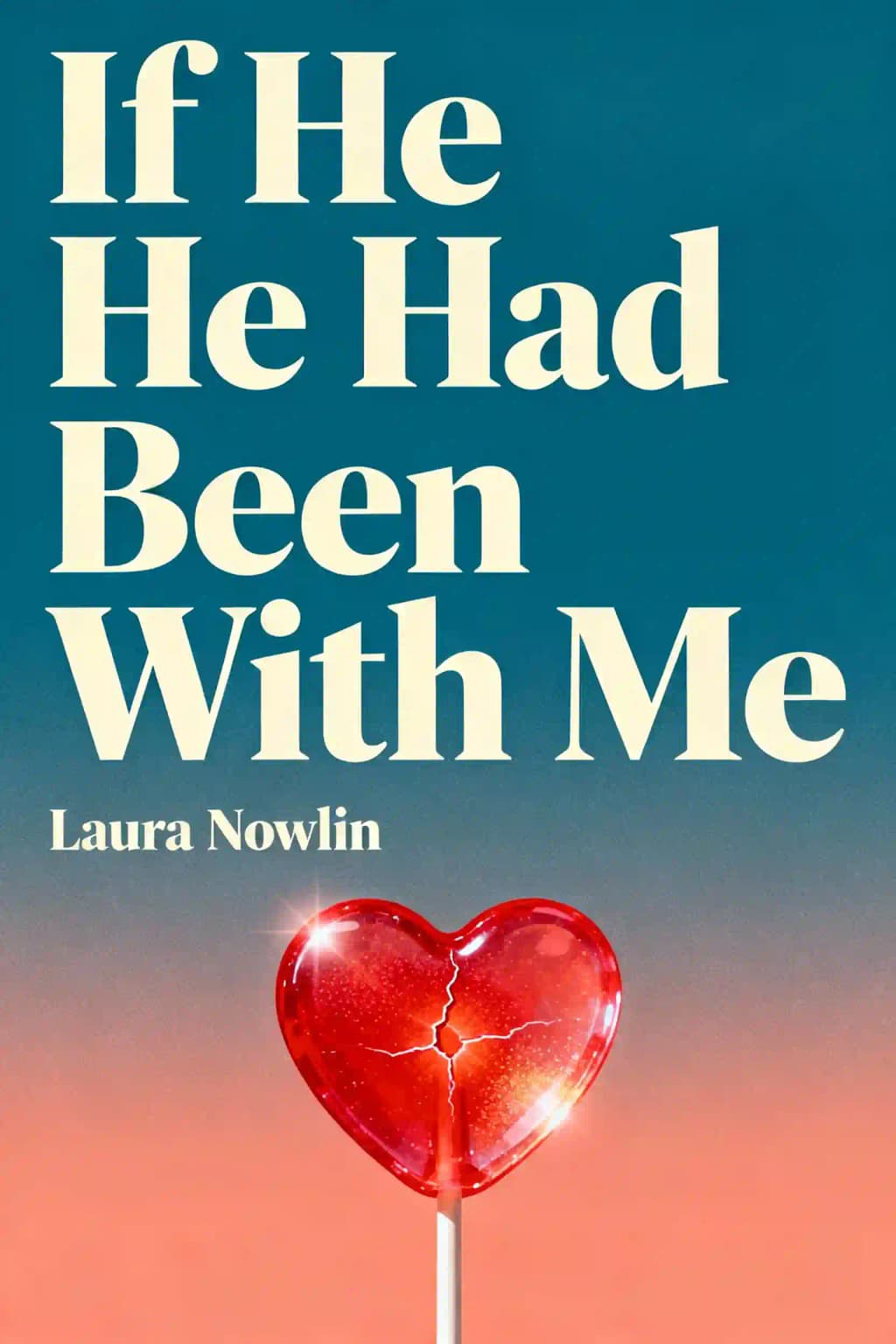
Have you ever wondered how different your life might be if you'd made just one different choice? Laura Nowlin's "If He Had Been With Me" has become a TikTok sensation, with over 130 million views on the platform and readers worldwide sharing tearful reactions. This devastating coming-of-age tale explores the thin line between friendship and love, and how timing can change everything. The novel has experienced a remarkable resurgence nearly a decade after its 2013 publication, becoming a New York Times bestseller in 2023 after going viral. Nowlin's exploration of missed opportunities and tragic timing resonates deeply with readers who find themselves wondering about their own "what ifs" - those moments when life could have taken an entirely different path if only we had recognized what was right in front of us.
2장
Childhood Bonds and Growing Apart
Autumn and Finny's story begins before they're even born. Their mothers, best friends themselves, were pregnant together that summer, sitting close so their unborn children could "kick each other like twins." Born just a week apart in September, they grew up in Ferguson, a small St. Louis suburb, practically inseparable. Autumn was quirky and odd with no friends besides Finny, while he was sweet, shy, and well-liked. Despite their differences, Finny remained fiercely loyal to Autumn, defending her from torment and always choosing her first.
Their childhood memories blend into seasons - summers hiding under bushes, autumn birthdays celebrated together, Christmases spent as one extended family, winters with Finny protecting Autumn from snowballs, and springs watching him play soccer. Everyone understood they belonged together, rarely separated except to sleep in their own beds, and even then, their windows faced each other across the short distance between their houses.
But as often happens, middle school changed everything. Autumn briefly became popular with "The Clique" while Finny joined a geeky group. They stopped studying together, found they had nothing to talk about, and somehow weren't friends anymore. By high school, they traveled in completely different social circles - Finny became popular after making varsity soccer as a freshman, while Autumn found her place among the school misfits, complete with dyed black hair and a boyfriend named Jamie who reminded her of Peter Pan.
The distance between them was painfully evident at the bus stop on their first day of high school, when Autumn was too nervous to return Finny's greeting. Soon after, he began dating a blonde cheerleader named Sylvie, creating an even wider gulf between them. Though they still shared family dinners because of their mothers' friendship, these encounters became increasingly awkward, filled with strained conversation and unspoken tension.
3장
Parallel Lives and Secret Longings
Throughout high school, Autumn and Finny live parallel lives that occasionally intersect due to their mothers' enduring friendship. These moments of connection are charged with unspoken feelings and missed opportunities. Autumn begins dating Jamie, who becomes her steady boyfriend for years. She finds a place among the school misfits - Sasha, Brooke, Noah, and Angie - who form a tight-knit group that stands in contrast to Finny's popular crowd.
Autumn develops a signature style, wearing tiaras daily and embracing her quirky personality. Her relationship with Jamie grows serious; he gives her a promise ring and a charm bracelet, telling her he'll add a charm every year "for the rest of our lives." They discuss marriage and children, planning their future together with the certainty of youth. Meanwhile, Finny continues dating Sylvie and becomes increasingly popular, eventually being crowned Homecoming King and later Prom King with Sylvie as his Queen.
Despite their separate lives, Autumn finds herself watching Finny from afar, noticing details about him that she shouldn't care about. When she overhears him discussing his plans for medical school, she recognizes how perfectly this career suits his natural instinct to help others. During one of Finny's soccer games that Autumn reluctantly attends with her mother, she has a startling revelation while watching him take a hard fall: she's in love with Finny and has been her whole life.
This realization torments her as she continues her relationship with Jamie. She describes her love for Finny as "buried like a stillborn child," cherished but impossible, tucked away in her heart. When her friends make her take a quiz called "Does he like you as MORE than a friend?" about Finny, she dismisses their suggestion that he had feelings for her in middle school, saying they were just kids without hormones. Yet she had answers for all the questions, even ones that shouldn't have applied to children.
As their high school years progress, Autumn struggles with depression that worsens during winter months. She begins seeing Dr. Singh and taking medication, which helps somewhat. Meanwhile, her parents' marriage deteriorates, eventually ending in divorce. Throughout these challenges, Autumn finds herself increasingly drawn to Finny, though she tries to suppress these feelings out of loyalty to Jamie and fear that no one else would ever love her.
4장
The Unraveling of Certainties
As senior year progresses, the carefully constructed lives of Autumn and her friends begin to unravel. Angie announces she's pregnant by her boyfriend Dave, whom she quickly marries in a courthouse ceremony. Brooke and Noah decide they won't stay together after high school. Sasha breaks up with her boyfriend Alex "for good" (though they still attend prom together). These changes foreshadow the impermanence of what once seemed certain.
After graduation, Autumn's world collapses when Jamie breaks up with her, revealing he and Sasha have "discovered" feelings for each other and have already slept together. This betrayal by both her boyfriend and best friend leaves Autumn devastated. She spends three days in bed until Finny unexpectedly arrives to check on her. He takes her for ice cream and to the park, helping her feel something beyond numbness. When she confesses she'd often wanted to break up with Jamie but feared no one would ever love her like that, Finny calls that part "stupid."
This moment marks the beginning of a new chapter for Autumn and Finny. With Sylvie traveling in Europe for the summer, they fall into a comfortable routine together - having late breakfast, watching movies, driving around with windows down, visiting drive-thrus after midnight, and wandering twenty-four-hour grocery stores. Autumn writes on her laptop while Finny plays video games on his bed. Their friendship rekindles, deeper than before, though neither acknowledges the growing attraction between them.
During this time, Autumn learns from Finny's friend Jack that Finny had "obsessed" over her in middle school and took "forever to get over" her. This revelation stuns her - Finny had actually liked her back then. The knowledge adds another layer to their complex relationship, making her wonder what might have been if she'd known sooner.
5장
Revelations and Reconnections
As summer progresses, Autumn and Finny grow increasingly close. They reminisce about their childhood - her crying over Charlotte's Web, him getting hit by a baseball, their snow adventures at the creek, him punching a boy for calling her a freak. They debate how differently they remember middle school - she thought she was rejected by the popular crowd, while he reveals they tell a different story.
Finny teaches Autumn to drive despite her resistance, his hands guiding hers over the steering wheel as he promises, "I'll catch you if we start to go too far." These words carry deeper meaning as their relationship evolves beyond friendship. When Sylvie calls during their movie night, Autumn is startled, having forgotten she exists beyond their bubble. Finny explains he can't break up with her over the phone but admits, "She's not who I want to be with."
The tension between them builds until one night when Finny reads Autumn's novel - a story about childhood neighbors and best friends who become lovers, face challenges together, and ultimately find a way to make their relationship work despite obstacles. After reading it, Finny confronts Autumn about their past - her abandonment and his unexpected kiss that scared her when they were thirteen. They apologize to each other, and when he asks if she'd want him to kiss her now, she says yes.
Their first kiss begins awkwardly but quickly deepens into something Autumn has never experienced before. It feels natural, right. As things intensify, they make love for the first time. Afterward, they confess their love and discover they've both loved each other "forever" - him since fifth grade, her for at least two years. They talk about their past misunderstandings and agree to be together now.
6장
Tragedy and Aftermath
The next day, Finny prepares to break up with Sylvie, who has just returned from Europe. Despite Autumn's pleas to wait until tomorrow, he insists, "I want it to be over. I want it to be just us." Before leaving, he promises to return as soon as possible and says, "After this, things are going to be the way they were always supposed to be." Autumn watches his car disappear as rain begins to fall.
That night, when she hears footsteps and the door opens slowly, she calls out "Finny?" but it's her mother, who responds with a sorrowful "Oh, Autumn." On August 8th, Phineas Smith died in a car accident while driving in the rain. Autumn imagines every detail - his hands on the steering wheel, his racing pulse as he took that turn too fast. She believes if he had been with her, Finny would still be alive.
In her mind, she sees him in the crashed car, initially unharmed, with rain falling through the shattered windshield. She imagines him unbuckling his seatbelt and running toward Sylvie's motionless body on the road, not seeing the fallen power line in the puddle by her head. As he kneels and places his hand down to steady himself, death takes him instantly.
Devastated by grief, Autumn stays home instead of going to college. Dr. Singh increases her medication, but she stops taking her pills. On the day halfway between their birthdays, she attempts suicide, leaving a note and locking herself in Finny's bedroom. She wakes up in the hospital with bandaged wrists, still planning to try again until a nurse's routine question about her last menstrual cycle gives her pause. She realizes she might be pregnant with Finny's child.
7장
The Promise of New Beginnings
In the final moments of the novel, Autumn sits in the sterile hospital room, contemplating the bittersweet possibility that she might be carrying Finny's child. The weight of this realization washes over her as she considers what Finny would say - knowing him, he would object to her trying again, always protective, always wanting her to move forward rather than stay tethered to the past. Yet in this moment, she allows herself to imagine their life together in vivid detail: living among The Mothers in their close-knit community, her days spent waiting tables at the local diner, carefully saving dollar by dollar. She pictures herself taking night classes at the community college, working towards her degree one course at a time, still finding moments late at night to write her stories by lamplight.
The memory of Finny holding Angie's baby floods back with startling clarity - his strong hands suddenly gentle, his eyes wide with wonder as he cradled the infant. She remembers how natural he looked, how his entire face softened, and how he'd glanced at her with that knowing smile that seemed to hold all their future possibilities. These memories, once painful, now feel like a gift, a window into what might have been - and what still could be.
When the nurse explains that the pregnancy test is standard hospital policy, her tone professional but kind, she asks if Autumn will stay put and wait for the results. "Yeah, I'll wait," Autumn responds, her arms instinctively wrapping around her middle in a protective gesture. The words carry more weight than just a simple agreement - they're a promise to herself, to Finny's memory, to their potential future. For the first time since she lost him, since everything fell apart, she feels an unfamiliar sensation blooming in her chest: hope.
This moment represents more than just the possibility of pregnancy - it's a convergence of endings and beginnings, of loss and renewal. Even in death, Finny has potentially given her the most precious gift: not just a part of him that might continue through a child, but a reason to embrace life again, to find purpose in the aftermath of tragedy. The circular nature of life and death, of endings and beginnings, comes full circle in this quiet hospital room, where Autumn finally feels that things might unfold exactly as they were meant to, even if the path there wasn't what she'd originally imagined.
8장
The Complexity of First Love
Throughout the novel, Nowlin explores the enduring power of first love and how it shapes our lives even when circumstances pull us apart. During a class discussion of Jane Eyre, Autumn shares that she believes you never get over your first love - a sentiment that proves prophetic in her own life. Her love for Finny persists despite years of separation and relationships with others.
This theme is reinforced when Aunt Angelina, after breaking up with a boyfriend, tells Autumn: "Try to marry your first love. For the rest of your life, no one will ever treat you as well." The irony is that Autumn believes she's following this advice by staying with Jamie, not realizing that Finny is truly her first love - the one who has always understood and accepted her completely.
The novel suggests that true love involves more than romance and attraction; it requires deep understanding and acceptance of another person's essence. While Jamie loves Autumn and cares for her, he doesn't fully comprehend her creative spirit or emotional depth. When she expresses her desire to write, he offers only acceptance, not understanding. In contrast, Finny recognizes her talent and encourages her to pursue her passion, even asking to read her work.
9장
Mental Health and Identity
Autumn's struggle with depression forms a significant subplot in the novel, manifesting in both subtle and overt ways throughout the narrative. Her condition noticeably deteriorates during winter months, which she poetically describes as her "dead season" - a time when she wishes she could hibernate like the trees, retreating from the world entirely. The metaphor of seasonal change becomes deeply intertwined with her emotional state, as she watches the landscape turn barren and feels herself becoming similarly empty inside. Her relationship with Jamie becomes increasingly strained during these periods; she alternates between pushing him away with angry outbursts and desperately clinging to him, begging him never to leave. These dramatic mood swings reflect the complex nature of her depression.
The physical manifestations of her mental health struggles become apparent as she begins to experience distorted self-perception. Looking in the mirror, she no longer recognizes herself - the girl she once thought was pretty seems to have vanished, replaced by someone she barely knows. She develops insomnia, spending nights staring at her ceiling and convincing herself that winter, like her depression, will never truly end. Her writing, once a source of joy, becomes sporadic and dark.
Her mother's history of hospitalization for depression casts a long shadow over Autumn's experience. The genetic component of her condition creates a dual burden: both the depression itself and the fear of following her mother's path. She remembers visiting her mother in the hospital as a child, the sterile corridors and vacant eyes becoming part of her own narrative of what depression means. When she finally visits Dr. Singh, his gentle approach helps her understand that chronic sadness isn't a necessary part of her identity - it's a condition that can be treated. The introduction of medication, combined with regular therapy sessions and the natural lifting of winter into spring, gradually helps Autumn regain her footing, though the underlying issues remain like a low hum in the background of her life.
Throughout the novel, Autumn's sense of self is initially defined through her relationships - first with Finny, then Jamie, then circling back to Finny again. This pattern reflects a common struggle among young adults: the challenge of distinguishing between love and identity. Her journey toward self-discovery involves painful but necessary separation from these relationship-based definitions of self. Through her writing, particularly her novel about childhood friends who become lovers, she begins to find her own voice. The novel-within-a-novel device serves multiple purposes: it's both a way for her to process her feelings for Finny and a means of establishing herself as an independent creative force. Her characters, while inspired by her own experiences, take on lives of their own, showing how Autumn is learning to transform personal pain into art and, in doing so, discovering who she is beyond her relationships.
10장
The Weight of Choices Not Made
Perhaps the most poignant theme in "If He Had Been With Me" is the exploration of how our lives are shaped by the choices we make - and don't make. The novel's title and opening lines establish this immediately: "I wasn't with Finny on that August night, but my imagination has burned the scene into my mind... If he had been with me, everything would have been different."
Throughout the story, Autumn and Finny make choices that keep them apart - she joins The Clique in middle school while he finds other friends; she dates Jamie for years while he dates Sylvie; they both maintain these relationships despite their feelings for each other. When they finally acknowledge their love and choose to be together, it's tragically too late.
This theme resonates deeply with readers because we all carry our own "what ifs" - moments when we wonder how our lives might have unfolded if we'd made different choices. Autumn's story serves as both a cautionary tale about waiting too long to pursue what truly matters and a reminder that even in tragedy, there can be hope and new beginnings.
11장
The Circular Nature of Time and Love
Nowlin structures the novel to emphasize the circular nature of time and love, weaving a complex tapestry of moments that loop back on themselves. The story begins with Autumn's haunting imagination of Finny's death, then circles back through their shared childhood and adolescence before returning to that fateful night. This deliberate narrative structure creates not only a sense of inevitability but also demonstrates how patterns echo and repeat throughout our lives - like ripples in a pond, touching everything they encounter.
The seasonal imagery serves as a powerful metaphor for life's continuous cycles. Winters bring depression and isolation, mirroring Autumn's darker moments, while springs burst forth with renewal and possibility - much like her periods of growth and self-discovery. The annual rituals of birthdays, holidays, and school events mark time's passage while simultaneously connecting present moments to memories of the past. Each New Year's Eve party echoes previous celebrations, each summer vacation carries whispers of summers gone by, creating layers of meaning and memory that deepen with each cycle.
Autumn's collection of tiaras becomes particularly significant in this circular narrative. These aren't mere accessories but physical manifestations of continuity and change. When her favorite tiara is destroyed - a moment that could have broken the circle - her friends step in to replace it, understanding intuitively the importance of maintaining these symbolic connections. The new tiara, while different, carries the weight of the old one's meaning, demonstrating how cycles can be maintained even through loss and change.
The novel's exploration of circularity reaches its most poignant expression in the possibility of Autumn's pregnancy. This potential new life represents the ultimate expression of cyclical existence - a fresh beginning emerging from profound loss. As she waits for the test results, arms wrapped protectively around her middle, Autumn experiences a deep recognition that this too is part of life's greater pattern. Her feeling that things will turn out "the way they were always meant to be" suggests not resignation but acceptance of life's circular nature. The love she shared with Finny, rather than ending with his death, transforms into something new - a continuation rather than a conclusion.
Through these interweaving circles of time, memory, and love, Nowlin illustrates how endings often contain beginnings, and how love, like time itself, doesn't move in a straight line but in endless cycles of renewal and transformation. The structure reminds us that while individual moments may pass, their essence continues in the circular dance of memory, legacy, and new life.
12장
Finding Beauty in Sadness
During a stargazing conversation with friends about the meaning of life, Autumn argues that we're meant to experience beauty - even in sadness. Jamie disagrees that sad things can be beautiful, highlighting their fundamental difference in worldview. Later, when discussing Romeo and Juliet, they debate whether the lovers' deaths were beautiful or stupid, with Jamie taking the practical view while Autumn sees the poetic tragedy.
This perspective helps explain why Nowlin's novel resonates so deeply with readers despite its heartbreaking conclusion. There is beauty in Autumn and Finny's story - in their childhood bond, their rediscovered connection, their brief moment of happiness together, and even in the possibility of new life emerging from loss. The novel doesn't shy away from the pain of missed opportunities and tragic timing but finds meaning and beauty within that pain.
In the end, "If He Had Been With Me" is not just a love story but a meditation on how we find purpose in a world where timing often seems cruel and random. Through Autumn's journey, we're reminded that even our deepest sorrows can contain unexpected grace, and that sometimes, what seems like an ending might actually be a beginning in disguise.