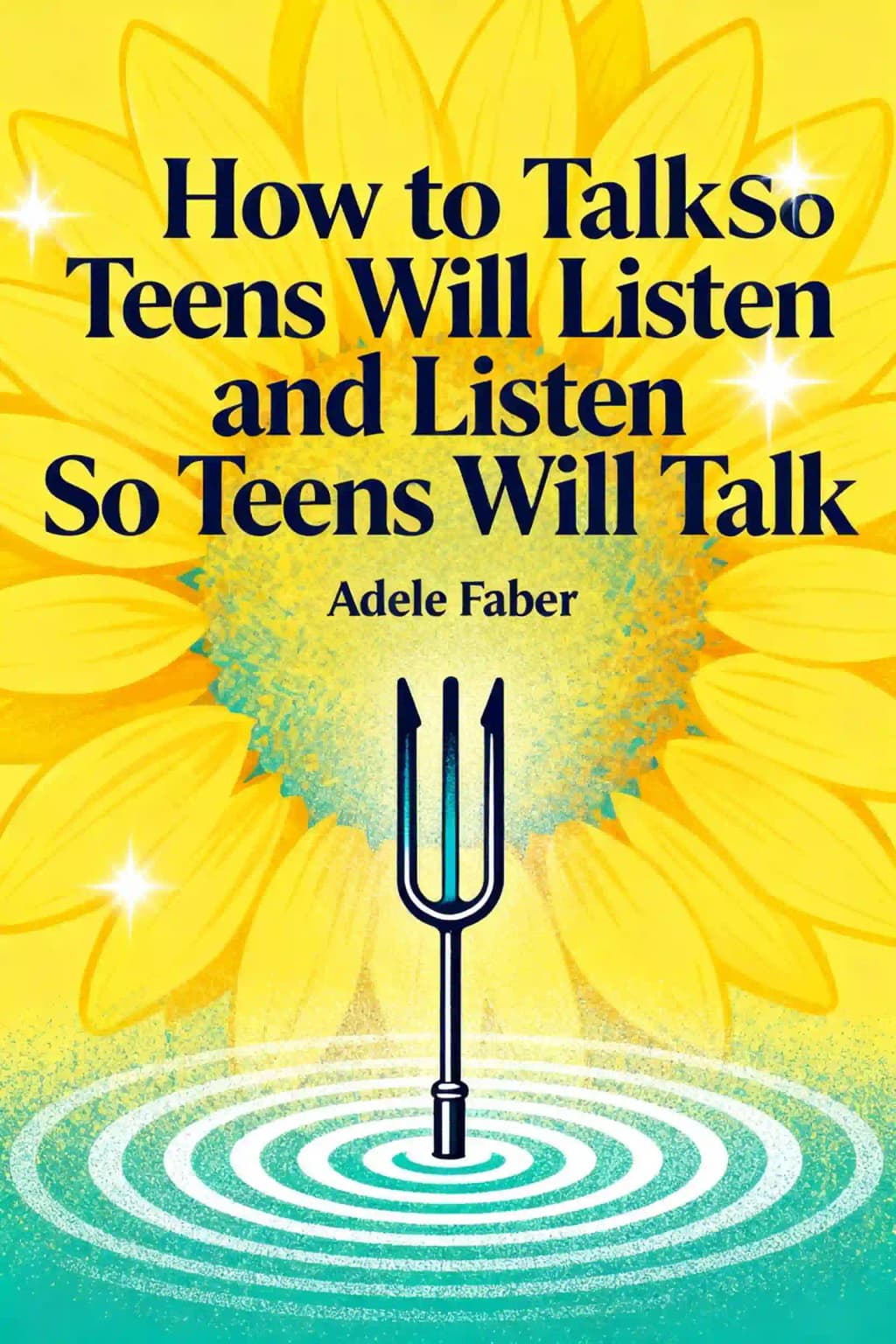
Struggling with teenage communication? This #1 New York Times bestseller from renowned experts Faber and Mazlish offers practical strategies for navigating adolescent challenges - from curfews to drugs. Thousands of parents worldwide swear by these techniques that transform teen-parent battles into meaningful conversations.
Adele Faber (1928–2024) was the bestselling co-author of How to Talk So Teens Will Listen and Listen So Teens Will Talk and a pioneering authority on family communication.
A New York University-educated teacher and parenting coach, Faber transformed decades of research and workshops into practical frameworks for bridging generational divides. Her work, including the foundational How to Talk So Kids Will Listen & Listen So Kids Will Talk (co-authored with Elaine Mazlish) and Siblings Without Rivalry, blends psychological insights with actionable strategies, selling over 10 million copies globally.
Faber’s methods, honed through collaborations with child psychologist Dr. Haim Ginott, became cultural touchstones through appearances on Oprah, Good Morning America, and international speaking tours. Her books, translated into 30+ languages, remain essential reading for parents and educators seeking to foster empathy and cooperation. Faber’s final work continues her legacy of helping families navigate adolescence’s challenges with respect and emotional intelligence.
How to Talk So Teens Will Listen and Listen So Teens Will Talk by Adele Faber and Elaine Mazlish provides practical strategies for improving parent-teen communication. It emphasizes empathetic listening, validating emotions, and collaborative problem-solving to address conflicts around independence, discipline, and sensitive topics like substance use. The book uses real-life scenarios and actionable techniques to foster mutual respect and strengthen relationships during adolescence.
This book is ideal for parents, caregivers, and educators seeking to navigate adolescent challenges. It’s particularly valuable for those struggling with communication breakdowns, resistance to rules, or conflicts over topics like curfews or technology use. The authors’ down-to-earth style appeals to both adults and teens aiming for healthier dialogue.
Yes—the book is a New York Times bestseller praised for its actionable advice and relatable examples. Readers appreciate its focus on replacing punitive approaches with cooperative problem-solving, making it a go-to resource for fostering trust and reducing family tension. Positive reviews highlight its effectiveness in improving parent-teen dynamics.
Key strategies include:
While Faber’s How to Talk So Kids Will Listen targets younger children, this book addresses adolescent-specific challenges like identity exploration and risky behaviors. It adapts core principles—like validating emotions—to teen development, emphasizing autonomy and shared decision-making over direct parental control.
Some readers find the comic-strip examples oversimplified for complex issues like substance abuse. Others note the strategies assume cooperative teens, which may not align with highly rebellious behavior. Cultural biases in scenarios (e.g., curfew negotiations) are also mentioned.
It advocates open, non-judgmental dialogue. Instead of lecturing, ask questions like “What do you think could go wrong in that situation?” to encourage critical thinking. Share concerns calmly (e.g., “I’m scared because I care about you”) and collaborate on safety plans.
It discourages punitive measures, arguing they damage trust. Instead, focus on natural consequences (e.g., a teen forgetting laundry faces wearing dirty clothes) and problem-solving. The goal is fostering responsibility, not compliance through fear.
Yes—it encourages parents to guide decision-making by asking “What’s your plan?” rather than dictating actions. Techniques like allowing safe failures (e.g., mismanaged allowance) help teens learn accountability while feeling supported.
Absolutely. Updated editions address modern challenges like social media and mental health. Its emphasis on empathy and adaptability aligns with contemporary parenting trends focused on emotional intelligence over authoritarianism.
저자의 목소리로 책을 느껴보세요
지식을 흥미롭고 예시가 풍부한 인사이트로 전환
핵심 아이디어를 빠르게 캡처하여 신속하게 학습
재미있고 매력적인 방식으로 책을 즐기세요
When teens feel their emotions are dismissed...they shut down.
Punishment made her less responsible and more secretive.
The problem isn't just what parents ask but how they ask it.
I can see you're angry, but I can't let you slam doors.
Wouldn't it be great if teachers never assigned homework on weekends?
How to Talk So Teens Will Listen and Listen So Teens Will Talk의 핵심 아이디어를 이해하기 쉬운 포인트로 분해하여 혁신적인 팀이 어떻게 창조하고, 협력하고, 성장하는지 이해합니다.
How to Talk So Teens Will Listen and Listen So Teens Will Talk을 빠른 기억 단서로 압축하여 솔직함, 팀워크, 창의적 회복력의 핵심 원칙을 강조합니다.

생생한 스토리텔링을 통해 How to Talk So Teens Will Listen and Listen So Teens Will Talk을 경험하고, 혁신 교훈을 기억에 남고 적용할 수 있는 순간으로 바꿉니다.
무엇이든 물어보고, 목소리를 선택하고, 진정으로 공감되는 인사이트를 함께 만들어보세요.

샌프란시스코에서 컬럼비아 대학교 동문들이 만들었습니다
"Instead of endless scrolling, I just hit play on BeFreed. It saves me so much time."
"I never knew where to start with nonfiction—BeFreed’s book lists turned into podcasts gave me a clear path."
"Perfect balance between learning and entertainment. Finished ‘Thinking, Fast and Slow’ on my commute this week."
"Crazy how much I learned while walking the dog. BeFreed = small habits → big gains."
"Reading used to feel like a chore. Now it’s just part of my lifestyle."
"Feels effortless compared to reading. I’ve finished 6 books this month already."
"BeFreed turned my guilty doomscrolling into something that feels productive and inspiring."
"BeFreed turned my commute into learning time. 20-min podcasts are perfect for finishing books I never had time for."
"BeFreed replaced my podcast queue. Imagine Spotify for books — that’s it. 🙌"
"It is great for me to learn something from the book without reading it."
"The themed book list podcasts help me connect ideas across authors—like a guided audio journey."
"Makes me feel smarter every time before going to work"
샌프란시스코에서 컬럼비아 대학교 동문들이 만들었습니다

How to Talk So Teens Will Listen and Listen So Teens Will Talk 요약을 무료 PDF 또는 EPUB으로 받으세요. 인쇄하거나 오프라인에서 언제든 읽을 수 있습니다.
Your fourteen-year-old slams the door. Again. You've asked three times about homework, and all you've gotten back is eye-rolling silence or an explosive "Get off my back!" Meanwhile, you're just trying to be a responsible parent. How did the sweet child who once held your hand crossing the street become this moody stranger who treats every question like an interrogation? This isn't just your family's struggle-it's the defining challenge of raising adolescents. The teenage years create a communication chasm that leaves parents feeling helpless and teens feeling misunderstood. What transforms this dynamic isn't stricter rules or more lenient boundaries, but something far more fundamental: learning to speak each other's language. The approach isn't about choosing sides or compromising values. Instead, it's about building a bridge where both generations maintain dignity while genuinely connecting. When parents learn to honor teenagers' emerging autonomy while teens learn their voices matter, something remarkable happens-families rediscover each other.