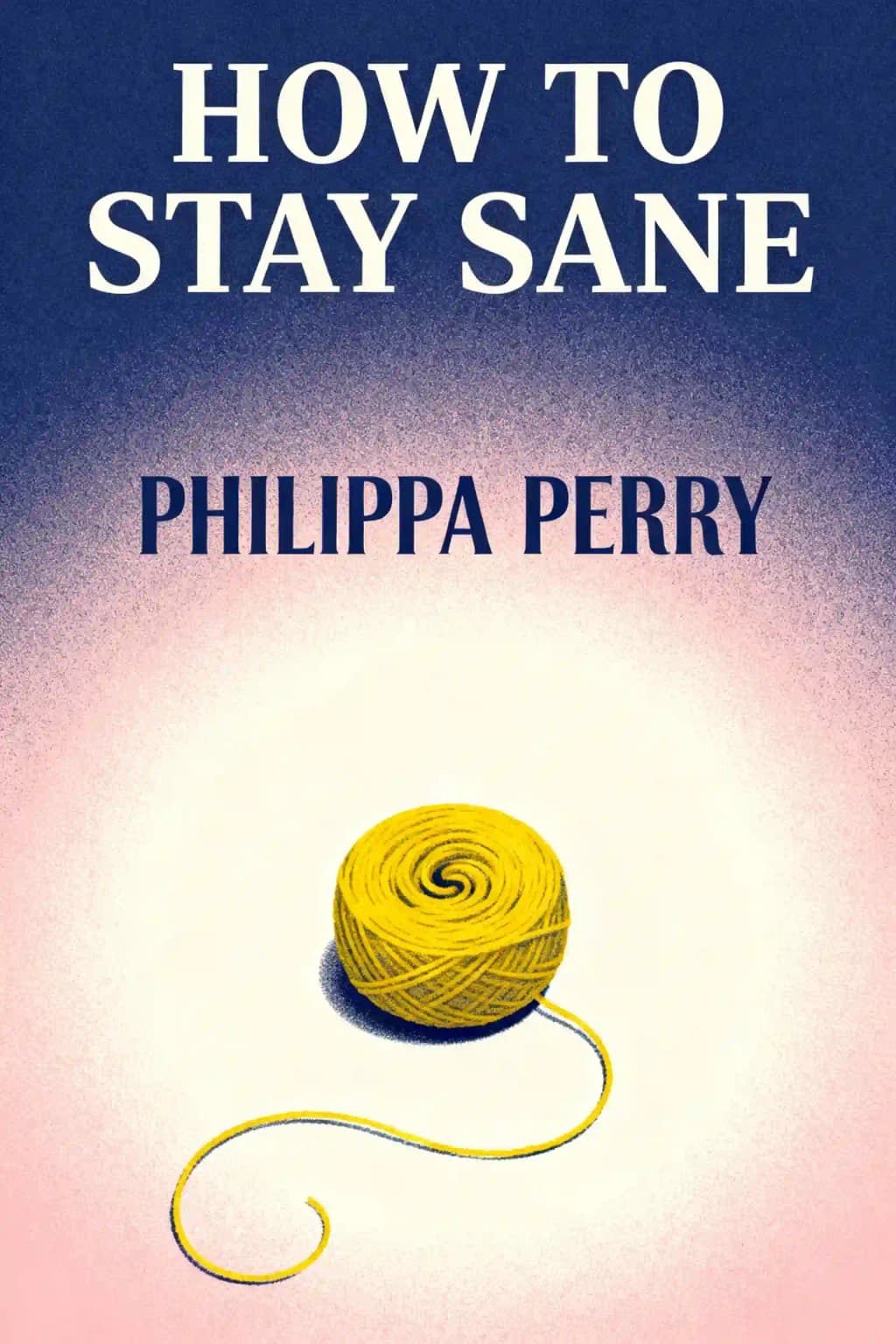
How to stay sane
How to stay sane 개요
In a chaotic world, psychotherapist Philippa Perry offers neuroscience-backed sanity: self-observation, relationships, stress management, and personal narratives. This School of Life gem reveals why some live in constant crisis while others remain stuck in rigid patterns - and how you can find the balanced middle ground.

How to stay sane의 핵심 주제
- emotional regulation
- neural integration
- self-observation
- childhood attachment patterns
- mental flexibility
How to stay sane의 명언
Isolation is toxic to mental health, while meaningful connection is essential for wellbeing.
Vulnerability is not weakness but rather 'our most accurate measure of courage.'
You contain multitudes.
Self-observation creates a compassionate internal witness who can acknowledge what's happening without judgment.
How to stay sane의 등장인물
- Philippa PerryAuthor and psychotherapist
저자 소개
How to stay sane의 저자 소개
Philippa Perry, bestselling author of How to Stay Sane and a renowned British integrative psychotherapist, combines decades of clinical expertise with accessible self-help guidance in this psychology classic. The book, part of The School of Life series, distills principles from psychotherapy, neuroscience, and philosophy into practical strategies for mental wellness.
This is a natural extension of Perry’s work as an Observer agony aunt and her psychotherapy practice spanning 20+ years. Her other acclaimed works, including the graphic novel Couch Fiction and the parenting guide The Book You Wish Your Parents Had Read, further cement her reputation for translating complex emotional concepts into relatable narratives.
Perry’s insights regularly feature in major outlets like The Guardian and Psychologies Magazine, and she has presented documentaries for BBC4 and Channel 4 on topics ranging from childhood development to surrealism. A sought-after speaker, she’s collaborated with institutions like Perspectiva to explore technology’s impact on mental health.
How to Stay Sane remains a foundational text in modern psychology literature, continuously recommended by mental health professionals since its 2012 publication.
How to stay sane 요약 다운로드
How to stay sane 요약을 무료 PDF 또는 EPUB으로 받으세요. 인쇄하거나 오프라인에서 언제든 읽을 수 있습니다.
이 책에 대한 FAQ
How to Stay Sane is a mental health manual offering science-backed strategies to maintain psychological balance. Drawing on neuroscience and psychotherapy, Philippa Perry explores four core concepts: self-observation, nurturing relationships, managing stress, and reframing personal narratives. The book provides actionable exercises to help readers understand their emotions and break cycles of crisis or stagnation.
This book is ideal for anyone seeking practical tools to improve mental resilience, manage stress, or understand their emotional patterns. It’s particularly valuable for self-help enthusiasts, psychology students, and individuals navigating life transitions. Perry’s accessible style makes complex psychological concepts approachable for general readers.
Yes, it’s a concise, evidence-based guide praised for blending therapeutic insights with actionable advice. The Economist named it a Best Book of the Year, highlighting its relevance for modern mental health challenges. Readers appreciate its focus on self-awareness and stress management techniques rooted in clinical practice.
- Self-observation: Track emotions to avoid reactive behavior.
- Embracing feelings: Validate emotions rather than judging them.
- Social connections: Relationships are vital for mental stability.
- Good stress: Engage in challenging activities to build resilience.
- Personal narratives: Rewrite limiting self-stories to reduce anxiety.
Perry distinguishes between harmful stress and “good stress” – activities like learning or problem-solving that foster growth. She advocates balancing comfort-zone activities with deliberate challenges, supported by studies on neuroplasticity. Exercises include mapping stressors and setting incremental goals to build mental stamina.
The book emphasizes that human connection is foundational to mental health. Perry provides frameworks for healthier interactions, such as structured communication exercises. She argues that relationships act as mirrors, helping us understand our emotional patterns and unconscious biases.
Unlike vague inspirational guides, Perry’s work combines psychotherapy techniques with neuroscientific research. It’s more structured than memoir-based mental health books but avoids academic jargon. The School of Life series’ focus on actionable exercises makes it stand out in the self-help genre.
Some readers note the book’s brevity (192 pages) limits depth on complex topics. Critics suggest it’s best suited as an introductory resource rather than a substitute for professional therapy. However, its concise format is widely praised for accessibility.
The book teaches reframing anxiety through narrative restructuring. By analyzing the stories we tell ourselves – “I always fail” becomes “I’m learning” – Perry shows how language shapes emotional responses. Breathing exercises and thought journals offer immediate coping tools.
- Genograms: Map family emotional patterns.
- Comfort-zone stretching: Gradually take on challenging tasks.
- Two-column thought logs: Separate facts from emotional interpretations.
- Relationship role-plays: Practice empathetic communication.
Perry explains how brain plasticity allows habit change through consistent practice. She links emotional regulation to the prefrontal cortex’s ability to override amygdala-driven reactions. The book simplifies studies on stress hormones and their impact on decision-making.
As digital overwhelm increases, Perry’s emphasis on intentional self-awareness remains critical. The book’s strategies for managing information overload and social isolation align with current mental health trends, making it a timely resource despite its 2012 publication.





