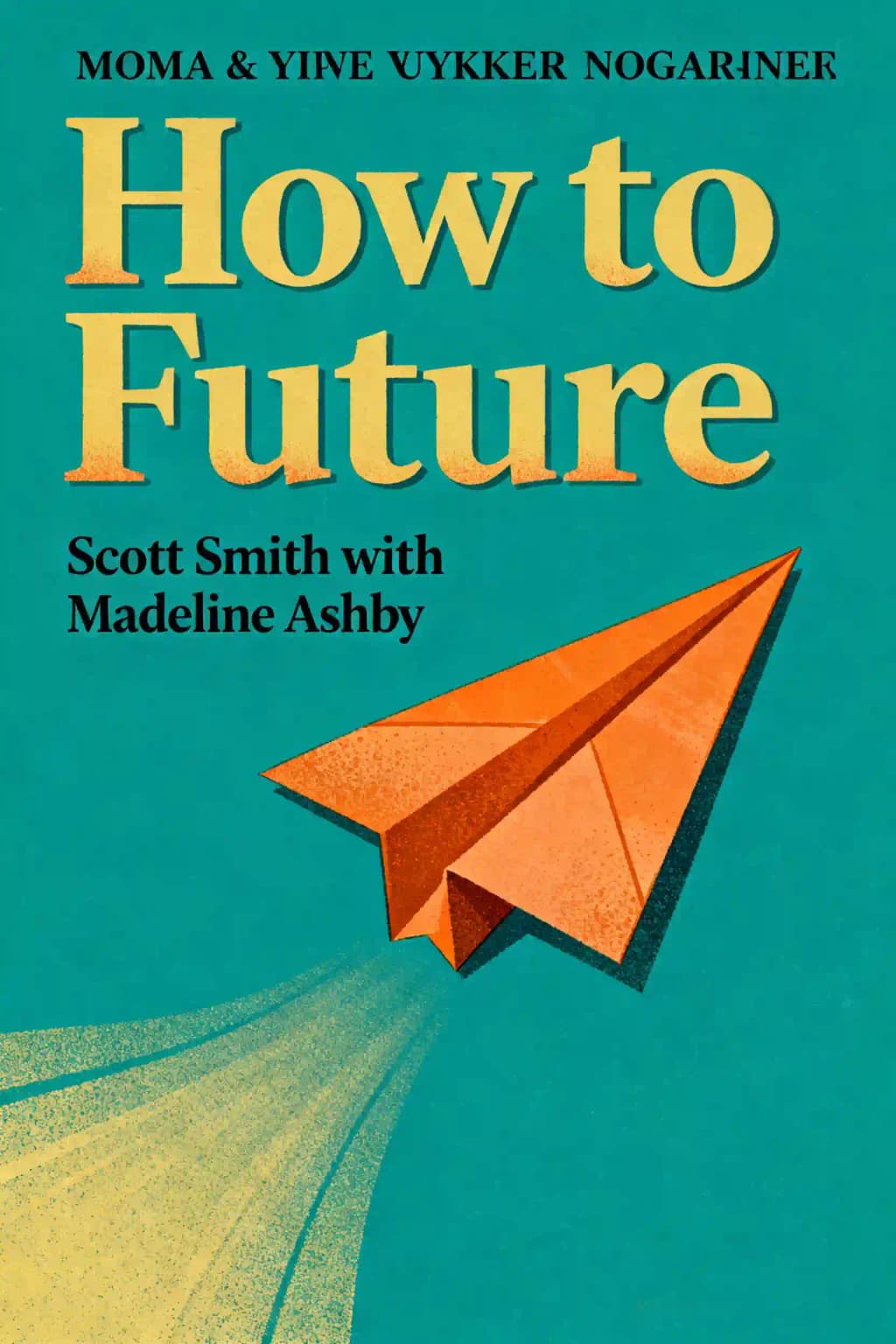
In an era of hyperchange, "How to Future" offers practical tools for strategic foresight. With a 4.04/5 rating, this guidebook by sci-fi writer Madeline Ashby and futurist Scott Smith reveals how industry leaders navigate disruption. Can you afford not to see what's coming?
저자의 목소리로 책을 느껴보세요
지식을 흥미롭고 예시가 풍부한 인사이트로 전환
핵심 아이디어를 빠르게 캡처하여 신속하게 학습
재미있고 매력적인 방식으로 책을 즐기세요
We've turned "the future" into a product. It's branded on magazine covers, streamed on Netflix, and somehow even printed on rubbish bins. Yet despite this obsession with what comes next, most of us feel utterly powerless to shape it. Here's the uncomfortable truth: we've been sold "flat-pack futures"-pre-assembled visions that someone else designed-when what we desperately need is the ability to build our own. This isn't about predicting tomorrow. It's about learning to navigate a world where the ground shifts beneath our feet before we've finished our morning coffee. Think about how you imagine next year. Do you see a straight line extending from today, or do you picture cycles and spirals? Your answer reveals something profound about how your mind processes possibility itself. Western cultures often treat time like a highway-linear, monochronic, marching steadily forward. But travel to Latin America, the Middle East, or much of Africa, and you'll encounter polychronic time: multiple threads weaving together, events overlapping, the past and future dancing with the present. These aren't just philosophical differences. They fundamentally shape how we frame probability, causality, and what's even possible. The language barrier runs deeper still. Modern life punishes uncertainty with a ferocity that would make medieval inquisitors proud. Data-driven businesses demand metrics for everything. "I don't know" becomes career suicide. Design teams rush to converge on singular solutions rather than productively exploring multiple possibilities. Organizations cling to "official futures"-like Moore's Law in computing-that become prison bars preventing us from seeing alternatives. Meanwhile, tech marketing has hijacked future language entirely, claiming "tomorrow, today" until the actual future becomes just another cultural commodity. Breaking free requires recognizing that futuring isn't about eliminating uncertainty-it's about learning to dance with it. The question isn't whether change is coming. It's whether we'll be swept along by it or learn to ride its currents with intention and skill.
How to Future의 핵심 아이디어를 이해하기 쉬운 포인트로 분해하여 혁신적인 팀이 어떻게 창조하고, 협력하고, 성장하는지 이해합니다.
How to Future을 빠른 기억 단서로 압축하여 솔직함, 팀워크, 창의적 회복력의 핵심 원칙을 강조합니다.

생생한 스토리텔링을 통해 How to Future을 경험하고, 혁신 교훈을 기억에 남고 적용할 수 있는 순간으로 바꿉니다.
무엇이든 물어보고, 목소리를 선택하고, 진정으로 공감되는 인사이트를 함께 만들어보세요.

샌프란시스코에서 컬럼비아 대학교 동문들이 만들었습니다
"Instead of endless scrolling, I just hit play on BeFreed. It saves me so much time."
"I never knew where to start with nonfiction—BeFreed’s book lists turned into podcasts gave me a clear path."
"Perfect balance between learning and entertainment. Finished ‘Thinking, Fast and Slow’ on my commute this week."
"Crazy how much I learned while walking the dog. BeFreed = small habits → big gains."
"Reading used to feel like a chore. Now it’s just part of my lifestyle."
"Feels effortless compared to reading. I’ve finished 6 books this month already."
"BeFreed turned my guilty doomscrolling into something that feels productive and inspiring."
"BeFreed turned my commute into learning time. 20-min podcasts are perfect for finishing books I never had time for."
"BeFreed replaced my podcast queue. Imagine Spotify for books — that’s it. 🙌"
"It is great for me to learn something from the book without reading it."
"The themed book list podcasts help me connect ideas across authors—like a guided audio journey."
"Makes me feel smarter every time before going to work"
샌프란시스코에서 컬럼비아 대학교 동문들이 만들었습니다

How to Future 요약을 무료 PDF 또는 EPUB으로 받으세요. 인쇄하거나 오프라인에서 언제든 읽을 수 있습니다.