1장
The Anger Paradox: Why We Cling to What Hurts Us
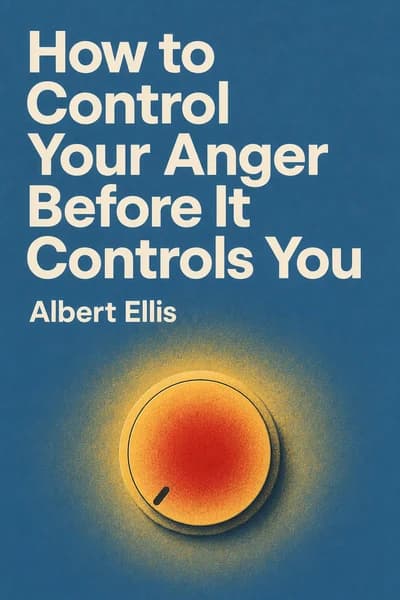
In a world where rage seems increasingly normalized, Albert Ellis's "How to Control Your Anger Before It Controls You" offers a revolutionary perspective that has influenced millions. Originally published in 1997 and revised with co-authors Raymond Chip Tafrate and Raymond DiGiuseppe, this groundbreaking work has become a cornerstone text in anger management. Its enduring popularity stems from a counterintuitive insight: we actively choose our anger rather than having it forced upon us by circumstances. This perspective draws from ancient Stoic philosophy while incorporating modern psychological research, making it a favorite among therapists, self-help enthusiasts, and even celebrities like Will Smith, who has credited Ellis's rational approach with helping him manage emotional reactions throughout his career. The book's cultural impact extends beyond individual therapy into workplace management, relationship counseling, and even criminal justice reform, where its principles have been integrated into rehabilitation programs nationwide.
2장
The Devastating Costs of Chronic Anger
Anger's most destructive impact often falls on our closest relationships. Counterintuitively, psychological surveys reveal we direct our strongest anger not at strangers or enemies, but at those we care about most-spouses, children, friends, and coworkers. Consider Jeff, who sought therapy in his late fifties after his wife divorced him and his adult children severed contact following years of explosive outbursts. Or Nancy, whose jealousy and unfounded accusations drove away her fiance Fred, who finally moved out after she escalated to throwing objects during arguments. Both initially blamed others rather than recognizing their own responsibility.
In professional settings, anger creates equally devastating consequences. Research from the Center for Creative Leadership identifies poor anger management as a major factor in missed promotions and terminations across all organizational levels. Jerry nearly lost his construction job after threatening a coworker who teased him about his height. Howard, an accounting agency owner, drove away five skilled assistants in a single year through screaming tantrums, severely damaging his business. Jane nearly sabotaged her career by obsessively ruminating about being passed over for promotion rather than maintaining productivity.
Anger's health impacts are equally alarming. Over fifty years of research links chronic anger to heart disease-America's leading cause of death. Stanford professor Robert Sapolsky explains how anger damages cardiovascular systems: sudden blood pressure spikes force blood violently through arteries, wearing down their smooth lining. These damaged vessels become scarred, allowing fatty deposits to accumulate on artery walls, eventually leading to atherosclerosis. Prospective studies following initially healthy people for decades show striking results: medical students scoring high on hostility measures had four to five times higher rates of coronary heart disease twenty-five years later, while hostile lawyers had mortality rates nearly five times higher by age fifty than their less angry colleagues.
Beyond physical health, anger creates profound emotional distress including depression, guilt, embarrassment, and diminished confidence. Stacy exemplifies this pattern-an unhappy housewife whose anger drove away her husband, parents, and potential friends, leaving her lonely and depressed. Bob avoided a supermarket and acquaintances for months after a humiliating rage incident involving police. Mike, a self-described "react-a-holic," sought help after losing relationships, jobs, and facing arrest due to anger outbursts. The birth of his son finally motivated him to change, as he feared his own lack of emotional control would harm his child.
The ultimate question becomes unavoidable: Is anger helping you get what you want from life? Are its costs worth whatever temporary satisfaction it provides?
3장
Debunking Dangerous Myths About Anger Management
Despite abundant advice about managing anger, much of it simply doesn't work. Five particularly harmful myths persist despite evidence to the contrary.
The first myth-that actively expressing anger reduces it-stems from Freudian hydraulic models suggesting anger builds up like water pressure and must be released. This contains two critical errors. Contrary to popular belief, venting anger doesn't reduce health risks-it increases them. Dr. Aaron Siegman's research shows expressing rage triggers precisely the physiological arousal patterns most likely to damage arteries. Additionally, catharsis doesn't reduce anger-it reinforces it. Sixty years of psychological research consistently demonstrates that both verbal and physical expressions of anger lead to more, not less, anger and aggression. As one therapist jokes, "How do you become a really angry person? Practice, practice, practice."
The second myth-taking time-outs when angry-often backfires. While briefly removing yourself from dangerous situations has merit, routinely avoiding problems doesn't make them disappear-they fester and grow. Moreover, running from stressful situations prevents learning how to manage them effectively. Fred's avoidance of disagreements destroyed his relationships, while Marjorie's workplace avoidance led to her being perceived as emotionally fragile and ultimately losing her job.
The third myth-that anger helps achieve goals-focuses on short-term compliance while ignoring devastating long-term consequences. Consider Ned's family, who walked on eggshells around him. They complied with his demands to avoid criticism and hostility, but eventually learned to secretly sabotage his control. The result? A relationship devoid of trust and intimacy.
The fourth myth-that insight into childhood origins of anger helps resolve it-confuses understanding with improvement. Like a tennis player with poor technique, understanding how you developed bad habits rarely improves performance. What helps is learning and practicing new skills.
The fifth and most insidious myth-that outside events make you angry-implies emotions are beyond your control. But if external events truly caused anger, everyone would respond identically to similar situations. Take ten people stuck in traffic and late for important meetings. Some will rage and honk, others will berate themselves, while some remain calm. Different people react differently to identical situations because what determines emotional reactions isn't the event itself but your beliefs about what's happening.
4장
The ABC Framework: How We Create Our Own Anger
Rational Emotive Behavior Therapy (REBT) provides a comprehensive framework for understanding and managing anger through what Albert Ellis calls the ABC model. This powerful analytical tool helps dissect emotional reactions into their component parts:
A - the Activating Experience or Adversity: This can be any external event or situation that triggers an emotional response. Examples include a friend breaking a promise, getting cut off in traffic, receiving criticism at work, or experiencing a relationship setback.
B - your Belief System about the experience: This represents your internal dialogue and interpretation of events, including both conscious and unconscious thought patterns, cultural programming, and personal values.
C - the emotional Consequence: The resulting emotional state and behavioral response, which can range from mild irritation to intense rage.
While conventional wisdom suggests that A directly causes C, REBT theory demonstrates that the Activating Experience contributes to but doesn't directly cause your emotional reaction. Your Beliefs about the situation act as the critical intermediary that largely determines your response. This explains why different people react vastly differently to identical situations. For instance, crime victims may respond to the same crime with varying degrees of anger, fear, or even forgiveness, based entirely on their individual belief systems and worldview.
The relationship can be expressed as C = A x B, highlighting how beliefs amplify or diminish our emotional reactions to events. While external circumstances (A) often lie outside our control, we maintain significant power over our belief systems (B), which ultimately shape our feelings and behaviors. This insight provides a practical pathway to emotional regulation.
REBT makes important distinctions between healthy negative feelings (disappointment, regret, frustration) that motivate constructive problem-solving, and unhealthy ones (rage, depression, self-pity) that typically paralyze and prevent effective action. Similarly, your Belief System contains both Rational Beliefs (RBs) that align with reality and promote wellbeing, and Irrational Beliefs (IBs) that distort reality and generate excessive emotional distress.
People typically generate rage through four main categories of irrational beliefs:
1. "How absolutely awful and catastrophic it is for people to treat me so inconsiderately and unfairly!" (Awfulizing)
2. "I can't stand their treating me that way - it's completely unbearable!" (Low Frustration Tolerance)
3. "They absolutely should not, must not behave so badly - it's completely unacceptable!" (Demanding)
4. "Because they're acting so wickedly, they're terrible people who deserve severe punishment!" (Global Rating)
These statements represent cognitive distortions that condemn people's entire character based on specific behaviors. They falsely assume a rigid world where "good" people can only act well and "bad" people can only perform bad deeds. This black-and-white thinking ignores human complexity and leads to intense emotional reactions.
By learning to evaluate specific behaviors rather than condemning the whole person, you can maintain appropriate boundaries while avoiding destructive rage. This allows for more nuanced responses that acknowledge both human fallibility and the possibility of growth and change. The ABC framework provides practical tools for identifying and modifying these belief patterns, leading to more measured emotional responses and better outcomes in challenging situations.
5장
Identifying Your Personal Rage-Creating Philosophy
Insight into your anger patterns is crucial but insufficient alone. REBT goes beyond merely understanding how your anger began-it reveals your philosophy about mistreatment and shows how you're still reinforcing these patterns today. This deeper analysis helps uncover the specific thought patterns that trigger and sustain your anger responses.
Three core irrational belief patterns typically underlie chronic anger, each creating distinct emotional and behavioral consequences:
First, irrational achievement and approval musts demand: "I must do well, win approval, and never face rejection or else I'm a rotten, inadequate person." When you believe this, you logically conclude there's no use trying since failure proves your worthlessness. This creates anxiety, depression, self-hatred, and procrastination. For example, a worker might become enraged at receiving constructive criticism, interpreting it as proof of their incompetence rather than an opportunity for growth. This pattern often leads to defensive behavior, withdrawal from challenges, and intense self-criticism.
Second, irrational musts about others insist: "Others absolutely must treat me considerately and exactly as I want. If they don't, they're bad people who deserve punishment." This makes you angry, nasty, combative and vindictive-which often provokes even worse treatment from others. Consider someone who becomes furious when a friend cancels plans at the last minute, viewing it as a personal attack rather than an unfortunate circumstance. This thinking pattern can destroy relationships and create cycles of escalating conflict.
Third, irrational musts about life conditions demand: "The world must be arranged so I get what I want when I want it, don't get what I don't want, and get everything quickly and easily." This creates low frustration tolerance. When thinking this way, you feel angry at unfavorable conditions, rebel against changing them, feel depressed, give up, and complain that things are awful and unbearable. A common example is becoming enraged at traffic jams or slow service, treating normal life inconveniences as personal affronts.
While others may try to provoke your anger, as Eleanor Roosevelt noted about feeling inferior, they need your permission to succeed. You create your own anger through irrational beliefs about others' "unfair" behaviors. These beliefs often manifest in specific phrases like "This is completely unacceptable!" or "They have no right to treat me this way!"
However you acquired these irrational beliefs - whether through childhood experiences, cultural conditioning, or traumatic events - you maintain them through four key mechanisms: repetition of negative thoughts, reinforcement through emotional reactions, acting out behavioral responses, and resistance to examining these beliefs critically. Your sustained view of an original frustration-not the frustration itself-keeps anger alive through self-repetition of beliefs like "They absolutely should not have treated me that way!" This self-perpetuating cycle can continue for years unless consciously interrupted through rational analysis and deliberate belief modification.
Understanding these patterns allows you to identify your personal triggers and begin the process of developing more rational, flexible responses to life's inevitable frustrations and disappointments.
6장
Disputing Irrational Beliefs: The Path to Freedom
The key to managing anger is disputing irrational beliefs through a systematic three-part process: Detection (identifying irrational beliefs), Discriminating (distinguishing between rational and irrational thoughts), and Debating (challenging irrational beliefs with logic and evidence). This ABC approach forms the foundation for lasting emotional change.
The essential distinction lies between rational preferences and irrational demands. Understanding this difference is crucial for emotional well-being. Consider these expanded examples:
Rational: "I hate your verbal abuse and strongly prefer you stop it. While it's unpleasant, I can handle it."
Irrational: "You absolutely must not treat me with verbal abuse! It's completely unacceptable and intolerable!"
Rational: "You behaved inconsiderately, which I dislike and wish you hadn't done."
Irrational: "You're a terrible person for treating me this way! No decent human would ever act like this!"
Rational: "This situation is difficult and unfortunate, but I can cope with it."
Irrational: "This situation is awful and unbearable! I can't possibly deal with this!"
To dispute effectively, pose specific questions to challenge your irrational beliefs:
• "Why exactly is their unfairness awful rather than merely unfortunate?"
• "What evidence exists that they treated me 100 percent badly?"
• "Where is it written that they absolutely must not treat me badly?"
• "How realistic is my expectation that friends should never treat me poorly?"
• "What are the consequences of holding onto this belief?"
A crucial disputing target is the tendency to globally rate people as "horrible" or "damnable" based on specific actions. As Alfred Korzybski demonstrated in Science and Sanity (1933), this kind of black-and-white thinking ignores human complexity. Even historically celebrated figures like Gandhi had flaws, while notorious villains occasionally showed kindness. When you damn others for unfair behavior, you're engaging in the same kind of absolutist thinking you're criticizing in them. This creates a cycle of self-hatred when you inevitably make your own mistakes.
The concept of "I-can't-stand-it-itis" requires particular attention. This belief system assumes certain treatments are literally unbearable, when in fact they are merely highly unpleasant. When you catch yourself thinking "I can't stand this unfair treatment," challenge yourself:
• "What would actually happen if I endured this?"
• "Have I survived similar situations before?"
• "Am I confusing discomfort with disaster?"
• "How does believing this is unbearable help me cope?"
Through persistent and systematic disputing, you can maintain healthy negative feelings (disappointment, annoyance, frustration) while eliminating unhealthy ones (rage, panic, depression). The key is regular practice - dispute these beliefs daily until rational thinking becomes habitual. Remember that emotional change requires both intellectual and practical work - understanding these principles intellectually isn't enough; you must actively apply them in real-life situations.
Keep a log of your irrational thoughts and their rational alternatives. Track how different responses lead to different emotional outcomes. With time and practice, you'll develop greater emotional resilience and a more balanced perspective on life's challenges.
7장
Emotional and Physical Techniques for Anger Management
REBT offers powerful emotive methods for reducing anger by focusing on feelings rather than just thoughts. The cornerstone is unconditional self-acceptance - fully accepting yourself regardless of your actions, including when you make yourself angry. This means acknowledging mistakes without harsh self-judgment and recognizing that being imperfect doesn't diminish your worth as a person.
Rational Emotive Imagery (REI) and shame-attacking exercises help overcome self-hatred and anger through systematic exposure. In REI, you vividly imagine anger-triggering situations while practicing emotional regulation. For example, visualize a critical coworker while maintaining calm feelings rather than rage. Shame-attacking exercises involve deliberately doing things you consider embarrassing - like singing in public, wearing mismatched clothes, or asking obvious questions in stores. These exercises demonstrate that "shameful" acts don't inherently cause embarrassment - your beliefs do. Since anger often masks shame, confronting shame directly reduces anger's power.
Assertion training provides concrete tools for expressing needs and boundaries effectively. When unassertiveness leads to rage (because you hate yourself for acting weakly and resent others for "manipulating" you), learning to firmly refuse unwanted requests eliminates self-condemnation and anger toward others. Effective assertiveness includes three progressive levels:
1. Minimal assertiveness - simply holding your ground with clear, firm statements like "No, I can't take on that project right now" without apologizing or explaining
2. Confident assertiveness - acknowledging others' positions while maintaining yours: "I understand this deadline is important to you, but I need to decline"
3. Bargaining assertiveness - firmly holding your position while actively seeking compromise: "I can't do the full project, but I could help with specific parts"
Physical relaxation techniques complement these approaches by interrupting the body's anger response. Progressive muscle relaxation (PMR) teaches you to recognize tension by systematically tensing and releasing different muscle groups for 5-7 seconds each. Start with larger muscle groups like shoulders and gradually work through the body. With regular practice, you'll identify anger's physical signals early - like tightened jaw, clenched fists, or shallow breathing - and calm yourself before rage fully develops.
After mastering basic relaxation, practice applying these skills during anger-provoking situations using detailed imagery techniques. Create specific "mini-movie scripts" of triggering situations - a traffic jam, an argument with family, or workplace conflict. Practice alternating between deep relaxation and vividly imagining these scenes, including sights, sounds, and physical sensations. This strengthens your ability to maintain composure when angry and reduces reactivity through repeated exposure.
Enhance this practice by incorporating rational coping statements that counter angry philosophies: "It is unpleasant but not horrible," "Unfairness is part of life; I can stand dealing with it without anger," or "This person's behavior reflects their limitations, not my worth." Once these techniques become familiar, gradually apply them to real-life situations, using body tension as an early warning signal. Keep a log of triggers and successful coping strategies to reinforce progress.
8장
Practical Applications and Advanced Techniques
Beyond the core methods, REBT offers several practical applications to reduce anger in daily life:
First, increase frustration tolerance by accepting that frustration and unfairness should exist (because they do). Acknowledge your tendency to demand frustration must not exist, realize this demandingness defeats you, replace absolutistic insistence with preferences, and work consistently to live up to that decision. Personal growth doesn't come from avoiding frustration but from facing it without whining.
Second, attack narcissism and grandiosity-the childish demand that others love and care for us. Accept that you don't need to run the universe or receive universal approval. The world doesn't care much about you and never will. By replacing godlike commands that people treat you specially with preferences, you'll minimize anger.
Third, challenge angry attributions. When frustrated, we often attribute horrible intentions to people who thwart us when they actually have none. Force yourself to question your attributions and consider other possible reasons for their behavior. Only rarely do people act badly because they hate you personally. More often, they're dealing with their own problems, are unaware of their injustice, or believe they have no choice.
Fourth, curb righteous indignation. Before giving vent to moral outrage, consider: Don't your opponents have some validity to their views? Even if deluded, don't they have the right to their beliefs? Have you truly understood their position? Nonviolence offers a powerful alternative philosophy, assuming decency exists in all humans and that violence against adversaries equals violence against yourself.
Fifth, recognize the irony of hatred. When consumed by fury about people who've treated you unfairly, they become the center of your attention, and you lose yourself in the process. Though you seem focused on your own satisfaction, you're actually obsessing about changing or hurting them. As Ken Olsen notes, "Hate is a means by which we punish and destroy ourselves for the actions of others."
Finally, enhance your relationships through cooperation rather than competition. Try strongly to win competitions-whether for love, money, or success-but don't insist you must win or be worthless. Consider cooperation's advantages: sometimes both you and opponents can win, and helping others achieve partial satisfaction can be enjoyable.
9장
Embracing Imperfection: The Path to Lasting Change
When dealing with anger, first fully acknowledge your enraged feelings rather than denying them. Admit that you mainly brought them on yourself-your boss didn't make you angry; you made yourself angry about his behavior. Second, work at accepting yourself with your rage by acknowledging the wrongness of your feelings but not condemning yourself as a person.
Don't be perfectionistic about handling anger-you'll inevitably respond badly sometimes, which merely shows your humanity. Remember that you can forgive people's acts without forgetting the experience, which helps you protect yourself in the future.
All the methods for reducing rage work beautifully with some people some of the time, but none are perfect. You should actively experiment with different techniques to find which work best for you. These clinically tested anger-reducing methods can help you feel less enraged and live better, provided you accept REBT's main thesis: that humans often take serious problems they didn't create and needlessly rage about them.
Once you accept your role in creating anger, you can focus on solving life's difficulties instead of becoming unhinged about them. You can train yourself to be much less angry, or if you prefer, learn to live fairly happily with your anger by accepting yourself with these feelings. Often, when you reach this stage of self-acceptance and problem-solving, you'll naturally want to move toward the more elegant step of surrendering your anger for a more forgiving attitude toward the world and people in it.
As Ellis himself often said, this transformation isn't about achieving perfection-it's about embracing our humanity while making meaningful improvements that enhance our relationships, health, and happiness. The journey toward managing anger effectively may be challenging, but the rewards of greater peace, stronger connections, and improved well-being make it unquestionably worthwhile.