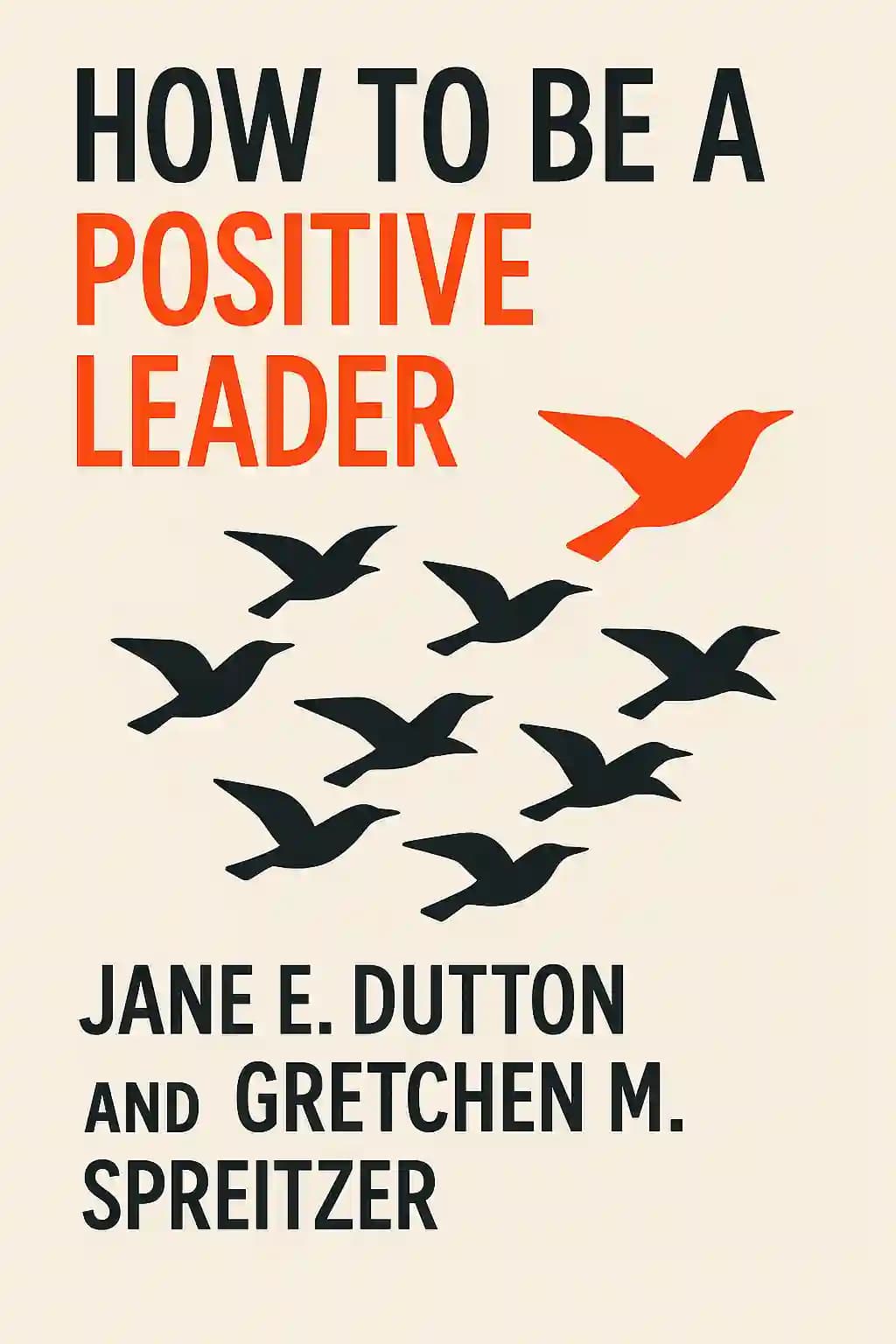
Transform your leadership with "How to Be a Positive Leader" - where small actions create massive impact. Endorsed by MIT and Babson College experts, this collection of 13 essays offers 800+ immediately implementable ideas that spark innovation and build authentic workplace connections.
Jane E. Dutton and Gretchen M. Spreitzer, co-authors of How to Be a Positive Leader: Small Actions, Big Impact, are renowned experts in organizational behavior and positive leadership.
Dutton, a distinguished professor at the University of Michigan’s Ross School of Business, and Spreitzer, a professor of management and organizations at the same institution, combine decades of research on workplace thriving, employee empowerment, and ethical leadership. Their book, a practical guide in the leadership and self-improvement genre, distills strategies for fostering resilience, innovation, and high-quality connections in organizations.
Both have co-authored influential works like The Oxford Handbook of Positive Organizational Scholarship and A Company of Leaders, establishing them as pioneers in positive organizational scholarship. Their research frameworks, such as the “reflected best self” model, are widely applied in corporate training and academic programs.
Praised as “readable and practical” by industry leaders, How to Be a Positive Leader has become a staple in executive education and management curricula, bridging cutting-edge research with actionable tools for modern workplaces.
How to Be a Positive Leader reveals how small, research-backed actions can create transformative workplace results. It teaches leaders to foster high-quality connections, cultivate meaningful work, and design ethical cultures. Key concepts include job crafting, mindful negotiation, and building hope to drive sustainable organizational change.
This book is ideal for managers, HR professionals, and aspiring leaders seeking practical strategies to boost employee engagement and organizational resilience. It’s particularly relevant for those aiming to create inclusive, energizing work environments through evidence-based leadership practices.
High-quality connections (HQCs) are brief, positive interactions that leave participants feeling energized, valued, and capable. Dutton argues HQCs boost creativity, learning, and organizational adaptability. Examples include active listening, expressing gratitude, and fostering psychological safety.
The book emphasizes “small actions with big impact,” like designing rituals to celebrate progress or empowering employees to co-create solutions. Dutton highlights case studies from Ford and Zingerman’s, showing how subtle shifts in communication and culture drive sustainable change.
Job crafting involves employees reshaping their roles to better align with their passions and strengths. Leaders can facilitate this by encouraging autonomy, providing skill-building opportunities, and recognizing individualized contributions.
Dutton links ethical leadership to daily acts of compassion, fairness, and integrity. She argues that modeling virtues like empathy builds trust, reduces burnout, and strengthens team cohesion. Examples include transparent decision-making and prioritizing employee well-being.
The book cites Griffin Hospital’s patient-centered care model, Burt’s Bees’ sustainability initiatives, and Zingerman’s employee empowerment practices. These cases illustrate how positive leadership principles drive innovation and loyalty.
Unlike theoretical guides, Dutton’s work focuses on actionable, research-based micro-strategies. It emphasizes achievable daily habits over grand gestures, making it accessible for leaders at all levels.
Yes. The book’s emphasis on high-quality connections and psychological safety translates well to virtual settings. Tactics like virtual recognition programs and structured check-ins help maintain engagement in distributed teams.
Absolutely. Its focus on resilience, ethical cultures, and employee well-being aligns with post-pandemic workplace trends. The actionable frameworks remain relevant for addressing burnout, hybrid work challenges, and Gen Z’s demand for purpose-driven leadership.
저자의 목소리로 책을 느껴보세요
지식을 흥미롭고 예시가 풍부한 인사이트로 전환
핵심 아이디어를 빠르게 캡처하여 신속하게 학습
재미있고 매력적인 방식으로 책을 즐기세요
Small actions can create extraordinary impact.
Trusting others requires demonstrating vulnerability.
Outsourcing inspiration connects employees directly with the people who benefit from their work.
How to Be a Positive Leader의 핵심 아이디어를 이해하기 쉬운 포인트로 분해하여 혁신적인 팀이 어떻게 창조하고, 협력하고, 성장하는지 이해합니다.
How to Be a Positive Leader을 빠른 기억 단서로 압축하여 솔직함, 팀워크, 창의적 회복력의 핵심 원칙을 강조합니다.

생생한 스토리텔링을 통해 How to Be a Positive Leader을 경험하고, 혁신 교훈을 기억에 남고 적용할 수 있는 순간으로 바꿉니다.
무엇이든 물어보고, 목소리를 선택하고, 진정으로 공감되는 인사이트를 함께 만들어보세요.

샌프란시스코에서 컬럼비아 대학교 동문들이 만들었습니다
"Instead of endless scrolling, I just hit play on BeFreed. It saves me so much time."
"I never knew where to start with nonfiction—BeFreed’s book lists turned into podcasts gave me a clear path."
"Perfect balance between learning and entertainment. Finished ‘Thinking, Fast and Slow’ on my commute this week."
"Crazy how much I learned while walking the dog. BeFreed = small habits → big gains."
"Reading used to feel like a chore. Now it’s just part of my lifestyle."
"Feels effortless compared to reading. I’ve finished 6 books this month already."
"BeFreed turned my guilty doomscrolling into something that feels productive and inspiring."
"BeFreed turned my commute into learning time. 20-min podcasts are perfect for finishing books I never had time for."
"BeFreed replaced my podcast queue. Imagine Spotify for books — that’s it. 🙌"
"It is great for me to learn something from the book without reading it."
"The themed book list podcasts help me connect ideas across authors—like a guided audio journey."
"Makes me feel smarter every time before going to work"
샌프란시스코에서 컬럼비아 대학교 동문들이 만들었습니다

How to Be a Positive Leader 요약을 무료 PDF 또는 EPUB으로 받으세요. 인쇄하거나 오프라인에서 언제든 읽을 수 있습니다.
Leadership isn't about grand gestures or complex frameworks-it's about small, intentional actions that create extraordinary impact. The most effective leaders understand that seemingly minor interventions can dramatically transform organizational culture and performance. When you express genuine gratitude, connect employees with the beneficiaries of their work, or foster high-quality interactions, you're not just being "nice"-you're engaging in evidence-based practices that improve everything from innovation to retention. What makes these approaches so powerful is their accessibility-they don't require massive resources or restructuring, yet they yield measurable results across industries. The most successful organizations have discovered that positive leadership isn't a feel-good philosophy but a practical strategy that creates resilient, adaptive teams capable of thriving amid constant change.