1장
When Your Brain Needs a User's Guide: Navigating Life with ADHD
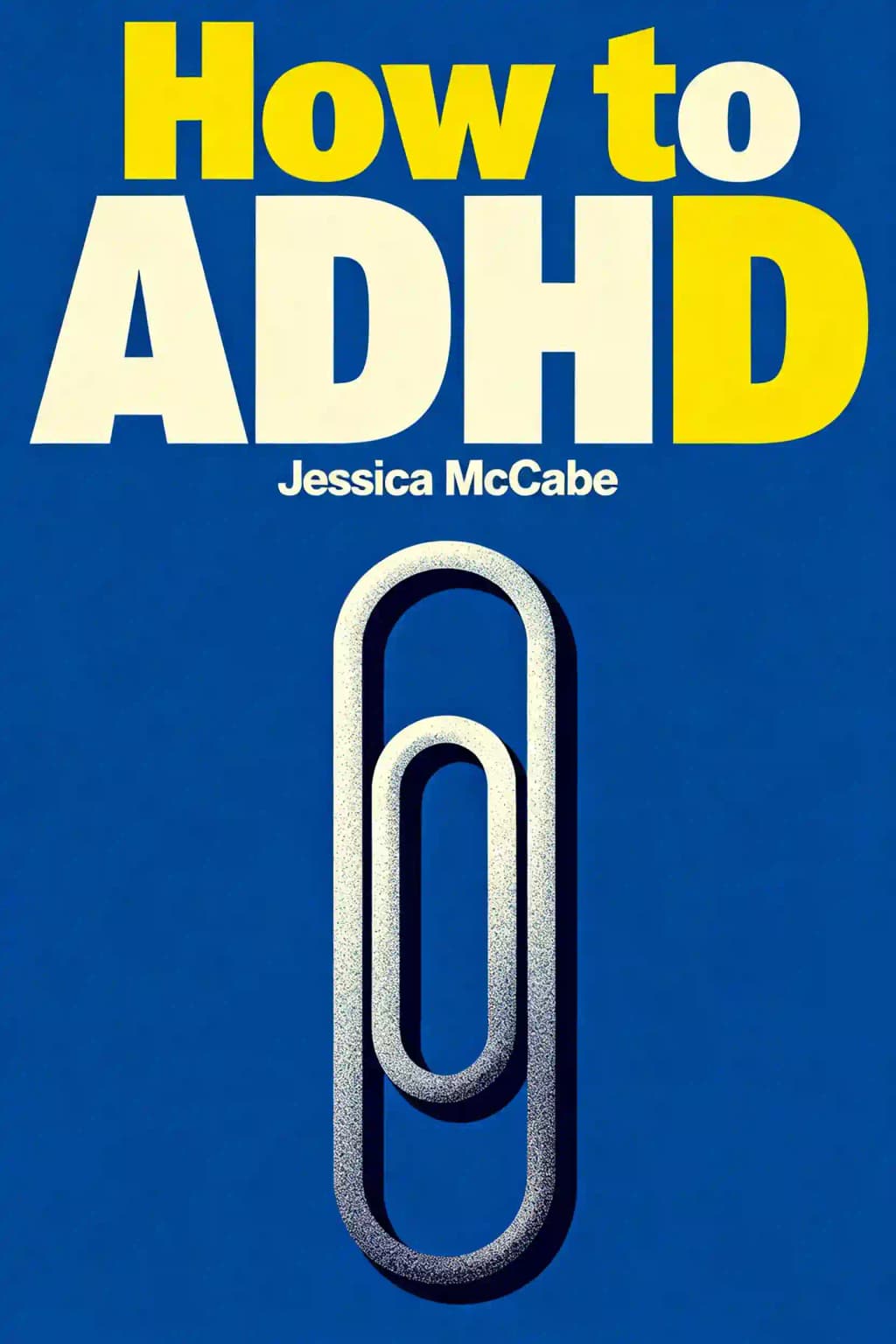
Jessica McCabe's journey with ADHD began long before she knew what to call it. As a child nicknamed "Messy Jessie," she was the student who arrived at school put-together but left disheveled, who could read at a post-high school level in third grade but couldn't keep track of her belongings. Her YouTube channel "How to ADHD" has become a lifeline for millions, with videos that have been incorporated into treatment programs and cited in academic research. This book, which Olympian Simone Biles called "revolutionary," distills seven years of research, interviews with experts, and personal experiences into what McCabe describes as "the book I needed and didn't have." It's no wonder it quickly became a New York Times bestseller, resonating with the estimated 366 million people worldwide who have ADHD and those who love them.
2장
The Paradox of Potential: Succeeding and Failing Simultaneously
For people with ADHD, life often feels like a contradictory message: "Be yourself!...No, not like that!" This contradiction manifests as a pattern of simultaneously failing to meet basic expectations while sometimes dramatically exceeding others. A child with ADHD might struggle to keep their room clean but read far above grade level. An adult might create innovative workplace systems but forget to show up for shifts.
This inconsistent performance creates profound frustration for both the person with ADHD and those around them. Teachers and parents repeat the maddening refrain: "You have so much potential!" The implication being that the person simply isn't trying hard enough.
The reality is far more complex. People with ADHD develop maladaptive coping mechanisms to manage their struggles. They deny problems through anxiety-driven checking and cheerful pretending. They apologize constantly, even for things that aren't their fault. They beg for forgiveness, extensions, and second chances. They try to do better next time through excessive giving and planning. And most damagingly, they try harder-internalizing the message that they simply aren't putting in enough effort.
This last strategy manifests as chronic overcommitment and burnout. The person with ADHD pushes themselves to juggle multiple jobs, activities, and relationships simultaneously while neglecting their own needs. They operate under a constant feeling of "not doing enough," no matter how much they accomplish.
The breaking point often comes after years or decades of this pattern. For McCabe, it was at thirty-two-broke, divorced, living with her mom, and completely burned out. The turning point came through counterintuitive advice: "stop doing everything." After a lifetime of trying harder, she finally stopped-no auditions, no diets, no making up for past failures.
In this space of surrender, she realized she needed to understand why her efforts weren't working rather than simply trying harder. This led to exploring her childhood diagnosis and eventually creating educational content to organize strategies that worked for her brain, knowing she "wouldn't lose YouTube" like she lost notebooks and other organizational tools.
3장
Understanding ADHD: More Than Just an Attention Problem
The first step in McCabe's journey was confronting her misconceptions about ADHD itself. She discovered that what she knew as ADD is now called ADHD, with different presentations including the inattentive type and combined type. More importantly, she learned that ADHD isn't simply an attention deficit but an inability to control attention.
ADHD is widely misunderstood due to slow research dissemination, the perception that it's less serious than other conditions, and rampant misinformation. Contrary to popular belief, hyperactivity isn't required for diagnosis and can manifest as verbal rather than physical. ADHD is neurological, not behavioral, and its impact is serious-reducing life expectancy by 12.7 years on average.
Many people with ADHD remain hidden due to stigma, medication prejudice, and masking symptoms while struggling to meet neurotypical expectations. Their struggles remain invisible because symptoms seem like things "everyone experiences sometimes," and their accomplishments hide the immense effort required. While some highly successful people have ADHD, their achievements often come at great personal cost without proper support.
The most effective approach for managing ADHD is taking it seriously (even "mild" cases significantly impact multiple life areas), connecting with others who have ADHD to recognize positive traits and develop self-acceptance, and working with your brain instead of fighting it. This means focusing on what works rather than what "should," building personalized strategies, working during optimal brain times, choosing ADHD-friendly tools, requesting needed accommodations, and approaching tasks as negotiations with your brain.
Success with ADHD isn't avoiding failure but continuing despite it. The encouragement of others provides motivation to continue through repeated setbacks, acting like "quarters" that allow you to keep playing after running out of lives.
4장
The Attention Paradox: From Distraction to Hyperfocus
For someone with ADHD, focus isn't something they do but something they attempt to capture. Traditional advice to sit still and concentrate often backfires-when genuinely focusing, a person with ADHD might appear distracted: eating, fidgeting, or asking constant questions.
Contrary to the name "attention deficit disorder," people with ADHD don't lack attention but rather the ability to regulate it. Like lizards that can't internally regulate body temperature, ADHD brains struggle with "top-down attentional control" due to prefrontal cortex development issues. This explains why people with ADHD often use external methods like fidgeting or doodling to help regulate their attention.
ADHD attention has a permanently open door that lets everything in, making it impossible to ignore distractions others might tune out. Eye-tracking studies confirm that people with ADHD frequently shift attention away from tasks. The challenge isn't just external distractions but internal ones-anxieties, negative thoughts, brilliant ideas, and the effort to remember things all compete for attention.
Hyperfocus, the flip side of distractibility, involves becoming so engaged that nothing outside registers. This phenomenon often leads to missed diagnoses because people assume someone can't have ADHD if they can focus intensely. However, hyperfocus isn't chosen but results from wonky attention regulation-people get "sucked in" and don't emerge until they're done, interrupted, or exhausted.
ADHD brains are chronically understimulated, making it difficult to pay attention to uninteresting tasks even when the person cares about completing them. The same brain structure that makes focusing difficult also enhances divergent thinking-the ability to generate creative ideas by exploring many possible solutions.
Modern life bombards everyone with distractions, leading to what Dr. Ned Hallowell calls "attention deficit trait" in non-ADHD people. The distinction: if removing modern distractions resolves your attention issues, you don't have ADHD; if a distraction-free environment makes you so bored you build a carnival, you probably do.
Effective strategies for managing attention with ADHD include boosting important signals while decreasing noise, practicing nonjudgmental redirection when distracted, creating optimal conditions for productive hyperfocus, using movement to enhance focus, and taking strategic brain breaks. Most importantly, balance focused productivity with time for mental wandering, embracing the creative potential of the roaming ADHD brain.
5장
Executive Function: The Brain's CEO Is on Vacation
For people with ADHD, organizational systems repeatedly collapse despite meticulous initial setup. Common reasons include forgetting to use them, getting bored, losing components, or life disruptions that break routines permanently. While occasionally maintaining perfect organization in specific areas is possible, it requires exhausting vigilance that prevents flexibility and normal social activities.
The fundamental truth is opposite of conventional wisdom: disorganization isn't the cause of dysfunction but rather a symptom of executive function difficulties. Executive function-the brain's CEO-consists of cognitive processes from the prefrontal cortex that help us self-regulate to plan, prioritize and sustain effort toward long-term goals. In typical development, these functions fully mature by age 25, enabling "adult" capabilities like career management and bill payment.
People with ADHD experience up to a 30% delay in executive function development, meaning an 18-year-old college student might have the executive function of a 12-year-old. This explains why they seem "immature" or appear to be misbehaving intentionally when they simply lack the cognitive capacity to meet expectations.
Two neural pathways govern executive function: the "hot" system activates when emotions and stakes are high, while the "cool" system handles logical decision-making when calm. Everyone switches between these systems, but for those with ADHD, heightened emotions and preference for immediate rewards make the hot system particularly dominant.
While ADHD brain differences can't be changed, the resulting impairments can be minimized through compensation strategies. Effective approaches include having less to manage (delegating responsibilities, simplifying systems, practicing minimalism), accommodating yourself (adding scaffolding, self-advocating, requesting formal accommodations), accounting for the "ADHD tax" (additional expenses incurred by having ADHD), and building systems for who you actually are, not who you wish you were.
When systems we've mastered suddenly change, we're thrown into "manual mode"-having to consciously think through processes that were once automatic. For ADHDers, this shift dramatically increases executive function demands and can be temporarily disabling. Avoid adding more changes during transition periods to prevent overwhelming the system.
6장
The Sleep-ADHD Connection: A Vicious Cycle
Sleep problems are deeply intertwined with ADHD, affecting 73% of children/adolescents and 80% of adults with the condition. These include obstructive sleep apnea, restless leg syndrome, periodic limb movement syndrome, sleepwalking, night terrors, insomnia, delayed sleep phase syndrome, and excessive daytime sleepiness. More severe ADHD symptoms correlate with worse sleep problems.
ADHDers sacrifice sleep for several reasons: having later chronotypes (natural sleep-wake cycles), taking longer to complete tasks due to focus issues, being either over- or under-stimulated at bedtime, and experiencing "revenge bedtime procrastination"-deliberately staying awake for personal time after obligations are done. Many also find bedtime routines boring and painful to maintain.
Despite the ADHD community's occasional bravado about not needing sleep, sleep is actually crucial for managing ADHD symptoms. Missing sleep worsens executive function, attention regulation, memory, processing speed, and response inhibition-all areas already challenged by ADHD. Research shows even a 30-minute reduction in sleep can significantly impact behavior and functioning.
For ADHDers, prioritizing sleep means recognizing it's not optional, even when competing activities seem more important. However, the goal isn't necessarily eight hours but rather finding your personal sleep need-the amount that leaves you feeling refreshed and alert.
While standard sleep hygiene advice often feels laughable to ADHDers ("Avoid electronics for two hours before bed?"), some strategies are worth trying: timing stimulants according to your personal response, avoiding conflict before bedtime, maintaining consistent sleep/wake times, and associating your bed primarily with sleep.
Since sleep lacks the excitement and novelty that ADHD brains crave, make bedtime appealing by getting needs for hobbies and social time met during the day, creating enjoyable wind-down rituals, and addressing sensory needs with comfortable bedding and suitable sleepwear.
Most ADHDers have night owl chronotypes. Working with your natural rhythm involves determining your chronotype, scheduling focus-intensive work during your most alert hours, preparing for mornings if you must wake earlier than your natural tendency, and using light cues to help regulate your circadian rhythm.
When sleep proves elusive despite your best efforts, having contingency plans can reduce anxiety: try sleeping somewhere else or in a different position, practice meditation or restorative yoga for rest benefits without sleep, and create reliable wake-up systems with multiple alarms or accountability checks.
7장
Time Blindness: When Minutes Feel Like Hours and Hours Like Minutes
Time feels fundamentally different for those with ADHD-folding, unfolding, and shape-shifting unpredictably. During hyperfocus, time slips away unnoticed; facing deadlines, it crushes with cold pressure; during boredom, it drips with maddening slowness. This unpredictable relationship creates profound life challenges-missed deadlines, lost jobs, and constant catch-up-despite endless attempts to create and follow schedules.
Time management difficulties affect a staggering 98% of people with ADHD-compared to just 8% of the general population. This isn't a personal failing but a neurological difference that fundamentally alters how we experience and process time.
People with ADHD are "time blind" or "time nearsighted," experiencing temporal processing differences that make it difficult to sense time passing without intentional tracking. They have shorter "time horizons" where events exist either "now" or "not now," with anything not immediate feeling unreal. Additionally, time perception stretches or compresses more extremely, with boring tasks seeming endless while engaging activities make hours disappear.
Those with ADHD often forget that activities have three parts: setup, the activity itself, and cleanup. They plan only for the main event, neglecting preparation and follow-up time. They also frequently fail to account for things going wrong, biological needs, transition time between activities, contingencies, energy levels, ideation time for creative work, and the likelihood of making mistakes.
Our time management struggles are compounded by executive function challenges: working memory impairments make us forget what we're doing, organizational difficulties mean we lose things and struggle to structure our thoughts, attention regulation problems create wildly inconsistent productivity levels, and response inhibition deficits lead us to impulsively start unintended tasks.
Generic time management strategies often fail for ADHD brains. More effective approaches include building "time wisdom" (understanding how long things actually take you), making abstract time concrete (getting specific about when "later" actually is), communicating about time difficulties, and having times when time doesn't matter (allowing freedom from rigid scheduling).
Time management isn't about optimizing every minute; we're humans, not computers, and need balance to thrive. If you need to optimize every minute, you have too much on your plate and will burn out or rebel. Even neurotypical people need buffer time, and those with ADHD need even more space for their brains to wander.
8장
Motivation and the ADHD Brain: Why Importance Isn't Enough
Most people with ADHD experience a battle between knowing a task is important and having a brain that refuses to cooperate. Despite caring deeply about goals like graduating college or having a clean home, they procrastinate on necessary tasks, often spending so much energy trying to convince themselves to do things that they have nothing left to complete them.
ADHD brains aren't motivated by importance but by stimulation. Tasks that are lengthy, repetitive, or boring can feel viscerally painful to complete, even when they're critical to goals. The tendency to escape the distress of delays leads to choosing immediate rewards over long-term goals. What actually motivates ADHD brains are things that are urgent, novel, appropriately challenging, or personally interesting-in other words, stimulating-due to fundamental differences in reward systems.
Dopamine motivates and reinforces behavior by making pleasurable activities feel good, signaling our brains to repeat them. Neurotypical brains even release "anticipatory dopamine" for behaviors that eventually lead to rewards. ADHD brains don't release anticipatory dopamine normally, and reuptake happens too quickly, preventing connections between tedious tasks and future rewards. This explains why immediately rewarding activities hijack attention-they provide the dopamine ADHD brains crave.
When approaching tasks, people with ADHD face not just the task itself but an emotional "Wall of Awful" built from past failures. With weak working memory, they might not remember why they're doing something or how good it will feel to finish-instead, they only see the wall of negative emotions.
Action often generates motivation rather than the reverse-a concept known as behavioral activation. Simply beginning a task can create the motivation to continue it. Starting an activity by taking small steps makes us more likely to continue and can interrupt negative thought spirals.
According to Dr. Ari Tuckman, motivation is just one part of a larger "get stuff done" system. When we struggle to complete tasks, the issue might not be motivation but could instead be: a skill gap, lack of resources, perfectionism and anxiety, overly optimistic thinking about future time availability, ADHD-related forgetfulness about goals, or simply having unrealistic goals.
Effective motivation strategies for ADHD include filling in motivational "planks" (adding urgency, appropriate challenge, personal interests, and novelty), reducing friction between you and tasks, adding accountability, making rewards more meaningful and immediate, and accepting that motivation will naturally fluctuate rather than expecting consistent interest in activities.
9장
The Memory Maze: Why We Remember and Forget
For people with ADHD, forgetting is a constant companion that affects everything from daily tasks to long-term goals. These memory challenges can damage self-esteem, financial security, and relationships-going far beyond mere inconvenience.
Memory is more complex than just short-term versus long-term. People with ADHD often perform as well as or better than neurotypicals on certain long-term memory tests, particularly episodic memory. Many can recall childhood scenes with movie-like detail but struggle with current tasks. Studies suggest ADHD memory issues stem from problems with encoding information rather than storing or retrieving it-we can't remember what we never properly learned in the first place.
Working memory-our ability to temporarily hold new information while using it-is significantly impaired in ADHD brains. People with ADHD have fewer "memory slots" available, especially for verbal and auditory information. In a classroom, an ADHD student might forget a teacher's question before hearing all possible answers, while also using valuable memory slots just to remember basic expectations like sitting still or staying quiet.
Two key recall challenges affect ADHD brains. First, they struggle to remember information they don't understand because working memory can't hold unfamiliar concepts long enough for encoding. Second, people with ADHD specifically struggle with "free recall"-remembering something without external prompts-which explains why things and people can be "out of sight, out of mind."
ADHD particularly impairs time-based prospective memory (remembering to do something at a specific time), while event-based prospective memory (remembering to do something when triggered by an external cue) works relatively well. This explains why someone with ADHD might forget to call a friend at 4pm but remember to ask about borrowing a book when they see the friend in person.
Practical strategies for managing ADHD memory challenges include using "assistants" like journals and to-do lists to free up working memory; lowering demands on working memory through techniques like writing down intrusive thoughts; improving encoding through hooks, active studying, and teaching others; and using cues strategically by keeping important items visible.
Memory challenges can have unexpected benefits. People with ADHD often move past difficult situations quickly by forgetting them, approach new projects with fresh enthusiasm, and develop compensatory skills like becoming adept with search functions. They experience the joy of rediscovery-finding forgotten money in coat pockets or appreciating possessions anew when found after being lost. Their forgetfulness enables them to dream big and pursue ambitious goals without dwelling on potential obstacles.
10장
Emotional Tsunamis: When Feelings Overwhelm
People with ADHD experience emotions with overwhelming intensity, comparable to being caught in powerful ocean waves. ADHD brains struggle with emotion regulation-emotions hit harder, last longer, and trigger more intense reactions than in neurotypical people. Despite being observed since ADHD was first identified, emotion dysregulation isn't included in diagnostic criteria because emotions are harder to measure than inattention or hyperactivity.
Emotion regulation requires skills ADHD brains struggle with: inhibition, self-soothing, attention refocusing, and goal-aligned responses. When emotions activate the "hot" executive function system, people with ADHD often bypass the "yellow" warning stage, jumping straight from "green" to "red" with no opportunity to regulate.
Emotion dysregulation causes children with ADHD to be labeled "overly sensitive," "immature," or "brats," with emotional meltdowns misinterpreted as tantrums. For adults, Dr. Barkley identifies emotion dysregulation as the ADHD challenge most likely to get someone fired-more than tardiness or disorganization.
People with ADHD often develop strategies to avoid emotional discomfort: avoiding triggering situations, distracting themselves, intellectualizing emotions, using food or substances to cope, or masking feelings. While occasionally using these strategies can be helpful, they become problematic when overused.
Emotions can't be permanently suppressed, and avoiding them has serious consequences. Suppressed feelings often intensify rather than disappear. "After-school restraint collapse," where ADHD children melt down after holding in emotions all day, continues in adulthood as irritability, mood swings, or panic attacks. Physical symptoms like insomnia, chronic pain, and digestive issues can also result.
Beyond these harms, avoiding emotions means missing important information they provide. Emotions are like smoke detectors-sometimes hypersensitive but always detecting something worth investigating. Many with ADHD experience dissociation, anhedonia, or alexithymia, creating distance from their feelings.
ADHD-friendly tools for managing emotions include labeling emotions by tracking intensity, using feeling wheels or body sensations as guides, and identifying primary emotions behind reactive ones. Making space for emotions involves waiting before acting, sitting with feelings until they naturally fade (usually within 20 minutes), and taking time to explore emotions through writing or art. Using emotions productively means channeling them as motivational fuel, as a compass for detecting danger or alignment with values, as experiences to enjoy, and as tools for fostering connection.
People with ADHD often feel differently about various emotions based on past experiences. Learning to acknowledge all emotions, even those labeled "bad," is essential progress. Recognizing anger, communicating it, and setting boundaries prevents it from building up and exploding in harmful ways.
11장
Social Connections with ADHD: The Friendship Challenge
Social struggles are common with ADHD. Using Judith Snow's "circle of support" framework, people with disabilities (including ADHD) typically have similar numbers in their innermost circle (intimate relationships) but significantly fewer friends in the middle circles and more paid relationships in the outer circle. This imbalance means their emotional needs fall disproportionately on their closest relationships or paid professionals.
The social difficulties stem from ADHD symptoms that make socializing harder-fidgeting, impulsivity, interrupting, forgetting names-and because ADHD is neurodevelopmental, many grew up out of sync with peers, missing crucial opportunities to develop social skills. As adults, they continue struggling with the executive function required to maintain friendships.
People with ADHD frequently miss important social elements-forgetting birthdays, failing to send messages they thought they sent, missing social cues, and being unaware of how their behaviors affect others. Research shows children with ADHD struggle to monitor and adjust their social behavior, have difficulty organizing social cues coherently, and tend to interpret situations based on the most recent information.
While ADHDers may be emotionally sensitive and hypervigilant to others' feelings, they often misinterpret others' perspectives either by missing important contextual details or being too consumed by their own emotions. Even highly empathic individuals with ADHD may struggle to apply their empathy effectively, becoming so distressed by others' suffering that they can't provide appropriate support.
People with ADHD typically dislike small talk-finding it fake and boring-while preferring deep, meaningful conversations that engage their interest-based attention. However, small talk serves important social functions: testing interpersonal chemistry, providing a low-risk way to connect before sharing vulnerabilities, identifying welcome conversation topics, and serving as expected social lubricant.
Beyond ADHD behaviors, mindset significantly impacts social relationships. Occasional awkwardness isn't what damages relationships-it's the anxious overcorrection afterward, like sending multiple apologetic texts. ADHDers often have unrealistic expectations of both others and themselves, expecting unlimited availability and capacity. They frequently operate from a scarcity mindset ("I'll take anyone") due to undervaluing themselves.
Rejection sensitivity-the tendency to find rejection extremely painful-is common with ADHD due to emotion regulation difficulties combined with lifetime experiences of actual rejection. Having experienced rejection since childhood, they've learned to modify their behavior as protection.
A crucial mindset shift for building friendships: friendship isn't instant but develops gradually through repeated connection. When ADHDers feel intense excitement about potential friendships, they often skip the uncertainty phase-sharing intimate details too soon, making elaborate plans, hyperfocusing on new connections, or overwhelming with communication. Successful friendships develop not from initial intensity but consistent connection over time.
12장
ADHD and Beyond: The Complex Interplay of Factors
While ADHDers share common experiences with attention, executive function, and time management, individual experiences differ significantly. Most people with ADHD are "ADHD and" many other things-autistic, immigrants, physically disabled, etc.-and these intersecting identities profoundly affect how ADHD manifests and is treated.
An estimated 60-80% of adults with ADHD have at least one coexisting condition. These conditions interact with ADHD in complex ways that affect diagnosis, treatment, and daily functioning.
Neurodevelopmental conditions involve fundamental differences in brain development and function-like an operating system or firmware. Having ADHD doesn't prevent having other neurodevelopmental conditions like autism, tic disorders, or learning disabilities. For example, in "AuDHD" brains, restricted interests combine with ADHD focus difficulties to create extreme difficulty focusing outside specific interest areas.
Non-neurodevelopmental conditions can significantly affect perception and thought processes. Depression's anhedonia (diminished interest or pleasure) particularly impacts ADHD brains that rely on interest for motivation and reward. Anxiety and ADHD create a problematic cycle where anxious rumination keeps us stuck in our heads, making us more likely to miss information, leading to more errors and thus more anxiety.
Our bodies and brains are interconnected systems affecting our ADHD experience. Hormones significantly impact symptoms-testosterone increases impulsivity, while estrogen affects dopamine production, causing symptom fluctuations during menstrual cycles, pregnancy, and menopause. Biological sex influences presentation and diagnosis rates, with girls showing more inattentive symptoms and being less likely to be diagnosed.
Ableism against those with ADHD manifests through social expectations that inherently disadvantage neurodivergent people-like classroom "good listening" rules that actually impair focus for ADHD children. We receive constant messages that our natural traits are unacceptable, leading to discrimination that often intersects with and compounds other marginalized identities.
Our ADHD experience is shaped by complex cultural, economic, and environmental systems. While ADHD exists across all cultures, acceptance, recognition and treatment approaches vary widely. Cultural values can align more or less with ADHD tendencies-some cultures' relaxed time attitudes better accommodate time blindness. Racial disparities in diagnosis and treatment are significant, with Black adults 77% less likely to be diagnosed than white adults. Socioeconomic status dramatically affects impairment levels, as financial resources can compensate for ADHD challenges.
When dealing with the complex interplay of ADHD and other factors, several approaches can help: learn what you're dealing with through professional diagnosis when possible, think holistically by considering all factors involved, find community with others who share your specific combination of conditions and identities, and respect your own journey by checking your inner compass rather than following external pressures about treatment.
13장
Relationships and ADHD: Hearts and Brains Working Together
When ADHD brains and those who care for them (whom McCabe calls "Hearts") interact, relationship challenges emerge that go beyond typical conflicts. ADHD significantly exacerbates normal relationship challenges around unmet expectations, making relationship problems one of the top reasons adults seek ADHD treatment.
The difficulties aren't from lack of effort-they stem from executive function challenges and neurological differences that make ADHD look different from the inside than it appears from the outside. Progress with ADHD is rarely linear, and while impairments can improve, the symptoms themselves don't disappear. Most relationship advice assumes neurotypical cognitive function, making many standard solutions inaccessible or counterproductive for ADHD brains.
People with ADHD often appear not to care when they repeatedly make the same mistakes, but the reality is they're typically putting in significant effort that may not be visible. While improvement is possible, expectations about the rate and magnitude of change are often unreasonable. Unlike conditions like anxiety that can improve over time, ADHD symptoms generally don't change-only how functional someone can become despite them.
Society often assumes capabilities based on intelligence markers like verbal ability or career success, but cognitive ability actually consists of multiple distinct abilities that vary widely in ADHD brains. This cognitive unevenness explains why someone might appear capable one day but struggle the next, creating frustrating inconsistency.
Dr. Damian Milton's "double empathy" theory explains communication breakdowns between neurotypical and neurodivergent people as mutual misunderstanding rather than one-sided deficits. In neurodiverse relationships, miscommunications aren't just inevitable but structurally embedded, creating significant relationship stress.
One of the most frustrating aspects of ADHD relationships is inconsistency in capabilities. Just because someone could do something yesterday doesn't mean they can today-maybe they're exhausted from hyperfocusing, didn't sleep well, or face more distractions.
Shame and anxiety become powerful obstacles to completing even simple tasks for those with ADHD. The emotional weight of past failures combined with knowing how important a task is creates a paradoxical barrier-caring deeply about something can actually make it harder to accomplish it.
Many ADHD traits that cause relationship friction are strengths in different contexts. Impulsivity becomes spontaneous romantic gestures; hyperactivity transforms into infectious energy; emotional sensitivity enables deep caring. When properly supported, these two-sided coins can flip more often to their positive side.
The best way to support loved ones with ADHD is to support their treatment efforts while strengthening your relationship. Engage in empathy by asking about their individual ADHD experience rather than assuming. Choose your battles by focusing on what matters most and allowing space for trying-and failing-to build resilience. Collaborate on solutions as a team rather than adversaries. Look for the good by noticing effort even when results fall short. Take care of yourself by setting boundaries focused on your actions rather than controlling others' behaviors.
Traditional relationship patterns where one person manages responsibilities while the other feels constantly inadequate serve no one well. Regular check-ins help partners distribute household tasks, emotional labor, and relationship maintenance equitably, creating true partnership rather than parent-child dynamics.