1장
Redefining ADHD: The Hidden Advantage in Our Fast-Paced World
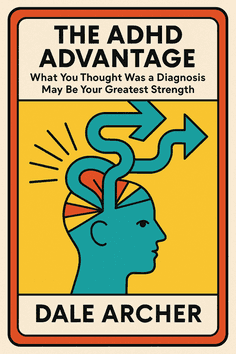
In a society that increasingly medicates what it doesn't understand, Dr. Dale Archer's "The ADHD Advantage" arrives as a revolutionary perspective. While 11% of American children now carry an ADHD diagnosis and 6% take medication-a staggering increase from just 600,000 medicated children in 1990 to 3.5 million today-Archer asks a provocative question: What if ADHD isn't a disorder at all, but an evolutionary advantage?
The evidence is compelling. JetBlue founder David Neeleman, Cisco CEO John Chambers, and Virgin Group's Richard Branson all credit their ADHD for their business success. Olympic champions Michael Phelps and Justin Gatlin thrived after discontinuing medication. Even historically, those with the "explorer gene" associated with ADHD were the restless villagers who became fearless leaders during crises, discovering new lands and survival methods. As Neeleman puts it, he wouldn't trade his ADHD for "normalcy" because it enables him to "distill complicated facts and come up with simple solutions." In our rapidly changing world, perhaps the ADHD mind-with its creativity, resilience, and ability to thrive in chaos-is exactly what we need.
2장
Born This Way: Reframing ADHD as a Difference, Not a Disorder
When Ty Pennington attended grade school in the 1970s, he was the quintessential hyperactive child-climbing out windows, swinging from blinds, and riding his desk like a jeep. Without an ADHD diagnosis available then, he was simply labeled a "problem child" and given antihistamines to keep him drowsy while teachers focused on students they deemed "worthy." His self-esteem suffered until he discovered soccer, which finally channeled his excess energy.
After his first year in college, Ty was diagnosed with ADHD. Though initially difficult to accept, the diagnosis helped him understand why he struggled with reading retention. His doctor, who also had ADHD, helped him recognize his strengths as a visual thinker. This self-awareness gave him courage to work as a carpenter while putting himself through art school.
When "Extreme Home Makeover" came along, it leveraged every ADHD strength Ty possessed: multitasking, risk-taking, boundless energy, calm amid chaos, quick transitions, and the ability to see both the whole project and its parts. The pressure of completing renovations in just seven days stimulated his brain and prevented boredom. "It was as if the job created itself for me," he says.
Today, Ty embraces his ADHD, even naming his business Art Design Home Decor (ADHD). His career perfectly suits his high energy, enthusiasm, curiosity, and low boredom threshold. By embracing his ADHD traits rather than suppressing them, he's carved an extraordinary path combining all his passions and strengths.
ADHD is fundamentally a combination of brain chemistry and genetics affecting the dopamine transporter gene and its receptors. Those high on the ADHD scale experience a rush from risk, deadline pressure, or chaos-situations that might cause anxiety in others. While the official diagnosis includes tendencies like difficulty focusing and disorganization, these "symptoms" can be reframed as strengths: multitasking ability, thriving in chaos, creative thinking, adventurousness, hyperfocus, resilience, high energy, calculated risk-taking, and calmness under pressure.
Successful people with ADHD excel precisely because they embrace their traits rather than viewing them as flaws. Entertainment lawyer Perry Sanders says, "People may not understand how my brain functions and view it as a problem, but it works well for me."
The nonlinear thinking characteristic of ADHD allows for remarkable creativity. Professional photographer Freddie's mind zigzags between ideas at warp speed, generating original concepts that help him capture visual moments others wouldn't notice. Howie Mandel's impulsivity launched his comedy career when he spontaneously performed at a comedy club with no prior experience. His most famous routines emerged spontaneously during performances-perfect examples of how impulsivity can fuel creativity.
The resilience of those with ADHD is equally impressive. Entrepreneur Benjamin Blanchard explains he "just doesn't have the attention span to dwell on setbacks." At just 27, his fearlessness has already yielded three thriving businesses. Similarly, JetBlue founder David Neeleman rebounded from his first failed venture to eventually create an airline worth $130 million.
This combination of traits-when properly channeled-creates individuals who can transform perceived weaknesses into their greatest strengths.
3장
A Diagnosis of Boredom: How We Medicalize Difference
If Mark Twain's Huckleberry Finn lived today, his fidgety restlessness and wanderlust would likely earn him an ADHD diagnosis and medication regimen. This highlights our problematic approach to ADHD. While awareness can be beneficial, labeling it a "diagnosis" automatically suggests the need for treatment, typically medication. We overlook the nuanced spectrum of ADHD, forcing diverse individuals into the same diagnostic box.
ADHD didn't exist as a diagnosis until 1980, when the DSM-III introduced the term. Initially called Attention Deficit Disorder, it evolved through several iterations before settling on ADHD in 1994 with three subtypes. In 2000, Adult ADHD was added, greatly benefiting pharmaceutical companies.
The diagnostic explosion has led to troubling patterns. William Evans, an economic statistics professor, revealed in 2010 that the strongest predictor for ADHD diagnosis was simply a child's age relative to classmates-younger children in any grade showed more ADHD-like behaviors. His research concluded that approximately 1.1 million children received inappropriate diagnoses, with over 800,000 unnecessarily prescribed stimulant medication due solely to relative developmental maturity.
While ADHD affects girls, diagnostic rates show three boys for every girl identified. Women often go undiagnosed until adulthood, frequently misdiagnosed with depression first. Girls typically exhibit different symptoms-poor self-esteem, worrying, perfectionism-rather than hyperactivity. Their risk-taking manifests more in social interactions rather than physical activity.
Psychiatry has taken on the troubling role of defining "normal" in society. As we shrink what's considered normal, the "abnormal" universe expands to include almost everyone, enabling the "we can fix you with a pill" mentality. The profession has gone from stigmatized to glamorized, while ignoring that psychiatric conditions occur along continuums rather than as on/off switches.
The continuum theory places psychological traits on a scale from 1 (none) to 10 (superdominant). Even scoring 9 or 10 on the ADHD continuum doesn't necessarily mean dysfunction or need for treatment. These traits aren't disorders but personality characteristics that contribute to our uniqueness.
We've become overzealous in treating every ADHD child, leading to diagnoses based on flimsy evidence. ADHD is now the second most frequent long-term diagnosis in children after asthma. This eagerness to label overlooks other potential causes of ADHD-like behavior-lack of sleep, anxiety, home problems-resulting in stimulant treatments that worsen problems. Even toddlers and infants are being medicated! Over 10,000 two- to three-year-olds on Medicaid receive ADHD medication, and shockingly, 1,422 infants under one year old.
No hard science exists for ADHD diagnosis-no blood test or brain scan-just a series of questions and assessments. Current diagnosis relies on subjective observations that emphasize negatives while overlooking strengths. The diagnostic threshold-six out of nine symptoms for children, five for adults-creates an artificial binary for what exists on a continuum.
The ideal ADHD diagnosis should come from a child psychiatrist specializing in the condition, but with only 8,300 such specialists compared to 54,000 family doctors in the US, most diagnoses fall to undertrained general practitioners. Most pediatricians receive minimal training-"a few hours of instruction" or "a PowerPoint presentation." Instead of proper observation across different environments, most doctors rely on brief evaluations from teachers and parents plus a five-minute interview with the child.
Mental health professionals need to ask tougher questions that consider the nuances of ADHD traits and individual strengths. When children first show symptoms, we should be telling them they're three times more likely to start their own business, will thrive in disruptive situations, embrace adventure, and excel at multitasking-not just handing them a diagnosis and medication.
4장
Pop-a-Pill Culture: The Overmedication Epidemic
Nine-year-old Cameron Alexander's struggles with focus following his parents' divorce led quickly to a Ritalin prescription that would haunt him for years. Though academically capable, he hated how the medication made him feel-insomnia, teeth grinding, sweating-and resented the daily reminder of his perceived defect. The pills kept him compliant but suppressed rather than addressed his behavior, while alternatives like channeling his energy into art were never seriously explored.
The medication followed him through high school and into college, where he began abusing and sharing his pills for social acceptance. After dropping out and drifting through odd jobs, Cameron found unexpected salvation in military service. The regimented environment with its physical demands, team dependency, and high-pressure situations perfectly engaged his ADHD brain. Off medication, he thrived: "I felt like a better, cleaner version of myself, and not someone who had just downed a gallon of coffee."
This pattern repeats among successful ADHDers like JetBlue founder David Neeleman and Olympians Michael Phelps and Justin Gatlin, who either never medicated or abandoned pills to embrace their natural strengths. "Once you learn how to manage it and can control your life through certain mechanisms, you will have a way of looking at the world that others don't have," explains Neeleman.
I don't reject ADHD medication entirely, but believe drugs should be reserved only for extreme cases-those rating 9 or 10+ on the continuum who cannot function otherwise. Stimulants like Ritalin and Adderall work by increasing dopamine and norepinephrine in the brain, reducing the need for self-stimulation through movement. While effective at helping people sit still and focus, medication alone is insufficient. As Dr. Oren Mason notes, "Pills without further therapy don't do much at all. You have to train this newly active part of the brain."
College students frequently trade prescription medications like baseball cards. A 2009 National Survey found college students were twice as likely to abuse Adderall as non-students. Emergency room visits from nonmedical stimulant use tripled between 2005-2010. This crisis stems from multiple culprits: pharmaceutical companies finding new billion-dollar markets, harried practitioners making diagnoses after brief consultations, psychiatrists with minimal psychotherapy training, overwhelmed teachers, stressed parents, and consumers demanding quick fixes.
Drug companies have aggressively oversold ADHD medication benefits, transforming common behaviors like forgetfulness into disorders requiring medication. They've been cited repeatedly by the FDA for misleading advertising. The pharmaceutical industry markets directly to children through subsidized comic books and pays doctors to publish pro-medication research that downplays risks. This aggressive marketing has increased ADHD medication sales from $1.7 billion in 2003 to over $10 billion in 2013.
Many mental health professionals misdiagnose ADHD cases that don't meet proper diagnostic criteria, leading to overmedication of normal behavior. Even when medication might be warranted, stimulants take a physical and mental toll. Side effects like sleeplessness, appetite loss, mood swings, and dry mouth affect nearly half of users. With the trend toward lifelong medication, concerns are growing about long-term effects including stunted growth, mood disorders, addiction risk, and compromised cognition.
When medication is appropriate, it should be used sparingly and thoughtfully. Mark Neeleman exemplifies this approach, taking Adderall only three days weekly to complete tedious tasks, while leaving his ADHD brain unrestricted the rest of the week to generate creative business ideas. The author argues that suppressing the ADHD "allergy to boredom" with daily medication can rob individuals of their unique strengths and energy.
5장
The Explorer Gene: Evolution's Gift to Innovation
The chapter opens with Trey Archer's realization during a flight that conventional corporate life would suffocate him. After failing to secure a traditional job post-graduation, he embraced uncertainty and found fulfillment through international travel and exploration. Now thriving as president of Panda Guides in China, Trey exemplifies the restless, adventurous spirit characteristic of those high on the ADHD spectrum.
Scientists have identified a genetic component to exploratory behavior-the "long allele of the dopamine transporter gene" or 7R variant, commonly called the "explorer gene." This gene is linked with novelty-seeking, hyperactivity, curiosity, and risk-taking. A 1999 UC Irvine study found populations with long migratory histories had higher prevalence of this gene. Researchers suggest these ADHD-associated traits may have been evolutionarily advantageous, particularly in prehistoric hunter-gatherer societies where constant vigilance and adaptability were essential for survival.
While not everyone with the 7R gene variant has ADHD, its persistence in about 20% of the population suggests evolutionary value. Studies show people with this genetic marker tend to embrace risk, exploration, and novelty across all aspects of life. Recent research extends this connection to creativity and problem-solving-schoolchildren excelling in hands-on science often display classic explorer characteristics, becoming absorbed in unconventional approaches to problems without needing instructions.
International chef Bobby Chinn exemplifies the restless explorer spirit. His wandering nature and curiosity were evident from childhood through his educational journey across continents. Never fitting in-partly due to his Egyptian/Chinese heritage-Bobby bounced between schools, colleges, and careers before discovering his passion for cooking. His ADHD-driven need for constant motion and novelty fueled his success establishing Vietnamese restaurants, hosting television shows, and creating fusion cuisines that earned international acclaim.
Bobby's inability to conform intensified as he aged, attending schools from San Francisco to Cairo to English boarding school. His restlessness manifested in an aversion to desk jobs, leading him through positions as research analyst, hedge fund trader, and stock exchange worker-all confirming his hatred for nine-to-five routines.
Through persistent trial and error, Bobby discovered his calling in cooking, convincing chef Hubert Keller to mentor him by offering to work for free. He eventually opened restaurants in Vietnam, reinventing local cuisine by fusing traditional recipes with contemporary techniques. His explorer nature drove him to keep moving forward-hosting television shows, writing books, and establishing restaurants in London.
Despite his success, Bobby struggles with burnout and racing thoughts that prevent sleep. Rather than medication, he's turned to mindfulness practices and technology prescribed by his neurologist-brief 10-minute sessions focusing on moving images through an iPhone app. Research shows such mindfulness exercises can "flex brain circuitry" for sustained mental focus, with studies demonstrating improvements comparable to ADHD medications.
The explorer gene has shaped many historical figures including Einstein, Edison, and Mozart, who was prolific, impatient, and restless from an early age, traveling across Europe while inventing new musical forms. Leonardo da Vinci embodied this trait as the ultimate Renaissance multitasker-creating art while simultaneously working as scientist, engineer, anatomist and inventor, designing flying machines centuries ahead of his time. Steve Jobs, though never formally diagnosed, has become an ADHD role model who "thought different," revolutionizing technology with ideas others dismissed until they proved transformative.
6장
Learning with ADHD: Reimagining Education for Different Minds
Small-town Texas doctor Mike Watson was brilliant but struggled academically-unable to sit still, forgetting homework, and having to derive math formulas from scratch because he couldn't memorize them. For millions of children with ADHD, traditional education systems are set up for failure, leading to unnecessary medication and stigma. The problem isn't the children but rather forcing them to sit still in overcrowded classrooms that don't accommodate their learning style.
Tatiana, struggling with focus and retention in traditional classrooms after her Montessori preschool experience, took matters into her own hands at age thirteen. Driven by competitiveness, she researched behavioral psychology and developed personalized learning techniques-reading aloud under her breath, running her finger along text lines, and taking margin notes. She mastered association by connecting new concepts with existing knowledge through analogies and stories.
IT entrepreneur Gordon Sanders struggled academically throughout his life, getting repeatedly expelled from university despite his intelligence. When he moved to China and needed to learn Mandarin, traditional rote memorization methods failed him completely. His breakthrough came when he leveraged the visual nature of Chinese characters, studying them as pictograms with associations and compounds. By finding relationships between characters and reinforcing them through online games, Gordon's nonlinear "bingo brain" mastered Mandarin in months.
Experimentation is key for ADHD learners, who can achieve extraordinary results when their passion enables hyperfocus. UK teacher Jane Beckley explains the fundamental compatibility issue: "Traditional schools run on Microsoft, but these kids are Macs. Their software is not compatible. Put them on Apple software and they will fly."
ADHD children particularly need mentors who recognize their potential. Tichelle Harris, who discovered her own ADHD when her son was diagnosed, switched from finance to teaching to make this difference. She transformed her classroom by using visual presentations, student-led discussions, and Monday conversations to discover students' passions and incorporate them into lessons. By challenging belief systems and flowing quickly between topics, she engages ADHD minds that resist rigid structure.
While exceptional teachers like Tichelle exist in public schools, they're constrained by standardization and limited resources. Private schools specializing in ADHD are pioneering better approaches, emphasizing learning diversity rather than disability. Eagle Hill School in Massachusetts rejects the term "learning disabilities," instead embracing "learning diversity" for its predominantly ADHD student body. Rather than applying standardized approaches, the school develops customized curricula for each student through what Headmaster P.J. McDonald calls "ad hocracy"-adapting constantly to individual needs rather than following rigid bureaucracy.
Eagle Hill empowers students through its Seminar on Learning course, where they explore their strengths and develop language to express their needs to teachers. The school's innovative nine one-month terms allow students to sample subjects until something clicks-ideal for ADHD minds. Full-time life coaches help with organization and time management, preparing students for college independence. The results speak volumes: 96% of Eagle Hill students attend college, with 71% graduating within six years-dramatically outperforming the 15-20% national average for students with learning differences.
Even without access to specialized schools, parents can create supportive environments for ADHD children. Dr. Oren Mason, an ADHD specialist who discovered his own son had ADHD, emphasizes providing consistent structure at home to counterbalance the "unstructured" ADHD brain. Parents should expose children to diverse experiences to help them discover their passions, then fully support those interests when found.
ADHD children often need unconventional study methods that contradict traditional approaches. Exercise is crucial for ADHD learning environments. Dr. John Ratey, Harvard psychiatry professor and author of "Spark," collaborates with Eagle Hill on their athletic facility where students must engage in intense physical activity before evening study sessions. Exercise raises dopamine levels, improving focus and reducing impulsivity.
Despite evidence that physical activity helps ADHD students reset and focus, 44% of U.S. schools have cut PE, recess and arts programs-precisely the interactive experiences these children need most. Making classroom adaptations for these children is a small investment compared to the billions spent on medications. These uniquely brilliant minds-potential future Neelemans, Bransons and Mozarts-deserve our investment rather than being written off by middle school.
7장
Resilience: The Superpower of Bouncing Back
David Neeleman's entrepreneurial journey exemplifies the remarkable resilience common among ADHDers. After dropping out of college and losing his first business when an airline partner went bankrupt, Neeleman co-founded Morris Air, which sold to Southwest for $130 million. Though fired from Southwest with a five-year non-compete clause, he used this setback to found Open Skies, help launch WestJet, and eventually create JetBlue and later Azul in Brazil. His ability to repeatedly bounce back from devastating failures demonstrates a core ADHD strength: resilience.
A small but significant Elon University study confirmed this trait, finding ADHD college students more adaptive and resilient than their neurotypical peers. This makes sense-ADHDers have lifelong practice handling setbacks from forgetfulness, procrastination, and distraction. This resilience combines optimism, adaptability, resourcefulness, and an ability to rebound quickly from disappointment.
Aaron Smith's story illustrates how "turnaround people" can transform an ADHD child's life. Despite crushing academic struggles, family stress, and an abusive stepfather, three educators saw Aaron's potential beneath his behavioral issues. A sixth-grade dean recognized his natural brightness, a high school English teacher called him gifted, and a school psychologist noticed his compassion for others. These mentors shifted Aaron's self-perception, igniting resilience that helped him overcome a 1.5 GPA in college to eventually earn two undergraduate degrees and a master's from Columbia. Today, Aaron runs Potential Within Reach, becoming a "turnaround person" for other ADHD youth.
Successful ADHDers often view their challenges as gifts that forged their resilience. Aaron wouldn't change his difficult experiences, noting that "resilience is really persistence, a kind of stubbornness and strong will." David Neeleman agrees that ADHDers must "get creative and find our own way" when conventional paths fail. Malcolm Gladwell calls ADHD a "strategic disadvantage" that teaches essential entrepreneurial skills-delegation, leadership, communication, and problem-solving-through years of compensation learning.
ADHDers' ability to hyperfocus during crises may explain their exceptional resilience. Real estate developer Joseph exemplifies this-after being publicly arrested on false charges that destroyed his reputation and forced bankruptcy, he remained remarkably upbeat. Rather than dwelling on past injustices, Joseph hyperfocuses on his next project: "It's my medication; my therapy."
Self-deprecating humor is another resilience tool common among ADHDers. Comedian Howie Mandel exemplifies this ability to rebound after public failures. After a disastrous appearance on The Tonight Show involving an absurd plaster tiger prop that got him banned by Johnny Carson-career suicide for most comics-Mandel simply moved forward. He quotes Churchill: "Success is the ability to go from one failure to another with the same vim and vigor as the last."
Compassion drives many successful ADHDers to help others facing similar struggles. Aaron coaches ADHD youth, while Howie Mandel and David Neeleman use their platforms to raise awareness about ADHD's positive aspects. As ADHD coach Carol Gignoux notes, "Since ADHDers know what it feels like to be marginalized, they are deeply compassionate people."
8장
Bingo Brain: The Power of Nonlinear Thinking
My ADHD clients describe their thinking as resembling a bingo machine-thoughts ricocheting and making unexpected connections in rapid succession. Perry Sanders, a successful attorney who represented Michael Jackson's mother, calls this his greatest strength. His nonlinear thinking creates seemingly crazy ideas that become elegant solutions. While linear thinkers move sequentially from A to B, his panoramic vision allows him to see interconnections others miss. "People assume it's a tangent, but in reality it's the tangent that's the answer," Perry explains, citing how this thinking helped him win a precedent-setting class action lawsuit when he realized what plaintiffs had in common was that they "did not know what they had in common."
The downside of bingo brain is that it can overwhelm others and lead to poor follow-through. Brian Scudamore, CEO of 1-800-GOT-JUNK?, found his constant stream of ideas frustrated his team who called them his "flavor of the month." To harness his creativity productively, Brian created a system-emailing ideas to himself with "new idea" in the subject line, reviewing them quarterly rather than immediately acting on each one. This filtering system revealed that a third of his "brilliant" ideas weren't so great upon reflection, reducing distractions by 33 percent while preserving his creative process.
Many ADHDers struggle with their "tornado of ideas." Interior designer Anita Erickson found that at her previous job at Dell, her mind would wander in the seconds between clicking a link and seeing a webpage load. Her solution is constant list-making-writing (not typing) thoughts on Post-it notes and scraps of paper throughout the day. Though 90% might be unimportant, getting ideas onto paper calms her mental storm and occasionally reveals gems.
Setting enticing "juicy" goals helps channel the bingo brain's energy productively. ADHD coach Shanna Pearson warns that without implementation, mental hyperactivity creates a false sense of achievement-thinking feels like doing. She recommends allowing free-flowing thought during downtime but being selective about which ideas deserve action.
The nonlinear ADHD mind often sees connections several steps ahead of others, which can make communication challenging. Emily Anhalt notes that ADHDers' energetic thinking style can unintentionally cause offense if not filtered appropriately. Christopher Lauer, head of Germany's Pirate Party, acknowledges that his decisions appear irrational to outsiders though they make perfect sense to him. Despite being described as an "intellectual force" with remarkable ability to recall complex facts, Christopher struggles to bring others along with his rapid-fire thinking.
While bingo brains can be distracting and lead to misunderstandings, suppressing this gift to be "more normal" is a mistake. Mark Neeleman demonstrates balance by dedicating three specific days weekly to indulge his free-roaming mind, coming off ADHD medications on Wednesdays to allow creative thinking. During these sessions, he developed a sustainable bamboo plywood business concept, connecting carbon emissions, deforestation solutions, and construction materials in classic bingo-ball fashion.
Lisa Castenada leverages her bingo brain by finding a career that demands innovative thinking. Through her educational nonprofit, she connects seemingly unrelated elements-like video games with learning or deejays with educational subjects. Her ability to weave threads between disparate worlds creates unique learning programs. This connecting of "random dots" is precisely why her nonprofit hired her-they wanted someone who could see through a different lens.
Spanish photographer Guadalupe's distinctive work stems from her nonlinear perception. She captures unexpected beauty by noticing how "people talk with their whole bodies" and how ordinary objects "suddenly come alive." Since childhood, she's perceived inanimate objects as having presence-not through anthropomorphizing them, but by noticing overlooked details others miss.
Successful ADHDers consciously direct their bingo brains toward positive outcomes. The bingo brain is an ADHD superpower that, when used wisely, can bounce you toward greatness rather than catastrophe.
9장
The Entrepreneur's Superpower: ADHD in Business
Shane Jordan's revelation came while watching security footage from one of his six computer repair stores. While his staff remained stationary, he appeared in fast-forward mode, buzzing constantly between tasks, never sitting still for more than thirty seconds. This was his lightbulb moment-his ADHD wasn't a curse but his entrepreneurial superpower.
Growing up undiagnosed until his teens, Shane struggled in school despite high IQ scores. Teachers predicted he'd never succeed. Though he studied pre-law in college, he wisely recognized that sitting in an office reviewing contracts wouldn't suit him. Instead, he leveraged his "computer nerd" skills into Repairs World, a thriving tech repair company.
His business perfectly harnesses his ADHD strengths: his need for variety (managing six shops requires constant multitasking), his problem-solving abilities (each technical issue presents a unique challenge), and his capacity to hyperfocus on researching new business ideas. His resilience helped him persevere through early business mistakes when others might have quit, and his calculated risk-taking-investing all his savings to start his company-paid off handsomely.
Research confirms that self-employment and entrepreneurship are dominant traits in individuals with ADHD. A UK twin study found that the "explorer gene" variation has enormous influence on business ownership. This makes evolutionary sense-those with ADHD in prehistoric times constantly sought fresh hunting grounds and new settlements, feeling restless with village life.
Johan Wiklund's preliminary research identifies several ADHD traits that benefit entrepreneurs:
• Resilience developed from overcoming early life challenges provides the perseverance needed to weather business setbacks
• Impulsivity enables rapid decision-making when opportunities would be lost to extensive analysis
• Hyperfocus allows extreme productivity and expertise development when business aligns with passion
• "Productive action under uncertainty" - thriving in chaos and taking action despite high uncertainty
• High energy and reduced sleep needs - many ADHD entrepreneurs routinely work unusual hours
One crucial ADHD strength often overlooked in research is the desire to multitask-a perfect fit for entrepreneurship. Start-up owners must constantly juggle sales, R&D, administration and payroll, darting between tasks until they can afford to delegate. This role is tailor-made for the ADHD brain.
An "ADHD pride movement" is emerging as prominent entrepreneurs embrace their diagnoses. Paul Orfalea, Kinko's founder, couldn't write letters or fix copiers, but his wandering nature was perfect for moving between stores, observing customers, and understanding the big picture of his service business.
Sir Richard Branson's Virgin Mobile ads inadvertently showcase his ADHD traits-depicting him as constantly rushing to the next thing, from childhood businesses to adult ventures. His success stems from curiosity, distractibility and a short attention span that drove him to create entirely new industries and business models.
Self-awareness helps unleash entrepreneurial superpowers. Benjamin Blanchard discovered during engineering school that he was more social than analytical, preferring interaction over desk work. His ADHD-fueled sales ability led him to set leasing records during a summer job. Through networking, he launched multiple successful businesses-painting, janitorial, transportation, medical sales-each sparked by random conversations that ignited his multitasking brain.
Bucky Buckman channeled his ADHD energy into entrepreneurship from an early age. While earning average grades, his passion was for numbers with dollar signs. At sixteen, he transformed a bicycle repair job into sales opportunities, getting an "adrenaline rush" that became "his cocaine." His ADHD-driven risk tolerance led him to purchase foreclosed properties when others warned against gambling with his family's future. His ability to "make rapid-fire decisions with limited information" and communicate them confidently proved invaluable.
Brian Scudamore discovered entrepreneurship before finishing college when he bought a $700 pickup truck to start a hauling business. Twenty-five years later, it's grown into a $150 million empire with 200 locations across three countries. He's since founded two additional successful businesses. Brian views ADHD as "a badge of honor in the entrepreneurial world" and "a gift, not a weakness" that drives his success.
Successful ADHD entrepreneurs develop tools to enhance their strengths while minimizing potential downsides. Brian recommends creating a "painted picture" of your company's future vision. When new ideas emerge, ask "Will this bring me closer to my vision?" He implements a "Top 3" system-listing three weekly priorities that advance his vision, then creating daily tasks to achieve these weekly goals.