1장
Beyond Test Scores: The Hidden Science of Success
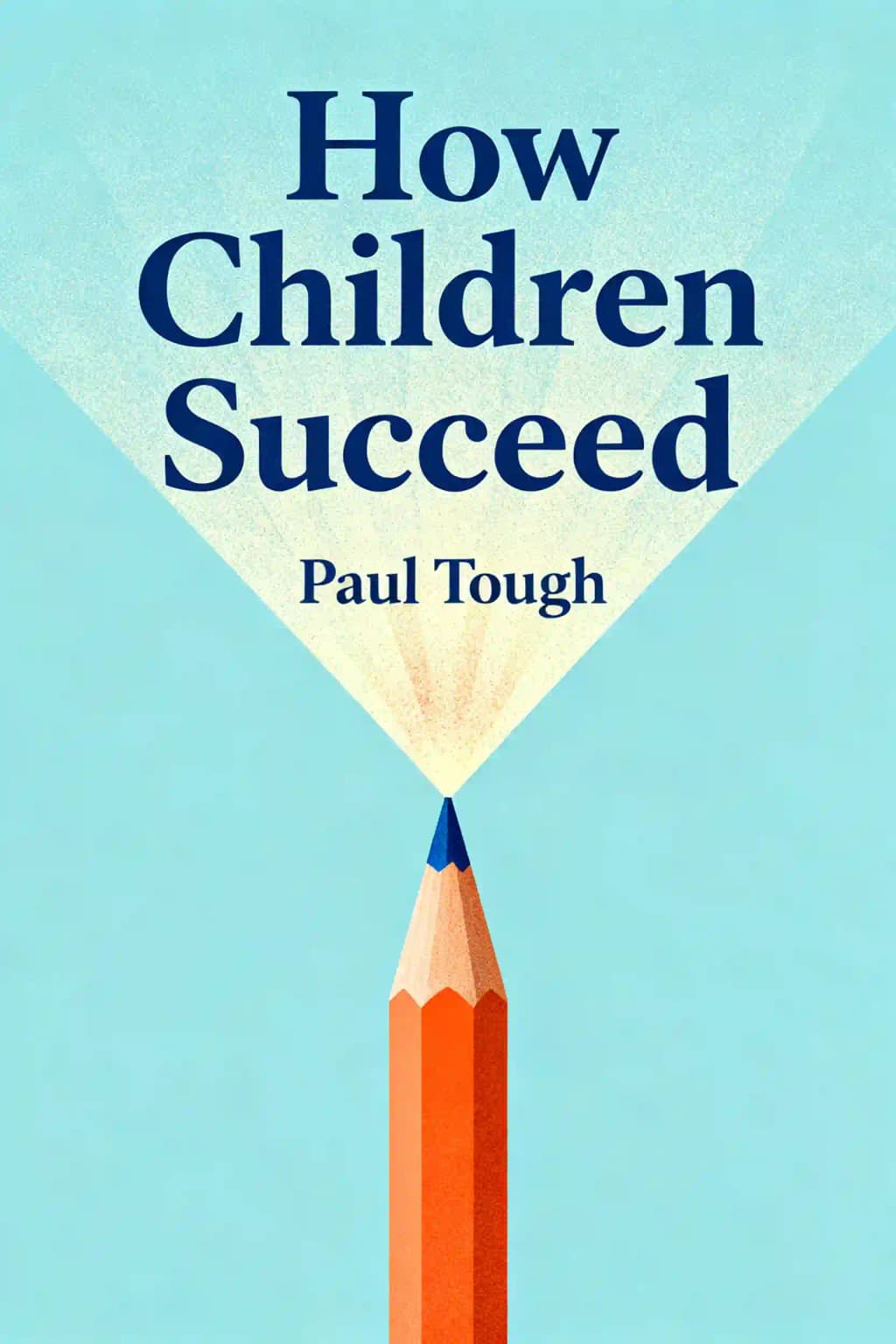
When Paul Tough visited a prekindergarten classroom in New Jersey shortly after his son's birth, he witnessed something remarkable. Unlike traditional early childhood programs drilling ABCs and 123s, this classroom used the Tools of the Mind curriculum to develop self-regulation-teaching children to control impulses, maintain focus, and organize thoughts. The result was astonishing: a calm, orderly classroom without conventional discipline techniques.
This experience made Tough question America's obsession with early cognitive achievement-what he calls the "cognitive hypothesis." This belief that success depends primarily on measurable intelligence has spawned industries of "brain-building" products and influenced education policy nationwide. Oprah Winfrey has featured multiple books on early brain development, and the Obama administration's education policies reflected this cognitive-first approach.
However, a growing coalition of researchers is challenging this hypothesis. Their evidence suggests what matters most isn't stuffing information into children's brains but developing qualities like persistence, self-control, curiosity, grit, and self-confidence-what economists call "noncognitive skills" and others call character. At the center of this research network is Nobel laureate James Heckman, whose groundbreaking studies reveal that character might be the missing ingredient in America's recipe for success.
2장
The Character Revolution: How Science is Redefining Success
James Heckman's career transformation began with his groundbreaking study of the GED program in the late 1990s. The General Educational Development (GED) program's widespread popularity was founded on what seemed like a logical premise - the cognitive hypothesis. This hypothesis suggested that if someone possessed sufficient knowledge to pass a comprehensive equivalency test, they should be considered academically equal to any traditional high school graduate. The program's reach was substantial: by 2001, nearly one in five new high school "graduates" had actually obtained their credentials through the GED program.
Through rigorous analysis of multiple national databases, Heckman uncovered a startling paradox that would challenge fundamental assumptions about education. While GED recipients demonstrated cognitive abilities equivalent to high school graduates on standardized achievement tests, their life trajectories diverged dramatically. The statistics were stark: at age twenty-two, merely 3 percent of GED recipients were enrolled in four-year universities, compared to 46 percent of traditional high school graduates. More troublingly, GED holders showed patterns remarkably similar to high school dropouts across multiple life outcomes - comparable rates of unemployment, similar income levels, equivalent rates of divorce, and parallel patterns of substance abuse - despite possessing demonstrably higher cognitive capabilities.
The missing element became clear through Heckman's research: psychological traits and character skills that enabled high school graduates to persist through challenges. These included crucial abilities such as delaying gratification, maintaining focus on long-term goals, following through on commitments, adapting to various social environments, and managing stress effectively. The GED had inadvertently become, in Heckman's words, "a test that separates bright but nonpersistent and undisciplined dropouts from other dropouts."
Seeking solutions to develop these essential "soft skills," Heckman's investigation led him to the Perry Preschool Project in Ypsilanti, Michigan - a program that would revolutionize our understanding of early childhood development. Though initially deemed unsuccessful because early IQ gains didn't persist into adulthood, long-term tracking revealed remarkable outcomes. Perry students demonstrated significantly higher rates of high school graduation, sustained employment, higher lifetime earnings, and lower rates of criminal behavior and welfare dependency. Heckman's detailed analysis of previously unexplored data revealed a crucial insight: noncognitive factors - including curiosity, self-control, social adaptability, and emotional regulation - accounted for approximately two-thirds of the program's positive impacts.
This revelation has profound implications for education policy and our understanding of human development. It challenges the conventional wisdom that academic achievement alone predicts life success. What if our educational system's intense focus on standardized testing and cognitive skills is fundamentally misaligned with what truly matters for long-term success? What if the development of character traits, emotional intelligence, and social skills deserves equal or greater attention than traditional academic metrics? What if the key to unlocking human potential lies not primarily in what children know, but in who they become as individuals? These questions have sparked a paradigm shift in how we think about education, success, and human development in the 21st century.
3장
The Biology of Adversity: How Stress Rewires Children's Brains
The science of adversity reveals how childhood stress literally rewires developing brains. When danger appears, the body's stress-response system triggers a cascade of chemical signals through the HPA axis (hypothalamic-pituitary-adrenal), releasing hormones that activate defensive responses-from conscious reactions like fear to less apparent effects like inflammatory protein surges.
As Robert Sapolsky explains in "Why Zebras Don't Get Ulcers," our stress-response evolved for brief, acute dangers, not chronic worries. The problem isn't stress itself but the body's reaction to it. Bruce McEwen's concept of "allostatic load" describes how repeated activation of stress management systems creates physical wear and tear throughout the body.
The HPA axis works like an overzealous firehouse-responding to every alarm by sending out all possible resources simultaneously. This "firehouse effect" means stress responses are often excessive and inappropriate for actual situations, like when your mouth goes dry before public speaking because your body is conserving fluids for a nonexistent physical threat.
The prefrontal cortex, critical for self-regulation, is particularly vulnerable to early stress. Children from stressful environments struggle to concentrate, sit still, rebound from disappointments, and follow directions. These effects manifest as both emotional dysregulation and cognitive impairment, particularly affecting "executive functions"-higher-order mental abilities that help manage confusing information.
A 2009 Cornell study revealed why executive function skills correlate strongly with family income. Using the electronic game Simon to test working memory in 195 seventeen-year-olds, researchers discovered that children who spent more time in poverty performed worse. However, when they factored out allostatic load-the physical effects of stress measured through biological indicators like blood pressure and cortisol levels-the poverty effect disappeared completely. It wasn't poverty itself compromising executive function, but the stress accompanying it.
This finding is significant because executive functions are highly malleable, more so than other cognitive skills, and the prefrontal cortex remains flexible well into early adulthood-making targeted environmental improvements potentially very effective for increasing a child's prospects.
4장
The Power of Attachment: Nature's Antidote to Toxic Stress
Despite the daunting research showing how early stress damages children's development, neuroscientists have discovered a powerful antidote: parental nurturing. Michael Meaney's groundbreaking research with rats revealed that mother rats who frequently licked and groomed their pups produced offspring that were dramatically different from those raised by less attentive mothers. The highly-nurtured rats were braver, more social, less aggressive, had better self-control, and even lived longer.
Through careful experiments, Meaney proved these differences weren't genetic but environmental. When researchers cross-fostered pups between high-nurturing and low-nurturing mothers, the outcomes followed the rearing mother's behavior, not the biological mother's traits. Most remarkably, this maternal nurturing affected gene expression through methylation, literally "switching on" genes that controlled stress response in the hippocampus.
This rat licking-and-grooming effect has a human parallel in attachment theory. Researchers have found that responsive parenting creates a similar protective buffer against stress in human children. Clancy Blair's study of 1,200 infants showed that when mothers were attentive and responsive, environmental stressors had minimal impact on children's cortisol levels.
This contradicts earlier behaviorist theories that warned against "spoiling" babies by responding to their cries. Mary Ainsworth and John Bowlby demonstrated in the 1960s that the opposite was true-infants whose parents promptly responded to their emotional needs became more independent and self-reliant.
The Minnesota study by Sroufe and Egeland tracked 267 low-income mothers and their children from birth into adulthood, providing compelling evidence of attachment's lasting effects. Children with secure attachment at age one were significantly more socially competent throughout childhood. By age ten, secure children showed greater self-confidence and curiosity. Remarkably, early parenting quality predicted high school graduation more accurately than IQ or test scores-with 77% accuracy by age four.
These findings have inspired effective interventions like Alicia Lieberman's child-parent psychotherapy. In one study by Dante Cicchetti, maltreating families receiving this therapy saw secure attachment rates rise from virtually zero to 61% after one year. This demonstrates that attachment problems can be effectively remedied even in challenging circumstances-offering hope for breaking intergenerational cycles of disadvantage.
5장
Character Education: Teaching the Intangible
When KIPP Academy's 1999 class achieved the highest test scores in the Bronx, they became education celebrities. Their success story, featuring predominantly Black and Hispanic students from low-income families, inspired the Gap founders to fund KIPP's national expansion. Despite immersion in college-focused culture, only 21 percent completed four-year degrees.
This sobering reality led KIPP co-founder David Levin to reevaluate his approach. He noticed that those who persisted weren't necessarily the academic stars, but rather students with particular character strengths-optimism, resilience, and social agility. After reading Martin Seligman's "Learned Optimism," which argues that optimism is a learnable skill, Levin began fundamentally rethinking KIPP's character development approach.
Simultaneously, Dominic Randolph, headmaster of the prestigious Riverdale Country School, was questioning similar issues from the opposite end of the socioeconomic spectrum. Despite leading a competitive school with $38,500 annual prekindergarten tuition, Randolph eliminated AP classes, limited homework, and criticized standardized testing as "patently unfair" for evaluating students primarily on IQ. "This push on tests," he argued, "is missing out on some serious parts of what it means to be a successful human."
These two educators from vastly different schools formed an unlikely partnership with Angela Duckworth, then a postdoctoral student under Seligman. Duckworth, a Harvard graduate and former McKinsey consultant, had come to believe that character was "at least as important as intellect" in education. Her first-year thesis studying 164 eighth-graders revealed that self-discipline scores better predicted final GPAs than IQ scores.
Working with Peterson and Seligman's "Character Strengths and Virtues," they narrowed down twenty-four character strengths to seven key traits most predictive of life satisfaction and achievement: grit, self-control, zest, social intelligence, gratitude, optimism, and curiosity. Duckworth developed a two-page evaluation tool with twenty-four reliable indicators that could be completed by teachers, parents, or students themselves.
Levin embraced the idea of grading students on character, envisioning a "character point average" (CPA) alongside the traditional GPA. At Riverdale, however, Randolph approached character assessment more cautiously, concerned that quantifying character might lead to "gaming" the metrics.
This difference reflected deeper philosophical divides about character education. The seven strengths Levin and Randolph selected leaned toward "performance character"-qualities that drive achievement rather than ethical behavior. Many Riverdale staff continued to define good character primarily in moral terms rather than performance terms.
6장
The Paradox of Privilege: Why Affluent Children Struggle
While KIPP students faced obvious challenges from poverty and unstable environments, Riverdale teachers observed that affluent students struggled with their own distinct character development issues. Despite their financial privilege, many seemed emotionally disconnected from their "helicopter parents" who hovered anxiously over every aspect of their lives but didn't necessarily forge meaningful emotional connections. These parents often substituted material comfort and academic intervention for genuine engagement, creating what psychologists termed "affluent neglect."
The screening of "Race to Nowhere" at Riverdale highlighted growing concerns about privileged adolescents' mental health. The documentary revealed a generation of high-achieving students who were burning out under intense pressure to excel in everything from academics to extracurriculars. Psychologist Madeline Levine's extensive research showed that children of affluent parents exhibit "unexpectedly high rates of emotional problems," including anxiety disorders, eating disorders, and self-harming behaviors. Studies by Suniya Luthar revealed that wealthy teenagers used substances more frequently than low-income peers - particularly prescription drugs and cocaine - and suffered elevated rates of depression, with girls showing especially concerning patterns.
The main cause of distress among affluent children was "excessive achievement pressures and isolation from parents-both physical and emotional." Many students reported feeling like their worth was entirely tied to their achievements, creating a perpetual sense of inadequacy. Harvard professor Dan Kindlon found that affluent parents were often unusually indulgent of bad behavior, perhaps out of guilt for their emotional absence or fear of damaging their children's self-esteem. At Riverdale, teachers regularly observed parents rushing to intervene at the first sign of academic difficulty, writing emails to challenge grades, or hiring expensive tutors rather than allowing their children to struggle and learn from setbacks.
Randolph faced a particularly delicate challenge implementing character education at Riverdale, as wealthy parents chose the school partly as a "risk-management strategy" to ensure their children maintained upper-class status. Many viewed any possibility of failure as an unacceptable risk to their children's future prospects at elite colleges. Yet Randolph firmly believed students needed to experience real possibility of failure to build character - something rarely allowed in elite academic environments where parents expected guaranteed success.
This reveals a profound paradox: while disadvantaged children often develop grit through necessity, learning to overcome obstacles with limited resources, privileged children may lack opportunities to develop resilience precisely because they're protected from adversity. Their parents' well-intentioned efforts to smooth every bump in the road actually prevented the development of crucial coping skills. As William James noted, virtues are simply habits-creases in our neural "paper" formed through repetition. Without practice facing and overcoming challenges, these habits never form, leaving affluent students surprisingly vulnerable when they eventually face real-world difficulties they can't buy or negotiate their way out of.
7장
The Chess Master's Mind: How Metacognition Builds Excellence
In Columbus, Ohio, Elizabeth Spiegel watched anxiously as her chess team from IS 318 in Brooklyn competed in the national tournament. This Title I school where 87% of students qualified for federal lunch subsidies had become indisputably the best middle-school chess program in the United States, consistently beating prestigious private schools like Trinity, Collegiate, Spence, Dalton, and Horace Mann.
Spiegel's teaching approach focused on developing executive functions-particularly cognitive flexibility (seeing alternative solutions) and cognitive self-control (inhibiting instinctive responses for more effective ones). "Teaching chess is really about teaching the habits that go along with thinking," she explained, "like how to understand your mistakes and how to be more aware of your thought processes."
Unlike conventional chess instruction that relies on studying books, Spiegel constructed lessons based on analyzing students' actual mistakes from tournaments. She had them confront errors directly, playing out alternative scenarios to understand consequences-an uncomfortable but effective approach. "Very rarely do kids have an experience in life of losing when it was entirely in their control," she noted.
A key mental skill that distinguishes chess masters is "falsification"-the ability to overcome confirmation bias. While novices see only how their moves might succeed, experts actively look for potential pitfalls. Yet Spiegel notes that while tactical pessimism helps, strategic optimism is equally important-players need confidence in their ability to win.
The mastery of chess exemplifies Anders Ericsson's theory that true expertise requires thousands of hours of deliberate practice. To explain chess's allure, Spiegel references Mihaly Csikszentmihalyi's concept of "flow"-that optimal state of complete absorption when a person is stretched to their limits in a worthwhile pursuit.
"I think it's really liberating for kids to understand what it's like to be passionate about something," Spiegel explains, arguing that chess gives children memorable experiences rather than a childhood blur of boredom. This passion connects directly to Angela Duckworth's definition of grit-the sustained dedication to meaningful long-term goals that predicts success across domains.
8장
The College Completion Crisis: Rethinking Higher Education Success
While the United States once led the world in college graduation rates, it has fallen to twelfth place among developed nations. American college completion has grown sluggishly from 24 percent in 1976 to just 28 percent in 2006, while other countries have rapidly advanced.
This stagnation masks a growing class divide-college attainment among wealthy students with college-educated parents rose from 61 to 68 percent between 1990-2000, while actually declining from 11.1 to 9.5 percent among the most disadvantaged Americans. The problem isn't merely college access-the US still ranks eighth in enrollment-but completion. America now ranks second-to-last in college completion rates among developed nations.
The most illuminating research on this crisis came from economists William Bowen and Michael McPherson's 2009 book "Crossing the Finish Line." With access to detailed academic data from 68 public colleges covering 200,000 students, they discovered that disadvantaged students were "undermatching"-attending schools below what their academic credentials qualified them for. This undermatching actually decreased their graduation chances.
Their most shocking finding was that high school GPA, not standardized test scores, was the strongest predictor of college completion. When Angela Duckworth analyzed the data, she found standardized tests correlated with IQ, while GPA correlated with self-control. The researchers concluded that high school grades reveal crucial qualities of "motivation and perseverance" that predict college success more accurately than raw intelligence.
This insight inspired Jeff Nelson to create OneGoal, an organization helping disadvantaged students not just get into college but complete degrees. Nelson's three-part curriculum includes intensive ACT prep, a comprehensive "road map to college," and development of non-cognitive skills. Drawing on research by Melissa Roderick identifying the mismatch between high school and college expectations, Nelson focused on five leadership principles: resourcefulness, resilience, ambition, professionalism, and integrity.
OneGoal's approach challenges Charles Murray's cognitive determinist argument that too many low-IQ students attempt college beyond their intellectual abilities. Instead, Nelson argues that noncognitive skills like resilience, resourcefulness and grit can help disadvantaged students compensate for educational inequality. The early results are promising-84% of one cohort persisted in college, with 94 students at four-year schools and 14 at two-year institutions.
9장
A Better Path: Reimagining Child Development and Education
The science of character development offers a powerful new lens for addressing persistent social problems. While Americans disagree on specifics, most believe government should help alleviate poverty and provide opportunities. Despite 87-94% of Americans supporting equal opportunity, public conversation about poverty has faded since the 1960s, even though poverty rates remain high (15.1% overall in 2010, with child poverty at 22%).
This silence stems partly from the psychological scars left by the War on Poverty's mixed results. Meanwhile, the poverty debate merged with education discussions as research showed academic achievement strongly predicts life outcomes regardless of background. The emergence of KIPP schools and similar institutions that seemingly defied the achievement gap created a powerful syllogism: test scores correlate with life outcomes, low-income children score worse than middle-income peers, but certain schools can substantially raise these scores.
However, discussing family influence on poor children's outcomes creates discomfort. Education reformers prefer locating obstacles within schools, while skeptics blame impersonal factors like environmental toxins or inadequate healthcare. Both avoid acknowledging what science reveals: the biggest obstacles are high-stress homes and communities, plus absence of secure caregiver relationships.
This avoidance stems from three factors: the science is complex and poorly understood; discussing others' parenting practices feels inappropriate, especially across racial and economic lines; and the findings challenge both liberal and conservative beliefs. The science confirms character matters deeply-conscientiousness, grit, resilience-but contradicts conservative arguments by showing these traits aren't innate or simply choices. They develop through brain chemistry shaped by environment, meaning society can intervene effectively.
The economic argument for early intervention is compelling-programs supporting low-income parents would cost less than later remediation. But the personal argument resonates more deeply: children like Kewauna Lerma, who overcame tremendous obstacles to achieve a 3.8 GPA in her first year of college, deserve better. Their remarkable efforts to remake themselves deserve not just applause but systematic support to help others take those first difficult steps toward success.
By understanding the science of character development-from the neurochemistry of stress to the psychology of attachment-we can create more effective interventions that address the root causes of inequality. This approach doesn't diminish the importance of cognitive skills but recognizes that character qualities provide the foundation upon which academic success can be built. The challenge now is translating this knowledge into practices and policies that give all children the opportunity to develop the full range of skills they need to thrive.
10장
The Science of Hope: Building Resilience in a Challenging World
The research on character development offers profound hope for addressing persistent social challenges. While we can't eliminate all adversity from children's lives, we can provide the buffers that help them develop resilience in the face of challenges. The most powerful of these buffers is secure attachment to caring adults who provide both emotional support and appropriate boundaries.
For parents like Paul Tough himself, this research transforms the approach to raising children. Rather than focusing exclusively on cognitive development through flashcards and educational videos, it suggests paying equal attention to developing qualities like perseverance, self-control, and curiosity. This means allowing children to experience appropriate challenges while providing the emotional security they need to take risks and recover from failures.
For educators, it means recognizing that teaching character isn't separate from teaching academics-it's the foundation that makes academic learning possible. Schools like KIPP are demonstrating that explicit character education, integrated throughout the curriculum and school culture, can help students develop the noncognitive skills they need to succeed not just in school but in life.
For policymakers, it suggests a fundamental reorientation of priorities. Rather than focusing exclusively on academic standards and test scores, effective education policy would support the development of the whole child, including social and emotional skills. This might include funding for programs that strengthen families, support for evidence-based character development curricula, and recognition of noncognitive outcomes in school accountability systems.
The science of character development reminds us that success isn't just about what we know-it's about who we become. By understanding the complex interplay of biology, psychology, and environment that shapes character, we can create more effective interventions that help all children develop the qualities they need to thrive. In doing so, we might finally make progress on the persistent problems of poverty and inequality that have resisted decades of well-intentioned efforts.
As we move forward, the question isn't whether character matters-the evidence clearly shows it does-but how we can create environments where all children have the opportunity to develop the character strengths that will help them succeed. The answer lies not in simplistic prescriptions or ideological certainties but in a nuanced understanding of human development that recognizes both the challenges children face and their remarkable capacity for growth and resilience.