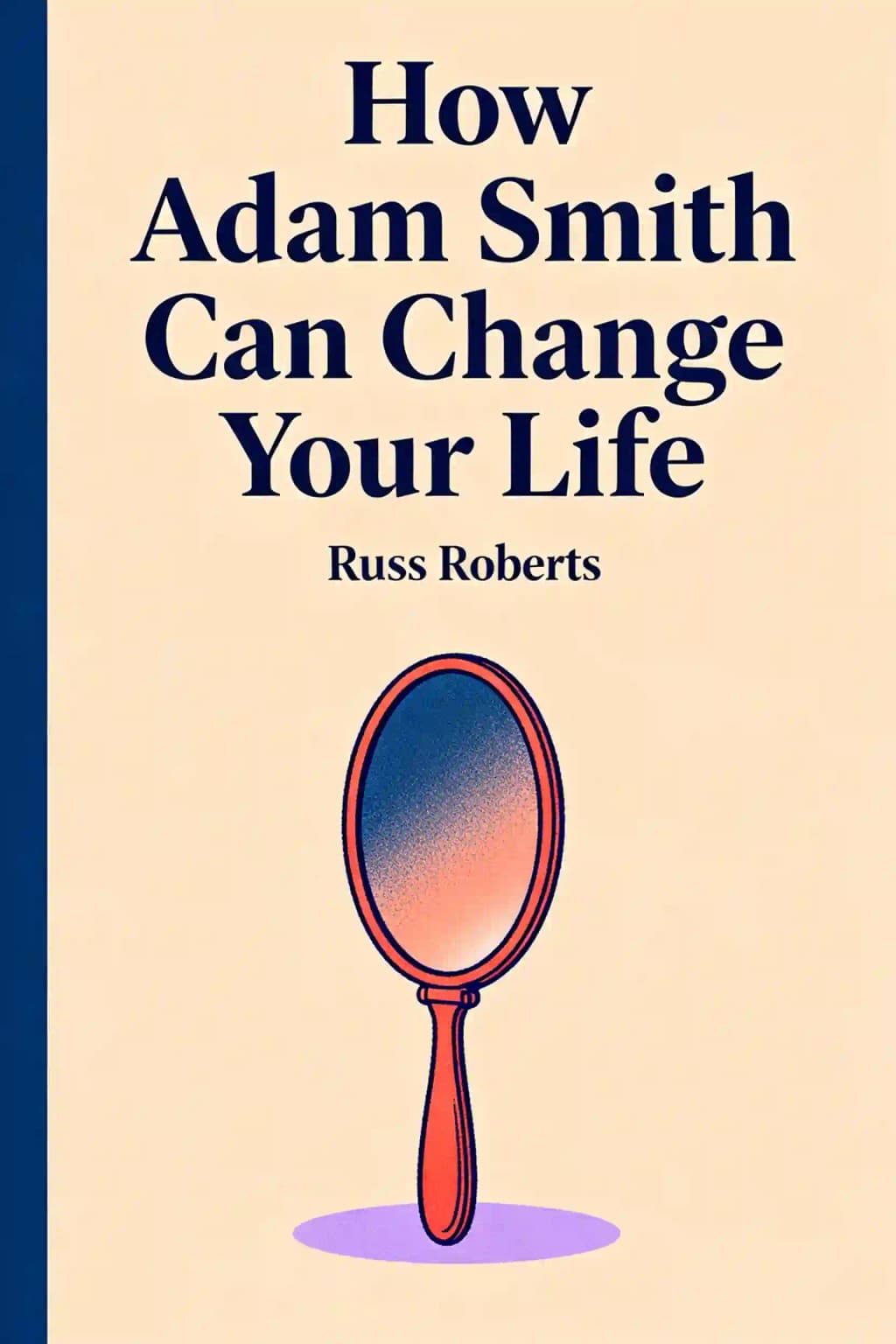
How Adam Smith Can Change Your Life
An Unexpected Guide to Human Nature and Happiness
How Adam Smith Can Change Your Life 개요
Discover why entrepreneur Derek Sivers recommends this surprising guide that reveals Adam Smith's hidden wisdom beyond economics. Can 18th-century philosophy really improve your relationships, happiness, and ethical choices while challenging our obsession with wealth and status?
How Adam Smith Can Change Your Life의 핵심 주제
- impartial spectator
- moral sentiments
- social validation
- virtue ethics
- human happiness
How Adam Smith Can Change Your Life의 명언
Only "the weakest and most superficial" delight in unmerited praise.
Smith identifies self-deception as "the source of half the disorders of human life."
We learn to judge ourselves by imagining how others would judge us.
Pure self-interest is grotesque while considering others is honorable.
How Adam Smith Can Change Your Life의 등장인물
- Russ RobertsAuthor and economist who interprets Smith's work
- Adam Smith18th-century philosopher and author of the book
- Peter BuffettMusician used as a case study on life choices
- Bernie MadoffCase study of a person who was loved but not lovely
- Lance ArmstrongCase study of a person who was loved but not lovely
저자 소개
How Adam Smith Can Change Your Life의 저자 소개
Russell David Roberts, economist and bestselling author of How Adam Smith Can Change Your Life: An Unexpected Guide to Human Nature and Happiness, merges moral philosophy with accessible economics in this genre-blending exploration of human behavior. A research fellow at Stanford University’s Hoover Institution and president of Jerusalem’s Shalem College, Roberts draws on Adam Smith’s The Theory of Moral Sentiments to reframe modern decision-making through an 18th-century lens.
His acclaimed podcast EconTalk—with 900+ episodes and Nobel laureate guests—solidifies his status as a leading translator of complex ideas for general audiences.
Roberts’ earlier works like The Invisible Heart and The Price of Everything use fiction to illuminate economic principles, a creative approach echoed in his viral Keynes-Hayek rap videos (13M+ YouTube views). As co-blogger at Cafe Hayek and frequent NPR commentator, he bridges academic rigor and public discourse.
How Adam Smith Can Change Your Life extends Roberts’ trademark synthesis of philosophy and practicality, offering timeless wisdom for contemporary readers navigating purpose and ethics.
How Adam Smith Can Change Your Life 요약 다운로드
How Adam Smith Can Change Your Life 요약을 무료 PDF 또는 EPUB으로 받으세요. 인쇄하거나 오프라인에서 언제든 읽을 수 있습니다.
이 책에 대한 FAQ
How Adam Smith Can Change Your Life explores Adam Smith’s lesser-known work, The Theory of Moral Sentiments, to uncover timeless lessons on ethics, happiness, and human behavior. Author Russ Roberts modernizes Smith’s 18th-century insights, showing how concepts like empathy, self-awareness, and moral judgment apply to modern challenges like consumerism and social validation. The book bridges philosophy and practical self-improvement.
This book is ideal for readers interested in moral philosophy, behavioral economics, or self-help. Fans of Russ Roberts’ EconTalk podcast, students of Adam Smith’s works, and anyone seeking a deeper understanding of human motivation will find it valuable. It’s also suited for those navigating career or personal decisions tied to ethics and fulfillment.
Yes. The book is praised for making complex philosophical ideas accessible and actionable. It blends scholarly rigor with relatable examples, offering fresh perspectives on happiness and relationships. Critics highlight its relevance to modern issues like social media and materialism. Business Week and the Financial Times have endorsed Roberts’ previous works for their clarity.
Key ideas include:
- Self-knowledge: Understanding how others perceive us shapes moral behavior.
- The “impartial spectator”: Smith’s metaphor for conscience, guiding ethical decisions.
- Pursuit of happiness: Critiquing materialism and emphasizing gratitude and virtue.
Roberts ties these to modern dilemmas like workplace ethics and social comparison.
Roberts uses Smith’s framework to address topics like consumerism, social media validation, and career choices. For example, he explains how Smith’s warnings about vanity resonate with today’s “image crafting” online. The book also links Smith’s emphasis on empathy to improving personal and professional relationships.
The “impartial spectator” is Smith’s concept of an internal voice that evaluates our actions through others’ perspectives. Roberts argues this idea helps combat self-deception and encourages ethical behavior. He applies it to scenarios like workplace conflicts and financial decision-making.
A standout Smith quote Roberts highlights is: “Man naturally desires not only to be loved, but to be lovely.” Roberts interprets this as a call to cultivate intrinsic virtue over superficial approval—a lesson he ties to parenting, leadership, and social media.
Some readers may find the focus on morality over economics unexpected, given Smith’s Wealth of Nations reputation. Others might desire more empirical data to support philosophical claims. However, Roberts’ conversational tone and real-world analogies mitigate these concerns.
While The Wealth of Nations explains economic systems, this book delves into Smith’s views on human nature. Roberts positions it as a companion piece, revealing how Smith’s moral philosophy underpins his economic theories. Both emphasize unintended consequences but target different aspects of societal well-being.
The book’s lessons on ethical decision-making and mental resilience resonate in an era of AI, remote work, and polarized discourse. Roberts’ analysis of status-seeking and mindfulness aligns with growing interest in digital detoxes and purpose-driven careers.
As an economist and host of the EconTalk podcast, Roberts combines academic expertise with communicative clarity. His experience translating complex ideas for public audiences ensures the book is both intellectually rigorous and engaging.
- Atomic Habits by James Clear (behavioral change)
- Thinking, Fast and Slow by Daniel Kahneman (decision-making)
- The Road to Serfdom by Friedrich Hayek (ethics and economics)
These complement Roberts’ blend of philosophy and practicality.