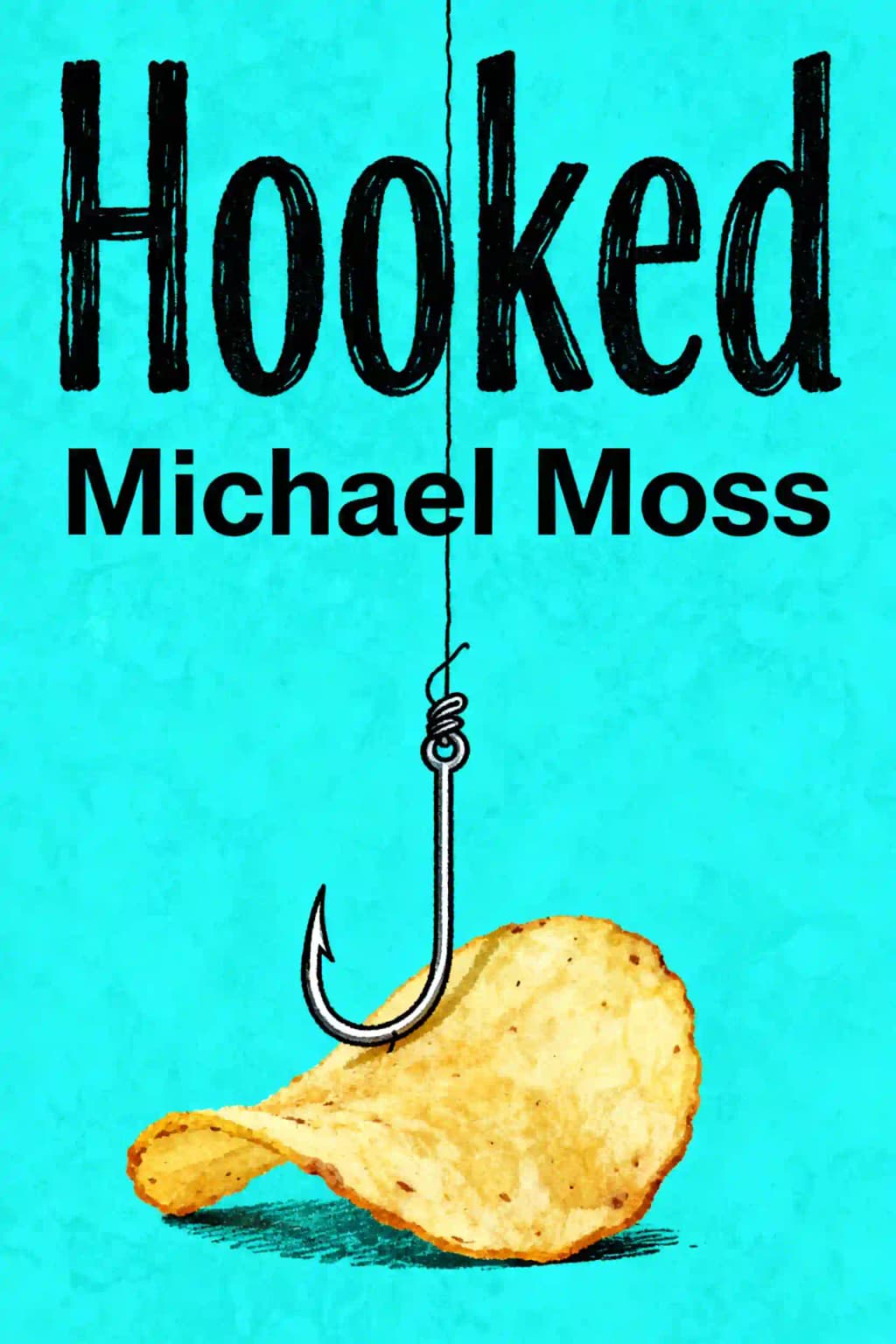
Hooked
Food, Free Will, and How the Food Giants Exploit Our Addictions
Hooked 개요
"Hooked" exposes how food giants exploit our biological cravings, turning processed foods into addictive substances. Pulitzer Prize-winner Michael Moss reveals industry tactics eerily similar to Big Tobacco. During the pandemic, companies strategically capitalized on our stress - making us question: do we truly have free will over what we eat?

Hooked의 핵심 주제
- processed food engineering
- neurological reward pathways
- industrial food addiction
- evolutionary biology mismatch
- corporate food lobbying
Hooked의 명언
Food addiction isn't just a metaphor-it's neurologically real.
Dopamine doesn't create pleasure-it creates wanting.
The companies changed the food.
Addiction isn't determined by any single factor.
Food can be even more addictive than alcohol, cigarettes, and drugs in some ways.
Hooked의 등장인물
- Michael MossAuthor and investigative journalist
- Jazlyn BradleyTeenager who filed a lawsuit against McDonald's
- Robert SweetJudge who presided over the McDonald's lawsuit
- Ashley GearhardtResearcher who developed the Yale Food Addiction Scale
- Nora VolkowScientist who conducted brain imaging research
저자 소개
Hooked의 저자 소개
Michael Moss is the Pulitzer Prize-winning investigative journalist and bestselling author of Hooked: Food, Free Will, and How the Food Giants Exploit Our Addictions, recognized for his incisive exposés on corporate influence in public health. A former reporter for The New York Times and The Wall Street Journal, Moss specializes in unraveling how industry practices shape consumer behavior, blending rigorous research with narrative-driven storytelling.
His earlier #1 New York Times bestseller, Salt Sugar Fat: How the Food Giants Hooked Us—translated into 22 languages—pioneered critiques of processed food marketing, establishing Moss as a leading voice in nutrition policy debates.
Moss’s work is informed by decades of investigative journalism, including Pulitzer-winning coverage of food safety failures, and he regularly appears on media platforms like CBS This Morning, NPR, and The Daily Show. A sought-after speaker, he has addressed audiences at Cornell University, the World Health Organization, and Fortune 500 companies. His books are widely taught in public health and business ethics programs, with Hooked lauded for linking food addiction science to corporate accountability.
Hooked 요약 다운로드
Hooked 요약을 무료 PDF 또는 EPUB으로 받으세요. 인쇄하거나 오프라인에서 언제든 읽을 수 있습니다.
이 책에 대한 FAQ
Hooked exposes how major food corporations exploit addiction science to engineer hyper-palatable processed foods. Pulitzer-winning journalist Michael Moss reveals industry tactics like deploying 56 sugar varieties, manipulating brain chemistry via fMRI-tested recipes, and rebranding junk food as "diet-friendly." The book ties legal loopholes, deceptive marketing, and cutting-edge food science to today’s obesity and health crises.
This book is essential for health-conscious consumers, nutrition professionals, and policy advocates. It’s ideal for readers seeking to understand food addiction mechanics, corporate marketing strategies, or the science behind cravings. Those interested in public health battles akin to Big Tobacco litigation will find its investigative depth compelling.
Yes—Hooked offers a rigorously researched exposé backed by internal industry documents and neuroscience. Moss’s findings, like processed foods triggering faster dopamine responses than cocaine, provide actionable insights for making informed dietary choices. It’s praised for its balance of scientific rigor and narrative readability.
Moss argues processed foods hijack evolutionary survival mechanisms: sugar activates the brain’s reward system within 0.5 seconds, while salt/fat combinations override satiety signals. Studies cited show these foods surpass drugs/alcohol in addictiveness for 10-20% of people, with industry-engineered “bliss points” ensuring repeat consumption.
The book details how food giants use 56 sugar variants to optimize addiction potential. For example, Moss reveals how “vanilla Frosty” formulations target specific dopamine receptors, while “diet” products maintain sweetness with alternative additives that still trigger cravings.
Moss uncovers tactics like funding biased nutrition studies, lobbying against stricter labeling laws, and using terms like “whole grain” on products containing minimal healthy ingredients. Companies mimic Big Tobacco’s playbook by disputing addiction research they privately acknowledge.
Moss critiques “diet” rebranding as deceptive: low-fat ice cream often has near-identical calories to regular versions, while “protein bars” may contain more sugar than candy. These products leverage health trends without addressing addictive properties, ensuring sustained sales.
While Salt Sugar Fat focused on ingredient-level manipulation, Hooked delves deeper into neuroscience and addiction parallels. It expands on marketing tactics post-2013, including social media targeting and “stealth health” campaigns that mask unhealthy products.
The book highlights corporate suppression of addiction research, exploitation of child-targeted advertising, and manipulation of serving sizes to mislead consumers. Moss documents how lobbyists shape USDA guidelines to favor processed foods.
With rising obesity and metabolic disease rates, Hooked explains why calorie-counting often fails: addictive food design overrides willpower. It’s critical for understanding 2025’s battlegrounds, like ultra-processed food taxes and TikTok marketing to teens.
Moss advocates policy changes—stricter labeling, junk food ad bans, and removing addictive additives from school meals. Individually, he suggests avoiding “hyper-palatable” combos (e.g., salted caramel) and opting for single-ingredient foods to reset taste preferences.
Case studies include a Brooklyn teen’s McDonald’s dependency leading to morbid obesity, Nestlé’s neuroimaging-driven cookie formulations, and Coca-Cola’s funding of exercise programs to offset soda criticism. These examples ground the science in tangible outcomes.