1장
When Teams Falter: The Hidden Costs of Misalignment
Have you ever wondered why some teams soar while others stumble? Picture this: You're in yet another meeting where half the participants seem to be working on entirely different projects, deadlines keep shifting, and the tension is palpable. You're not alone. A staggering 50% of meetings are considered unproductive, 75% of cross-functional teams are dysfunctional, and only 29% of projects achieve successful outcomes. These aren't just statistics-they represent countless hours of wasted potential and organizational frustration.
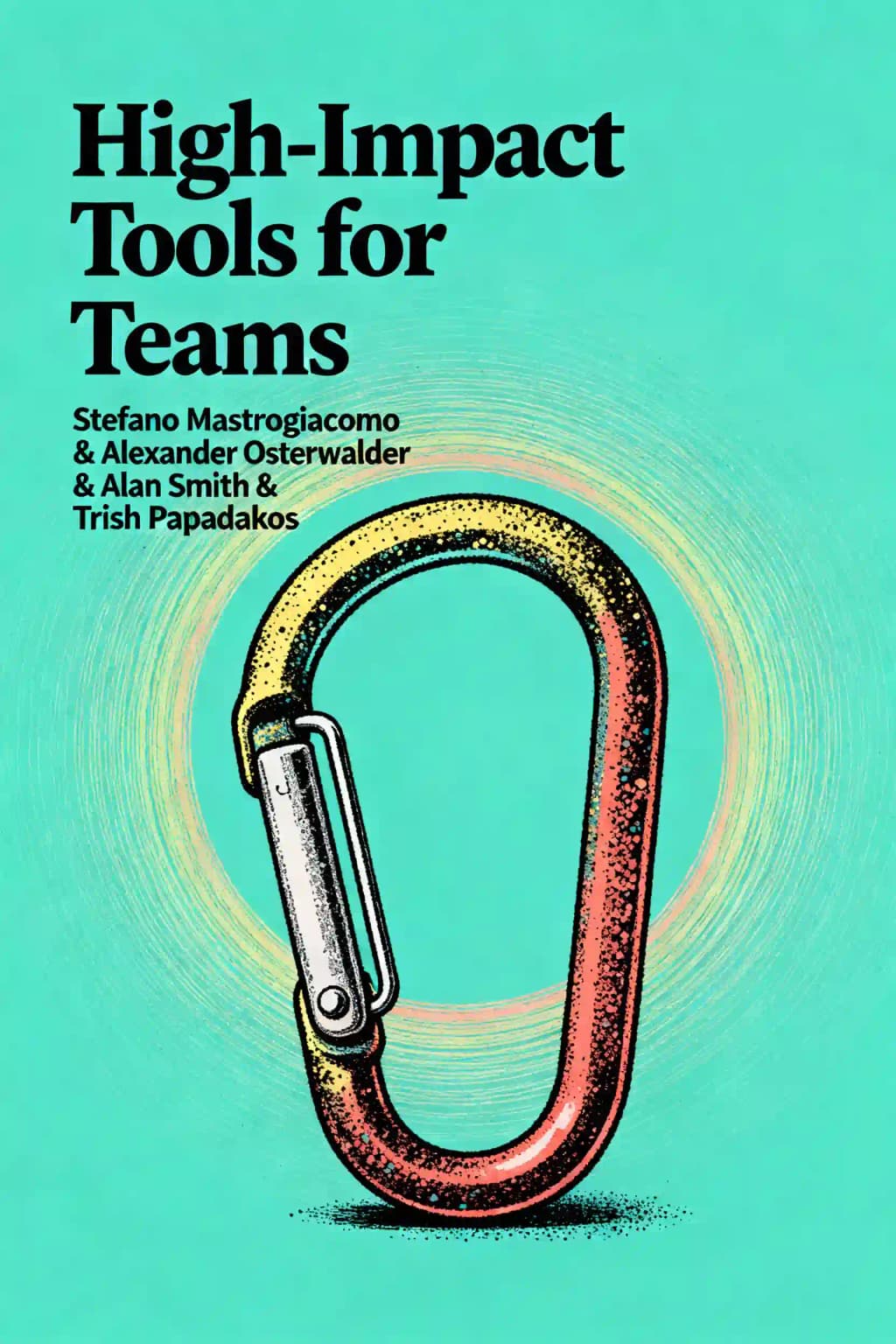
"High-Impact Tools for Teams" by Stefano Mastrogiacomo has become something of a phenomenon in Silicon Valley, with tech giants like Google and Microsoft implementing its frameworks to transform their team dynamics. The book has earned praise from organizational psychologist Adam Grant as "the missing manual for teamwork" and has been translated into 17 languages since its publication. What makes this approach revolutionary isn't complex theory but practical tools that address a fundamental insight: teams fail when members work around rather than with each other. As management guru Peter Drucker wisely noted, the critical question isn't "How can I achieve?" but "What can I contribute?"
2장
The Dual Pillars of Team Success: Alignment and Safety
What truly separates high-performing teams from struggling ones? Research reveals two critical factors that determine team effectiveness: alignment of activities and psychological safety. When teams lack alignment, members work with different understandings of goals, responsibilities, and priorities. When psychological safety is absent, team members withhold crucial information out of fear.
Alignment transforms individual contributors into effective team members by making their efforts converge toward shared goals. Though teamwork requires more effort than working alone due to constant synchronization needs, the payoff is achieving greater goals impossible to accomplish individually. Essentially, alignment means creating common ground through communication, enabling team members to predict others' actions and coordinate effectively. The richer this common ground, the better the team's execution through seamless division of labor.
In psychologically unsafe environments, team members protect themselves from embarrassment by remaining silent, preventing collective learning and leading to poor performance. This creates a cycle where common ground isn't updated, perception gaps increase, and the team relies on outdated information. Without revising assumptions or correcting plans, work becomes inadequate, resulting in stagnation or worse outcomes.
Conversely, in psychologically safe environments, team members speak up freely, engaging in productive dialogue that fosters learning behaviors like seeking feedback, sharing information, asking for help, discussing errors, and experimenting. This regularly updates the team's common ground, enabling adaptation and effective coordination that leads to complex problem-solving capabilities.
The impact of any team is determined by the combination of these two factors. Teams with misaligned activities and unsafe climates have low ability and low effort toward their mission. Those with aligned activities but unsafe climates have some ability but low effort. Teams with misaligned activities but safe climates have low ability despite high effort. The highest impact comes from teams with both aligned activities and safe climates, enabling the best ability and best effort toward their mission.
3장
The Team Alignment Map: Your Visual Compass
The Team Alignment Map (TAM) provides a visual framework that transforms how teams collaborate. Unlike complex project management tools, the TAM uses a simple structure organized around four crucial pillars that answer fundamental questions every team must address:
1. Joint Objectives: What are we trying to achieve together?
2. Joint Commitments: Who will do what?
3. Joint Resources: What do we need to succeed?
4. Joint Risks: What could prevent our success?
Joint Objectives break down the mission into actionable pieces of work, typically 3-10 items that clearly define what the team intends to achieve. These can be expressed as goals, measurable objectives, or end results with varying levels of detail depending on the team's needs.
Joint Commitments establish who will take responsibility for each objective. This creates accountability through the ritual of team members publicly committing in front of others, which creates moral obligations and rights that bind the team together.
Joint Resources help the team identify what each member needs to contribute successfully - from people and equipment to budget, technology, and information. Estimating and negotiating resources anchors the team in reality and prevents workflow interruptions.
Joint Risks acknowledge that all projects carry uncertainty. The Team Alignment Map helps teams identify potential obstacles, analyze risk exposure, and develop mitigation strategies, increasing the team's resilience and likelihood of success.
What makes this approach powerful is its versatility - the TAM can be used in both planning mode to create clear action plans and assessment mode to evaluate team alignment in real-time. In planning mode, teams follow a two-step process: a forward pass to create the plan (working left to right through objectives, commitments, resources, and risks), followed by a backward pass to lower risks by transforming identified problems into new objectives and commitments.
In assessment mode, team members individually vote on their perception of alignment across the four pillars, revealing perception gaps that might otherwise remain hidden until they cause project failures. This creates a structured process of reveal (voting), reflect (analyzing gaps), and repair (fixing identified issues).
4장
Transforming Meetings from Time Wasters to Action Drivers
We've all experienced the frustration of endless meetings that produce little tangible progress. The Team Alignment Map (TAM) transforms these unproductive sessions into focused, action-oriented gatherings. Rather than being used for brainstorming or exploratory discussions, the TAM excels at propelling teams from conversation to concrete action by providing a clear visual framework for decision-making and commitment tracking.
The map structures meetings through a disciplined approach of timeboxing discussions and concluding with clear next steps through forward and backward passes. In the forward pass, teams identify objectives and required contributions, while the backward pass ensures every objective has specific commitments and acknowledges risks. This systematic process typically reduces meeting duration by 25-40% while increasing productivity.
The TAM boosts engagement by framing missions as compelling challenges that connect to larger organizational goals. It democratizes participation by giving all team members, including introverts and remote participants, equal opportunity to contribute through structured input methods. The visual format allows quieter team members to add their thoughts without competing for airtime, leading to more diverse perspectives and better decisions.
Consider how this played out at a major pharmaceutical company where cross-functional teams were struggling with accountability. By implementing TAM-structured meetings, they reduced their average meeting time by 30% while simultaneously increasing action item completion rates by over 60%. Similar results were seen at a technology startup, where using the TAM helped reduce follow-up meetings by 45% and improved project delivery times by 25%.
The visual nature of the tool creates powerful accountability mechanisms. When commitments are publicly displayed and connected to specific objectives on the map, team members feel a stronger sense of responsibility to follow through. The map also serves as a persistent reference point between meetings, allowing teams to track progress and adjust course as needed.
What makes this approach particularly effective is how it helps teams escape endless conversation loops and focus on what truly matters. By making alignment visual and explicit, the TAM creates a shared understanding that prevents the common meeting pitfall of participants leaving with completely different interpretations of what was decided. The map becomes a single source of truth that teams can reference for clarity on decisions, commitments, and next steps.
The tool also excels at surfacing and addressing potential obstacles early. When objectives lack clear commitments or resources, they're immediately visible as risks on the map, allowing teams to proactively problem-solve rather than discovering issues weeks later. This risk identification feature typically helps teams reduce project delays by 35-40%.
5장
Project Management Reimagined: From Kickoff to Completion
Project teams lose significant energy and resources when key stakeholders aren't properly aligned. This leads to poor information flow and execution problems that spiral into cost overruns, delays, quality issues, and client dissatisfaction. Creating a shared initial view of what needs to be done and maintaining alignment throughout should be a priority for any project leader.
Starting projects with strong alignment requires extra effort initially but pays dividends throughout the entire project lifecycle. The TAM helps create a rapid big picture where each participant finds their place, whether using waterfall or agile methodologies. Teams that neglect initial alignment often find themselves overwhelmed with coordination issues and crisis committees later.
Alignment needs vary throughout a project's lifecycle. In teams with good initial alignment, alignment efforts naturally decrease over time-unlike misaligned teams that experience growing problems due to perception gaps. For waterfall projects, use the TAM weekly or monthly during initiation and planning phases, then only when required during execution and delivery. For agile projects, conduct rapid TAM sessions at the beginning of each sprint, with sessions becoming shorter over time to avoid overcollaboration.
Project teams often neglect risk management because it feels like unpleasant administrative work. The TAM makes risk mitigation more engaging by handling it visually during alignment sessions-particularly during the backward pass. Removing Post-it notes represents tangible progress in eliminating problems, which motivates the team. By emphasizing the backward pass and ensuring the joint resources and joint risks columns are properly addressed, teams increase accountability for risk management.
For distributed teams, online boards like Miro or Mural can implement the TAM remotely. These platforms offer infinite canvas space, synchronous and asynchronous collaboration, chat and video conferencing, and the ability to append documents and comments. On-site teams can also benefit from these digital features, including update summaries, version history, archiving, and integration with project management tools.
6장
Breaking Down Organizational Silos
Complex organizational challenges require effective cross-functional collaboration, as even high-caliber individuals and teams isolated in functional silos cannot successfully implement new business models, client experiences, products, or services. Strategic initiatives need organic alignment across teams, facilitated cross-functional work, and engagement at scale.
Team leaders can escape the exhausted superhero role by using the TAM for empowerment sessions. This approach follows Spotify's "aligned autonomy" formula (autonomy = authority x alignment) where leaders set the direction (mission), teams work independently on implementation (forward pass), risks are mitigated, and resources are negotiated together (backward pass). Fast 60-minute empowerment meetings allow teams to self-organize while maintaining accountability and alignment with leadership.
Effective engagement of large teams comes from participation. Despite requiring significant energy and time, mobilizing large groups is essential to avoid budget overruns and execution failures. The process involves splitting participants into subgroups of 4-8 people, running parallel TAM sessions with the same mission, having each group present their results, consolidating findings, and sharing decisions with all participants.
Cross-functional teams often struggle with misaligned missions and resource dependencies. Creating a supportive context starts by aligning missions across impacted teams, assigning common objectives, and facilitating negotiation. The TAM helps establish a shared language and process during alignment workshops, evolving the organizational culture toward more collaborative practices.
Resource negotiation follows two principles: gain missing resources by explaining their relationship to objectives and mission, or adapt/remove objectives when resources aren't available. Teams can negotiate with leadership by presenting their TAM in logical order and discussing resource needs, or negotiate team-to-team using agreed criteria (urgency, impact, client value, etc.) to make meaningful tradeoffs.
7장
Building Psychological Safety: The Foundation of Team Trust
While alignment tools provide essential structure, they're insufficient without psychological safety-the fundamental belief that team members won't face negative consequences for speaking up with ideas, questions, concerns, or mistakes. As psychologist Paul Watzlawick astutely noted, "In human relations, all prediction is connected in one way or another with the phenomenon of trust." This observation underscores how psychological safety serves as the bedrock for effective team collaboration and innovation.
The Team Contract functions as a simple yet powerful tool for establishing team norms and expectations. Unlike the Team Alignment Map (TAM) which requires frequent updates to remain relevant, the Team Contract establishes enduring agreements that span the entire collaboration period. It enhances psychological safety through multiple mechanisms: aligning relationships around appropriate behaviors, creating a harmonious cultural foundation, providing legitimate measures for addressing noncompliance, and preventing power imbalances within the team. For example, a contract might specify that all team members have equal speaking time in meetings, or that criticism must always be constructive and focused on ideas rather than individuals.
Team Contracts are uniquely tailored for each team, addressing six critical areas: attitudes and behaviors (like respect and punctuality), decision-making processes (consensus vs. majority vote), communication protocols (response times, preferred channels), common tools usage (which platforms to use and how), disagreement management (steps for resolution), and relationships with other teams (boundaries and interfaces). The tool clearly distinguishes between "ins" (accepted behaviors like active listening and meeting deadlines) and "outs" (behaviors to avoid such as interrupting or withholding information), creating explicit expectations for all members.
When Team Contract violations occur, inappropriate behaviors must be confronted promptly and professionally to prevent festering resentment. A structured three-step approach is recommended: first, explain the problem factually with specific reference to the Contract terms; second, listen actively to all viewpoints without judgment; and third, collaborate to find an appropriate solution with all parties involved. Having behaviors specified beforehand in the Contract provides a legitimate, objective basis for addressing issues without making them personal.
Amy Edmondson's groundbreaking research demonstrates that both high psychological safety and high performance standards are necessary to enter the "learning zone" where teams achieve superior performance. This creates a matrix with four distinct zones: the Learning Zone (high safety, high standards) where innovation thrives, the Comfort Zone (high safety, low standards) where complacency can set in, the Anxiety Zone (low safety, high standards) where fear inhibits performance, and the Apathy Zone (low safety, low standards) where teams stagnate. Teams should actively work to create conditions that place them in the Learning Zone, where psychological safety enables risk-taking while high standards drive excellence.
To maintain psychological safety over time, regular check-ins and adjustments to the Team Contract may be necessary, especially as team composition changes or new challenges arise. This dynamic approach ensures that psychological safety remains a living practice rather than just a documented principle.
8장
Communication Tools for Clarity and Respect
Beyond alignment and safety, effective teams need practical tools for everyday communication challenges. The Fact Finder addresses our natural tendency to omit or distort information through our three-level sense-making process: perception, interpretation, and evaluation. It helps identify and overcome five common communication traps: unclear facts, generalizations, assumptions, limitations, and judgments.
For example, instead of making an assumption like "You don't care about this project," the Fact Finder encourages asking clarifying questions: "I notice you've missed the last two meetings. What's your perspective on the project timeline?" This shifts conversations from potentially harmful assumptions to productive dialogue based on shared understanding.
The Respect Card provides tips for demonstrating consideration through basic politeness rules. It helps maintain a respectful climate by suggesting ways to express respect and value others, especially when interacting with people from different cultural backgrounds. The contrast between saving face and not saving face in communication is stark: saying "Forgive me... I don't think we will be allowed to work on the first two objectives" saves face, while "Remove the first two objectives" doesn't.
For managing disagreements constructively, the Nonviolent Requests Guide presents a simplified version of Marshall Rosenberg's nonviolent communication principles. A nonviolent statement consists of four consecutive parts: 1) When you do [observation], 2) I feel [feeling], 3) My need is [need], 4) Would you please [request]? This structure allows expressing discontent without making others feel personally attacked, creating opportunities for empathic dialogue and conflict resolution.
Consider how this transforms workplace communication. Instead of saying "You're always late with your deliverables!" (an attack), the nonviolent approach would be: "When the report arrives after the deadline for the third time, I feel frustrated because my need is to submit consolidated reports on time. Would you please let me know in advance if you anticipate delays?" This approach has been influential in corporate settings, including Microsoft's cultural transformation under CEO Satya Nadella.
9장
The Science Behind Effective Teamwork
The tools presented in this book aren't just practical-they're grounded in rigorous research across multiple disciplines. Common ground-what every team member knows that others know-is essential for successful teamwork. Herbert Clark and Steven Pinker's work demonstrates that language serves as the primary mechanism for coordinating joint activities, with team members needing sufficient shared understanding to predict and respond to each other's actions. This shared mental model enables teams to operate efficiently without constant explicit communication.
Building common ground happens through a systematic grounding process where understanding is signaled through various verbal and non-verbal cues: nodding, continuing sentences, answering questions, or requesting clarification when misunderstanding occurs. These micro-interactions create a feedback loop that continuously updates and reinforces shared understanding. For example, when a team member summarizes a discussion point, others might nod or add supporting details, confirming their aligned understanding. This process is fundamental to the Team Alignment Map's effectiveness and explains why tools that make implicit knowledge explicit are so powerful.
Alan Fiske's anthropological framework identifies four fundamental relationship types that govern human interactions: Share ("What's mine is yours"), Authority ("Who's in charge?"), Reciprocate ("To each the same"), and Bargain ("To each in due proportion"). Each mode comes with its own set of expectations and appropriate behaviors. For instance, in Share mode, resources are freely given without tracking, while in Bargain mode, careful accounting is expected. Conflict often arises when people operate in misaligned modes-what's appropriate in one mode can be offensive in another. A manager operating in Authority mode might give direct orders, while team members expecting Reciprocate mode might feel disrespected by this approach.
Brown and Levinson's politeness theory explores the concept of "face"-the positive social value we claim for ourselves. This theory explains why certain interactions feel comfortable while others create tension. Demonstrating consideration requires addressing two universal social needs: the need to be valued (when others' actions reflect a positive image of ourselves) and the need to be respected (protecting our freedom of action and territory). These needs represent the duality of social life: connection versus autonomy, intimacy versus power. For example, giving direct feedback without acknowledging someone's contributions can threaten their positive face, while making demands without offering choices can threaten their negative face.
Fairness in decision-making processes is built on three essential principles: engagement (involving individuals in decisions through active participation and consultation), explanation (clarifying thinking behind decisions with transparent reasoning and evidence), and expectation clarity (stating new rules and responsibilities explicitly). Research shows that people often care more about the fairness of the process than the outcome itself. The tools presented in this book support implementing these principles in everyday team interactions by providing structured approaches to involvement, communication, and role definition. For instance, the Team Alignment Map ensures engagement by giving everyone a voice in planning, while decision logs provide clear explanations of choices made.
10장
Putting It All Together: The Path to High-Impact Teams
What makes the approach in "High-Impact Tools for Teams" so powerful is its integration of structure and human dynamics. The Team Alignment Map provides the structural framework for clear objectives, commitments, resources, and risk management, serving as the foundational blueprint for team success. For example, a product development team might use the map to clearly define sprint goals, assign technical responsibilities, identify required testing resources, and anticipate potential market risks. The Team Contract goes beyond basic ground rules to establish psychological safety through agreed norms and behaviors, such as "no idea is too crazy during brainstorming" or "we address conflicts directly within 24 hours."
The communication tools-Fact Finder, Respect Card, and Nonviolent Requests Guide-enable productive everyday interactions by providing specific frameworks for different communication challenges. The Fact Finder helps teams separate assumptions from evidence, particularly valuable in complex problem-solving scenarios. The Respect Card serves as a real-time intervention tool when conversations become heated, while the Nonviolent Requests Guide transforms vague complaints into actionable requests.
Together, these tools address the fundamental challenges that cause teams to underperform: misalignment of activities and unsafe team climates. Research shows that up to 75% of cross-functional teams are dysfunctional, primarily due to these two factors. By creating both alignment and psychological safety, teams can achieve their highest potential-what the authors call the "high-impact zone" where both ability and effort are maximized. Teams in this zone consistently demonstrate higher innovation rates, faster problem-solving, and greater employee satisfaction.
The beauty of this approach lies in its simplicity and adaptability across different contexts. Whether you're leading a small startup team of five people, managing a complex cross-functional initiative with multiple stakeholders, or trying to align an entire organization around strategic priorities, these tools provide a common language and process for effective collaboration. For instance, a healthcare team might use the alignment map to coordinate patient care across departments, while a software development team could apply it to manage agile sprints.
As work becomes increasingly complex and interdependent, with remote and hybrid arrangements adding new layers of complexity, the ability to build high-performing teams becomes not just desirable but essential for organizational success. The frameworks presented here offer a practical path forward-one that acknowledges both the structural requirements of alignment and the human needs for psychological safety, respect, and clear communication. By addressing both dimensions simultaneously, teams can move from dysfunction to high impact, turning the discouraging statistics about team failure into stories of collaborative success. Case studies show that teams implementing these tools typically see a 30% improvement in project completion rates and a 40% reduction in meeting time within the first three months.