1장
The Whisper Within: Finding Peace in a Noisy World
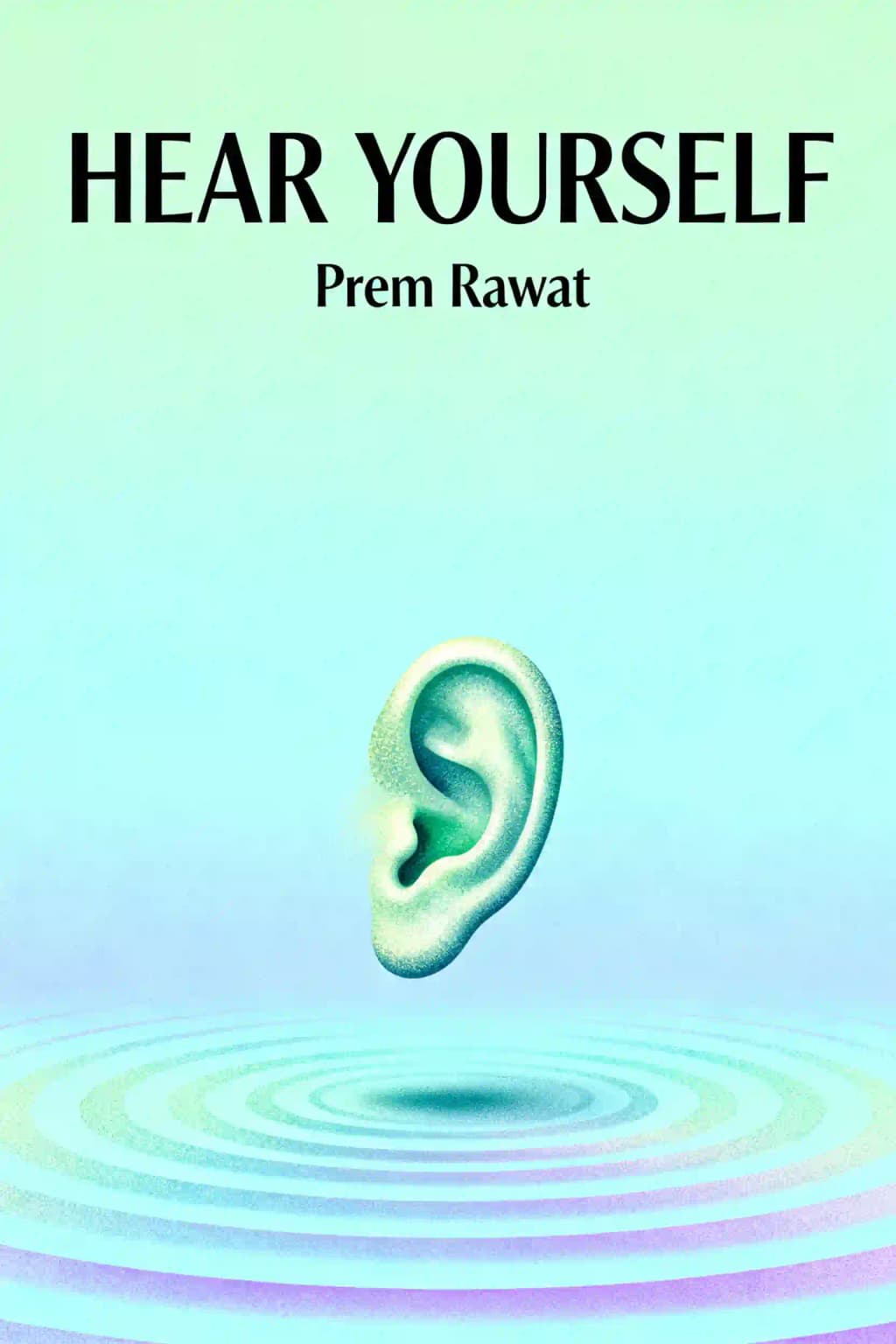
In a world of constant distraction, Prem Rawat's "Hear Yourself" arrives as a timely invitation to rediscover what lies beneath the noise. This international bestseller has garnered praise from spiritual seekers and pragmatists alike, with figures from Russell Brand to Susan Sarandon citing its transformative impact. Born in India and speaking on peace since age four, Rawat has addressed audiences from prison inmates to world leaders, reaching over 15 million people across 100 countries. What makes this book particularly compelling is how it bridges ancient wisdom with modern challenges, offering a practical approach to finding inner peace without requiring religious conversion or lifestyle overhauls. As mental health concerns reach epidemic proportions globally, Rawat's message resonates with increasing urgency: the peace we desperately seek outside ourselves has been within us all along.
2장
The Noise Between Your Ears
Our lives have become increasingly cluttered with distractions. From the moment we wake, thoughts bombard us-goals, expectations, problems, worries about yesterday and tomorrow. These mental distractions wait impatiently for our consciousness, sometimes even waking us prematurely, demanding attention. Many people complain of constant demands and no personal time, as if they've become servants to life's busyness. When distractions set our agenda, time evaporates and we miss the contentment and joy available in each moment.
Technology promised to eliminate tedious tasks and free us for what we love, but reality proved different. While technology has brought increased prosperity, health, comfort, travel capabilities, improved communication with distant loved ones, and enhanced home entertainment, these advances haven't necessarily simplified our lives. My own journey with technology began with my family's first refrigerator in India, where I once climbed inside to see if the light stayed on when the door closed. Though I embrace innovation, I insist on remaining in control of my technology rather than letting it control me.
Technology amplifies the noise in our lives, bombarding us with messages while simultaneously making us anxious about what we might be missing. We're carried by innovation's tide rather than navigating our own course. The "always on" world demands we surrender parts of ourselves to constant connectivity, creating FOMO-fear of missing out. As new technologies like AI emerge, we must ensure they enhance rather than diminish our reality.
Our sense of overload extends beyond technology to others' expectations and our own unmet desires. Some are so busy pursuing success they don't enjoy who they already are. As Seneca observed about restless travelers seeking new spectacles, "Thus each man ever flees himself" without escaping himself. The real question isn't about your social media presence but whether you follow, like, and befriend yourself.
Finding peace isn't about escaping external noise-people try everything from hiding under blankets to climbing mountains to visiting temples-because the noise lives between our ears. As Emerson wrote, "Though we travel the world over to find the beautiful, we must carry it with us or we find it not." The good news? We're allowing this noise to happen and can choose differently. Like pilots trained to turn off problematic technology and fly manually, we can turn off distractions and fly ourselves.
Many feel their time is being stolen, but who opens the door to these thieves? We do! While encountering new things is part of learning, we must control the doorway to our mind and heart. We're the main source of our agitation, confusion, and discontent-but also of the positive qualities that lead back to joy, clarity, and inner peace.
When life's noise seems unavoidable, remember that many concerns get supersized beyond their importance in our negative imagination. We get trapped between regret about the past and anxiety about the future, our negative imagination haunting us with endless "what ifs." Some flee to tomorrow to escape yesterday, while others hide in nostalgia to avoid facing tomorrow. All life happens only in the present moment-this second, and this second, and this second. We can't live in yesterday or tomorrow. Today is where peace, joy and love reside, where the magic happens.
3장
The Miracle of Breath and Being
A universal power has flowed through the cosmos for billions of years, bringing life to everything we see, touch, hear, smell, and taste. This force exists in mountains, forests, oceans, and within us-connecting all living things. Consider the scale of life's transformation-from single-cell organisms to creatures walking on the Moon. All this cosmic evolution has led to you, this moment of your presence as a living expression of universal power. You're surfing a wave of incredible creativity billions of years in the making.
The universe has momentarily held apart past and future to create now-this narrow slice where all action happens. Every tree, flower, and blade of grass represents what worked, what survived and bloomed. You too are a walking success story! Though we're physically composed of elements like oxygen, hydrogen and carbon, we're far more than our physical makeup. We can consciously connect with ourselves and everything around us, with every moment offering the opportunity to express gratitude for life.
The miracle explaining our purpose happens every day: we breathe. With each breath we choose our role in life's drama. Among the world's noise, our breath sings a lifelong song, perfectly in sync with us. When we're born, everyone focuses on one thing: are we breathing? When we die, that's what they check. Breath arrives unconditionally, without appointment or judgment. It comes whether we've been good or bad, whether we think about it or not. Nothing is more valuable-no money can buy the ability to breathe. How rich does that make us? We possess something priceless.
Many live on autopilot, disconnected from the reality of their breathing. Often it takes a mortal threat to recognize life's preciousness. As Marcus Aurelius advised: "Do everything as if it is the last thing you will do in this life." Like Aladdin's lamp that grants wishes, life offers limited time. Don't waste precious moments thinking "if only I had more time" or "this isn't convenient." Your life is the lamp-start rubbing it and making wishes!
We get roughly 25,550 days if we live to 70-not many. We entered life through one wall and will exit through another. While many speculate about what's beyond the second wall, no one calls back to tell us. What matters is what happens between these walls. Our life is one long today, measured in breaths. We can learn from yesterday and plan for tomorrow, but we can only truly experience now. The greatest success is living every moment fully, even through problems-to "seize the day" or "pluck the day" as Horace put it, like gathering rosebuds while we may.
Though life sometimes feels like a barren desert, the seeds for a magnificent garden wait within us from birth. Our job is to water the ground and let in clarity's light. Peace wants to show itself, to blossom. These seeds are remarkably resilient-they'll wait a lifetime for water and light, always ready to flower. However long our life has felt like a desert, we always retain the potential to bloom.
Everything in Nature creates space for itself and relationships with everything else. Trees have "heartbeats," pulsing water through their bodies at night. They're master strategists, designing themselves to thrive in their environments-even growing from tiny cracks in mountain rocks. Whatever our circumstances, we must find ways to express our inner nature, letting no opportunity pass.
4장
The Sanctuary of Inner Peace
Growing up in Dehra Dun, I experienced magical fall days with crystal-clear blue skies over the Himalayas. I would sit in our front yard under magnolia trees, surrounded by sweet peas and snapdragons, experiencing perfect moments of pure being. One day, sitting there with my heart completely open, I felt a profound connection to whatever force created both me and everything around me, whispering simply: "Just feel." In that perfect moment, I needed nothing-it felt good just to be.
That feeling part of me hasn't changed, though I've sometimes layered other concerns on top of it. Even someone who has spoken about peace since age four finds it challenging to stay connected to inner clarity. That garden moment was for me, and I've experienced this deep connection repeatedly. It is my reality-a feeling of perfect peace-while everything else is merely noise. Perfection is the living experience of being able to just feel right now.
The peace inside us isn't about anything but itself. It doesn't exist to serve a purpose; it simply is. It's entirely for you and independent of everything else. This peace is my deepest self, yet also part of something greater. Peace encompasses every other blessing, but nothing else encompasses peace-joy, kindness, and clarity are all found within peace, but none alone constitutes peace. Peace is a unique and total state of being.
My father once described connecting with inner peace as "going to sleep, without sleeping." This profound merging of states offers tremendous freedom when we remove the need for our innermost self to be about other things. Peace exists within us yet remains elusive to many-like light that illuminates everything while itself remaining unseen. Natural light doesn't exist to illuminate our world; that's just a wonderful benefit of light being light. Similarly, inner peace isn't just useful-it's essential to appreciate for its own sake.
We feel time's passage when viewing old photos or meeting long-unseen friends, sensing the river of time rushing toward eternity. Yet we can only ever live in the "now." Beyond conventional linear time that divides into years, months, and seconds, we can access another perspective-experiencing each moment as absolute: a timeless today. In this inner time, the march of time becomes the dance of time. Here we find infinite peace, where as William Blake wrote, we can "Hold Infinity in the palm of your hand / And Eternity in an hour."
To understand inner peace, we must remove intellectual concepts to reveal our natural self. Peace isn't created; it's uncovered through letting go of what isn't needed. The revelation we seek is simply taking things away to experience our true self in perfect simplicity. As Antoine de Saint-Exupery said, "Perfection is not when there is no more to add, but no more to take away."
Like a classical concert where chaos gives way to silence and then beautiful music, our inner experience can transform from noise to peace. The conductor's raised baton creates a moment of hushed tension before the music begins. Similarly, inside us there's a concert happening in our hearts. For some, the tuning up and chatter last years; for others, peace comes and the music starts sooner. Through self-knowledge, we experience our true rhythm, moving in time to it while everything else drops away. There is silence, then a beautiful symphony plays in our heart. We hear ourselves.
5장
Knowing Versus Believing
While our intellectual capacity helps us understand challenges and shape the world to our advantage, thinking has limitations. Modern societies often prioritize thinking above all, trying to fit everything into frameworks of belief. But there's a more fulfilling approach: being intellectually open to new ideas while remaining centered in self. Through self-knowledge, we can focus on what's happening inside-not ignoring the world, but adding knowing to believing.
Thoughts and beliefs struggle to express important aspects of who we are. If someone says they "think" or "believe" they love you rather than knowing it, the difference is profound. Similarly, when asked "Who are you?", people struggle because the answer requires feeling, not just facts about name, job, or status. As Swami Vivekanand said, "To believe blindly is to degenerate the human soul." Believing is popular because someone else has done our homework, but knowing is about knowing yourself, not something external.
Socrates' directive to "Know thyself!" invites us to experience our innermost universe. What we find there isn't a list of beliefs, character traits, or psychological indicators, but a feeling of infinite peace and heartfelt appreciation of our presence in the moment. This is the complete connection of self with universal power-the rare joy of just being in a world of noise and busyness.
Like pilots who must know their position before navigating, we must know ourselves before finding our way. Without self-knowledge, we're disoriented-lost with maps but no sense of where we stand. When connected to our inner peace, we experience joy in the present moment rather than waiting for some imaginary future destination. Self-knowledge means appreciating our existence in the here and now, allowing us to truly enjoy life's journey.
All meaning begins inside us. Beauty exists because we recognize it; sweetness comes alive through our experience. Without our perception, a mango would just be an object with chemical properties-our desire transforms it into a delicious experience. Similarly, rather than developing theories about who we are, we can choose to directly experience ourselves. Life isn't theoretical; without experience, everything we think and believe remains mere theory.
We can know we're alive, that these moments are real, that we can fully enjoy each one, that inner peace brings ocean-deep fulfillment. Knowledge isn't explanation; it's experiencing the divine within. Yet overthinking distracts us from simple truths. As Euripides said, "Cleverness is not wisdom." Sometimes we're reading a two-thousand-page guide to a one-page book, missing what's essential right before our eyes.
Like a visually impaired person who feels their way forward without getting distracted by surrounding chaos, self-knowledge helps us see the clear path through life's obstacles. While it doesn't magically remove obstacles, it helps us navigate around them rather than repeatedly walking into them. Even when life seems dominated by barriers, there's always a clear path when we connect with our inner peace.
Balance comes from listening carefully to both thoughts and deepest feelings. When they disagree, invite heart, mind, and intuition to converse. While the mind loudly questions with who, what, where, when, how and why, the heart simply says "Be fulfilled." The mind tries to create meaning while the heart naturally overflows with it. Like love, peace just is-it cannot be explained, only experienced.
6장
The Power of Self-Responsibility
When we're born, we express the pure energy of being alive through natural laughter and tears. As adults, we often become like actors performing for others, forgetting the joy, love and peace always deep within us. While others can help, ultimately I alone am responsible for my happiness, and you for yours.
We often wrongly believe that others' opinions define us, molding ourselves to fit what we think people want-like politicians consulting approval ratings. But as Marcus Aurelius noted, "Every man's happiness depends from himself," yet we make it "consist in the souls and conceits of other men." The most important question is: Do you approve of you? This isn't about being self-centered, but being centered in your self.
We constantly judge and feel judged, creating negative emotional weather systems. Like two stable chemicals that explode when combined, our mutual judgments lead to emotional combustion. The alternative is to stop judging others and focus on self-approval. My mantra is "Don't take offense, don't give offense"-if you don't take on board negative comments, you won't need to dump them elsewhere. As Rumi said, "Yesterday I was clever, so I wanted to change the world. Today I am wise, so I am changing myself."
What others think about you isn't your concern. When criticized, learn from valid points but otherwise go your own way. Like the couple walking with their horse who kept changing their approach based on villagers' comments, we'll never reach our destination if we're swayed by everyone's opinions. The lesson is simple: trust your judgment and continue your journey as you see fit.
People often spend extravagantly on weddings to impress others, particularly in India where families take out massive loans for this purpose. But here's the truth: other people's perceptions cannot be controlled. Their opinions shift constantly. What endures is how we feel about ourselves. As Ann Landers wisely noted, "At age 20, we worry about what others think of us. At age 40, we don't care what they think of us. At age 60, we discover they haven't been thinking of us at all."
You have the power to decide what's right for you. When Buddha's disciple asked if criticism bothered him, Buddha demonstrated with his bowl. He placed it in the disciple's lap and asked whose bowl it was. "It's still your bowl," the disciple replied. "Exactly!" said Buddha. "If I don't accept criticism, it's not mine." Your courage is always within you, waiting to be rediscovered.
We often seek external approval to fill an emptiness inside, but no one else can fill that void. Everything we need-clarity, joy, serenity, love-exists within us, alongside negative qualities like confusion, despair, chaos, and hatred. While negative qualities tend to surface easily, finding the good requires effort. Like the traveler who hid his fortune under the thief's pillow, our greatest treasures are often where we least expect to look. The priceless treasure of inner peace can't be bought, regulated, or stolen-it's already yours.
When asked about yoga, I explained it's like a zero-put zero before one, and one remains one. Put zero after one, and you get ten, then a hundred. What we put before ourselves doesn't add to us, but what comes after multiplies our value. Jobs, money, beliefs, others' needs-these shouldn't come before us. We must establish our "one" first, then add the zeros. In this world of seven billion ones, everything must start with your particular one-you.
Self-knowledge gives us the power of choice-between peace and conflict, love and hate, joy and grumbling. Not choosing is itself a choice. We must be conscious of our direction in life, recognizing the signposts along our journey. Though living unconsciously comes naturally to us, choosing consciousness can profoundly affect ourselves and others. Even in terrible situations with little freedom or security, we can still choose to connect with our inner peace. The choice is always ours.
7장
The Transformative Power of Gratitude
Gratitude begins with appreciating life itself-the most fundamental gift without which nothing else is possible. While people often cite family, friends, homes or jobs when asked what they're grateful for, they frequently overlook the miracle of being alive. True gratitude means unwrapping and treasuring the gift of life, recognizing there's a "use by" date on this blessing. When we feel genuine gratitude, we acknowledge that every breath brings the blessing of life, creating an incredible feeling of fulfillment.
Though many claim we should "live for today," few truly embody this principle. Instead of waking with gratitude for being alive, we immediately tune into mental noise about tasks, time, and trivial concerns. The gift of life deserves to be unwrapped and treasured before its "use by" date expires. True gratitude is the inner acknowledgment that each breath brings the blessing of life, creating profound fulfillment. When gratitude expresses itself, it recognizes the miracle of existence-the universal life-force pulsing through us, our complex biological systems functioning perfectly, all powered by each new breath on this stunning planet.
Gratitude isn't intellectual but emotional-we can feel fulfilled but can't think fulfilled. It's not about good manners or being coerced into saying "thank you"; true gratitude for life comes from within as a personal choice to appreciate existence. The perfect time to begin feeling this gratitude is now-no need to wait for ceremonies, planetary alignments, or personal crises. In that perfect moment of gratitude, all distractions fade away, creating a perfect meeting point of past and present-a celebration of now.
Gratitude stems from what is, not what might be. While we needn't abandon our dreams and ambitions, we don't need to wait for external success before giving thanks for what we already have. Our imagination can achieve great things, but we don't need achievements to make us complete-we are already complete. By choosing to accept things as they are, experience them as they are, and appreciate them as they are, our gratitude becomes infinite. Our contentment, joy, love, understanding, happiness and inner peace cannot be measured or quantified-they are formless yet utterly real.
When asked if we should be grateful for bad things in life, the answer is no-but even in suffering, there's a sign pointing toward something good: life itself. Without life, we couldn't feel pain or anger, nor see bad times turn good. Neither suffering nor success defines us-peace remains constant. Even amidst terrible pain, something beautiful happens in our heart, offering a glimpse of joy waiting beyond suffering.
Like anyone, I have good and bad days. But even on terrible days, I turn within to say: "I give thanks that I'm alive." The same gratitude applies during wonderful times. Neither troubles nor happiness should distract us from the peace in our heart. My darkest cloud came when my wife Marolyn suffered a brain aneurysm while I was in Argentina. Facing the possibility she might die, I found clarity by connecting with myself. Throughout her month-long recovery, our family remained grateful for life itself-not for the problem, but maintaining gratitude as a light in our darkness.
I think of inner peace like a river flowing through us. Sometimes we're on dry ground with nothing growing, but then peace bubbles up, finding old riverbeds. As this water flows, life transforms-grass grows, seeds sprout, insects arrive, birds follow, trees emerge, and a vibrant ecosystem flourishes with color, sound and fragrance. Peace is that water enabling life to blossom. I give gratitude for the peace flowing through my life, for my existence, and for the many patterns of life that bloom whenever I connect with myself.
8장
Finding Peace in Difficult Times
Life inevitably brings pain, but suffering remains optional. When experiencing life's difficulties, everything can feel like a source of suffering-even things that would normally bring joy. While tough times present problems we can potentially solve, rough times feel hopeless. Yet even when circumstances are beyond our control, we always have a choice about our internal response. Two realities exist simultaneously: the bad going through our mind and the good forever in our heart.
Our constant exposure to negative news can distort our perception of reality, making the world seem increasingly dangerous and people mostly bad. While terrible events do occur, dwelling on every bad story helps no one. Instead, we can channel our energy toward empathy and direct action. Remember that there's far more love, compassion, and generosity in the world than hate-good news that rarely gets reported.
Losing someone we love brings profound difficulty-emptiness, numbness, anger, and confusion. While grief is uniquely personal, with some returning to their old selves and others forever changed, we must understand that relationships transform rather than end. Though physical presence is gone, loved ones live on in our hearts and memories. I was eight when my father passed away. Initially, I cried constantly without understanding, but gradually realized I could still see, hear and feel him within me. Just as energy transforms rather than disappears, our loved ones become something else, somewhere else-their energy passed through us, part of the infinite universal consciousness.
Scientists believe the Moon formed when a body called Theia crashed into Earth, creating a satellite from the debris. Like the Moon that left Earth but remains in orbit, influencing tides and illuminating darkness, our passed loved ones circle our lives. We can honor them in their new form, floating on life's tide while gazing at their reflected light.
Fear of our own mortality can haunt us throughout life, especially during illness or danger. While acknowledging death's reality is necessary-we must all go eventually-the only certainty is that we're alive right now, in this moment. During illness or hardship, remember the incredible strength within. Though negative experiences distance us from our courage, clarity, fulfillment, joy and peace, these resources remain accessible in our hearts.
Our expectations shape our experience of life. While it's natural to have expectations-from alarm clocks to saltshakers-problems arise when they don't match reality. As Mike Tyson bluntly put it, "Everyone has a plan until they get punched in the mouth." Accepting life as it is requires courage but saves us tremendous heartache. Our greatest suffering comes from projecting expectations onto others, generating anger and sadness when unfulfilled. We grow stronger by flexing with what is-like trees swaying with wind, birds flying in storms, and fish moving with tides.
Being realistic rather than blindly positive is essential. When dinner burns and there's no food left, someone chirping "Be positive!" doesn't help. My message isn't about whitewashing difficult situations with grinning optimism. The rough times are real, but the peace within you is equally real. Living consciously means acknowledging pain while knowing you can always connect with inner peace. As a Chinese proverb states: "Don't blame God for creating the tiger; thank him for not giving it wings." Life becomes easier when we focus on dealing with what is.
It's better to light a candle than curse the darkness. We can weep in the dark forest of our problems, but at some point, we must summon courage and strike a match. From one candle we can light others without diminishing the original flame. The light is consciousness-the one true guide through life's roughest times. My perspective isn't new, but remains relevant: the world can be difficult, but people are born good, and peace exists in everyone. Death transforms what we love into something we can still honor. Facing reality takes courage but liberates us.
9장
The Practice of Inner Peace
Life is like a book we write daily, with our birth opening the cover and death writing "The End." We must ensure our story makes sense, inspires us, and truly reflects who we are. Each day brings a blank page to fill with something meaningful, but connecting with our inner peace requires ongoing practice. The journey from distraction to fulfillment isn't always straightforward, but through self-knowledge, we can write something memorable, joyful, and true to ourselves.
Peace is always there inside us-unchangeable amid life's chaos. Through self-knowledge, we connect with all that's good in us: clarity, understanding, serenity, kindness, gentleness, light, joy, gratitude, beauty, breath, and the divine. Embracing self-knowledge requires courage to go against social pressure and dismissive attitudes. Many have an inner voice telling them not to look within-the noise of inherited ideas. While the outer world offers pleasure and progress, acknowledging both inner and outer worlds requires bravery.
Peace isn't created through actions but by opening to what's already within us. Some can journey alone; others need guidance from teachers who feel right for them. As a teacher, I don't tell people what they should be but offer reminders of life's miracle and help point toward inner peace. Like the tanpura in Indian classical music that provides a constant harmonic drone for other instruments, I help people stay in key with life's music.
I learned about self-knowledge from my father, understanding that we're born with everything needed for peace, though everyday life can obscure these inner strengths. Understanding cannot be forced upon someone-it must be accepted willingly. While questioning is helpful in many areas, self-knowledge comes through experience, not theory. Like learning to ski, where counterintuitive movements eventually feel right with practice, gaining self-knowledge requires moving through uncertainty and trusting new feelings rather than overthinking.
Peace is possible for everyone. I offer a free educational program called Peace Education and Knowledge (PEAK) to help people discover their potential for personal peace. For those who resonate with this approach, there are practical techniques of self-knowledge that help tap into inner strengths and shift focus from outside to inside. The key is your thirst for self-knowledge; without genuine desire, any approach may prove fruitless.
The key to self-knowledge is relinquishing expectations that get in the way of authentic experience. Many seekers focus on what they think they should feel rather than appreciating what they actually do feel. I've seen this with a woman who claimed nothing was happening in her practice, yet when questioned further, admitted experiencing peace and joy. We don't need wings to fly; we just need to cut the chains of expectation that bind us. It's in gratitude for what is that knowing begins, and our practice can evolve until our final breath.
Inner peace has been an incredible blessing in my life through both good and rough times. When I fully connect with my self, all concerns vaporize regardless of external circumstances. This possibility exists for every human being-to reach that place where the heart sings and one simply enjoys the music of being. Self-knowledge provides inner instruments connected to your true self, like a pilot's instruments that provide orientation when visual cues fail.
We are cosmic dust temporarily blessed with consciousness-on vacation from being dust until we return to it. For billions of years we floated as particles, then universal energy gave us this brief opportunity to live on this planet. Yet do we truly appreciate this precious vacation? We are connected to everything-the planets, trees, birds, butterflies-all formed from the same cosmic material. The question becomes: are we enjoying this fleeting opportunity to feel and understand before we return to dust?
In every moment we choose whether to give attention to the good or bad in us. As in the Native American story, we have two wolves inside-good and bad-constantly fighting. Which one wins? "The one you feed," as the Chief explained. Rather than punishing our bad wolf, we should nourish the good one with time, awareness, understanding, and love. Love, joy, calm, and clarity feed the good wolf; hatred, anger, fear, and confusion feed the bad one. Our choices define us.
Our nature is to be free, yet like caged birds who eventually stop trying to escape, we can forget what freedom means. Whatever happens in our lives, we always remain free to connect with the deeper reality of who we are-to be free from being controlled by external events. As our breath rises and falls, bringing the miracle of life, we can choose in each moment to turn within, where the noise of the world settles into silence, enabling us to hear the divine music of now. Turn within, and you will hear yourself. Begin!