손도끼 개요
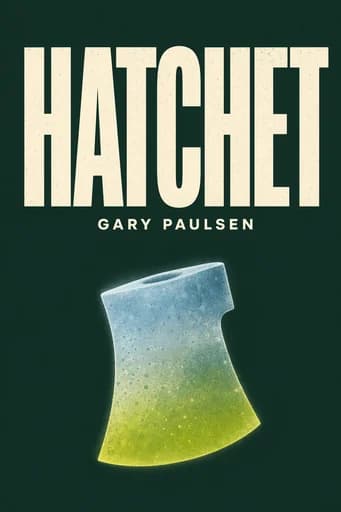
단 한 자루의 손도끼만을 가진 채 캐나다의 황무지에 고립된 브라이언 로브슨의 처절한 생존 여정은 1,300만 명의 독자들을 매료시켰습니다. 뉴베리 아너 상을 수상한 이 걸작은 전국 교실의 토론 풍경을 바꾸어 놓았습니다. 오직 지혜만으로 홀로 54일 동안 살아남을 수 있을까요?
손도끼 요약 다운로드
손도끼 요약을 무료 PDF 또는 EPUB으로 받으세요. 인쇄하거나 오프라인에서 언제든 읽을 수 있습니다.
단 한 자루의 손도끼만을 가진 채 캐나다의 황무지에 고립된 브라이언 로브슨의 처절한 생존 여정은 1,300만 명의 독자들을 매료시켰습니다. 뉴베리 아너 상을 수상한 이 걸작은 전국 교실의 토론 풍경을 바꾸어 놓았습니다. 오직 지혜만으로 홀로 54일 동안 살아남을 수 있을까요?
손도끼 요약을 무료 PDF 또는 EPUB으로 받으세요. 인쇄하거나 오프라인에서 언제든 읽을 수 있습니다.
샌프란시스코에서 컬럼비아 대학교 동문들이 만들었습니다
"Instead of endless scrolling, I just hit play on BeFreed. It saves me so much time."


"I never knew where to start with nonfiction—BeFreed’s book lists turned into podcasts gave me a clear path."


"Perfect balance between learning and entertainment. Finished ‘Thinking, Fast and Slow’ on my commute this week."
"Crazy how much I learned while walking the dog. BeFreed = small habits → big gains."
"Reading used to feel like a chore. Now it’s just part of my lifestyle."

"Feels effortless compared to reading. I’ve finished 6 books this month already."
"BeFreed turned my guilty doomscrolling into something that feels productive and inspiring."

"BeFreed turned my commute into learning time. 20-min podcasts are perfect for finishing books I never had time for."
"BeFreed replaced my podcast queue. Imagine Spotify for books — that’s it. 🙌"

"It is great for me to learn something from the book without reading it."
"The themed book list podcasts help me connect ideas across authors—like a guided audio journey."
"Makes me feel smarter every time before going to work"
샌프란시스코에서 컬럼비아 대학교 동문들이 만들었습니다
"Instead of endless scrolling, I just hit play on BeFreed. It saves me so much time."
"I never knew where to start with nonfiction—BeFreed’s book lists turned into podcasts gave me a clear path."
"Perfect balance between learning and entertainment. Finished ‘Thinking, Fast and Slow’ on my commute this week."
"Crazy how much I learned while walking the dog. BeFreed = small habits → big gains."
"Reading used to feel like a chore. Now it’s just part of my lifestyle."
"Feels effortless compared to reading. I’ve finished 6 books this month already."
"BeFreed turned my guilty doomscrolling into something that feels productive and inspiring."
"BeFreed turned my commute into learning time. 20-min podcasts are perfect for finishing books I never had time for."
"BeFreed replaced my podcast queue. Imagine Spotify for books — that’s it. 🙌"
"It is great for me to learn something from the book without reading it."
"The themed book list podcasts help me connect ideas across authors—like a guided audio journey."
"Makes me feel smarter every time before going to work"
"Instead of endless scrolling, I just hit play on BeFreed. It saves me so much time."
"I never knew where to start with nonfiction—BeFreed’s book lists turned into podcasts gave me a clear path."
"Perfect balance between learning and entertainment. Finished ‘Thinking, Fast and Slow’ on my commute this week."
"Crazy how much I learned while walking the dog. BeFreed = small habits → big gains."
"Reading used to feel like a chore. Now it’s just part of my lifestyle."
"Feels effortless compared to reading. I’ve finished 6 books this month already."
"BeFreed turned my guilty doomscrolling into something that feels productive and inspiring."
"BeFreed turned my commute into learning time. 20-min podcasts are perfect for finishing books I never had time for."
"BeFreed replaced my podcast queue. Imagine Spotify for books — that’s it. 🙌"
"It is great for me to learn something from the book without reading it."
"The themed book list podcasts help me connect ideas across authors—like a guided audio journey."
"Makes me feel smarter every time before going to work"
"Instead of endless scrolling, I just hit play on BeFreed. It saves me so much time."
"I never knew where to start with nonfiction—BeFreed’s book lists turned into podcasts gave me a clear path."
"Perfect balance between learning and entertainment. Finished ‘Thinking, Fast and Slow’ on my commute this week."
"Crazy how much I learned while walking the dog. BeFreed = small habits → big gains."
"Reading used to feel like a chore. Now it’s just part of my lifestyle."
"Feels effortless compared to reading. I’ve finished 6 books this month already."
"BeFreed turned my guilty doomscrolling into something that feels productive and inspiring."
"BeFreed turned my commute into learning time. 20-min podcasts are perfect for finishing books I never had time for."
"BeFreed replaced my podcast queue. Imagine Spotify for books — that’s it. 🙌"
"It is great for me to learn something from the book without reading it."
"The themed book list podcasts help me connect ideas across authors—like a guided audio journey."
"Makes me feel smarter every time before going to work"




손도끼의 같은 아이디어를 담았습니다. 나에게 맞는 목소리, 깊이, 속도를 고르고 언제든 바꿔 보세요.
Gary Paulsen's "Hatchet" has captivated readers since its publication in 1987, selling over 4.5 million copies and becoming a staple in middle school curricula across America. This Newbery Honor book isn't just another survival tale-it's a profound coming-of-age story that resonates with readers of all ages. The book has developed a cult following among outdoor enthusiasts, with Bear Grylls citing it as one of his childhood inspirations. Beyond its literary success, "Hatchet" has been credited with sparking interest in wilderness survival skills among young people, with some readers even crediting the book with saving their lives in real outdoor emergencies. Imagine being completely alone in the wilderness with nothing but a small hatchet-would you have what it takes to survive? Brian Robeson's journey from ordinary teenager to wilderness survivor isn't just about physical endurance, but about the remarkable resilience of the human spirit when pushed to its absolute limits.
Thirteen-year-old Brian Robeson's journey begins on what should be a routine flight to visit his father in the Canadian oil fields. The flight represents more than just a summer visit-it's the new reality of his life after his parents' painful divorce. As the small Cessna bushplane soars over the northern wilderness, Brian carries not just his mother's parting gift-a hatchet-but also a devastating secret about her that weighs heavily on his mind. When the pilot suddenly clutches his chest and slumps forward, victim of a fatal heart attack, Brian's ordinary world shatters. One moment he's a passenger; the next, he's desperately trying to control a plane with no flying experience. The transition from passive traveler to active survivor happens in seconds, forcing Brian to grow up in ways he never imagined. Despite managing to make radio contact, the signal breaks before meaningful help can arrive. For a terrifying hour, Brian repeatedly calls for help while trying to decipher the plane's mysterious instruments. As the fuel gauge drops toward empty, Brian formulates a desperate plan: aim for a lake when the inevitable happens. When the engine finally dies, the sudden silence is more terrifying than any noise. The plane begins its deadly descent, and Brian pushes the nose down, fighting his own body's reaction as he vomits from fear and vertigo. Spotting an L-shaped lake, he attempts a turn but loses crucial speed. The world seems to move in slow motion-a moose in a pond below, trees rushing past-as Brian pulls back on the controls in a final desperate maneuver. The impact is violent and disorienting. Wings tear away as the plane crashes into the lake, the windshield shattering as water floods in. Fighting rising panic, Brian claws at his seatbelt until it releases, then tears through the broken windshield. His lungs burning, he fights to reach the surface, breaking into the light with a desperate gasp before swimming blindly until his hands catch grass and brush. Pulling himself onto land, he collapses into unconsciousness, alone in the vast Canadian wilderness with nothing but the hatchet at his belt. This catastrophic beginning sets the stage for Brian's transformation. In mere minutes, he's thrust from the comfortable world of a suburban teenager into a primal fight for survival, where every decision could mean life or death. The crash isn't just a physical trauma-it's the violent severing of Brian's connection to the modern world and the beginning of his rebirth as someone new.
손도끼의 각 단어가 오디오에 맞춰 실시간으로 강조되어 편하게 따라 읽을 수 있습니다.
Awakening to pain and disorientation, Brian finds himself in a world utterly removed from his previous existence. His body, battered from the crash, screams with every movement. Though nothing appears broken, every inch of him throbs with bruises and strains. The physical pain, however, is only the beginning of nature's harsh welcome. As dawn breaks, Brian faces his first true wilderness adversary-insects. Swarms of mosquitoes and black flies descend upon him in biblical proportions, covering his skin, clogging his nostrils, filling his mouth when he breathes. The torment is relentless and maddening. This isn't the sanitized wilderness of nature documentaries-it's raw, uncomfortable, and unforgiving. The insects leave him with swollen hands and eyes nearly shut from bites, a painful introduction to nature's indifference to human comfort. Thirst soon becomes Brian's next urgent challenge. His mouth dry and cracked, he makes his way to the lake on a beaver-dropped log. Despite hesitation about drinking untreated water, desperation overwhelms caution. He gulps down lake water until his stomach swells, only to immediately vomit most of it back up-another harsh lesson from the wilderness. Even something as basic as drinking requires new knowledge in this environment. With his most immediate physical needs somewhat addressed, Brian's mind begins to work again. The full reality of his situation crashes down upon him: he's alone in the Canadian north woods after surviving a plane crash, with no idea of his exact location. His initial hope that searchers will quickly find him begins to crumble as he realizes the pilot's heart attack caused the plane to veer off course. He might be hundreds of miles from the expected flight path, potentially delaying rescue by days or even longer. The emotional impact is as brutal as the physical challenges. Waves of despair threaten to overwhelm him as he confronts the enormity of his situation. Yet something within Brian-a spark of resilience he didn't know he possessed-pushes back against the panic. He forces himself to focus on immediate needs: shelter and food. This practical focus becomes his lifeline, the first step in his transformation from victim to survivor. The wilderness doesn't care about Brian's age, his parents' divorce, or the secret that haunts him. Nature simply presents reality without cushioning the blow: survive or perish. This harsh introduction strips away the veneer of civilization, forcing Brian to confront both the brutal reality of his situation and the untapped reserves of strength within himself.
With the initial shock of the crash behind him, Brian begins the difficult process of establishing himself in the wilderness. His first stroke of luck comes in discovering a glacier-scooped hollow under a stone ridge-a natural shelter that requires only partial walling to become a viable home. This small victory lifts his spirits momentarily, but hunger quickly reasserts itself as his most pressing concern. Desperate for sustenance, Brian recalls a survival television show where pilots ate lizards and berries. Though there aren't lizards in the northern wilderness, he reasons there must be berries. Keeping the lake on his right to avoid getting lost, he searches methodically until a flock of bright orange birds leads him to bushes drooping with red berries. Driven by overwhelming hunger, he gorges himself and collects pounds more in his windbreaker. Back at his shelter, he weaves branches into a wall across the opening, creating a fifteen-foot room with a small doorway-his first real accomplishment in the wilderness. That night brings another harsh lesson as Brian becomes violently ill from overeating the unfamiliar "gut cherries," suffering through vomiting and diarrhea for over an hour. By morning, though weakened, he's learned an important lesson about moderation, carefully selecting only the ripest berries and eating just enough to take the edge off his hunger. His discovery of raspberries in a nearby clearing provides a more reliable food source, though an encounter with a large black bear while gathering them nearly stops his heart with fear. When the bear simply studies him before moving on, Brian learns another crucial wilderness lesson-not everything is an immediate threat, and panic can be more dangerous than the wildlife itself. The true turning point in Brian's survival journey comes with his discovery of fire. After a nighttime encounter with a porcupine leaves him with painful quills in his leg, Brian throws his hatchet in frustration, creating sparks when it strikes the stone wall. This accidental discovery becomes his most valuable asset when he realizes he can create fire by striking the hatchet against rock. The process isn't easy-it requires properly prepared tinder and patient technique-but after hours of meticulous work shredding birch bark into an incredibly fine nest and learning to direct sparks into it, Brian achieves fire. The significance of this achievement cannot be overstated. Fire transforms Brian's situation entirely-providing warmth, protection from animals, relief from insects, a means to cook food, and perhaps most importantly, a signal for potential rescuers. The psychological impact is equally profound; the dancing flames become both friend and symbol of hope in the darkness. As Brian sits by his fire that night, he feels a sense of accomplishment that strengthens his resolve to survive. These first steps-securing shelter, finding food, and creating fire-represent more than just physical survival. They mark the beginning of Brian's transformation from helpless victim to capable survivor, from city boy to wilderness inhabitant. Each small victory builds his confidence and teaches him to think differently, to see the world around him not as an enemy but as a place of resources and possibilities.
Survival in the wilderness isn't merely a physical challenge-it's an intense psychological battle that fundamentally transforms Brian from within. As days stretch into weeks, his mental evolution becomes as striking as his physical adaptation to wilderness life. The first significant mental shift occurs after Brian's devastating realization that he won't be rescued quickly. When a distant plane passes without spotting his signal fire, despair overwhelms him. That night, in his darkest moment, he attempts suicide with his hatchet but fails. By morning, something profound has changed within him-he is not the same Brian. Two critical truths emerge: he is fundamentally transformed by the plane's passing, and he will not let death in again. This pivotal moment marks the death of the old Brian-the self-pitying, passive victim-and the birth of a new Brian determined to fight for his survival. Brian begins to understand that feeling sorry for himself accomplishes nothing. After crying himself out following the porcupine attack, he realizes an important survival lesson: self-pity changes nothing. His leg still hurts, he's still alone in the dark, and wallowing in misery only wastes precious energy. This pragmatic approach to emotional challenges becomes a cornerstone of his new mentality. Perhaps the most remarkable aspect of Brian's mental transformation is the development of what he calls "tough hope"-not hope for rescue, but hope in his own knowledge and ability to survive. After catching his first fish with his homemade bow, he experiences a profound shift in perspective. Rather than focusing on being rescued, he begins to take pride in his growing skills and self-reliance. This internal locus of control-the belief that his fate rests primarily in his own hands rather than external forces-represents a fundamental maturation. Brian's senses and awareness undergo a dramatic enhancement as well. He notices that his perception has sharpened dramatically-he truly hears sounds and sees details he would have missed before. His mind and body form a new connection, responding instinctively to his surroundings. This heightened awareness isn't just useful for survival; it represents a deeper connection to the natural world and his place within it. The wilderness teaches Brian that small mistakes can become disasters. Unlike in the city where errors can be rectified, here a sprained ankle or missed hunt could mean starvation. This understanding leads to a more deliberate, thoughtful approach to every action. He learns to plan carefully, to consider consequences, and to value patience-qualities that were foreign to his previous thirteen-year-old self. Most profoundly, Brian discovers an inner strength he never knew existed. When a tornado destroys everything he's built-his shelter, tools, and food-he endures the night in pain as mosquitoes attack relentlessly. Despite this devastating setback, he realizes: "I'm tough where it counts-tough in the head." This mental resilience becomes his greatest asset, allowing him to face each new challenge with determination rather than defeat. Through these trials, Brian isn't just surviving-he's undergoing a profound psychological transformation that will alter his perspective forever. The wilderness strips away the superficial concerns of his former life and forces him to confront fundamental questions about strength, resilience, and what truly matters for survival.
As Brian's time in the wilderness extends, he develops an increasingly sophisticated relationship with the natural world. What begins as a hostile environment gradually transforms into a complex ecosystem that he learns to read, understand, and ultimately become part of. This evolution represents one of the most profound aspects of his journey. Brian's initial approach to nature is clumsy and uninformed. His early attempts at hunting and gathering are inefficient and often unsuccessful. He tries to spear fish with a crude willow staff but discovers the fish are simply too fast for his reflexes. His first bow explodes in his face, nearly blinding him. These failures teach him patience and the necessity of careful observation before action. A crucial breakthrough comes when Brian realizes he's been "looking wrong" at the foolbirds (ruffed grouse). After many failed hunting attempts, he understands he's been searching for feathers and colors instead of shapes. Suddenly, he can see the birds everywhere, their pear-shaped outlines now obvious where before they were invisible. This represents more than just improved hunting technique-it symbolizes a fundamental shift in perception, learning to see the world as it actually is rather than through preconceived notions. Brian discovers that in the wilderness, food is everything-the single driving influence for all creatures. This realization comes at great cost when a skunk destroys his turtle egg cache, teaching him crucial lessons about protecting food and respecting the natural order. The incident leads him to rebuild his shelter more thoughtfully, creating a structure impenetrable to small animals with a secure woven door. His hunting techniques evolve through careful observation of animal behavior. When stalking foolbirds, he perfects an indirect approach, never looking directly at the bird until the moment of attack. This strategy-moving sideways and avoiding direct eye contact-comes not from human instruction but from watching predators and understanding prey psychology. Similarly, after multiple failures catching fish with his bow, Brian realizes water refracts light, making fish appear where they aren't. This scientific insight, discovered through observation, dramatically improves his success rate. Perhaps the most significant aspect of Brian's integration with nature is his developing awareness of its rhythms and patterns. He begins to mark time by significant events rather than days, adopting a more natural relationship with temporal passage. His senses sharpen dramatically-he truly hears sounds and sees details he would have missed before. This heightened awareness isn't just useful for survival; it represents a deeper connection to the natural world. Not all of Brian's nature lessons come easily. A massive moose attacks him without warning, driving him into the water and badly injuring his ribs and shoulder. The encounter teaches him respect for the unpredictable power of wild animals and the importance of maintaining appropriate distance. Similarly, a tornado destroys everything he's built in minutes, demonstrating nature's overwhelming force and the necessity of humility in the face of such power. By the time rescue eventually comes, Brian has developed what can only be described as a relationship with the wilderness. He's neither its master nor its victim but a participant in its cycles. This integration with nature represents perhaps the most profound aspect of his transformation-from an ordinary suburban teenager disconnected from natural processes to someone who understands his place within the larger ecological system.
손도끼의 각 단어가 오디오에 맞춰 실시간으로 강조되어 편하게 따라 읽을 수 있습니다.
Brian's journey from helpless crash victim to capable wilderness survivor hinges largely on his ability to improvise tools and adapt to his environment with minimal resources. Armed initially with nothing but a hatchet-his mother's parting gift-he gradually develops an impressive array of survival implements through creativity and persistent experimentation. The hatchet itself becomes far more than just a cutting tool. When Brian accidentally discovers that striking it against stone creates sparks, it transforms into a fire starter-perhaps his most valuable survival asset. This dual functionality makes the hatchet the centerpiece of his survival strategy, and he guards it zealously, even diving repeatedly into the murky lake to recover it when accidentally dropped. Brian's shelter construction showcases his growing sophistication in tool use and environmental adaptation. His first crude wall of woven branches evolves into a meticulously constructed log and branch structure after a skunk destroys his food cache. Learning from this failure, he rebuilds with heavy logs and tightly woven branches, creating a shelter impenetrable to small animals with a secure woven door. This evolution demonstrates not just improved technical skill but a deeper understanding of how to work with available materials. Food acquisition drives much of Brian's tool innovation. After failed attempts with a simple fish spear, he conceptualizes a bow and arrow system-something to propel the spear faster than fish can react. Through trial and error, he develops effective hunting implements: his second bow works where his first exploded in his face; he learns to fashion arrows that can take down foolbirds; he creates a two-pronged fish spear that proves more effective than his initial design. Each iteration represents an improvement based on practical experience. Perhaps Brian's most ambitious construction is the raft he builds to reach the submerged plane. Facing the challenge of creating a floating platform with minimal tools, he first attempts to lash smooth logs together, only to find they won't stay aligned. Through creative problem-solving, he discovers that tree tops with limbs can be woven together to create a crude but functional raft. Though "Brushpile One" floats low in the water and proves unwieldy to maneuver, it successfully allows him to reach the aircraft and retrieve the survival pack. The contrast between Brian's handcrafted tools and the manufactured items in the survival pack highlights his remarkable journey. When he discovers the lighter, matches, cooking pots, and especially the .22 survival rifle, he experiences strange feelings of disconnection. The ease of using these manufactured tools somehow separates him from the wilderness skills he's developed. The lighter makes fire-starting too simple, and the rifle feels almost like cheating after the challenge of hunting with his homemade bow. This reaction reveals how deeply Brian has internalized his new identity as someone who creates rather than consumes. Throughout his ordeal, Brian demonstrates remarkable resourcefulness in repurposing materials. He uses strips of his windbreaker to fashion a tie-down rope for his raft. He saves triangular pieces of aluminum cut from the plane for potential future use. He transforms birch bark into fire-starting tinder and pine boughs into a comfortable bed. This ability to see potential tools in ordinary objects represents a fundamental shift in perspective-from seeing the world as a consumer to seeing it as a maker. Brian's tool development journey parallels his personal growth. Each new implement represents not just a practical solution to a survival problem but a step in his evolution from passive victim to active creator of his own destiny. By the time rescue arrives, he has developed not just a collection of tools but a toolmaker's mindset-the ability to see possibilities where others might see only limitations.
Brian's transformation from terrified crash victim to capable wilderness survivor hinges on several pivotal moments that fundamentally alter his relationship with himself and his environment. These turning points mark the stages of his evolution from a passive recipient of circumstances to an active shaper of his own destiny. The first critical turning point comes after the search plane passes without spotting Brian's signal fire. This devastating moment initially crushes his spirit, leading to his darkest hour when he attempts suicide with his hatchet. By morning, however, something profound has shifted within him. He realizes he is fundamentally changed by the plane's passing-the old Brian is gone, and a new Brian has emerged who refuses to surrender to despair. This moment represents the death of passive hope (waiting to be rescued) and the birth of active hope (determining to survive through his own efforts). Brian's first successful fish catch marks another crucial transition. After days of failed attempts with various hunting implements, he finally succeeds with his homemade bow and arrow. His exultation-"He had done food"-reflects more than just satisfaction at a meal; it represents his first real victory against the wilderness on his own terms. This success fundamentally alters his relationship with his environment, transforming it from an adversary to a source of sustenance that he has the skills to access. The tornado that destroys Brian's camp represents perhaps the most dramatic turning point in his journey. In a single night, he loses everything he's built-his shelter, tools, food supplies, and fire. Left with nothing but his hatchet and facing a night of relentless mosquito attacks, Brian nevertheless discovers an inner strength he never knew existed: "I'm tough where it counts-tough in the head." This realization-that his most valuable resource is his own resilience rather than any physical tool-marks his full transition from victim to survivor. Brian's decision to attempt retrieving the survival pack from the submerged plane demonstrates his evolution from passive acceptance to active problem-solving. Rather than merely subsisting on what nature provides, he takes the initiative to improve his situation through a complex, risky operation requiring planning, tool-making, and courage. The successful retrieval of the pack represents not just access to better supplies but the culmination of his journey to self-reliance. Interestingly, the discovery of manufactured tools in the survival pack creates a kind of cognitive dissonance for Brian. The ease of using the lighter, matches, and especially the .22 rifle feels almost like cheating after the challenges he's overcome with his handcrafted implements. This reaction reveals how thoroughly Brian has internalized his new identity as a wilderness survivor-the manufactured tools connect him to his old life in ways that feel strangely disconnecting from his new self. Perhaps the most subtle but significant turning point comes when Brian begins marking time by events rather than days. This shift in temporal perception reflects a fundamental change in how he relates to the world-moving from artificial human constructs to natural rhythms. It represents his integration into the wilderness as a participant rather than an outsider, completing his transformation from frightened city boy to capable wilderness inhabitant. Through these turning points, Brian doesn't just survive physically; he undergoes a profound psychological metamorphosis. The boy who emerges from the wilderness after fifty-four days is fundamentally different from the one who crashed into it-stronger, more resourceful, more connected to the natural world, and more aware of his own capacity for resilience in the face of overwhelming challenges.
When rescue finally comes after fifty-four days in the wilderness, Brian's ordeal technically ends, but its impact on him proves permanent and profound. The epilogue reveals that while his physical body eventually recovers-regaining some of the seventeen percent body weight he lost-his mind and spirit remain forever altered by his time alone in the northern woods. The most immediately noticeable change is Brian's relationship with food. Having experienced genuine hunger and the constant struggle to feed himself, he develops a reverence for nourishment that never fades. For years afterward, he finds himself stopping in grocery stores simply to marvel at the abundance and variety available-a behavior incomprehensible to those who haven't faced starvation. This changed relationship with something as fundamental as food represents how deeply the wilderness experience penetrated his consciousness, altering even his most basic interactions with the world. Brian's perceptual abilities remain permanently enhanced. The heightened observation skills he developed as survival necessities-truly seeing shapes rather than just colors, hearing subtle sounds that might indicate food or danger-become ingrained aspects of his personality. He moves through the world more deliberately and attentively than before, noticing details others miss and processing information more thoroughly. This increased awareness represents not just a survival skill but a fundamentally different way of engaging with reality. His emotional processing shifts as well. The thoughtful, reflective nature he developed in the wilderness-where hasty decisions could be fatal-remains with him in civilian life. The boy who returns is more patient, more deliberate, and more resilient than the one who left. His dreams about the lake aren't frightening but reflective, suggesting that his mind continues to process and integrate the experience in constructive ways rather than experiencing it as trauma. Interestingly, Brian's brief fame after rescue-press coverage and interview requests-fades within months, but his internal changes persist indefinitely. This contrast between the temporary external recognition and the permanent internal transformation highlights how truly personal his journey was. The world might briefly acknowledge his survival story, but only Brian fully understands how completely the experience reconstructed his identity. Perhaps most poignantly, Brian's wilderness experience fails to resolve the family issues that initially set his journey in motion. Despite initial happiness and hope that his parents might reconcile, they soon return to their separate lives. Brian ultimately never reveals the Secret about his mother's affair to his father-a decision that suggests he's learned to accept some aspects of life that cannot be changed. This wisdom-distinguishing between challenges that can be overcome through perseverance and situations that must simply be accepted-represents one of the most mature insights gained from his ordeal. The epilogue's observation about what would have happened had Brian not been rescued when he was-that winter would have brought severe challenges with the frozen lake eliminating his fish supply and deep snow restricting his movement-serves as a reminder of how precarious survival truly was. Yet given Brian's demonstrated adaptability and resourcefulness, one can't help but wonder if he might have found ways to overcome even these obstacles. Brian's wilderness experience fundamentally recalibrates his understanding of himself and his capabilities. The challenges he faced and overcame-from the initial plane crash through hunger, attacks by wildlife, and natural disasters-revealed strengths he never knew he possessed. This discovery of inner resources becomes perhaps the most valuable and lasting impact of his time alone in the wilderness-the knowledge that within himself exists the capacity to face overwhelming adversity and emerge not just alive, but stronger.
Brian Robeson's fifty-four days in the Canadian wilderness represent far more than a simple survival story-they constitute a profound journey of self-discovery and transformation. Thrust into nature's unforgiving classroom by a tragic accident, this ordinary thirteen-year-old boy discovers extraordinary capacities within himself that permanently alter his understanding of both the world and his place within it. The wilderness strips away the comfortable illusions of modern life, forcing Brian to confront fundamental realities about survival, resilience, and what truly matters. Each challenge-from the initial terror of the plane crash to the daily struggle for food, shelter, and safety-peels away another layer of his former self, gradually revealing a core of strength and adaptability he never knew existed. The boy who emerges from the forest after fifty-four days bears little resemblance to the one who crashed into it, having undergone a metamorphosis as dramatic as any in literature. What makes Brian's journey so compelling is its authenticity. Unlike manufactured coming-of-age rituals in modern society, the wilderness offers no artificial safety nets, no participation trophies, no second chances. Nature's feedback is immediate and uncompromising-success means survival; failure potentially means death. This stark reality creates a crucible for genuine growth that cannot be simulated in more controlled environments. The skills Brian develops-fire-making, shelter construction, hunting, tool creation-are impressive, but they represent only the visible manifestations of his deeper transformation. More significant are the mental and emotional changes: his enhanced perception, his patience, his resilience in the face of setbacks, his ability to find hope in seemingly hopeless situations. These internal developments constitute the true education provided by his wilderness experience. Perhaps most striking is how Brian's ordeal simultaneously connects him more deeply to humanity's primal past while preparing him for whatever future challenges life might present. The skills and mindset he develops in the wilderness-observation, adaptation, resourcefulness, perseverance-are precisely the qualities needed to thrive in an increasingly unpredictable world. His journey backward into more primitive survival modes paradoxically propels him forward in his development as a complete human being. The lasting changes in Brian-his reverence for food, his heightened observation skills, his thoughtful nature-suggest that something essential was awakened during his time alone in the wilderness. Modern life, with its comforts and conveniences, had lulled certain capacities into dormancy. The wilderness experience reactivated these latent abilities, reconnecting Brian with aspects of human potential that often remain untapped in contemporary existence. In this sense, Brian's story raises profound questions about what we gain and lose through civilization. The comforts and security of modern life come at the cost of certain kinds of awareness, self-reliance, and connection to the natural world. Brian's journey suggests that something valuable lies dormant within us-capacities and strengths that emerge only when necessity strips away the layers of convenience that normally insulate us from our own potential. Ultimately, Brian's wilderness odyssey reminds us that our most significant growth often occurs not in comfort but in challenge, not in ease but in adversity. The harshest classroom offered the most valuable education, transforming an ordinary boy into someone extraordinary-not through supernatural powers or special advantages, but through the discovery and development of capacities that lie within us all, waiting for circumstances that demand their emergence.
100만 명 이상의 학습자가 사랑합니다
“23일째 매일 사용하고 있어요. 이제 제 일상의 한 부분이 되었습니다.”
jayallen


The Hiker's Guide to Living Landscapes
This guide bridges the gap between recreation and deep ecological literacy for outdoor enthusiasts. It is ideal for hikers and naturalists who want to transform their treks into an immersive study of ancient survival, botany, and Earth's geological evolution.

Aron beauregard's playground
This plan is essential for aspiring writers and horror enthusiasts who want to master the delicate balance between visceral shock and psychological depth. It provides a structured approach to understanding the mechanics of extreme fiction while honoring its literary significance.

Stealth Survival in the Buckeye State
This guide is essential for individuals seeking self-reliance in politically charged rural environments where visibility is a liability. It is designed for those who prioritize security, discreet food production, and social navigation in the Ohio backcountry.

The Ethics of the Axe
This learning plan is essential for students of literature, philosophy, and psychology seeking to understand the dark intersection of ego and ethics. It provides a deep dive into the human psyche for anyone interested in the moral limits of intellectual ambition.

Romero Apocalypse Survival Guide
This guide is essential for survivalists and horror enthusiasts who want to apply classical cinematic logic to real-world tactical preparedness. It provides a structured approach to home fortification and environmental awareness for those living in semi-rural settings.

Improve fishing skills today and tomorrow
This comprehensive plan bridges the gap between basic technique and elite mastery by integrating wilderness survival with advanced sports psychology. It is ideal for aspiring anglers who want to deepen their connection to nature while sharpening their mental and physical fishing performance.

Survival Strategies for the Muskingum Valley
This plan is essential for individuals in the Muskingum Valley seeking to balance personal safety with community resilience. It is designed for those who need to navigate sensitive social environments while building practical, self-sufficient survival skills.

The World of Three Pines
This plan is essential for readers and literary enthusiasts who want to look beyond the mystery and understand the profound human themes of Louise Penny’s work. It is ideal for aspiring writers, book club members, or fans of the series seeking a deeper analysis of Armand Gamache’s character and the healing power of community.