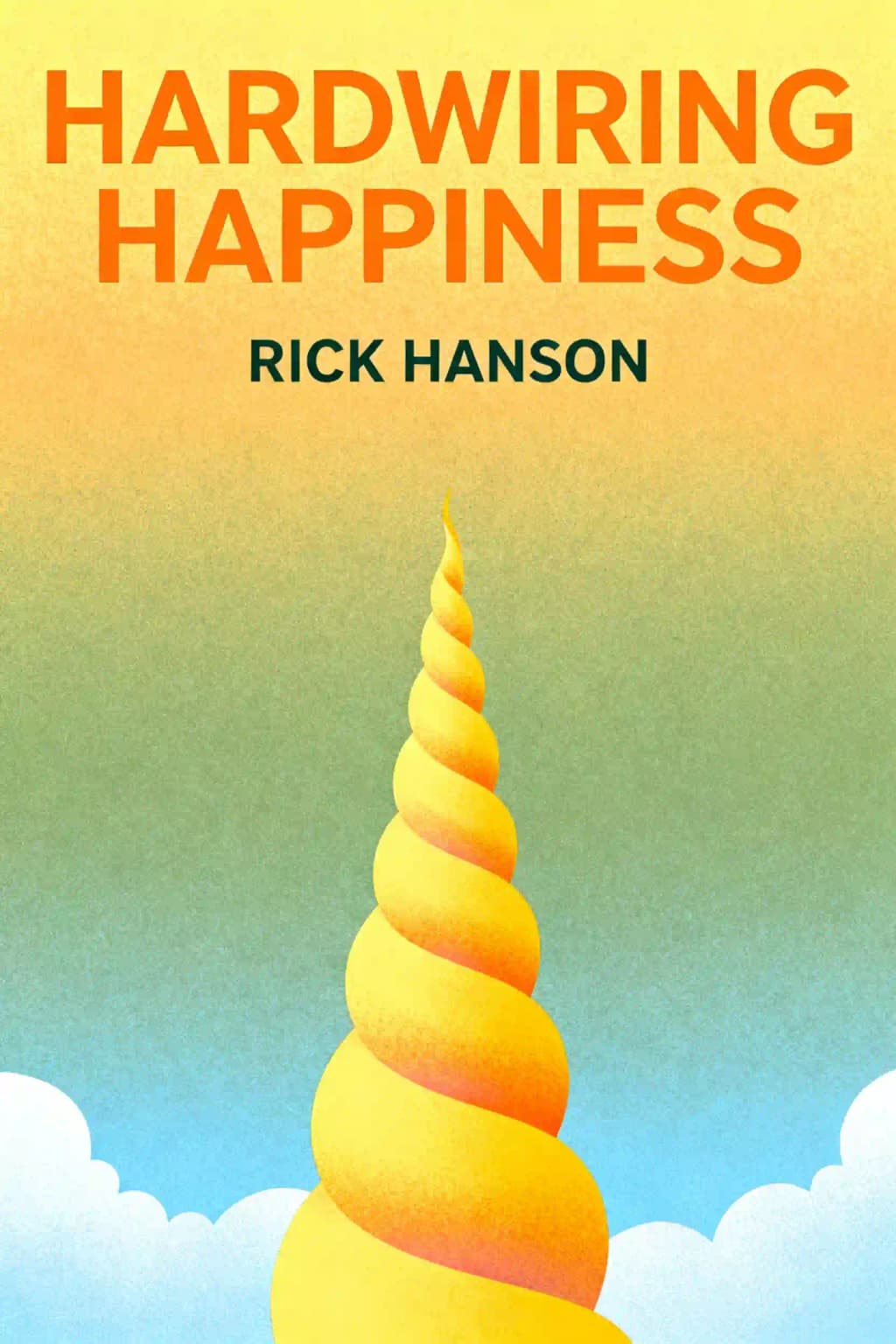
Rewire your brain for lasting happiness with Rick Hanson's million-copy bestseller. Translated into 33 languages, this neuroscience gem teaches the HEAL method - a scientifically-proven technique endorsed by Harvard and Google. Can 60 seconds of practice really transform your neural pathways?
Rick Hanson, Ph.D., is the New York Times bestselling author of Hardwiring Happiness: The New Brain Science of Contentment, Calm, and Confidence and a pioneering psychologist specializing in positive neuroplasticity. A senior fellow at UC Berkeley’s Greater Good Science Center, Hanson merges clinical psychology with contemplative practices to explore how mindfulness reshapes the brain. His work focuses on transforming everyday experiences into lasting resilience and well-being, themes central to Hardwiring Happiness and his other acclaimed books like Resilient and Buddha’s Brain.
Hanson founded the Wellspring Institute for Neuroscience and Contemplative Wisdom and co-hosts the Being Well Podcast, downloaded over 15 million times. His insights have been featured on CBS, NPR, and the BBC, and he’s lectured at institutions including NASA, Google, and Harvard. With over 260,000 newsletter subscribers, Hanson democratizes brain science through accessible online programs.
Hardwiring Happiness has been translated into 16 languages, solidifying Hanson’s global influence as a bridge between neuroscience and personal growth. His eight books, published in 33 languages, have collectively sold over a million copies worldwide.
Hardwiring Happiness explores how to rewire the brain’s negativity bias using neuroscience-backed techniques. Rick Hanson introduces the HEAL method (Have, Enrich, Absorb, Link) to transform fleeting positive experiences into lasting neural changes, fostering resilience, calm, and confidence. The book blends psychology, mindfulness, and brain science to teach readers how to cultivate contentment by "taking in the good."
This book is ideal for individuals seeking to overcome anxiety, build emotional resilience, or enhance mindfulness practices. It’s particularly valuable for self-help enthusiasts, therapists, and anyone interested in neuroplasticity. Hanson’s practical exercises cater to readers wanting evidence-based strategies to shift from stress to sustained well-being.
Yes—the book offers actionable tools grounded in neuroscience, making it a standout in personal development. Its four-step HEAL framework provides a structured approach to counterbalancing negative thought patterns, supported by real-world examples and exercises. Readers praise its blend of scientific rigor and accessible writing.
The HEAL method (Have, Enrich, Absorb, Link) is a four-step process to internalize positive experiences:
This technique helps build resilience by transforming brief joys into enduring brain traits.
Hanson explains that evolution wired humans to prioritize threats, creating a "sad amygdala" dominance. The book teaches readers to consciously focus on positive experiences—like gratitude or small wins—to strengthen the "happy amygdala." Over time, this counters innate pessimism and builds default positivity.
Key practices include:
These methods help rewire neural pathways for lasting change.
Unlike generic mindfulness guides, Hanson’s work focuses on neuroplasticity—using daily micro-moments to structurally alter the brain. While books like The Power of Now emphasize present-moment awareness, Hardwiring Happiness provides a science-based roadmap to cultivate optimism through deliberate neural training.
Some readers find the exercises repetitive or time-intensive, requiring consistent practice for results. Others note the neuroscience explanations may feel technical for casual readers. However, most praise its practical approach to transforming mental habits.
The book teaches techniques to interrupt anxious thought loops by linking positive experiences to negative triggers. For example, pairing a calming memory with a stressor during the Link step weakens the brain’s fear response. Regular practice reduces overall reactivity and builds emotional resilience.
The Green Zone represents a mental state of safety, satisfaction, and connection—contrasted with the stress-driven “Red Zone.” Hanson argues that living in the Green Zone enhances decision-making, relationships, and well-being. Practical exercises help readers anchor themselves here during daily challenges.
As a neuropsychologist and mindfulness teacher, Hanson merges clinical research with spiritual insights. His expertise in implicit memory and trauma informs the book’s focus on embedding positive experiences at a neural level, distinguishing it from purely theoretical self-help guides.
Yes—by teaching readers to “see the good in others” and share positive experiences, the book strengthens empathy and communication. Practices like savoring moments of connection help build trust and reduce conflict, fostering healthier interpersonal dynamics.
저자의 목소리로 책을 느껴보세요
지식을 흥미롭고 예시가 풍부한 인사이트로 전환
핵심 아이디어를 빠르게 캡처하여 신속하게 학습
재미있고 매력적인 방식으로 책을 즐기세요
Our brains overestimate threats, underestimate opportunities, and underestimate our resources.
This isn't a character flaw - it's the default setting of your brain's operating system.
Modern life, however, violates our ancient design.
Reactive experiences become risk factors for depression and psychological disorders.
The key is having the willingness to be changed by what you absorb.
Hardwiring Happiness의 핵심 아이디어를 이해하기 쉬운 포인트로 분해하여 혁신적인 팀이 어떻게 창조하고, 협력하고, 성장하는지 이해합니다.
Hardwiring Happiness을 빠른 기억 단서로 압축하여 솔직함, 팀워크, 창의적 회복력의 핵심 원칙을 강조합니다.

생생한 스토리텔링을 통해 Hardwiring Happiness을 경험하고, 혁신 교훈을 기억에 남고 적용할 수 있는 순간으로 바꿉니다.
무엇이든 물어보고, 목소리를 선택하고, 진정으로 공감되는 인사이트를 함께 만들어보세요.

샌프란시스코에서 컬럼비아 대학교 동문들이 만들었습니다
"Instead of endless scrolling, I just hit play on BeFreed. It saves me so much time."
"I never knew where to start with nonfiction—BeFreed’s book lists turned into podcasts gave me a clear path."
"Perfect balance between learning and entertainment. Finished ‘Thinking, Fast and Slow’ on my commute this week."
"Crazy how much I learned while walking the dog. BeFreed = small habits → big gains."
"Reading used to feel like a chore. Now it’s just part of my lifestyle."
"Feels effortless compared to reading. I’ve finished 6 books this month already."
"BeFreed turned my guilty doomscrolling into something that feels productive and inspiring."
"BeFreed turned my commute into learning time. 20-min podcasts are perfect for finishing books I never had time for."
"BeFreed replaced my podcast queue. Imagine Spotify for books — that’s it. 🙌"
"It is great for me to learn something from the book without reading it."
"The themed book list podcasts help me connect ideas across authors—like a guided audio journey."
"Makes me feel smarter every time before going to work"
샌프란시스코에서 컬럼비아 대학교 동문들이 만들었습니다

Hardwiring Happiness 요약을 무료 PDF 또는 EPUB으로 받으세요. 인쇄하거나 오프라인에서 언제든 읽을 수 있습니다.
What if the very organ responsible for your survival is also sabotaging your happiness? Your brain evolved over millions of years to keep you alive in a world of predators and scarcity, not to make you feel good in a world of abundance and safety. This mismatch between our ancient neural wiring and modern reality creates a profound problem: we're running twenty-first-century lives on Stone Age software. The result? We obsess over a single criticism while barely registering ten compliments. We catastrophize minor setbacks while taking major blessings for granted. We remember embarrassing moments from decades ago with perfect clarity while forgetting yesterday's joys. But here's the revolutionary insight: you can actually change your brain's default settings. Through understanding how neural pathways form and deliberately installing positive experiences into your brain's structure, you can transform fleeting moments of joy into lasting changes that fundamentally alter how you experience life.