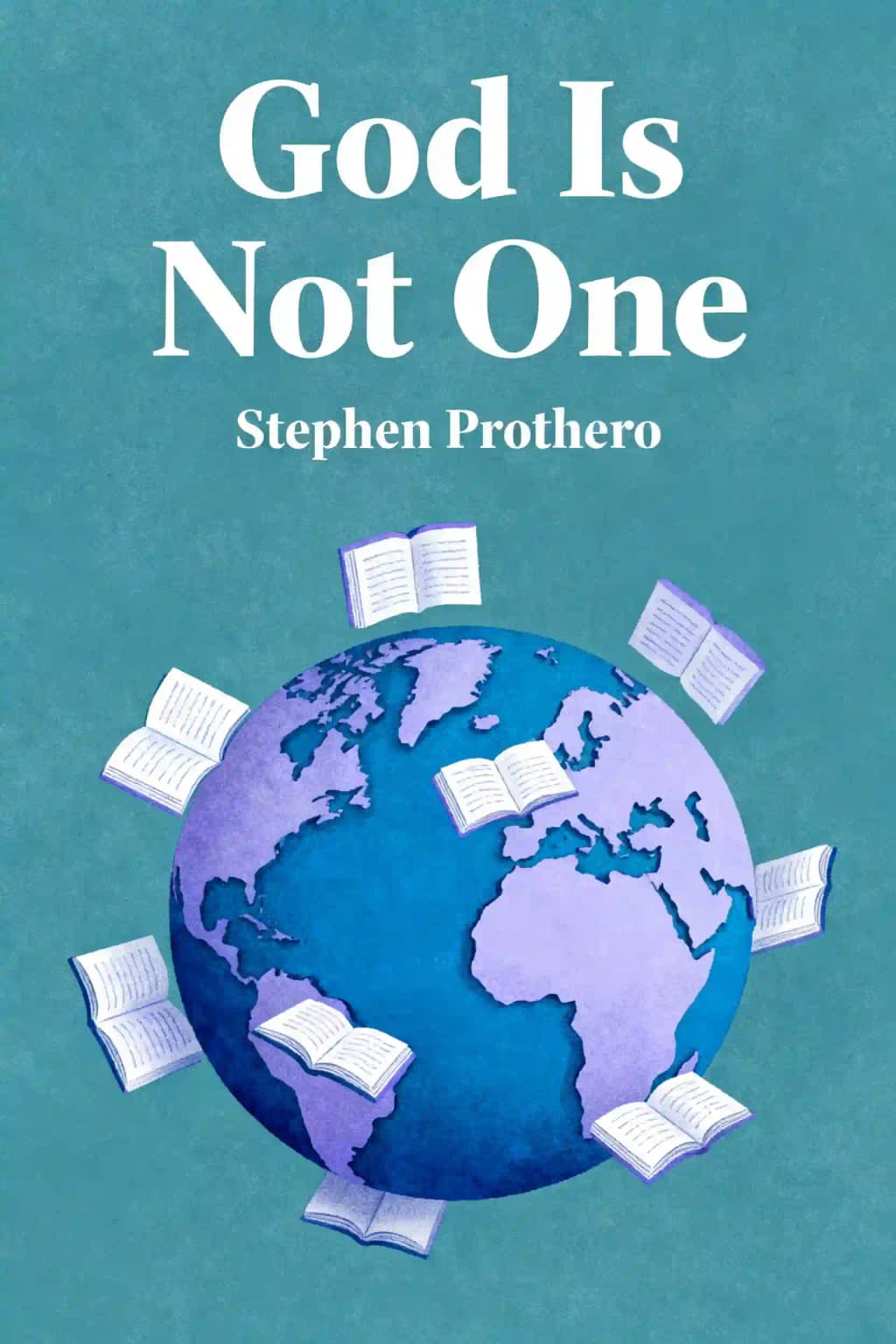
Prothero boldly challenges the "all religions are the same" narrative, exploring eight rival faiths that shape our world. Harvard's Harvey Cox calls it "the most readable introduction to world religions" - a provocative must-read that's transforming interfaith dialogue in our post-9/11 reality.
저자의 목소리로 책을 느껴보세요
지식을 흥미롭고 예시가 풍부한 인사이트로 전환
핵심 아이디어를 빠르게 캡처하여 신속하게 학습
재미있고 매력적인 방식으로 책을 즐기세요
Religious tolerance has morphed into mandatory religious agreement.
God Is Not One의 핵심 아이디어를 이해하기 쉬운 포인트로 분해하여 혁신적인 팀이 어떻게 창조하고, 협력하고, 성장하는지 이해합니다.
God Is Not One을 빠른 기억 단서로 압축하여 솔직함, 팀워크, 창의적 회복력의 핵심 원칙을 강조합니다.

생생한 스토리텔링을 통해 God Is Not One을 경험하고, 혁신 교훈을 기억에 남고 적용할 수 있는 순간으로 바꿉니다.
무엇이든 물어보고, 목소리를 선택하고, 진정으로 공감되는 인사이트를 함께 만들어보세요.

샌프란시스코에서 컬럼비아 대학교 동문들이 만들었습니다
"Instead of endless scrolling, I just hit play on BeFreed. It saves me so much time."
"I never knew where to start with nonfiction—BeFreed’s book lists turned into podcasts gave me a clear path."
"Perfect balance between learning and entertainment. Finished ‘Thinking, Fast and Slow’ on my commute this week."
"Crazy how much I learned while walking the dog. BeFreed = small habits → big gains."
"Reading used to feel like a chore. Now it’s just part of my lifestyle."
"Feels effortless compared to reading. I’ve finished 6 books this month already."
"BeFreed turned my guilty doomscrolling into something that feels productive and inspiring."
"BeFreed turned my commute into learning time. 20-min podcasts are perfect for finishing books I never had time for."
"BeFreed replaced my podcast queue. Imagine Spotify for books — that’s it. 🙌"
"It is great for me to learn something from the book without reading it."
"The themed book list podcasts help me connect ideas across authors—like a guided audio journey."
"Makes me feel smarter every time before going to work"
샌프란시스코에서 컬럼비아 대학교 동문들이 만들었습니다

God Is Not One 요약을 무료 PDF 또는 EPUB으로 받으세요. 인쇄하거나 오프라인에서 언제든 읽을 수 있습니다.
A Muslim bows toward Mecca. A Buddhist sits in silent meditation. A Christian kneels before a crucifix. We've been taught to see these as different expressions of the same spiritual impulse-like saying French, Mandarin, and Arabic are just different words for the same thing. But what if this comforting narrative is actually dangerous? What if pretending religions are fundamentally identical blinds us to conflicts reshaping our world? The claim that "all religions are one" sounds beautifully tolerant, yet it reveals a stunning ignorance of what billions actually believe. When we say all paths lead to the same mountaintop, we're not describing reality-we're reimagining it to soothe our discomfort with difference. This well-meaning fiction has consequences. Religious conflicts don't arise despite our shared humanity; they emerge precisely because different traditions diagnose different problems and prescribe radically different solutions. Here's what religions do share: they all begin by declaring something is profoundly wrong with human existence. But that's where agreement ends. Christianity identifies sin as humanity's core problem-our separation from God through moral failure. The solution? Salvation through Jesus Christ's sacrifice. Islam sees a different problem entirely: human arrogance and self-sufficiency, the delusion that we can live without submitting to Allah. Buddhism points to suffering itself as the fundamental issue, caused by our attachment and craving. The solution isn't salvation but nirvana-extinguishing desire altogether. Confucianism diagnoses social chaos stemming from broken relationships and poor character. Its remedy involves cultivating virtue through education and ritual propriety. These aren't different languages describing the same reality. They're entirely different projects. Asking which religion best achieves salvation misses the point-Buddhists aren't seeking salvation, and Christians aren't pursuing nirvana. It's like debating whether basketball or baseball better achieves touchdowns. The goals themselves differ fundamentally, and pretending otherwise insults practitioners of every tradition.