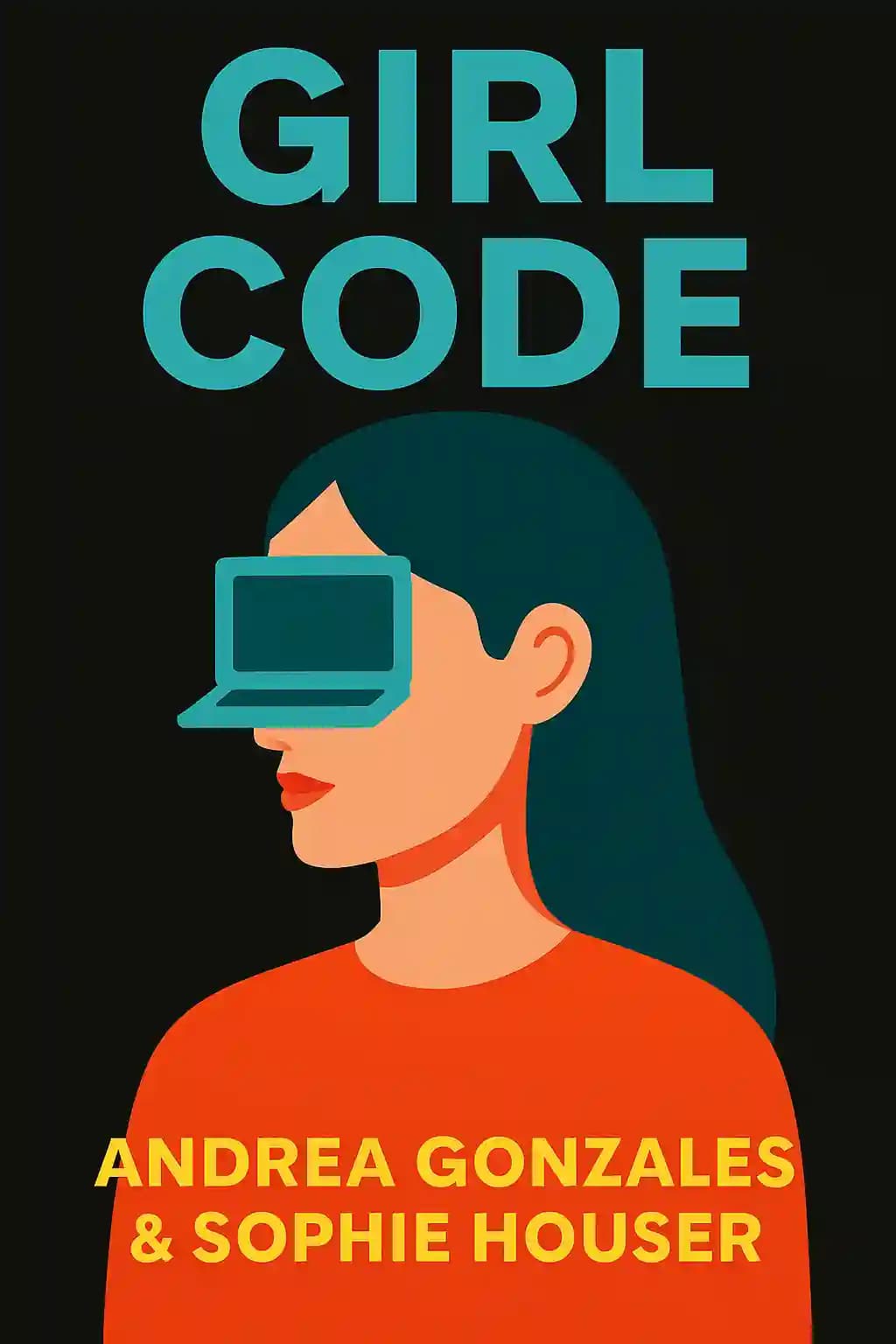
Two teen coders created "Tampon Run," a game that smashed menstrual taboos and went viral overnight. Named a "Best STEM Book" and praised by Publishers Weekly, "Girl Code" reveals how girls are revolutionizing tech while breaking society's most awkward silence.
Andrea Gonzales and Sophie Houser, co-authors of Girl Code: Gaming, Going Viral, and Getting It Done, are trailblazing advocates for women in STEM and feminist game developers who gained recognition for their viral video game Tampon Run. The memoir chronicles their journey from high school students at a Girls Who Code summer program to international figures challenging societal taboos around menstruation and gender representation in tech.
Gonzales, a Robertson Scholar who studied computer science and journalism at UNC-Chapel Hill and Duke University, now works as a software engineer at Microsoft.
Houser, a Brown University computer science graduate, continues to promote diversity in tech through public speaking and mentorship. Their work has been featured in TIME, Teen Vogue, and CNN, and they have presented at institutions like NC State University, bridging activism with tech innovation.
Published by HarperCollins in 2017, Girl Code combines personal storytelling with coding tutorials, inspiring a generation of young women to pursue STEM careers while dismantling stereotypes. The book’s success underscores their lasting impact on conversations about gender equity in technology.
Girl Code chronicles the journey of Andrea "Andy" Gonzales and Sophie Houser, two teens who met at a Girls Who Code camp and created the viral video game Tampon Run to challenge menstrual stigma. The book blends their personal experiences in tech with insights on overcoming gender barriers, advocating for women in STEM, and harnessing creativity to drive social change.
Aspiring coders, educators, and advocates for gender equality in tech will find this book inspiring. It’s particularly relevant for teens interested in STEM, educators seeking relatable success stories, and anyone passionate about bridging the gender gap in male-dominated fields.
Yes—readers praise its uplifting message, real-world examples of perseverance, and actionable advice for navigating tech careers. The authors’ candid storytelling and practical coding tips make it both motivational and educational, especially for young women exploring STEM.
Key themes include overcoming societal taboos (like menstruation), resilience in male-dominated spaces, and the power of coding as a tool for activism. The authors emphasize collaboration, creativity, and using technology to amplify underrepresented voices.
During their Girls Who Code camp, Gonzales and Houser collaborated to build Tampon Run, a game that satirizes period stigma. The project went viral, landing them media spots and speaking engagements, and became a catalyst for discussions about gender equality in tech.
The duo navigates public speaking fears, societal discomfort around menstruation, and technical hurdles in game development. Their journey highlights the emotional and logistical obstacles women often face in tech.
By sharing their viral success and advocacy work, Gonzales and Houser critique the lack of female representation in tech. They encourage readers to challenge stereotypes, pursue coding careers, and create inclusive spaces for women.
The authors stress collaboration, embracing failure as a learning tool, and using code to solve real-world problems. The book includes bonus coding resources to help readers kickstart their own projects.
While praised for its positivity, some note the book focuses more on inspirational storytelling than deep technical analysis. However, its accessibility and relatable tone resonate strongly with its target audience.
Unlike theoretical takes on gender inequality, Girl Code offers a firsthand narrative of teen innovators leveraging tech for social impact. It pairs memoir-style storytelling with actionable advice, setting it apart from academic guides.
With ongoing gender disparities in tech, the book’s message about representation and empowerment remains critical. It serves as a roadmap for young women navigating an evolving industry still grappling with inclusivity.
Yes! The book provides coding tips, project ideas, and guidance for beginners. These resources aim to demystify programming and inspire readers to turn their ideas into functional projects.
저자의 목소리로 책을 느껴보세요
지식을 흥미롭고 예시가 풍부한 인사이트로 전환
핵심 아이디어를 빠르게 캡처하여 신속하게 학습
재미있고 매력적인 방식으로 책을 즐기세요
Coding can be a powerful tool for social change.
Financial stability was paramount in her family's values.
Girl code의 핵심 아이디어를 이해하기 쉬운 포인트로 분해하여 혁신적인 팀이 어떻게 창조하고, 협력하고, 성장하는지 이해합니다.
Girl code을 빠른 기억 단서로 압축하여 솔직함, 팀워크, 창의적 회복력의 핵심 원칙을 강조합니다.

생생한 스토리텔링을 통해 Girl code을 경험하고, 혁신 교훈을 기억에 남고 적용할 수 있는 순간으로 바꿉니다.
무엇이든 물어보고, 목소리를 선택하고, 진정으로 공감되는 인사이트를 함께 만들어보세요.

샌프란시스코에서 컬럼비아 대학교 동문들이 만들었습니다
"Instead of endless scrolling, I just hit play on BeFreed. It saves me so much time."
"I never knew where to start with nonfiction—BeFreed’s book lists turned into podcasts gave me a clear path."
"Perfect balance between learning and entertainment. Finished ‘Thinking, Fast and Slow’ on my commute this week."
"Crazy how much I learned while walking the dog. BeFreed = small habits → big gains."
"Reading used to feel like a chore. Now it’s just part of my lifestyle."
"Feels effortless compared to reading. I’ve finished 6 books this month already."
"BeFreed turned my guilty doomscrolling into something that feels productive and inspiring."
"BeFreed turned my commute into learning time. 20-min podcasts are perfect for finishing books I never had time for."
"BeFreed replaced my podcast queue. Imagine Spotify for books — that’s it. 🙌"
"It is great for me to learn something from the book without reading it."
"The themed book list podcasts help me connect ideas across authors—like a guided audio journey."
"Makes me feel smarter every time before going to work"
샌프란시스코에서 컬럼비아 대학교 동문들이 만들었습니다

Girl code 요약을 무료 PDF 또는 EPUB으로 받으세요. 인쇄하거나 오프라인에서 언제든 읽을 수 있습니다.
In 2014, two teenage girls met at a summer coding program and created something extraordinary. Andrea "Andy" Gonzales and Sophie Houser developed "Tampon Run" - a game where players throw tampons at enemies instead of shooting bullets. What began as a coding project exploded overnight, reaching over half a million people worldwide and catapulting them into unexpected fame. Their creation wasn't just entertaining; it challenged one of society's most persistent taboos and sparked crucial conversations about menstruation stigma and women in technology. Most remarkably, they accomplished all this while still navigating high school, homework, and the complexities of teenage life. Their journey demonstrates how coding can become a powerful tool for social change, especially when wielded by young women determined to make their voices heard in spaces where they've traditionally been silenced.
