1장
Standing Out in a World of Sameness: The Marketing Revolution You Need
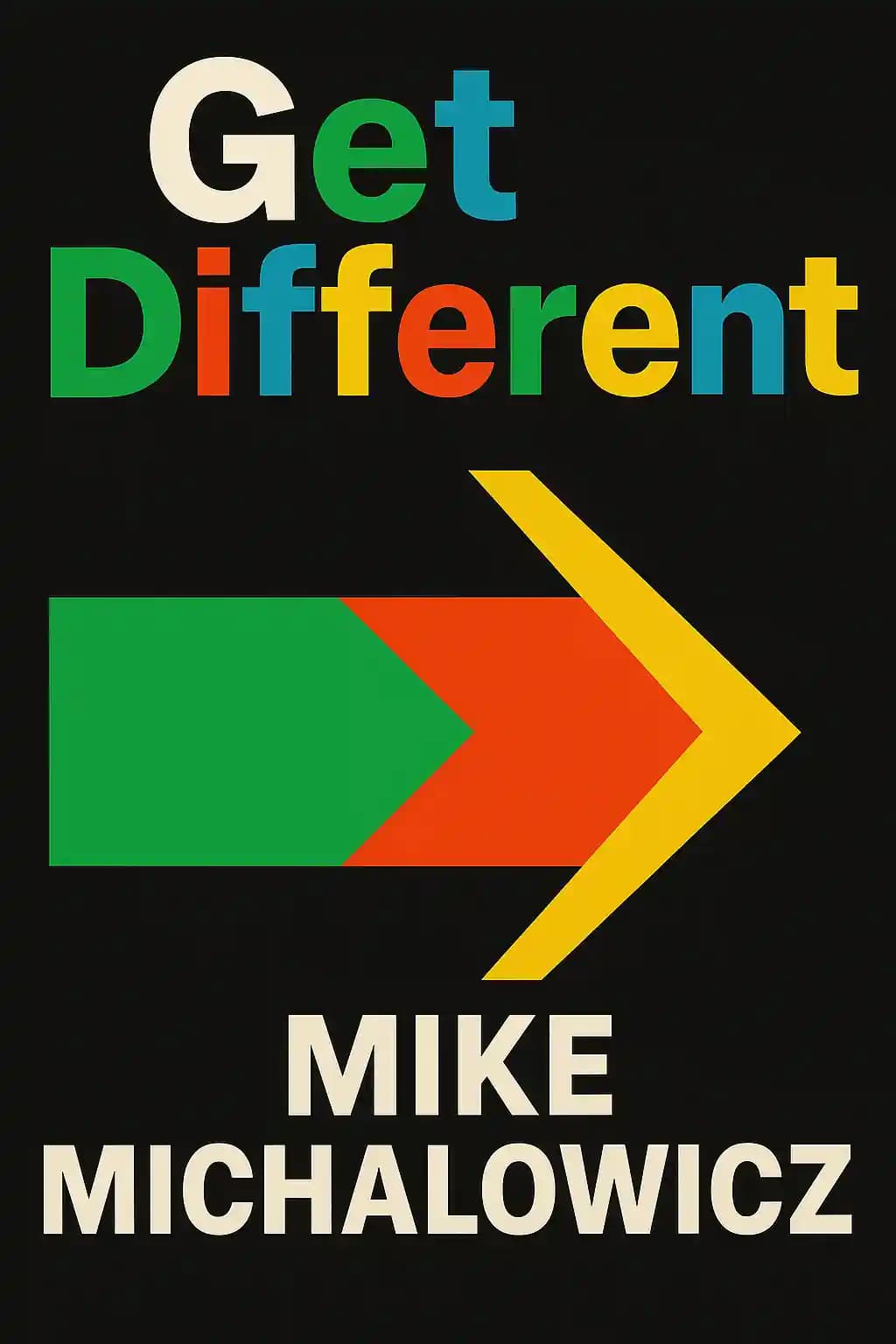
What if I told you that your business is dying, not because your product is bad, but because no one knows it exists? In a world where the average person sees up to 10,000 marketing messages daily, being merely "good" isn't enough-you need to be different. This is the core message of Mike Michalowicz's game-changing book "Get Different," which has become required reading in marketing departments at companies like HubSpot and has been endorsed by Seth Godin as "the only marketing book you need to read this year." Michalowicz, who built and sold two multimillion-dollar companies before becoming a bestselling author, learned his most profound marketing lesson during a game of billiards with internet marketing pioneer Yanik Silver: "If your solution is better than what's out there, you have a goddamn responsibility to outmarket them." This book is his blueprint for doing exactly that.
2장
The Marketing Crisis Every Business Faces
The hard truth is that marketing happens in milliseconds, not months. Your website has about fifteen seconds to capture attention. Your Instagram post? Maybe ten. The human brain is hardwired to filter out the familiar and focus only on what's different-a survival mechanism from our prehistoric ancestors that now determines whether your business thrives or dies in obscurity.
Most business owners are terrified of standing out. We play by imaginary rules that don't exist, falling in line with industry norms out of fear. We convince ourselves that "word of mouth" will save us, which is really just crossing our fingers and hoping clients will do our marketing for us. This passive approach is why so many great products and services languish in obscurity.
I learned this lesson the hard way with my first book, "The Toilet Paper Entrepreneur." Despite believing that "a great book will sell itself," my launch flopped completely. I ended up with twenty thousand unsold copies stacked throughout my house-in the basement, attic, under beds, and even in my car. Each box was a painful reminder that better doesn't matter until you get noticed, and you won't get noticed until you're different.
The truth is, people buy what they know exists. If you're not getting noticed, you're not even in the game. When everyone markets the same way, you become just another gray suit in a room of five hundred. Different is where you become undeniably noticeable-like arriving in red when everyone expects gray.
To overcome this challenge, you need both a mission to fight for and a nemesis to fight against. My mission is to eradicate entrepreneurial poverty. My nemesis is a particular business "thought leader" who promotes greed and defines success through material possessions. His most obnoxious promotional photo sits in my office as a daily reminder of what I'm fighting against. When you have both a mission and a nemesis, you become a street fighter for your dreams.
3장
The DAD Marketing Framework: Your Path to Getting Noticed
The solution to marketing mediocrity is a three-step framework I call DAD: Differentiate, Attract, Direct. This approach works because it aligns with how our brains naturally process information rather than fighting against it, making it particularly effective in today's oversaturated marketing landscape.
Step 1: DIFFERENTIATE - Do something different enough to get noticed. This breaks through the reticular formation's filtering system-the part of our brain that ignores the familiar and focuses on the unexpected. For example, while most real estate agents send generic postcards, one successful agent delivers quarterly market updates inside hand-delivered mason jars filled with seasonal treats. The unexpected presentation ensures her materials don't end up in the recycling bin with other real estate mailers.
Step 2: ATTRACT - Ensure your approach appeals to your ideal prospects rather than repelling them. Your different approach must be viewed as an opportunity, not a threat. Consider how Dollar Shave Club disrupted the razor industry not just by being different, but by making that difference appealing through humor and straightforward messaging that resonated with their target audience. The key is to be memorably different in a way that draws people in rather than pushes them away.
Step 3: DIRECT - Compel prospects to take a specific, reasonable action. Without this step, even the most attention-grabbing marketing fails to convert interest into results. The action must be clear, simple, and appropriate to the level of relationship you've established. For instance, asking for a major purchase on first contact usually fails, while requesting a small commitment like downloading a free guide often succeeds.
These steps must be followed in sequence, like the "YMCA" dance. Skip any step and your marketing fails-even the best offer flops if no one notices it in the first place. Think of it as a three-act play where each act builds upon the previous one to create a compelling whole.
Gabriel Pina's story illustrates the power of this framework. After struggling for years with traditional marketing methods for his accounting business, he was facing bankruptcy. By applying the DAD framework and combining his accounting expertise with his passion for cigars, he created "The Numbers Guy Cigar Club," where he hosted monthly financial planning sessions in a premium cigar lounge. This unique approach differentiated him from other accountants, attracted successful business owners who enjoyed cigars, and directed them to specific tax-saving opportunities. Within six months, this strategy added six figures to his annual revenue.
The science behind this approach is compelling and rooted in evolutionary psychology. Our brains evolved to filter out familiar sounds while focusing on different or unexpected ones that might signal opportunity or danger. This process, called habituation, is why traditional marketing becomes invisible-our reticular formation simply filters it out as meaningless noise. When something is different, however, our brains analyze it first for threats, then for opportunities, creating a brief window where marketing can make an impact. This window typically lasts just 3-7 seconds, making it crucial to progress quickly from differentiation to attraction.
Modern neuroscience research supports this framework, showing that novel stimuli trigger increased activity in the brain's hippocampus and dopamine systems, enhancing both attention and memory formation. This explains why different approaches are not just noticed more but also remembered better.
4장
Identifying Your Target One Hundred
To implement effective different marketing, you need a scientific approach focused on a specific group of ideal prospects-what I call your "Target One Hundred." These are the specific individuals or organizations you're salivating to have as customers. Rather than casting a wide net, this targeted approach allows you to concentrate your resources and creativity on the prospects most likely to become valuable, long-term clients.
Start by analyzing your existing customers through a crush/cringe analysis. Sort them by revenue (highest to lowest) over the past two years, then mark those you love working with (crushes) and those who make you cringe. Consider factors like payment reliability, communication style, respect for your expertise, and overall compatibility. Circle the top 10% who generate high revenue AND you enjoy serving-these are the customers you want to clone. Pay special attention to patterns in their industry, company size, decision-making process, and how they found you.
If you don't have existing customers to analyze, define your ideal customer avatar with detailed demographics and psychographics. Go beyond basic characteristics like age and location to understand their values, fears, aspirations, and daily challenges. Then find their congregation points-groups, platforms, conferences, and online communities where they gather. This might include industry-specific LinkedIn groups, professional associations, trade shows, podcasts they follow, or blogs they read.
Once you've identified your Who (target prospects), determine your What (specific offer) and your Win (desired outcome). Your What must address your prospects' core desires and pain points, not just surface-level wants. For example, instead of offering "social media management," you might position it as "helping busy executives build thought leadership while saving 10 hours per week." Your Win could be gaining a customer, getting a referral, or having someone volunteer time - be specific about what success looks like.
To determine your marketing budget, calculate the lifetime value (LTV) of your ideal customer by considering not just initial purchase value but repeat business, referrals, and long-term potential. Then assess your Close Rate Odds (the likelihood of converting a prospect) based on historical data or industry standards. Based on these figures, decide what you're willing to invest per prospect. For instance, if your customer LTV is $50,000 and your close rate is 20%, you might be willing to invest $1,000 per prospect. This Investment per Prospect figure establishes parameters for your different marketing approach.
Linda Weathers' story illustrates the power of targeted different marketing. After spending over $50,000 on various marketing "experts" without landing a single client in nine months, she implemented the Get Different system focused on her Target One Hundred. She identified specific decision-makers in mid-sized manufacturing companies, created personalized outreach campaigns, and concentrated on building relationships at industry events. Within just three weeks, she landed two new clients and one prospect-demonstrating that effective marketing doesn't require massive spending, just a different approach focused on the right people with the right message at the right time.
5장
Creating Marketing That Demands Attention
Jesse Cole transformed a failing baseball team into the wildly successful Savannah Bananas by making one crucial different decision: naming the team the "Bananas"-a name completely unrelated to Savannah but undeniably attention-grabbing. This simple differentiation catapulted them from unknown to the talk of the town, leading to sold-out seasons and worldwide merchandise sales.
To create your own different marketing, try these proven techniques:
1. Use a Different Medium: One of the simplest ways to differentiate is to use a medium different from industry norms. When Kasey Anton's upscale Boston restaurant struggled with weekday business, she sent birthday candles with "Dinner on us" coupons to previous customers. This simple approach generated over $18,000 in new business for under $200 investment.
2. Mine for Ideas: Gather at least five people from diverse backgrounds for a structured "Idea Mine" brainstorming session. Share information about your ideal customer and offer, then follow specific facilitation techniques to generate creative marketing approaches without judgment.
3. Identify the Ordinary and the Obscure: Document your competitors' typical marketing approaches, then brainstorm different approaches by imposing constraints. Ask questions like: How would you market to one specific person in a crowd? What if you could highlight only one feature? What if you couldn't use standard industry marketing approaches?
4. Discover Your 'Est': Find what makes you the most extreme in your category-the craziest, weirdest, funniest, sincerest, or deepest. Your best "-est" should be an amplification of who you naturally are.
5. Blend It: Study how people market outside your industry and borrow strategies from unrelated fields. Vernon Hill of Commerce Bank adapted McDonald's toy giveaway concept by offering dog treats at drive-throughs, creating Pavlovian-trained dogs that barked when passing his banks (he later sold for $8.5B).
6. Change the Label: Create a unique professional label to immediately differentiate yourself from competitors. Martin Bissett, an accountant, calls himself a "Knowledge Partner" instead, making him unique rather than one of countless "trusted advisers."
7. Find Opposites and Loopholes: Identify standard industry practices and rules, then deliberately do the opposite or find creative loopholes.
8. Think Like a Reporter: Ask "Is this newsworthy? Is this a story in itself?" Stories with unexpected visuals or outcomes naturally attract attention from both media and prospects.
The most important principle is to stay true to who you are. Despite criticism for my goofy humor in business books, I've learned that authenticity trumps conformity. Being disingenuous with your community carries the greater risk-either being discovered as a fake or slowly losing your soul while maintaining the charade.
6장
Making Your Marketing Attractive, Not Just Different
Mike shares how his first company, Olmec Systems, was outperformed by Geek Squad despite having better service. Geek Squad dominated through different marketing-showing up in nerdy glasses taped in the middle, dressed like FBI agents, using creative job titles, and driving black and white Volkswagen Beetles with their logo. While competitors laughed at their approach, customers flocked to them.
To make your different marketing attractive, consider these key Attraction Influencers:
1. Authority: Positioning yourself as an expert or trusted source
2. Comfort: Maintaining what people have and avoiding loss
3. Expansion: Upgrading things people already value
4. Belonging: Creating a sense of community
5. Health: Improving physical, mental, or sexual well-being
6. Relief: Avoiding pain
7. Beauty: What's pleasing to the senses
8. Esteem: Making people feel valued and recognized
Your marketing must be congruent with your offer. A disheveled man in a cheap Statue of Liberty costume promoting tax services gets attention but fails to attract because it doesn't inspire confidence in professional services. Similarly, the Savannah Bananas baseball team name initially received criticism from sports purists but perfectly attracted their true target audience: families seeking entertainment, not hardcore baseball fans.
The most powerful attraction technique is speaking to your prospect's identity. The "Don't Mess with Texas" anti-littering campaign succeeded by aligning with Texans' state pride, reducing highway litter by 72%. We're naturally drawn to messaging that affirms our identity and beliefs.
Timing is also critical for marketing effectiveness. After George Floyd's murder, I canceled a planned hot air balloon marketing stunt, recognizing it was inappropriate during a national racial reckoning. People know when they're being marketed to and when marketers ignore or exploit crises. Always ask: "Does this serve my ideal prospect?" and "Is this the right time for this message?"
7장
Directing Your Prospects to Take Action
Street performers excel at the Direct stage of marketing-they make it crystal clear what they want you to do: put money in the bucket. They don't provide complex instructions or multiple options that create friction. Instead, they offer one clear directive that's easy to follow.
Wall Drug's success story exemplifies how a simple directive can transform a business. When Dorothy Hustead realized their struggling drugstore needed customers, she created signs offering "Free Ice Water" to hot, thirsty travelers crossing South Dakota. The results were immediate-customers arrived before her husband and son returned from posting the signs. Today, Wall Drug attracts millions of visitors annually.
Your directive's effectiveness depends on how your community perceives their relationship with you-as superior, equal, or inferior:
1. Superior Position: Tell them what to do using commanding verbs and reward compliance with relational advancement phrases like "you made a great decision."
2. Equal Position: Invite them with inclusive language to "join our community" and acknowledge their significance.
3. Inferior Position: Petition them with appeal verbs like "share your experience" and acknowledge their superior position.
The relationship context shifts based on circumstances-even churches experience all three positions during a single service. Your directive must match your perceived position or it will fall flat.
Secrets and exclusivity can trigger extreme loyalty. United Airlines' invitation-only Classified restaurant makes members feel special, driving loyalty despite knowing it's a marketing tactic. Hidden venues like Ajito behind a Coca-Cola machine or Rails' secret bar create allure through the power of being "in the know." Scarcity amplifies action-Ford's limited First Edition Bronco sold out within minutes twice, even after doubling production.
To create an effective directive, start with your end goal and work backward. Write a directive phrase that's clear, specific, reasonable, and actionable. Ensure all ideal prospects can take that action without barriers. Remember Barry Schwartz's paradox of choice: give prospects only ONE action to take, and clearly explain what will happen when they do.
8장
Turning Marketing Into a Scientific Experiment
Let's face it: most of your different marketing ideas will fail. Over 90% of my own attempts bombed in the marketing milliseconds. But the 10% that succeeded more than compensated for all the failures.
The magnetic pull back to what everyone else does feels safe, not because it works, but because it's familiar. Doing different feels scary precisely because no one else is doing it-and that's exactly why you must do it! The human tendency to rein ourselves in kills innovation, so approach your ideas as experiments, not permanent marketing plans.
I developed the Get Different Experiment Sheet to evaluate whether marketing approaches target the right prospects with the right offers and leverage the DAD framework effectively. This simple tool helps transform random ideas into actionable marketing experiments:
1. OBJECTIVE: Define your WHO (ideal prospect), WHAT (offer), and WIN (ultimate outcome).
2. INVESTMENT: Calculate your CUSTOMER LTV (lifetime value), CLOSE RATE ODDS, and resulting INVESTMENT PER PROSPECT.
3. EXPERIMENT: Identify which MEDIUM you'll use, describe your specific marketing IDEA, and evaluate whether it passes the DAD test (Different, Attractive, Direct).
4. MEASUREMENT: Document both your INTENTIONS (start date, prospects targeted, expected ROI, investment cost) and OUTCOMES (end date, prospects reached, actual ROI, actual investment).
After reviewing these results, render a VERDICT: Expand & Track (when outcomes meet intentions), Retest (when results lack confidence), Improve (when parts work but need tweaking), or Abandon (when the idea clearly fails).
Don't abandon experiments prematurely. Give your experiment enough time-complete your full Target One Hundred test and allow reasonable time before deciding an approach doesn't work.
The only true measure of marketing success is whether people will actually pay for your offering. As Frank Minutolo taught me, "Trust wallets, not words." People often say what they think you want to hear-"I'd buy that in a heartbeat"-when they actually mean "I want you to like me." The only validation that matters comes from strangers who have no emotional investment in your feelings-when they buy, you have real proof your marketing works.
9장
Turning Disadvantages Into Marketing Advantages
What seems like a disadvantage can often become your greatest marketing advantage. UC Davis transformed slippery fallen olives from a liability into award-winning olive oil, saving $60,000 in cleanup costs while creating a profitable product. Similarly, Bugatti's $25,000 oil changes-seemingly a deterrent-actually become prestigious marketing that reinforces exclusivity.
Matt Shoup transformed his company's biggest mistake-accidentally painting a baby-into a marketing advantage. After years of hiding this "dirty secret," Matt realized that sharing the story and how his company made it right could demonstrate accountability. Despite being told by his advertising vendor that this was "company suicide," Matt included the painted baby story in all his marketing materials. The results were remarkable-his sales, close ratios, and profitability exploded.
Embracing your unique quirks can be your greatest marketing advantage. I leverage my difficult-to-pronounce last name (Michalowicz) as an icebreaker rather than hiding from it. I celebrate my oddities-from being "too skinny" in school to my vest obsession to writing in a sweltering cookie factory office. These peculiarities make me approachable and memorable. Weird isn't bad-it's humanizing, creates discussion points, wins marketing milliseconds, and most importantly, it's different.
Burger King brilliantly leveraged its second-place status against McDonald's with the "Whopper Detour" campaign. Instead of hiding their underdog position, they offered one-cent Whoppers to customers who installed their app and stood within 600 feet of a McDonald's. This David-versus-Goliath approach turned McDonald's massive presence into a disadvantage, resulting in 1.5 million app downloads, 300% increase in mobile revenue, and 818% more Twitter mentions.
Not having resources that competitors have can become a powerful differentiator. When the Savannah Bananas' electric scoreboard was destroyed by lightning, owners Jesse and Emily Cole couldn't afford to replace it. Instead, they embraced the manual scoreboard, which became a marketing feature that added nostalgic charm and attracted media attention.
10장
Reimagining Your Business Through Different Marketing
With the ability to get noticed by the right people through different marketing, you can dream bigger and see further possibilities. Imagine what you could accomplish knowing you can generate leads at will.
To reimagine your business, try these approaches:
1. The 1-Step Back Method: Identify your final offer (what you deliver to customers), then work backward through each preceding step. By examining each step, you can discover new ways to deliver value-like restaurants shifting to takeout, delivery, or even virtual cooking classes during the pandemic.
2. Sell the Tell: Instead of fully developing an idea before testing market interest, get customers to commit to a concept before you've created it. Share your idea with your community, be transparent about it being new, ask for deposits at a discounted "beta" price, and do this within 24 hours of conception.
3. Ask, "Who Else Benefits?": When Robin Robins had to pivot her IT Sales and Marketing Boot Camp from in-person to virtual during COVID-19, she didn't just try to retain attendees-she grew from 1,500 to nearly 5,000 registrations by partnering with vendors who wanted access to her audience.
4. Do What Doesn't Scale: Joey Coleman's advice-"Do what doesn't scale, because no one else will do it"-provides a breakthrough insight for differentiation. Most businesses avoid unscalable activities, creating an opportunity for you. Ask "What if you weren't concerned about scalability?" and "What if the inability to scale was just an industry myth?"
I challenge the notion that businesses should "grow up," which is often code for conformity and fitting in. While personal maturity has its place, allowing your business to conform means losing the ability to stand out in the marketplace. The most successful business owners are those who embrace their uniqueness rather than coloring inside the lines.
As a fortune cookie once advised me: "Be bold, be italic, but never be regular"-a reminder that being different is the bold amplification of your authentic self, which is why it always wins. Your marketing should be as unique as you are, and your business should grow without growing up. The world needs what you have to offer, but first, they need to know you exist.