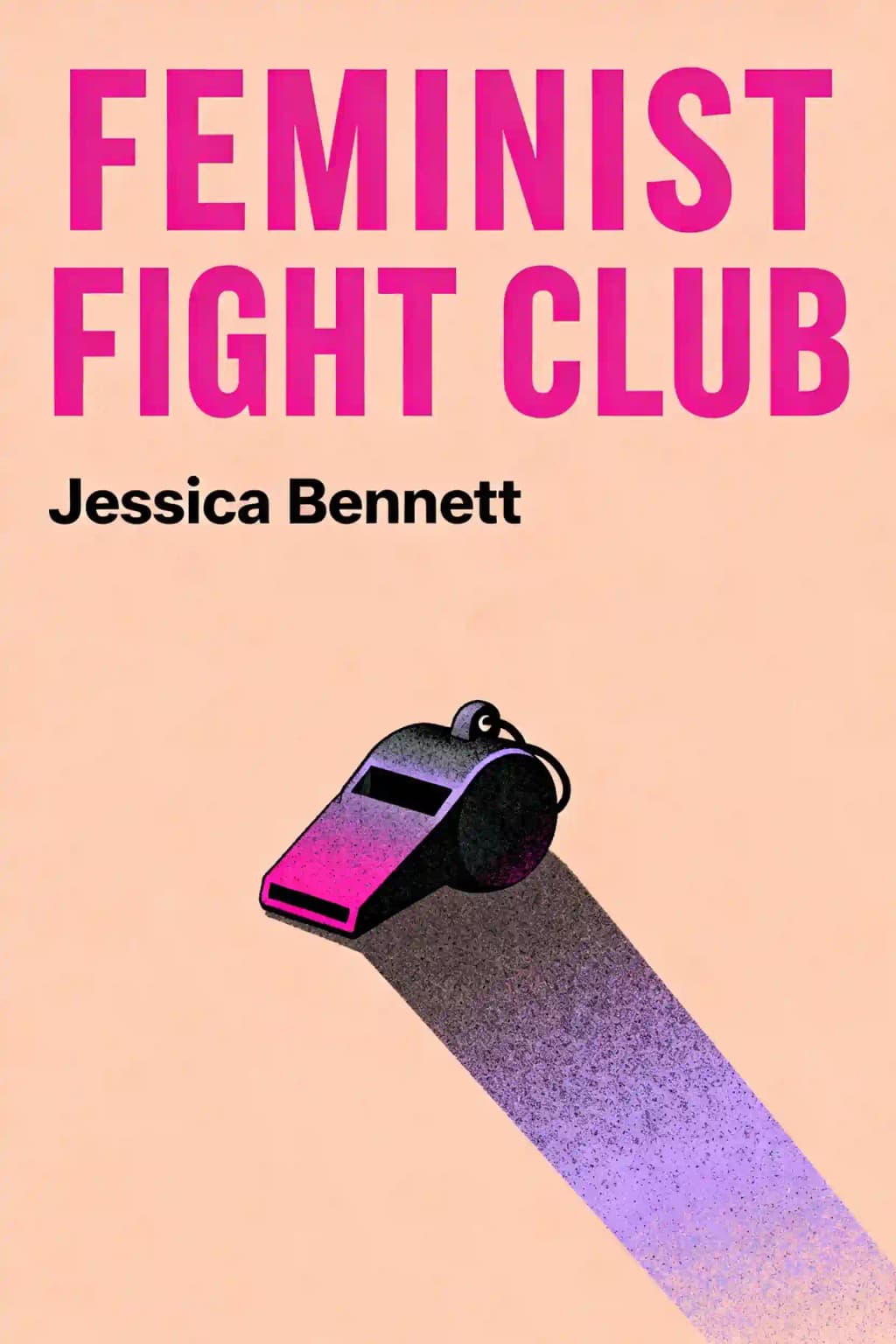
In "Feminist Fight Club," Jessica Bennett delivers a witty battle manual for sexist workplaces that's sparked global movements. Did you know Sheryl Sandberg's Lean In foundation editor created a book so revolutionary that women worldwide formed their own fight clubs? Your career's secret weapon awaits.
Jessica Bennett is the bestselling author of Feminist Fight Club: A Survival Manual for a Sexist Workplace and an award-winning journalist renowned for her incisive analysis of gender, culture, and workplace dynamics. A former New York Times gender editor, Bennett draws on her experience spearheading initiatives like the Overlooked obituaries project and covering the #MeToo movement to craft this mix of humor and actionable strategies for combating systemic sexism.
Her expertise extends to her role as cofounder of the Lean In Collection with Getty Images, which reshapes depictions of women in media, and her editorial work on This Is 18, a global portrait of teenage girlhood adapted into a book by Abrams.
Bennett’s career began at Newsweek, where she co-wrote the exposé behind Amazon’s Good Girls Revolt series, and she now teaches journalism at NYU. Her writing has appeared in TIME, Vogue, and The Washington Post, alongside her iHeartRadio podcast In Retrospect. Feminist Fight Club has spawned a newsletter, podcast, and upcoming television adaptation, cementing its status as a modern guide for workplace equality.
Feminist Fight Club is a practical guide for navigating workplace sexism, blending humor, research, and actionable strategies. It identifies common gender-based challenges—like interruptions ("Manterrupters") or idea theft ("Himitators")—and offers tools like negotiation scripts, historical context, and "Feminist Mad Libs" to combat them. The book also provides frameworks for starting real-life support groups to tackle systemic and internalized biases.
This book is ideal for professionals facing gender bias, managers aiming to create equitable workplaces, and anyone interested in feminist strategies for career advancement. It’s particularly relevant for women in male-dominated fields but offers universal insights on combating microaggressions and systemic barriers.
Yes—readers praise its witty, accessible approach to complex issues, with actionable "fight moves" and relatable anecdotes. Critics highlight its blend of data, historical analysis (e.g., 1970s Newsweek gender discrimination cases), and modern tools like a negotiation cheat sheet. However, some note it focuses more on individual than systemic solutions.
Key ideas include:
Bennett combines research with tactical advice, such as:
The book references the 1970s Newsweek gender discrimination lawsuit (which Bennett later covered as a journalist) and broader feminist movements to contextualize modern workplace struggles. These examples underscore how systemic sexism evolves but persists.
While both address workplace gender issues, Feminist Fight Club focuses more on collective action and幽默战术, whereas Lean In emphasizes individual empowerment. Bennett’s approach includes explicit callouts of systemic barriers and humor-driven strategies, differing from Sandberg’s corporate-centric advice.
Some critics argue the book prioritizes individual behavior changes over structural reforms and lacks intersectional analysis of race, class, or LGBTQ+ experiences. However, its practical frameworks are widely praised for immediate workplace application.
Yes—it provides a negotiation cheat sheet with phrases like, “Based on industry standards and my contributions, I propose…” to counter lowball offers. The book also advises documenting achievements and rehearsing responses to pushback.
Inspired by the book, these are real-life support networks where women share workplace challenges and strategize solutions. Bennett includes a starter kit for organizing meetings, fostering solidarity, and practicing “fight moves” together.
Bennett’s investigative rigor (from roles at Newsweek and The New York Times) shines through in data-driven arguments, while her humor and relatable tone make complex topics accessible. Her coverage of #MeToo and gender equity informs the book’s contemporary relevance.
Despite progress, gender disparities persist in pay, promotions, and everyday interactions. The book’s tools for identifying biases, assertive communication, and building alliances remain critical for navigating modern workplaces, especially post-#MeToo.
저자의 목소리로 책을 느껴보세요
지식을 흥미롭고 예시가 풍부한 인사이트로 전환
핵심 아이디어를 빠르게 캡처하여 신속하게 학습
재미있고 매력적인 방식으로 책을 즐기세요
Am I actually just crazy?
This isn't just a women's issue-it's an economic one.
The modern feminist fight requires new weapons.
Women supporting other women rather than competing.
Today's barriers exist in cultural norms, unconscious bias.
Feminist Fight Club의 핵심 아이디어를 이해하기 쉬운 포인트로 분해하여 혁신적인 팀이 어떻게 창조하고, 협력하고, 성장하는지 이해합니다.
Feminist Fight Club을 빠른 기억 단서로 압축하여 솔직함, 팀워크, 창의적 회복력의 핵심 원칙을 강조합니다.

생생한 스토리텔링을 통해 Feminist Fight Club을 경험하고, 혁신 교훈을 기억에 남고 적용할 수 있는 순간으로 바꿉니다.
무엇이든 물어보고, 목소리를 선택하고, 진정으로 공감되는 인사이트를 함께 만들어보세요.

샌프란시스코에서 컬럼비아 대학교 동문들이 만들었습니다
"Instead of endless scrolling, I just hit play on BeFreed. It saves me so much time."
"I never knew where to start with nonfiction—BeFreed’s book lists turned into podcasts gave me a clear path."
"Perfect balance between learning and entertainment. Finished ‘Thinking, Fast and Slow’ on my commute this week."
"Crazy how much I learned while walking the dog. BeFreed = small habits → big gains."
"Reading used to feel like a chore. Now it’s just part of my lifestyle."
"Feels effortless compared to reading. I’ve finished 6 books this month already."
"BeFreed turned my guilty doomscrolling into something that feels productive and inspiring."
"BeFreed turned my commute into learning time. 20-min podcasts are perfect for finishing books I never had time for."
"BeFreed replaced my podcast queue. Imagine Spotify for books — that’s it. 🙌"
"It is great for me to learn something from the book without reading it."
"The themed book list podcasts help me connect ideas across authors—like a guided audio journey."
"Makes me feel smarter every time before going to work"
샌프란시스코에서 컬럼비아 대학교 동문들이 만들었습니다

Feminist Fight Club 요약을 무료 PDF 또는 EPUB으로 받으세요. 인쇄하거나 오프라인에서 언제든 읽을 수 있습니다.
Have you ever watched your brilliant idea get credited to the guy who repeated it five minutes later? Ever been interrupted so many times in a meeting that you just stopped trying to finish your sentences? Ever wondered if you're being paranoid about workplace sexism, or if it's actually happening? In 2009, a group of women in New York started meeting in secret to answer exactly these questions. They called themselves the Feminist Fight Club-not to wage war on men, but to combat the subtle, maddening sexism that pervades even the most progressive workplaces. What began as wine-fueled venting sessions evolved into something powerful: a sisterhood armed with strategies, data, and the shared recognition that they weren't crazy-the system was. This wasn't your mother's feminism of burning bras and breaking glass ceilings. This was about surviving the thousand tiny cuts that bleed women's confidence and stall their careers, one "sweetie" and stolen idea at a time.