Discover how soil health directly impacts your wellbeing. Dr. Daphne Miller's revolutionary approach connects sustainable farming to human vitality, earning praise from agricultural thought leaders. Can the microbiome in your garden prevent disease? This physician's journey through seven innovative farms reveals surprising medical insights.
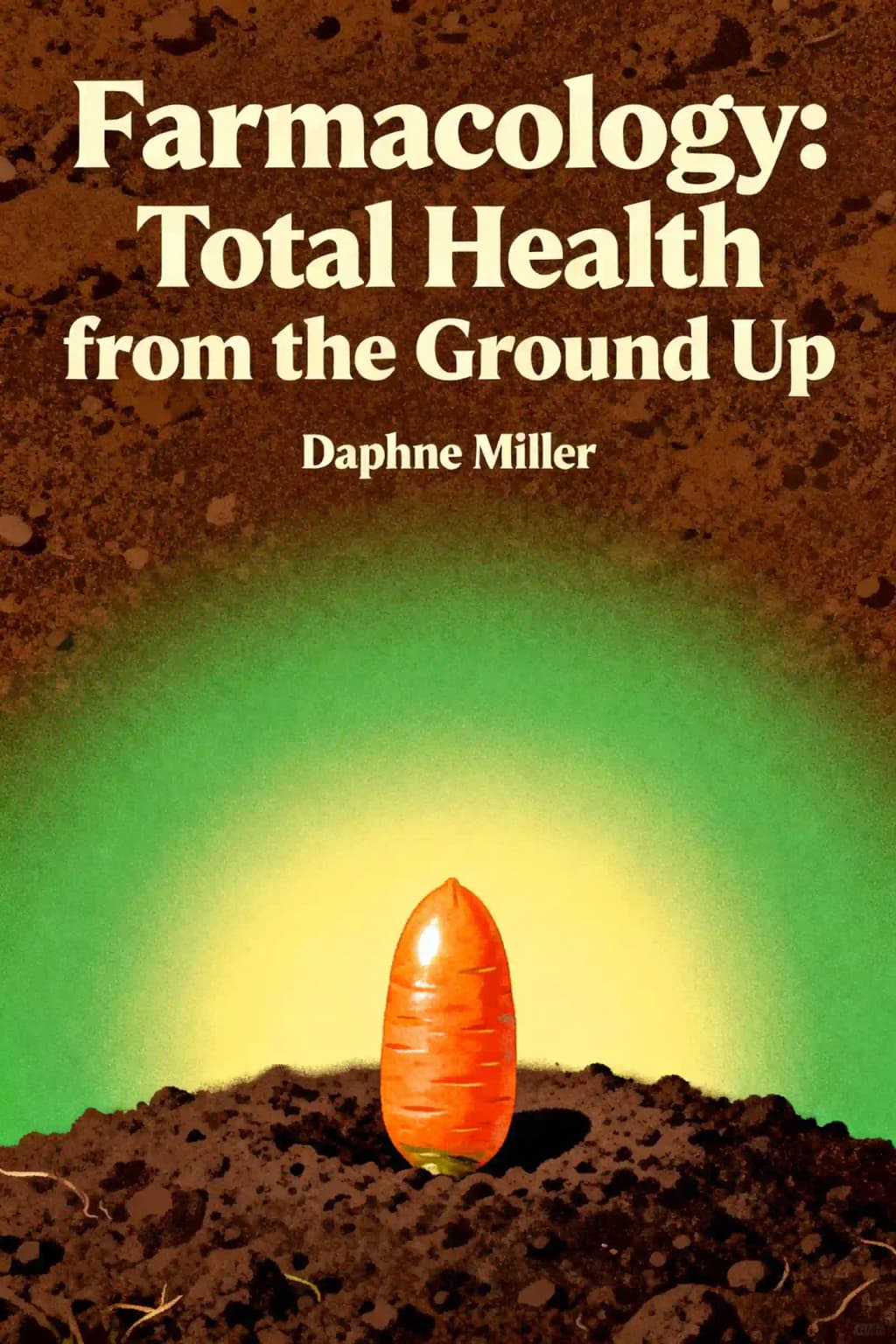
Daphne Miller, MD, is a physician, scientist, and acclaimed author of Farmacology: Total Health from the Ground Up, a groundbreaking exploration of the vital connection between soil health, sustainable agriculture, and human well-being.
A practicing family physician and Clinical Professor at the University of California San Francisco, Miller combines her medical expertise with a passion for environmental stewardship through her Research Scientist role at UC Berkeley’s School of Public Health, where she founded the Health from the Soil Up Initiative.
Her work has been featured in The Washington Post, The New York Times, and the award-winning documentary In Search of Balance. Miller’s earlier book, The Jungle Effect: The Science and Wisdom of Traditional Diets, examines global dietary patterns for disease prevention.
A sought-after speaker, she has advised the United Nations Food and Agriculture Organization and pioneered "park prescription" programs linking nature exposure to health outcomes. Farmacology has been translated into four languages and inspired interdisciplinary dialogues among healthcare providers, farmers, and policymakers worldwide.
Farmacology explores the profound connection between agricultural practices and human health. Daphne Miller, MD, visits seven innovative farms to uncover how soil health, polyculture farming, and sustainable practices like pastured poultry or vineyard pest management can inform medical care. The book links concepts like microbial diversity in soil to gut health and stress resilience, offering insights into holistic wellness rooted in ecological principles.
This book is ideal for healthcare professionals, farmers, environmentalists, and anyone interested in integrative health. Readers curious about sustainable agriculture’s impact on nutrition, stress management, or chronic disease prevention will find actionable insights. It also appeals to those exploring connections between community well-being and urban farming.
Yes—its unique blend of medical science and agrarian wisdom offers a fresh perspective on health. Miller’s farm visits and research-backed examples, such as how vineyard ecosystems inspire cancer treatment strategies, provide practical takeaways for personal and community wellness. The book’s interdisciplinary approach has been praised for bridging gaps between medicine and agriculture.
Miller argues that healthy soil microbiomes mirror human gut microbiomes, both thriving on diversity and balance. Farms avoiding monocultures and synthetic chemicals foster nutrient-rich crops and resilient ecosystems, which parallel dietary and lifestyle habits that prevent chronic diseases. For example, polyculture farms reduce pest outbreaks, akin to how diverse diets boost immunity.
Pastured hens experience “good stress” through natural foraging, which strengthens their resilience—contrasting with chronic stress in confined industrial settings. Miller applies this to humans, advocating for moderate physical activity and exposure to nature to build stress tolerance rather than avoid stressors entirely.
Vineyards using integrated pest management (IPM) balance ecosystem health rather than eradicating pests. Miller compares this to oncology’s shift toward targeted therapies that strengthen the body’s defenses instead of aggressive treatments. Both approaches prioritize long-term system resilience over short-term fixes.
Yes—Miller highlights urban farms that reduce neighborhood crime by fostering social connections and purposeful work. These spaces also lower stress through green exposure and physical activity, demonstrating how food systems impact mental health and community cohesion.
Aromatic herb farms practicing regenerative agriculture show how plant compounds used in skincare (like lavender or rosemary) thrive in chemically balanced soil. Miller ties this to holistic beauty rituals that prioritize internal health and environmentally friendly products over synthetic treatments.
As a family physician and UC Berkeley researcher, Miller bridges clinical expertise with agroecology. Her fieldwork on farms and collaborations with soil scientists provide evidence-based parallels between agricultural sustainability and preventive medicine, enriching the book’s credibility.
Some readers note the book’s heavy reliance on anecdotal farm visits, urging more robust clinical studies to validate connections. Others highlight its niche focus, which may overwhelm those unfamiliar with agricultural terms. However, most praise its innovative interdisciplinary lens.
While The Jungle Effect examines traditional global diets, Farmacology delves deeper into ecological health, linking farming practices to modern diseases. Both emphasize prevention through natural systems but cater to distinct audiences: food enthusiasts versus sustainability advocates.
The book suggests:
저자의 목소리로 책을 느껴보세요
지식을 흥미롭고 예시가 풍부한 인사이트로 전환
핵심 아이디어를 빠르게 캡처하여 신속하게 학습
재미있고 매력적인 방식으로 책을 즐기세요
"You can change a microbiome in a day."
"quit cold turkey" on conventional inputs.
Farmacology의 핵심 아이디어를 이해하기 쉬운 포인트로 분해하여 혁신적인 팀이 어떻게 창조하고, 협력하고, 성장하는지 이해합니다.
생생한 스토리텔링을 통해 Farmacology을 경험하고, 혁신 교훈을 기억에 남고 적용할 수 있는 순간으로 바꿉니다.
무엇이든 묻고, 학습 스타일을 선택하고, 나에게 맞는 인사이트를 함께 만들어보세요.

샌프란시스코에서 컬럼비아 대학교 동문들이 만들었습니다
"Instead of endless scrolling, I just hit play on BeFreed. It saves me so much time."
"I never knew where to start with nonfiction—BeFreed’s book lists turned into podcasts gave me a clear path."
"Perfect balance between learning and entertainment. Finished ‘Thinking, Fast and Slow’ on my commute this week."
"Crazy how much I learned while walking the dog. BeFreed = small habits → big gains."
"Reading used to feel like a chore. Now it’s just part of my lifestyle."
"Feels effortless compared to reading. I’ve finished 6 books this month already."
"BeFreed turned my guilty doomscrolling into something that feels productive and inspiring."
"BeFreed turned my commute into learning time. 20-min podcasts are perfect for finishing books I never had time for."
"BeFreed replaced my podcast queue. Imagine Spotify for books — that’s it. 🙌"
"It is great for me to learn something from the book without reading it."
"The themed book list podcasts help me connect ideas across authors—like a guided audio journey."
"Makes me feel smarter every time before going to work"
샌프란시스코에서 컬럼비아 대학교 동문들이 만들었습니다

Farmacology 요약을 무료 PDF 또는 EPUB으로 받으세요. 인쇄하거나 오프라인에서 언제든 읽을 수 있습니다.
When Kentucky farmer Wendell Berry welcomed me to his porch, he understood my quest before I did: "You doctors who kicked over the traces interest me a lot. There are doctors suffering pretty badly because of that collision of technology with flesh." His words crystallized my growing discomfort with conventional medicine's limitations. I never expected to find answers to our fragmented healthcare approach in sustainable agriculture, yet that's exactly where the most profound insights emerged. The revolutionary premise-that ecological farming principles offer profound wisdom for human health-connects two worlds we've artificially separated but that fundamentally operate by the same principles.
At Jubilee Biodynamic Farm, farmer Erick showed me a handful of rich, cocoa-colored soil with perfect "tilth" - moist, alive with microorganisms, with a texture like pastry dough. "It's like good Chi," his colleague explained. "You know it when you see it." This soil wasn't always healthy. Initially, Erick collected soil analysis reports resembling medical lab results and applied fifty tons of imported minerals based on lab recommendations with minimal improvement. This mirrored my patient Allie's situation, who arrived with shopping bags of supplements that hadn't helped her chronic fatigue. What transformed Jubilee's soil was switching to biodynamic farming, emphasizing interconnections between physical and living systems. I witnessed this cycle firsthand: cows consume grass, converting it through their microbiota into nutrients while their manure returns to soil, where microbes transform it into rich humus that nourishes plants, boosting immunity and delivering balanced nutrients. Stanford researcher Justin Sonnenburg explained that gut microbes function like a newly discovered organ, potentially more therapeutically accessible than our genome since "you can change a microbiome in a day." Research comparing Italian and Burkina Faso children revealed that children eating locally-grown, plant-based foods had more diverse gut bacteria that excel at extracting nutrients from unprocessed foods while offering protective functions. By contrast, children eating Western diets had more "Homer Simpson bacteria" that thrive on fats and sugars, store calories efficiently, and promote inflammation. When Allie connected to sustainable agriculture through farm-fresh foods, seasonal produce, "dirty" farm vegetables, avoiding antimicrobial chemicals, and community gardening, her health transformed. Four months later, she had stopped almost all medications and felt well for the first time in years, with all her previously low nutrients returning to normal.
In Missouri's Ozarks, rancher Cody Holmes transformed his cattle operation after realizing conventional inputs weren't economically sustainable. After abandoning hormones, vaccines, and commercial feed, his results were remarkable: healthier soil, cleaner water, and zero calf mortality - a claim so extraordinary that university experts accused him of lying. Cody described traditional weaning as "singularly tragic," with calves separated from mothers at six to eight weeks, causing stress, illness, and 5-7% mortality. After switching to bison-style grazing and keeping calves with mothers, mortality plummeted while fertility improved by 25%. The calves learned to identify medicinal herbs and developed natural parasite resistance. "I cannot teach a calf how to graze," Cody explained, "but I can offer the mother the opportunity to teach her calf." This wisdom parallels human research showing flavor exposure begins in the womb and continues through breast milk. Children introduced to bitter vegetables early, often, and in varied combinations develop better long-term acceptance. Family meals, pleasant eating environments, and parents modeling vegetable consumption all encourage healthier eating habits.
In Arkansas, Gary Cox found renewed purpose after converting from conventional egg production to a pasture-based facility. One operation had 15,000 beak-trimmed hens in dim, ammonia-filled conditions, while Gary's birds engaged in natural behaviors outdoors. These environments mirrored two swine flu patients - Mike developed pneumonia requiring months of recovery, while Carl recovered within a week. Stress researcher Bruce McEwen explained that Gary's hens faced intense but brief threats, efficiently mobilizing their stress response without experiencing "allostatic overload." Conventionally raised hens endured chronic stressors: poor air quality, mites, crowding-induced insomnia, and social isolation despite proximity. Indoor hens laid about 20% more eggs than pastured hens because confined hens, with nothing better to do, ate constantly - similar to humans who stress-eat when bored. Pastured hens stayed active foraging and socializing. The bigger picture revealed pastured eggs had superior nutritional value and fewer health problems, highlighting how prioritizing quantity over quality mirrors our shortsighted human productivity model.
At Scribe Winery in Sonoma, winemaker Andrew Mariani learned that his vineyard was a complex ecosystem after eliminating rattlesnakes, which triggered a devastating gopher population explosion. Viticulturist Jeff Wheeler implemented integrated pest management: oak forests housing beneficial insects, native plants attracting pollinators, poultry controlling pests, and strategically managed weeds. This ecological approach inspired radiologist Bob Gatenby's "adaptive therapy" for cancer treatment. Rather than overwhelming with maximum chemotherapy doses, treatment is calibrated based on tumor response. In groundbreaking studies, this method maintained tumors at static levels indefinitely, while conventional approaches triggered aggressive growth as resistant cells emerged. This paradigm shift views cancer as a manageable presence rather than an invader requiring elimination, mirroring sustainable agriculture's approach to pest management. Just as vineyards thrive through careful balance rather than attempted pest eradication, human bodies might better manage cancer through approaches that work with biological systems rather than against them.
In the Bronx, Karen Washington transformed trash-filled vacant lots into thriving community gardens. Beyond vegetables and chickens, the Garden of Happiness featured a 9/11 shrine, picnic tables, and party lights - a true gathering place where the community connected. This urban farm network served multiple health functions. The market made produce affordable through food subsidy programs, offering healthy options in convenient locations. Three octogenarian gardeners looked decades younger than their age - research confirms gardening benefits older adults by reducing falls, depression and dementia. Beyond nutrition, the garden network fostered entrepreneurship and transformed a drug-dealing hotspot into a safe community space. Sociologist Robert Sampson found that neighborhood crime rates weren't primarily determined by economic status but by "collective efficacy" - a community-wide belief that members could make a difference by working together.
My journey through sustainable farms revealed a profound truth: health emerges from relationships, not isolation. Just as farmers focus on soil health rather than just crop yield, human health requires viewing the whole-person ecosystem instead of isolated symptoms. The vital signs of resilient systems-diversity, synergy, and redundancy-apply equally to farms and human bodies. Creating a personal "health map" of the "conversations" contributing to our wellness helps identify thriving areas and those needing rebalancing. With healthcare providers who think ecologically, we can transform our unsustainable healthcare system just as conscious consumers have helped nurture healthy farms. The wisdom of sustainable agriculture offers a path to health that honors our interconnected nature. When we recognize that we're part of nature's cycles rather than separate from them, we discover that the same principles nurturing thriving farms can nurture thriving humans-revealing medicine's future not as a battle against disease, but as cultivation of health from the ground up.