1장
When Different Becomes Extraordinary: A Journey Through Human Identity
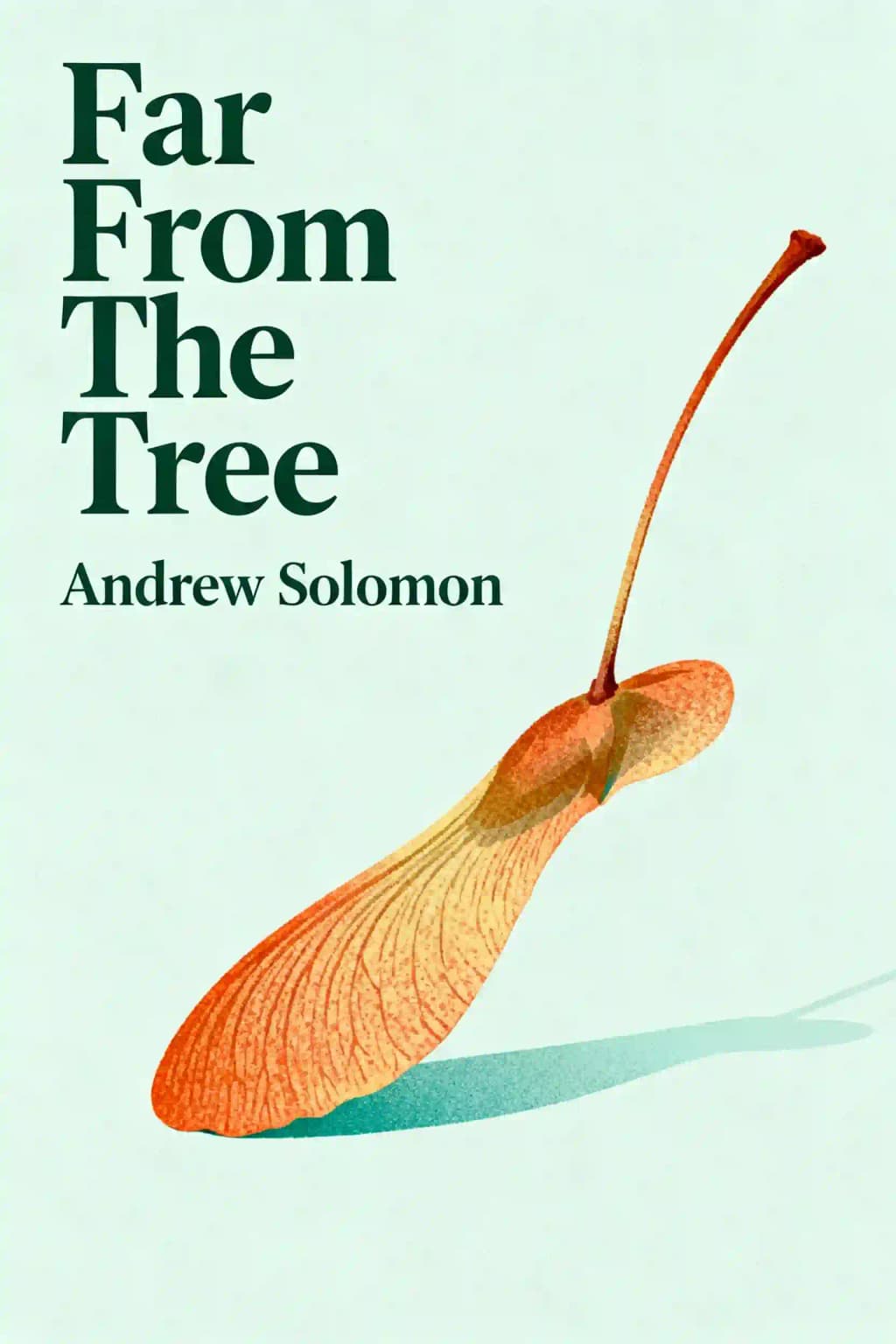
Have you ever wondered what happens when a child is born fundamentally different from their parents? Andrew Solomon's groundbreaking exploration of identity takes us on a profound journey through the lives of families facing extraordinary challenges. This masterpiece spent over ten years on bestseller lists, garnered multiple awards including the National Book Critics Circle Award, and transformed how we understand difference in families. Oprah Winfrey called it "a book everyone should read," while The New York Times praised it as "a work of genius." Solomon's remarkable ability to weave scientific research with deeply personal narratives creates an unforgettable tapestry of human experience that will forever change how you view family, identity, and love.
2장
Horizontal Identity: When Children Fall Far From the Tree
When two people have a child, they engage in production, not reproduction. Parents often wish to see themselves live forever through their children, unprepared for offspring with unfamiliar needs. While most children share traits with their parents through vertical identities-attributes passed down through DNA and cultural norms-horizontal identities emerge when someone has traits foreign to their parents, requiring identity formation from peer groups outside the family.
Solomon first recognized this pattern while investigating Deaf culture, finding parallels to his own gay identity. Both deaf and gay individuals often grow up with parents who wish to "fix" them before discovering affirming communities in adolescence. This insight revealed a vast company of people with horizontal identities whose differences paradoxically unite them.
The distinction between "illness" and "identity" creates a false dichotomy. Many conditions are simultaneously both, though we typically see only one aspect at a time. Identity politics rejects illness framing, while medicine diminishes identity. We need vocabulary where these concepts aren't opposites but compatible aspects of a condition.
Children described in Solomon's work have horizontal conditions alien to their parents: deafness, dwarfism, Down syndrome, autism, schizophrenia, multiple disabilities, prodigiousness, conception in rape, criminality, or transgender identity. They are apples that have fallen far from the tree. Yet countless families learn to tolerate, accept, and ultimately celebrate children different from what they originally envisioned.
Parents' responses to children with differences fundamentally shape how those children view themselves. Having a child with a disability becomes a primary fact about a parent, changing how others perceive them. In these xenophobic times when legislation abrogates the rights of marginalized groups, compassion thrives at home. Understanding how these parents came to accept their children may help others do the same.
3장
Deaf Culture: A World of Visual Communication
The deaf community has evolved from a marginalized group into a vibrant culture with its own language, values, and identity. American Sign Language (ASL) isn't simply gestures but a complete language with complex grammar and syntax. Neuroimaging shows Sign is processed primarily in the brain's language hemisphere, just like spoken languages.
The history of deaf education began with religious prejudice, as St. Paul's declaration that "faith comes by hearing" was misinterpreted to mean deaf people couldn't inherit property or give confession. In the mid-18th century, the Abbe de l'Epee learned sign language from deaf Parisians and founded the Institute for the Instruction of Deaf-Mutes in 1755.
In America, Thomas Gallaudet traveled to France and returned with Laurent Clerc to establish the American Asylum for the Education and Instruction of the Deaf in 1817. The following fifty years were a "golden age" as American Sign Language developed. This progress was halted by Alexander Graham Bell's oralist movement, culminating in the 1880 Congress of Milan that banned sign language in favor of speech. Bell disparaged Sign as "pantomime" and advocated against deaf people marrying each other.
The linguistic legitimacy of Sign wasn't recognized until William Stokoe's 1960 book "Sign Language Structure." Today, the deaf community faces new challenges with cochlear implants, electronic devices that provide a sense of sound by directly stimulating the auditory nerve. While many parents choose implants for their deaf children, the Deaf community often views this as an attempt to eradicate their culture.
Jackie Roth, who grew up caught between deaf and hearing worlds, described how oralism dominated her education: "I spent two weeks learning to pronounce 'guillotine' as my entire French Revolution education, only to have no one understand my 'deaf voice' in real situations." Despite these challenges, she built a multifaceted career and eventually found balance between her deaf and hearing identities.
The 1988 Deaf President Now movement at Gallaudet University became "the Stonewall of Deaf culture" when students successfully demanded a deaf university president. This activism continues today as the deaf community fights for recognition of ASL as a legitimate language and against the view that deafness needs "curing."
4장
Dwarfism: Standing Tall in a World Built for Height
Unlike deaf people, dwarfs rarely have vertical community since most are born to average-height parents through random genetic mutation. This makes the annual Little People of America (LPA) gatherings emotionally significant-for some, "happy for one week a year"-as they provide the rare opportunity to be in an environment where height becomes irrelevant.
Dwarfs face a unique burden of being perceived as inherently comical. While people respond with hushed seriousness to other disabilities, the mere mention of dwarfs often provokes laughter. This callousness exceeds that shown to almost any other disabled group-dwarfs still appear in freak shows, dwarf-tossing competitions, and exploitative pornography.
Over two hundred genetic conditions lead to exceptionally short stature, with achondroplasia accounting for approximately 70% of cases. LP children face significant physical restrictions, needing to avoid high-impact activities while being encouraged toward swimming and golf. In adulthood, LPs commonly suffer from chronic back problems, allergies, sinus issues, arthritis, hearing impairments, spine deformities, and sleeping difficulties.
Despite public mockery and health challenges, dwarfs often display cheerful dispositions in childhood-likely a compensatory social strategy rather than an inherent trait. While initial emotional development appears positive, adolescence brings higher rates of depression and lower self-esteem compared to average-height siblings. Depression levels are notably higher in LPs with average-height parents than those with dwarf parents, highlighting the psychological benefit of vertical identity versus horizontal identity development.
Many dwarfs have fought against dwarf-tossing, a "sport" where dwarfs in harnesses are thrown by average-height people onto padded surfaces. Despite the practice being banned in France and several U.S. states, enforcement remains necessary. While some dwarfs defend participation as personal economic choice, others argue it dehumanizes the entire community by implying all dwarfs are "tossable."
Harry Wieder exemplified fearless activism despite multiple challenges-he was physically disabled, gay, nearly deaf, often incontinent, and child of Holocaust survivors. He criticized fellow dwarfs who refused to acknowledge their disabilities, drawing from his parents' Holocaust experience that "ignoring your identity did not afford protection."
The discovery of the achondroplasia gene in 1994 has enabled prenatal diagnosis, creating new ethical dilemmas. While some couples want to screen out dwarfism, others-particularly dwarf couples-might prefer children who share their condition. The question of genetic testing has sparked heated debate, with some clinics refusing requests to select for rather than against dwarfism.
5장
Down Syndrome: Finding Joy in Unexpected Places
Emily Perl Kingsley's 1987 essay "Welcome to Holland" has become the definitive metaphor for raising children with disabilities, particularly Down syndrome. The essay compares expecting a typical child to planning a trip to Italy, only to unexpectedly land in Holland instead. While some parents find it provides hope and strength, others criticize it for setting unrealistic expectations or inadequately acknowledging the unique joys of raising children with special needs.
Down syndrome affects 1 in 800 births in America, with over 400,000 people living with the condition. It can involve intellectual disability, heart defects, and various other health challenges, though not all features appear in every case. Early intervention has dramatically improved outcomes, with services including physical therapy, occupational therapy, nutrition counseling, audiology, vision services, nursing support, speech-language therapy, and assistive technology training.
When Jason Kingsley was born with Down syndrome in 1974, doctors told his parents to institutionalize him, claiming he would never recognize them, speak, think, or walk. Rejecting this advice, Emily and Charles Kingsley brought Jason home and enrolled him in early intervention. Their efforts yielded remarkable results, but as Jason grew older, his limitations became apparent. Despite his intelligence and verbal abilities, Jason struggled with social judgment and employment.
For most of history, Down syndrome was not compared to a holiday in Holland. The first attempts to educate the intellectually disabled began with Jean Marc Gaspard Itard's work with the Wild Boy of Aveyron in the early nineteenth century. By 1900, institutions originally meant to educate the disabled were being used to exclude them from society as eugenicists falsely linked mental retardation to criminality.
The condition was scientifically identified as trisomy 21 by Jerome Lejeune in 1958. Throughout much of the 20th century, children with Down syndrome were routinely institutionalized. Even prominent figures like psychoanalyst Erik Erikson and playwright Arthur Miller hid their children with DS.
After early intervention, education for children with disabilities follows two key approaches: mainstreaming and inclusion. Mainstreaming, advocated in the 1970s and 1980s, placed disabled students in dedicated classrooms within ordinary public schools. The 1990s brought a shift to inclusion, educating disabled children in the same classrooms as nondisabled peers, often with special assistance.
The debate centers on what benefits both disabled and nondisabled children. Critics argue disabled children can distract and slow learning, while advocates like Michael Berube contend inclusion's benefits are "truly universal"-making able-bodied children more humane while giving children with DS good language models and behavioral norms.
Despite widespread prenatal testing, the proportion of people born with Down syndrome has remained constant or increased. About 70% of expectant mothers who receive a prenatal diagnosis choose abortion, yet ironically, outcomes for people with DS have improved dramatically-those who once died at ten now live to fifty or sixty, with better education, healthcare, and societal accommodation.
6장
Autism: The Mystery of the Mind
Autism presents a mysterious paradox in modern medicine-while most diseases retreat with medical progress, autism diagnoses have exploded from 1 in 2,500 births in 1960 to 1 in 88 today. Unlike well-understood conditions, autism remains a syndrome rather than an illness-a collection of behaviors without clear biological markers or known brain mechanisms.
In stark contrast to the gentle "Welcome to Holland" metaphor for disability, one mother wrote "Welcome to Beirut," likening raising an autistic child to being dropped into a war zone. The hellish reality often includes extreme behaviors like smearing feces, sleeplessness for days, disconnection, and random violence. No definitive treatment exists for autism's neurological configuration, only various educational approaches, medications, and lifestyle modifications that may help some symptoms.
The traditional view of autism as an inability to love presents parents with a Pascalian dilemma: if autistic children can receive affection but don't get it, they suffer; if they cannot receive it but are given it abundantly, the affection may be wasted-clearly the lesser evil. Loving a child who doesn't mirror that love exacts a terrible emotional price, though most autistic children eventually develop at least partial attachments.
The term "autism" was first used by Swiss psychiatrist Eugen Bleuler in 1912 to describe disconnection from logic and reality. Leo Kanner identified it as a distinct disorder in 1943, choosing the term to emphasize the extreme aloneness of affected children. For decades, the prevailing theory blamed "refrigerator mothers" lacking maternal warmth-a notion championed by Bruno Bettelheim who claimed parents wished their children didn't exist.
Bernard Rimland challenged this in 1964 with a biological explanation for autism, while parents organized and pushed back against blame. As one mother noted, "We mothers would have liked an apology. We deserve it."
Autism is associated with underconnectivity between brain hemispheres and an overabundance of local connections. Autistic children often have smaller heads at birth that grow larger than average by 6-14 months, with brains enlarged by 10-15%. The condition involves inflammation in white matter areas, creating neurological "noise" similar to hearing a hundred voices on a telephone line simultaneously.
"Autism" likely encompasses multiple conditions with varied causes, similar to how epilepsy or dementia can result from different underlying issues. No single gene causes autism-up to 200 genes may be implicated, with some requiring environmental triggers to become active.
The neurodiversity movement celebrates aspects of autism, opposing organizations like "Cure Autism Now." This movement, forged in opposition to prejudice, argues that autistic behavior isn't lacking social coherence but represents a different, equally valid system. Jim Sinclair, co-founder of Autism Network International, explains that autism isn't something a person has but "a way of being" that colors every experience.
7장
Schizophrenia: The Shattering of Self
While Down syndrome challenges parents from birth and autism transforms toddlers parents have already bonded with, schizophrenia's unique trauma lies in its late onset during adolescence or early adulthood. Parents must accept that the child they've known and loved for over a decade may be irrevocably changed, even as they appear physically the same.
Initially, parents believe schizophrenia merely masks their beloved child, but the reality is that it replaces and deletes aspects of identity. Yet vestiges persist-memories of childhood, certain skills, and sometimes basic character traits like kindness. The cruel juxtaposition of what remains and what vanishes creates profound confusion and grief.
Schizophrenia erases the ability to connect with others, rational thinking, professional functioning, self-care, and self-awareness. Sufferers disappear into an alternative world of internal voices perceived as external, typically cruel and encouraging bizarre behavior. This creates profound isolation-"a fixed residence on a noxious private planet" with no possibility of visitors.
Schizophrenia manifests through both positive symptoms (psychotic hallucinations) and negative symptoms (psychic disorganization, blunted affect, withdrawal). One expert described it as "autism plus delusions." Patients experience horrific sensory hallucinations while simultaneously suffering from emotional detachment.
The condition develops through five predictable stages: an asymptomatic premorbid phase, a prodromal phase with gradually emerging symptoms, a psychotic phase with hallucinations and delusions, a progressive phase with clinical deterioration, and finally a chronic residual phase with permanent brain changes. Though most experience schizophrenia as a sudden break, it appears to be a developmental disorder inscribed in the brain before birth, typically manifesting between ages fifteen and thirty.
Schizophrenia clearly runs in families, with identical twins showing slightly higher than 50% concordance-indicating enormous shared vulnerability but not predestination. Children of both affected and unaffected twins face the same elevated risk, showing how people can carry susceptibility genes without developing schizophrenia, then transmit them to children who may become ill.
The genetic uncertainty surrounding schizophrenia has fueled a persistent culture of blame. As Maryellen Walsh wrote, "The history of schizophrenia is the history of blame," with mothers bearing the heaviest burden. The poisonous term "schizophrenogenic mother" was introduced by Frieda Fromm-Reichmann in 1948, leading to theories that blamed entire families.
For centuries, treatments for schizophrenia ranged from ineffectual to barbaric-from pulling teeth in the nineteenth century to lobotomies in the mid-twentieth. The development of antipsychotic medications beginning with Thorazine in 1950 marked a breakthrough for treating positive symptoms, but did little for negative symptoms.
The liberation movements of the 1960s fundamentally questioned mental illness itself. Thinkers like Michel Foucault, Erving Goffman, and R.D. Laing reframed madness as potentially liberating, with Laing suggesting schizophrenia might be "breakthrough" rather than "breakdown." This intellectual climate helped spawn deinstitutionalization, a massive social experiment that reduced America's institutionalized schizophrenic population from over half a million in 1950 to roughly forty thousand today.
8장
Prodigies: The Burden of Extraordinary Talent
Being gifted and being disabled share surprising similarities: both are isolating, mystifying, and petrifying. Many people come to value ostensibly undesirable abnormalities, while supposedly desirable variances like prodigiousness can be daunting. Prodigies function at advanced adult levels in specific domains before age twelve, though the author uses the term expansively to include anyone developing profound innate gifts early. The word derives from Latin prodigium, meaning "monster that violates the natural order"-suggesting these differences resemble birth defects.
For Evgeny "Zhenya" Kissin, music was unquestionably a first language. Born to Soviet Jewish intelligentsia, his parents initially assumed he would become an engineer like his father. At eleven months, he sang an entire Bach fugue his sister had been practicing. By twenty-six months, he began playing piano with one finger, and within days was playing with both hands using all fingers. At three, he improvised musical portraits of people.
Musical talent comprises three essential elements: athletic (physical prowess to manipulate an instrument precisely), mimetic (ability to reproduce techniques), and interpretive (conveying emotional meaning). Critics and musicians debate the balance between technical perfection and authentic expression. As critic Justin Davidson explains, mimicry shouldn't be dismissed as mere replication-it's how we learn all forms of expression.
The concept of genius has been debated for millennia, with competing theories about its source. Plato believed genius was divinely bestowed, while Longinus proposed it was something humans created. John Locke thought parents could cultivate it, claiming children's minds were as malleable as water. The Romantic era embraced mystery-Kant said geniuses couldn't explain their ideas' origins, while Schopenhauer described genius as hitting "a target no one else can see."
Financial exploitation represents the crudest form of parental abuse. In pre-war Russia, Isaac Babel described how prodigy "factories" offered families paths out of poverty. Pianist Ruth Slenczynska endured methodical beatings for mistakes before her debut at age four. Later she overheard her father say, "I teach Ruth to play Beethoven because it brings in the dollars." When she quit at sixteen, he disowned her.
Suicide haunts the prodigy landscape. Brandenn Bremmer, who finished high school at ten and possessed extraordinary musical gifts, shot himself at fourteen without explanation. His mother reflected, "He was born an adult." Pianist Terence Judd performed with the London Philharmonic at twelve but committed suicide at twenty-two. Violinist Michael Rabin had a breakdown and died at thirty-five from a fall with barbiturates in his system.
Classical music's meritocratic nature makes it an avenue for social mobility among marginalized groups. While Jewish prodigies from Eastern Europe once dominated, East Asians now prevail. Gary Graffman, himself a former Jewish prodigy, now teaches exclusively Chinese students. This shift reflects demographics (over 300,000 Chinese children study instruments), linguistic advantages (tonal languages enhance hearing acuity), physical attributes (hand structure suited to piano), cultural emphasis on discipline, and the forbidden allure Western music acquired during China's Cultural Revolution.
9장
Transgender: Beyond the Binary
Western culture prefers binaries, separating good from evil, mind from body, and masculine from feminine. Threats to gender norms become threats to social order itself. As psychoanalyst Richard C. Friedman joked, transgender people should wear shirts saying, "Don't worry-it won't happen to you." Gender remains difficult to define yet unmistakable to know. Jan Morris, who documented her transition in the 1970s, described it as "a passionate, lifelong, ineradicable conviction" that manifested as "swirls and clouds of color, a haze inside me."
Children may notice gender incongruity as early as age three or four. While gender nonconformity might be tolerated in early childhood, by around seven, children face intense pressure to conform to gender stereotypes. This pressure often leads trans children to become anxious and depressed. As Stephanie Brill, founder of Gender Spectrum, explains, "If you don't let them transition, their internal energy is fully occupied with gender identity, keeping them from reaching developmental markers."
The transgender experience has evolved beyond simple binary transitions. Some live "stealth," with everyone around them believing they were born into their affirmed gender. Others live openly as transmen or transwomen, while some identify as "genderqueer" (neither male nor female) or "gender fluid" (shifting between genders). Some experience debilitating gender dysphoria while others reject this framing. Physical interventions vary widely-some pursue surgeries and hormones while others don't.
Parents face the familiar tension between cure and acceptance, with fierce debates about whether bodies should be altered to accommodate minds or minds to accommodate bodies. While reparative therapies for gay people are now widely considered unethical, similar approaches for transgender people remain controversial. Kenneth Zucker claims his follow-up study shows only three of twenty-five girls he treated in childhood maintained gender dysphoria later in life. However, critics question these "successes"-one mother doubted her Zucker-treated daughter, now an alcoholic and self-mutilator, would outlive her.
The physical transition process differs significantly between natal males becoming female and natal females becoming male. Transwomen may appear less convincing when clothed due to height and bone structure, but can achieve nearly identical genitalia. Transmen typically pass well in public once they develop facial hair and deeper voices, but their constructed genitalia remain noticeably different from biological males.
Transgender individuals face staggering levels of discrimination. Despite higher-than-average education levels, respondents to a 2009 survey faced twice the national unemployment rate, with a quarter having been fired for gender nonconformity. Eighty percent had experienced harassment or assault in school, often by teachers. More than half of transgender youth had attempted suicide, compared to just 2% of the general population.
Since 1999, over 400 transgender people have been murdered in the United States alone, with global statistics showing a transgender person is killed every three days. The violence transcends national boundaries and murder rates, occurring in countries with both high and low general homicide statistics.
10장
The Transformative Power of Difference
Solomon started his book to forgive his parents and ended it by becoming a parent. He explains that understanding his past liberated him to move forward, as he sought to determine what parts of his childhood pain were his responsibility, his parents', or the world's. He acknowledges that his research about parenting was likely also preparation for becoming a parent himself.
The author argues that reproduction should be an inalienable right, noting that prejudice against "anomalous people" becomes most evident when adults with unusual traits choose to have children. He discusses Bree Walker, a newscaster with ectrodactyly who faced public outrage when she became pregnant knowing her child might inherit her condition.
The author reveals his journey to parenthood began when his friend Blaine expressed desire to become a mother. What started as a lighthearted offer evolved into a serious arrangement where he would be the legal father of a child living in Texas with Blaine. The author and his partner John later decided to have another child together through surrogacy, with their son George born on April 9, 2009.
The author concludes that his research built him "a plank" to join the heroic parents he once thought might be "fools, enslaving themselves to a life's journey with their alien children." He recognizes that he was "startled to learn" he was ready to join them, having witnessed how "splendor can illuminate even the most abject vulnerabilities" and experienced "the terrifying joy of unbearable responsibility."
Throughout this remarkable journey across multiple forms of human difference, Solomon discovers a profound truth: that the most challenging children often inspire the deepest love. The parents who navigate these extraordinary circumstances demonstrate that acceptance isn't merely tolerance but a radical embrace of human diversity in its most demanding forms. Their stories reveal that while we cannot always choose our circumstances, we can choose how we respond to them-with fear and rejection or with courage and love. In the end, these families teach us that difference isn't something to be feared but something that enriches our shared humanity in ways we could never have imagined.