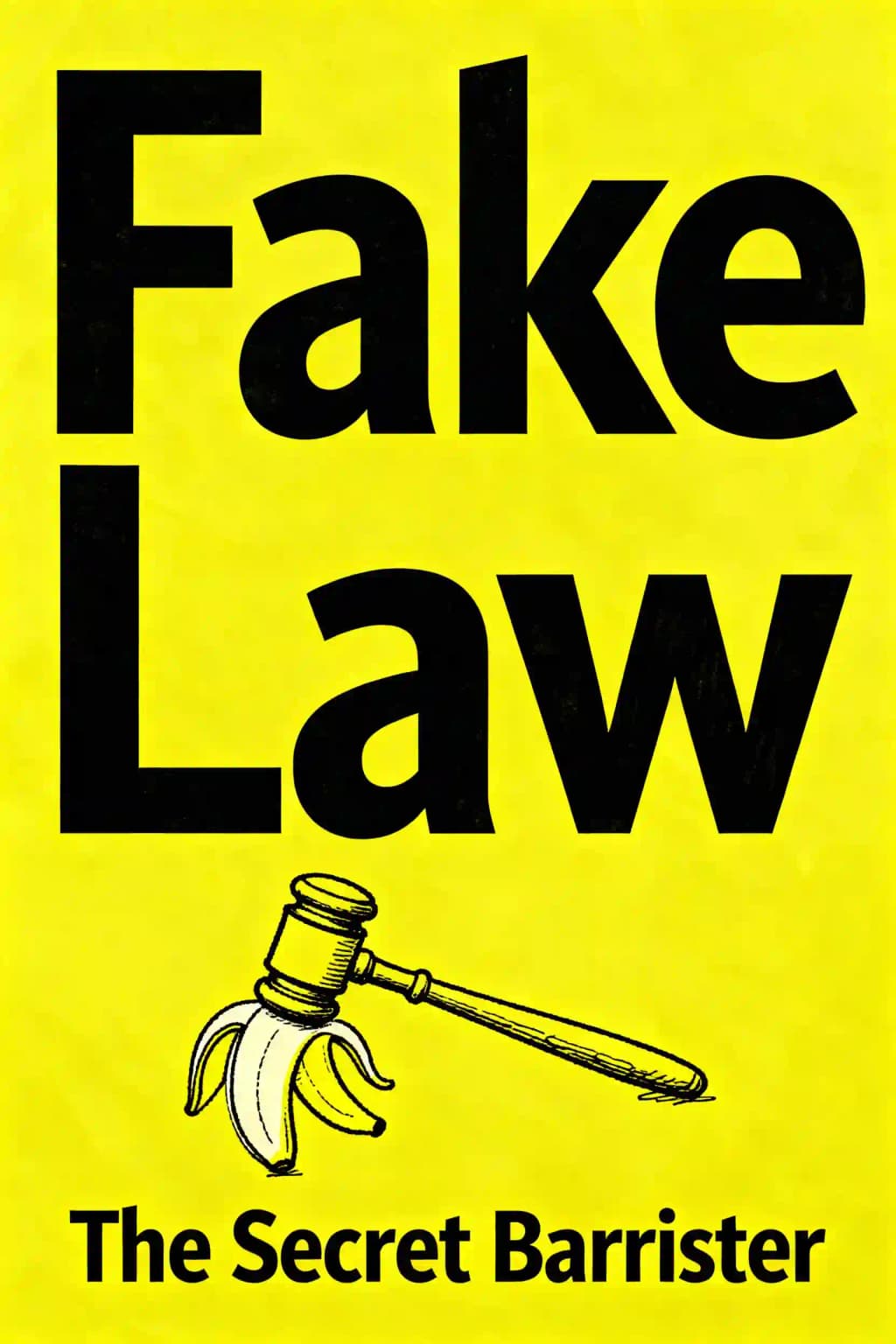
Unmasking legal deception: "Fake Law" reveals how media distorts justice, leaving citizens misinformed. Shortlisted for Parliamentary Book Awards, this eye-opening expose should be "required reading for law students" - and anyone who consumes news about courtroom drama.
저자의 목소리로 책을 느껴보세요
지식을 흥미롭고 예시가 풍부한 인사이트로 전환
핵심 아이디어를 빠르게 캡처하여 신속하게 학습
재미있고 매력적인 방식으로 책을 즐기세요
A masked intruder breaks into your home at 2 a.m. In the chaos, you defend yourself, and the burglar ends up injured. As sirens wail and paramedics rush past, one question pulses through your mind: *Will I go to prison for this?* This fear-that defending yourself makes you a criminal-has burrowed deep into our collective consciousness. Yet it's built on a foundation of distortion. The law in England and Wales actually provides robust self-defense protections, allowing you to use reasonable force based on what you genuinely believed in the moment, even if you were mistaken. The courts recognize that when your life is threatened, you can't calculate force with mathematical precision. So why do we believe we'll be prosecuted for protecting our families? Because certain cases have been stripped of crucial context and weaponized for political gain. Tony Martin, the Norfolk farmer who became a folk hero for shooting a teenage burglar, wasn't defending himself-he shot the boy in the back as he fled, using an illegal weapon, after previously declaring burglars should have their heads blown off. Munir Hussain wasn't prosecuted for stopping a home invasion but for hunting down a fleeing intruder and beating him with a cricket bat until he suffered permanent brain damage. Between 1990 and 2005, only eleven people were prosecuted for using force against intruders, and just seven involved actual burglaries. Politicians then exploited these rare cases to promise "reforms" that changed nothing substantively but allowed them to claim they'd protected homeowners. This cycle of manufactured outrage doesn't just mislead-it encourages violence as a first response and erodes our understanding of proportionality, pushing us toward a world where fatal force goes unquestioned.
Fake Law의 핵심 아이디어를 이해하기 쉬운 포인트로 분해하여 혁신적인 팀이 어떻게 창조하고, 협력하고, 성장하는지 이해합니다.
Fake Law을 빠른 기억 단서로 압축하여 솔직함, 팀워크, 창의적 회복력의 핵심 원칙을 강조합니다.

생생한 스토리텔링을 통해 Fake Law을 경험하고, 혁신 교훈을 기억에 남고 적용할 수 있는 순간으로 바꿉니다.
무엇이든 물어보고, 목소리를 선택하고, 진정으로 공감되는 인사이트를 함께 만들어보세요.

샌프란시스코에서 컬럼비아 대학교 동문들이 만들었습니다
"Instead of endless scrolling, I just hit play on BeFreed. It saves me so much time."
"I never knew where to start with nonfiction—BeFreed’s book lists turned into podcasts gave me a clear path."
"Perfect balance between learning and entertainment. Finished ‘Thinking, Fast and Slow’ on my commute this week."
"Crazy how much I learned while walking the dog. BeFreed = small habits → big gains."
"Reading used to feel like a chore. Now it’s just part of my lifestyle."
"Feels effortless compared to reading. I’ve finished 6 books this month already."
"BeFreed turned my guilty doomscrolling into something that feels productive and inspiring."
"BeFreed turned my commute into learning time. 20-min podcasts are perfect for finishing books I never had time for."
"BeFreed replaced my podcast queue. Imagine Spotify for books — that’s it. 🙌"
"It is great for me to learn something from the book without reading it."
"The themed book list podcasts help me connect ideas across authors—like a guided audio journey."
"Makes me feel smarter every time before going to work"
샌프란시스코에서 컬럼비아 대학교 동문들이 만들었습니다

Fake Law 요약을 무료 PDF 또는 EPUB으로 받으세요. 인쇄하거나 오프라인에서 언제든 읽을 수 있습니다.