Master JavaScript architecture with Addy Osmani's definitive Backbone.js guide - the bible that shaped modern web development. Ever wonder why tech leaders swear by this book? It transformed how developers build scalable applications, making complex frontends manageable overnight.
Addy Osmani is a Senior Staff Engineering Manager at Google Chrome and the bestselling author of Developing Backbone.js Applications. He is a leading authority on JavaScript frameworks and web development best practices, specializing in scalable application design. His work bridges technical rigor with practical insights for developers.
Osmani is also the author of seminal titles such as Learning JavaScript Design Patterns and Essential Image Optimization. Both books are widely referenced in programming communities. He is a recognized speaker, having delivered over 175 talks at global conferences, including Google I/O and SmashingConf, and contributes to open-source projects with over 32,000 GitHub stars.
Osmani's books have garnered over 1,100 Goodreads ratings, and his frameworks underpin applications at Fortune 500 companies. Developing Backbone.js Applications remains a cornerstone text for engineers tackling complex frontend architectures, praised for its actionable approach to sustainable code design. His book, focused on building modular web applications with Backbone.js, draws from his decade-long experience optimizing Chrome’s developer tools and spearheading projects like Material Design Lite and AI-powered Chrome DevTools.
This book teaches developers how to build maintainable, single-page applications using Backbone.js. It explains core concepts like models, views, collections, and routers while demonstrating real-world implementations like Todo lists and RESTful book libraries. Advanced topics include testing with Jasmine/QUnit, modular code organization with RequireJS, and integration with jQuery Mobile.
Intermediate to advanced JavaScript developers seeking to structure frontend code using MVC patterns will benefit most. It’s ideal for engineers transitioning from jQuery-heavy apps to organized SPAs and those needing solutions for data binding, event management, or server communication.
Yes, as foundational material for understanding JavaScript MVC frameworks. While newer libraries exist, Backbone’s minimalistic approach remains relevant for legacy systems and developers valuing flexibility. The book’s principles on testing, modularity, and RESTful design are evergreen.
It breaks down Backbone’s interpretation of MVC: Models for data, Views for UI logic, and Collections for model groups. The book contrasts this with traditional MVC, emphasizing Backbone’s lightweight implementation for client-side apps. Practical examples show how components interact via events.
Marionette.js is presented as a framework simplifying complex Backbone apps. The book covers its features like application lifecycle management, region-based view organization, and built-in memory cleanup. It demonstrates how Marionette reduces boilerplate code for larger projects.
Yes, it dedicates sections to testing with Jasmine, QUnit, and SinonJS. The author advocates test-driven development, showing how to validate models, check view rendering, and mock server responses. Example test suites for Todo apps illustrate integration strategies.
It details Backbone’s sync mechanism for CRUD operations, explaining how models automatically map to API endpoints. The RESTful book library example showcases fetching/persisting data, with tips for handling API versioning and authentication.
Strategies include modular architecture using RequireJS, lazy loading with Backbone.Paginator, and efficient event binding. The book emphasizes code splitting, dependency management, and performance optimization for rendering/data fetching.
Yes, a dedicated section explains integrating Backbone with jQuery Mobile. It solves routing conflicts between the two libraries and demonstrates adaptive UI techniques for hybrid mobile/web apps.
Key methods include minimizing DOM reflows via batched rendering, using efficient event listeners with listenTo, and caching fetched data. The book also compares lazy-loading vs. eager-loading strategies for collections.
It advocates AMD modules via RequireJS for dependency management. The modular app example demonstrates separating concerns into discrete components, with guidance on structuring large codebases across teams.
While primarily pro-Backbone, it acknowledges limitations like lacking built-in two-way data binding. The author suggests solutions via extensions like Marionette or complementary libraries like React for view layers.
Despite newer frameworks, Backbone’s unopinionated nature makes it valuable for custom architectures. The book’s focus on foundational patterns (models, routing, testing) provides transferable skills applicable to any frontend framework.
저자의 목소리로 책을 느껴보세요
지식을 흥미롭고 예시가 풍부한 인사이트로 전환
핵심 아이디어를 빠르게 캡처하여 신속하게 학습
재미있고 매력적인 방식으로 책을 즐기세요
JavaScript applications without proper structure quickly become unmanageable tangles.
MVC has been adapted for the web to address these exact challenges.
Teams can work independently on different components.
Models serve as the central component of application data and logic.
Backbone encourages centralizing it in model objects.
Developing Backbone.js Applications의 핵심 아이디어를 이해하기 쉬운 포인트로 분해하여 혁신적인 팀이 어떻게 창조하고, 협력하고, 성장하는지 이해합니다.
Developing Backbone.js Applications을 빠른 기억 단서로 압축하여 솔직함, 팀워크, 창의적 회복력의 핵심 원칙을 강조합니다.

생생한 스토리텔링을 통해 Developing Backbone.js Applications을 경험하고, 혁신 교훈을 기억에 남고 적용할 수 있는 순간으로 바꿉니다.
무엇이든 물어보고, 목소리를 선택하고, 진정으로 공감되는 인사이트를 함께 만들어보세요.

샌프란시스코에서 컬럼비아 대학교 동문들이 만들었습니다
"Instead of endless scrolling, I just hit play on BeFreed. It saves me so much time."
"I never knew where to start with nonfiction—BeFreed’s book lists turned into podcasts gave me a clear path."
"Perfect balance between learning and entertainment. Finished ‘Thinking, Fast and Slow’ on my commute this week."
"Crazy how much I learned while walking the dog. BeFreed = small habits → big gains."
"Reading used to feel like a chore. Now it’s just part of my lifestyle."
"Feels effortless compared to reading. I’ve finished 6 books this month already."
"BeFreed turned my guilty doomscrolling into something that feels productive and inspiring."
"BeFreed turned my commute into learning time. 20-min podcasts are perfect for finishing books I never had time for."
"BeFreed replaced my podcast queue. Imagine Spotify for books — that’s it. 🙌"
"It is great for me to learn something from the book without reading it."
"The themed book list podcasts help me connect ideas across authors—like a guided audio journey."
"Makes me feel smarter every time before going to work"
샌프란시스코에서 컬럼비아 대학교 동문들이 만들었습니다

Developing Backbone.js Applications 요약을 무료 PDF 또는 EPUB으로 받으세요. 인쇄하거나 오프라인에서 언제든 읽을 수 있습니다.
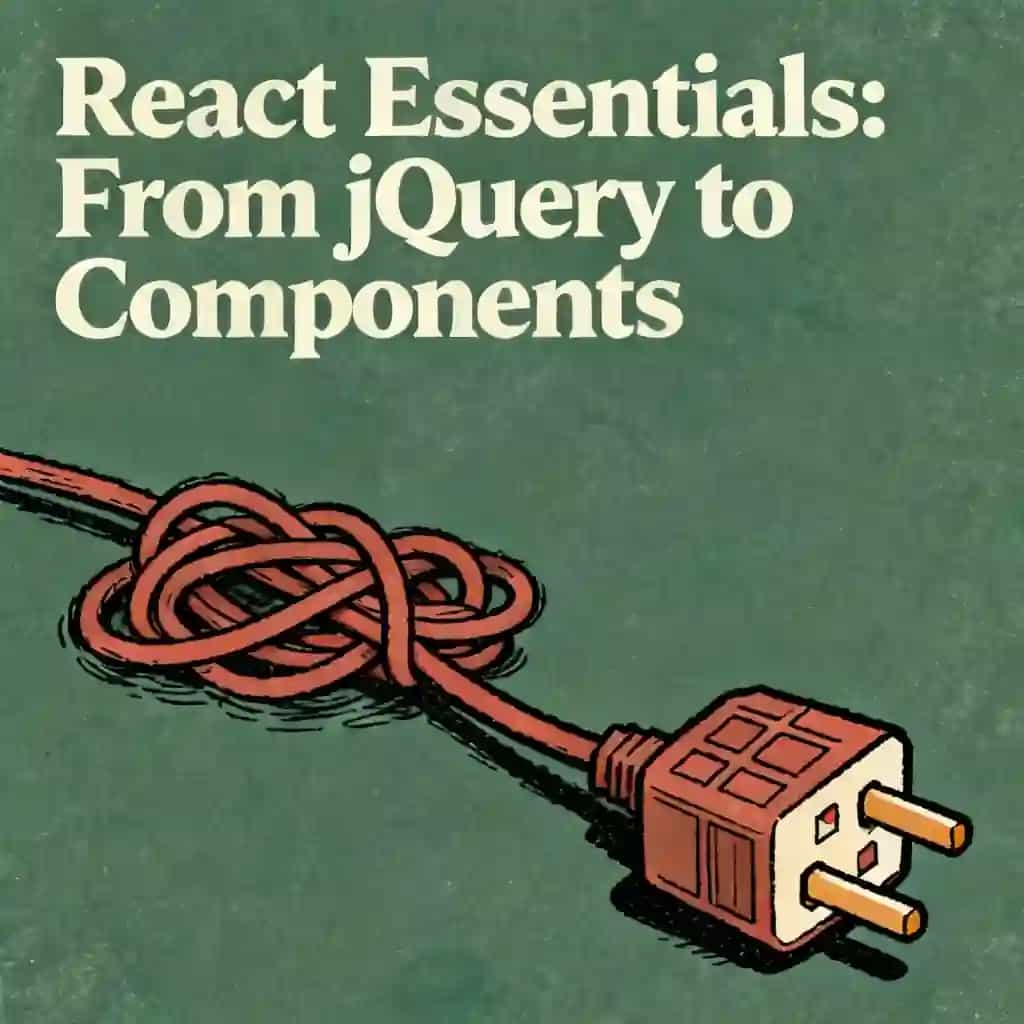
Ever wondered why some web applications feel seamlessly responsive while others crumble under complexity? The secret often lies not in the invisible architecture. Backbone.js emerged as a revolutionary solution to the chaotic "jQuery soup" that plagued early JavaScript applications. As web applications grew increasingly complex, developers needed structure - a skeleton to support growing functionality without collapsing under its own weight. Backbone provides exactly that: a lightweight yet powerful framework that brings order to client-side code without dictating every aspect of implementation. We've witnessed a fundamental inversion in web architecture over the past decade. Remember when servers generated complete HTML pages for every user action? Today's applications pull raw data via APIs and render it client-side, creating more responsive experiences but dramatically increasing frontend complexity. Without proper structure, JavaScript applications quickly become unmanageable tangles of jQuery selectors and callbacks. Imagine trying to keep data synchronized between your interface, business logic, and server calls using only direct DOM manipulation - it's like building a skyscraper with duct tape and hope. This is where the Model-View-Controller (MVC) pattern shines. By separating concerns into distinct components, MVC brings sanity to complexity. Models manage data and business logic, Views handle user interface elements, and Controllers coordinate between them. Backbone implements its own variation of MVC, providing Models, Collections, Views, and Routers as building blocks. Unlike more opinionated frameworks, Backbone offers just enough structure while giving developers freedom to make their own architectural decisions.