1장
When Madness Breeds in Isolation
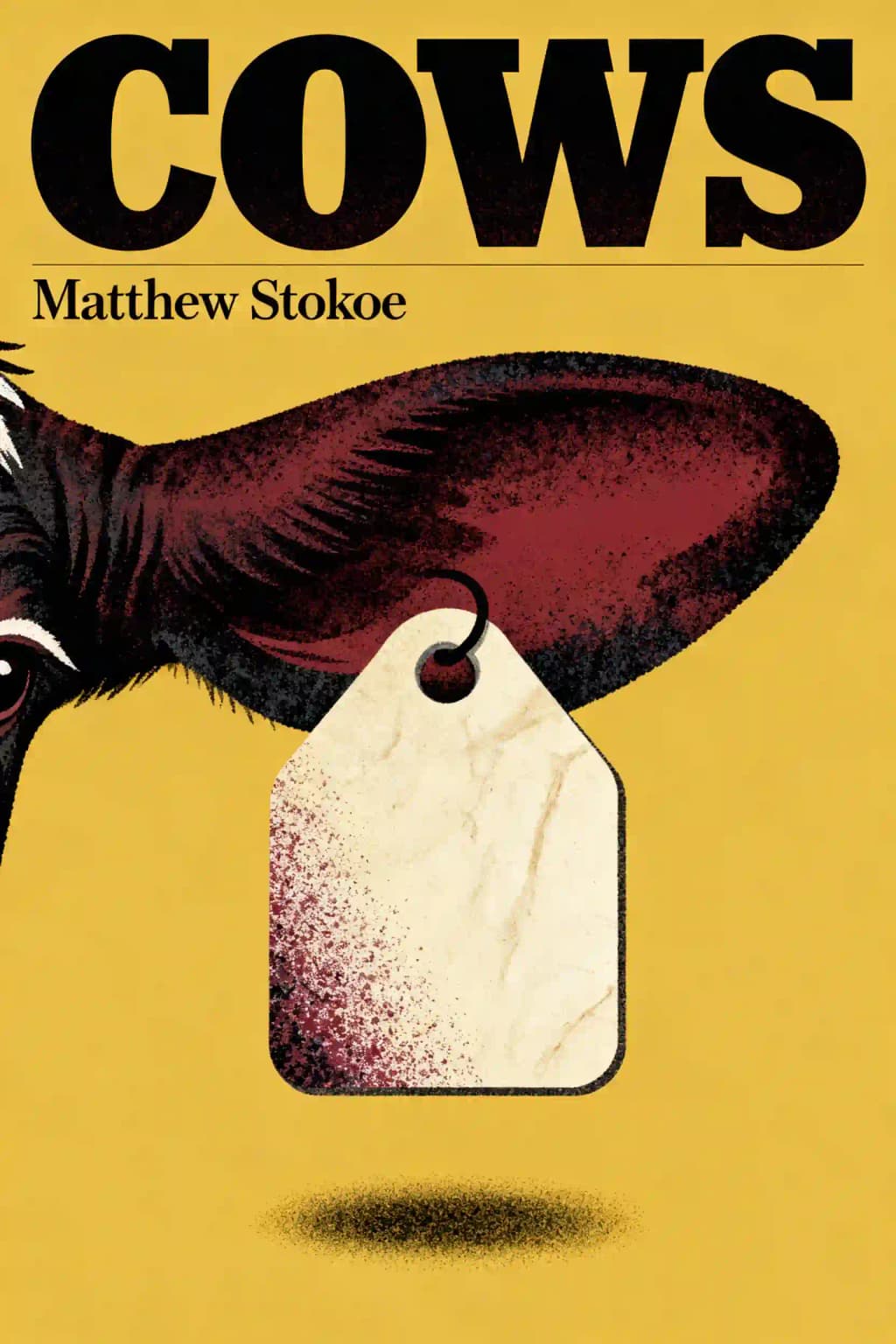
"Cows" by Matthew Stokoe isn't just a novel; it's a visceral assault on the senses that has earned its place as one of the most disturbing works of transgressive fiction ever written. First published in 1997, this underground cult classic has been passed between readers like a forbidden text, with copies once selling for hundreds of dollars before its reissue. Celebrated by extreme horror aficionados and banned in multiple countries, Stokoe's work has influenced a generation of transgressive writers who seek to explore the darkest corners of human experience. The book's unflinching portrayal of isolation, abuse, and desperate attempts at connection has made it a touchstone for those interested in the psychological boundaries of literature. Despite its graphic content-or perhaps because of it-"Cows" continues to fascinate readers looking for fiction that refuses to flinch from the most disturbing aspects of humanity.
2장
A Prisoner in His Own Home
Steven lives in a nightmare of his own making-or rather, one his mother has crafted for him. His existence is defined by the toxic relationship with the woman he calls "the Hagbeast," a monstrous figure who looms over his life like a malevolent shadow. Their shared apartment is a prison of filth and degradation, where Steven feels the "toxins tumbling through his bloodstream like jagged black particles gouging soft tissue." His body is a battleground, constantly under siege from the rancid food his mother forces him to consume.
The physical space mirrors Steven's psychological state-decrepit, isolated, and cut off from normal society. Looking out at the 3am city through his uncurtained window, he rages at his powerlessness, desperately wanting to escape but finding himself paralyzed by fear. The television serves as his only window to normalcy, showing him glimpses of lives so perfect and complete that they only intensify his suffering by comparison.
Steven's companion in this hell is Dog, a crippled animal whose back legs were paralyzed when the Hagbeast smashed them with a brick for no reason. This act of senseless cruelty serves as a constant reminder of Steven's inability to protect even those he loves, reinforcing his sense of powerlessness. Dog's pathetic dragging across the floor, its useless hind feet swishing sideways, becomes a physical manifestation of Steven's own trapped existence-damaged but still desperately clinging to life.
The only respite Steven finds comes in the form of long showers when the water runs hot. These moments allow him to imagine having all the things he sees on TV-"love, a ranch, a horse, a wife who tenderly strokes his cheek." But reality always crashes back when he steps out to dry himself, and nothing has changed. His attempts at resistance are futile, as when he protests "I can't eat this" at breakfast only to have his mother erupt in fury, shrieking "Ungrateful fuck!" Despite knowing that "Food like this kills people," his fear withers his opposition, and like every mealtime, he fills his mouth, chews, and swallows until his plate is empty.
3장
The Slaughterhouse as Metaphor
Steven's job at the meat grinding plant represents a grotesque extension of his home life-another environment defined by death, filth, and power imbalances. The facility "squats in a wasteland of industrial units, belching smoke and steam," a physical manifestation of the moral wasteland it contains. The constant arrival of trucks emptying cows into stock pens creates a relentless flow of death-four animals per minute drained into the plant through a hole in the wall.
As Steven moves deeper into the plant on his first day, the conditions deteriorate in parallel-temperature dropping, lighting dimming, staff looking increasingly harried. This journey mirrors his own psychological descent throughout the novel. When Cripps, the sadistic foreman, shoves Steven through a door into a blinding white light where men look "like angels in some kind of movie about heaven," the irony is palpable. "This is where things are real," Cripps declares, but the reality he refers to is one of industrialized slaughter and dehumanization.
The slaughterhouse scenes are rendered with unflinching detail-carcasses swinging through plastic strips, blood dripping from their noses into polished steel gutters, workers in blood-stained coats tending various stations. The mechanized violence becomes almost hypnotic: "washing, slitting, scraping, skinning, dismembering the animals into unsupported flesh." The sounds create a hellish symphony-"electric knives keening as they part skin and meat amid the coarser whine of bone saws and the repeated crumping of a pneumatic skull press."
In this environment, Steven meets Gummy, a worker with a horrifically disfigured face-no teeth, lips torn away, an open purple scar. Gummy's disturbing story about kissing a cow that bit off his lips and teeth foreshadows the bestial relationships that will develop later in the novel. Steven returns to the grinder, disturbed but already being absorbed into this world where boundaries between human and animal, life and death, are constantly transgressed.
4장
The Poisoned Body and Mind
The concept of poison-both literal and metaphorical-permeates every aspect of Steven's existence. His body feels constantly contaminated by his mother's cooking, which he describes as toxic waste rather than nourishment. After meals, he retreats to the bathroom, feeling "heavy with waste," but notices his dump is incomplete-"his body never manages to expel all its poison at once." This physical retention of toxins parallels his psychological inability to purge himself of his mother's influence.
When Steven meets Lucy, the half-Indian, half-Jewish woman who lives upstairs, she introduces another dimension to this poison metaphor. She desperately asks if he's seen "the poison inside them" at the slaughterhouse-not toxins but something "hard and black" that grows from suffering. Though Steven hasn't seen this, her words plant a seed that will grow throughout the narrative.
Lucy's obsession with finding and removing this physical manifestation of unhappiness becomes a driving force in their relationship. She watches medical videos of abdominal operations, searching for something hidden under organs. Her theory is disturbing in its logic: she's measured all her bodily excretions and believes they don't account for "what being alive pumps into me every fucking day." She's convinced there's something inside her that needs to be cut out-a belief that will lead to her tragic end.
The poison metaphor extends to Steven's relationship with his mother as well. Their mutual hatred began at his birth-"she cursed him on the kitchen table where they still eat, and he, sensing worse to come, pissed in her eyes." This exchange of bodily fluids at the moment of their first meeting establishes the pattern of their relationship: a constant battle of contamination and resistance.
When the Hagbeast serves Steven an uncleaned sheep's stomach with undigested vegetable matter still visible, their power struggle reaches new heights. "I know you like this," she says with false sweetness. When Steven refuses to eat, her voice takes on a deadly sing-song quality before she drops the act: "And just exactly what is wrong with it, Mister Cocksucker?" The confrontation escalates until Steven is forced to eat the disgusting meal, only to vomit later in his bedroom-which Dog eagerly consumes "as a sacrament," completing the cycle of degradation.
5장
Violence as Transformation
Throughout the novel, Cripps promotes a disturbing philosophy: killing as an act of "self-realization" that reveals a man's true power and frees him from societal constraints. "Killing frees you to live as you should," he proclaims, presenting violence as a transformative force that can reshape identity.
Steven initially rejects this idea, but as his desperation grows, he begins to consider whether there might be ways to "force happiness into being" rather than waiting for it to happen by luck. The slaughterhouse becomes a testing ground for this philosophy, with Cripps positioning Steven on a platform beside a grabber, making him touch a cow before it's killed. When the bolt gun fires and Steven feels the animal collapse beneath his hand, he experiences not empowerment but nausea.
The violence escalates dramatically when Cripps shows Steven an even more disturbing scene: slaughtermen cutting holes in a living cow and using them sexually while Gummy performs other degradations. This grotesque tableau represents the ultimate transgression-not just killing but violating the boundary between life and death, human and animal, in the most intimate way possible.
When Steven finally decides to kill his mother, he initially considers subtle poisoning but ultimately embraces direct confrontation. After striking her for the first time in his life, he feels the impact travel through his bones as his knuckles connect with her face. This moment marks a fundamental shift in their power dynamic, as Steven holds her gaze during tense seconds of "power recalibration." Before leaving, he leans close and repeats his new rule: "I make the food and you eat it."
The ultimate test of Cripps' philosophy comes when he forces Steven to participate in killing Gummy. Using secateurs to cut open the old man from "anus to skull while the old man screams and pleads," Steven completes this gruesome task, vomits into the gaping body, then collapses. Cripps praises him, saying he's overcome "the greatest hurdle" and changed himself fundamentally.
Indeed, Steven wakes the next day feeling transformed-"bright, clean, and new." The horror of killing Gummy hasn't destroyed him but strengthened him, becoming "a dynamic heart that beat deep and sure" within him. This perverse confirmation of Cripps' philosophy leads Steven to believe he's found the key to power and self-determination.
6장
Desperate Attempts at Connection
At its core, "Cows" explores the desperate human need for connection and the grotesque forms this need can take when normal relationships are impossible. Steven's relationship with Lucy represents his attempt to create a conventional life despite his profound damage. When they have sex for the first time-while she remains fixated on a medical monitor screen during an endoscopic self-examination-the encounter is far from romantic, yet Steven sees it as the beginning of something meaningful.
He returns to his room afterward, hoping their sexual connection will eventually transform into his fantasy of domestic life. Though there was no love between them yet, he believes Lucy will eventually need him as much as he needs her, and will call this dependence "love." This pathetic hope reveals how little Steven understands about genuine human connection, having never experienced it himself.
As their relationship develops, Steven and Lucy settle into a simulacrum of domestic life in his flat after he murders the Hagbeast. They transform the flat, erasing all traces of the past and creating what Steven sees as a perfect TV family home. The apartment becomes "clean, ordered and sun-filled," and Steven feels his dream becoming real-Lucy is pregnant, and he's created the family he's always watched on television.
But this connection is built on mutual damage rather than genuine love. Lucy has become a prisoner in their apartment, afraid to venture outside where she sees pain and suffering in every stranger's face. She fills her days with endless domestic chores, trying to distract herself from the "brainfilth" that constantly threatens to overwhelm her. Though Steven provides some relief from her inner torment, she recognizes their relationship isn't based on love but mutual need-"each using the other as a screen against the world."
The most disturbing attempt at connection comes in Steven's relationship with the cow herd. After discovering a group of escaped cows living in tunnels beneath the city, led by a talking Guernsey, Steven eventually positions himself as their leader and savior. The herd kneels before him, accepting his leadership, and he begins to see them as his true family. This perversion of normal human relationships reaches its nadir when Steven has sex with a roan cow while the herd cheers him on, a grotesque parody of intimacy that reveals the depths of his alienation from humanity.
7장
The Illusion of Normalcy
Television serves as a powerful and pervasive force in the novel, functioning as Steven's primary lens through which he views "normal" life. He obsessively studies the fictional families on screen - their interactions, their homes, their routines - treating these manufactured scenes as anthropological documents of how life should be lived. The sitcom families become his aspirational models, with their predictable problems and neat resolutions serving as a stark contrast to the chaos and trauma of his own existence. This media-filtered view of reality creates a devastating gap between his lived experience and what he believes represents authentic happiness, deepening his feelings of being fundamentally broken and separate from society.
When Steven and Lucy undertake the transformation of his flat following the Hagbeast's death, they meticulously craft what Steven calls "a simulacrum of perfect TV family homes." Every detail is considered - from the arrangement of furniture to the quality of light streaming through newly cleaned windows. The apartment becomes almost theatrical in its perfection, mirroring the carefully staged domestic spaces Steven has studied on television. As Lucy's pregnancy progresses, Steven believes he's finally manifesting the family life he's always envied from afar. His pride in this achievement sometimes borders on smugness - he sees himself as having conquered normalcy through determination and careful observation, unlike those who simply inherited it.
However, the carefully constructed facade begins to crack under the weight of reality. Steven's anxiety, temporarily subdued by his domestic achievements, resurfaces with increasing intensity. Each morning becomes a psychological battleground as he struggles to maintain the illusion of stability. His hard-won confidence dissolves into a paralyzing fear of losing everything he's built. The pressure of sustaining this artificial world manifests in concrete worries - financial instability, his continued absence from work, Lucy's emotional state, and even the structural integrity of the building itself.
Lucy ultimately becomes the voice of brutal honesty, confronting their shared delusion. She articulates what they've both been avoiding - that their relationship is built on mutual desperation rather than genuine connection. Their attempt to create a conventional life together has been an elaborate coping mechanism, a way to paper over their deep-seated trauma. Despite Steven's passionate insistence that their love is real, Lucy recognizes that the "poison" within them both cannot be neutralized by simply mimicking normalcy.
The novel presents a devastating critique of the possibility of rehabilitation for those profoundly damaged by trauma. The more Steven and Lucy strive to embody the conventional happiness they've observed through the safe distance of television, the more apparent it becomes that such normalcy will forever elude them. Their attempt to force themselves into society's prescribed mold only emphasizes their fundamental alienation, suggesting that some wounds are too deep to be masked by even the most convincing performance of normality.
8장
Descent into Madness
As the novel progresses, Steven's tenuous grip on reality steadily weakens. His initial transformation through violence gives him a temporary sense of power and clarity, but this quickly deteriorates into increasingly bizarre and disturbing behavior. The talking Guernsey cow represents a significant marker of his psychological breakdown-a hallucination that nevertheless becomes central to his new identity.
Steven's leadership of the cow herd marks his complete break from human society. He leads them in violent raids, including a massacre at an underground station where they slaughter about twelve waiting passengers. After the carnage, the cows roll in the blood and viscera, smearing themselves with the remains, while Steven collects pieces of human flesh in a bloodied T-shirt.
This flesh becomes a "sacrament" that Steven feeds to the herd, believing it will complete their transformation into hunters who have abandoned their former nature. He sees himself as their god, having given them new life at the price of an "ongoing hunger for human flesh." This messianic delusion represents the final stage of Steven's psychological disintegration.
When Steven returns home to find Lucy dead on the kitchen floor, having cut herself open in a desperate attempt to remove her imagined "poison," his last connection to humanity is severed. The sight of her body in a lake of blood, with a "yellow foetus corpse" beside her thigh and a hole above her pubic area, destroys his fantasy of normalcy. In his grief and rage, he takes the fetus and nails it to the wall with kitchen knives, a grotesque symbol of his shattered hopes.
After days of catatonic depression, Steven is forced to flee when his building partially collapses. His terror of social contact becomes overwhelming-each person he encounters seems surrounded by a "vicious field" that corrodes whatever holds him together as a person. He runs desperately through the city, feeling he might disintegrate "like meat in a bath of acid."
In the novel's final scenes, Steven retreats to the underground tunnels, convincing himself there had never been a home, woman, or dog-only these tunnels and the herd waiting at their end. After killing the Guernsey to establish his dominance, Steven embraces the roan cow, anticipating his new life as leader of the herd-"a perfect family where he'll finally belong." In this underground sanctuary where nothing can enter without his permission, he believes he can create a perfect world free from outside judgment-a life "as perfect as any he had seen on TV." This final delusion represents the complete collapse of Steven's humanity, as he abandons the human world entirely for a fantasy of power and belonging among animals.
9장
The Cycle of Abuse and Trauma
At its heart, "Cows" is a brutal examination of how abuse perpetuates itself across generations and relationships. Steven's relationship with his mother established the template for all his future interactions-characterized by power struggles, degradation, and violence. Their mutual hatred began at his birth and has defined his entire existence, leaving him fundamentally incapable of normal human connection.
The novel suggests that severe childhood trauma creates a wound that never truly heals, instead festering and eventually poisoning all aspects of the victim's life. Steven's inability to form healthy relationships stems directly from his mother's abuse, creating a cycle that he perpetuates in his interactions with others. When he finally strikes his mother, crossing the threshold into physical violence, he doesn't break the cycle but merely reverses the roles within it.
This pattern extends to Steven's relationship with Lucy, which initially seems like an escape from his toxic past but ultimately reproduces many of its dynamics. Though he doesn't physically abuse her, he views her primarily as a means to fulfill his fantasy of normalcy rather than as a person with her own needs and identity. When she begins to deteriorate psychologically, he "molds what he sees of Lucy into something acceptable," ignoring her suffering to preserve his illusion of domestic bliss.
Even Steven's relationship with the cow herd reproduces the abusive dynamics he learned from his mother. As their leader, he manipulates and exploits them, feeding them human flesh to create dependency and establish his dominance. His sexual relationship with the roan cow represents the ultimate perversion of intimacy-a power dynamic completely divorced from mutual care or respect.
The novel offers no easy answers or redemption. Instead, it presents trauma as a poison that, once introduced, can never be fully expelled-only transferred to new victims in new forms. Steven's final embrace of madness, choosing to live as the leader of a cow herd in underground tunnels, represents not freedom but the completion of the cycle-he has become as monstrous as the Hagbeast who created him, finding power in the domination and corruption of others.
10장
The Unspeakable Made Manifest
"Cows" stands as one of the most extreme examples of transgressive fiction ever written, deliberately violating every taboo it encounters. The novel forces readers to confront aspects of human experience typically hidden from view-the industrial slaughter of animals, extreme physical and psychological abuse, sexual perversion, and the complete breakdown of the social contract.
What makes the novel particularly disturbing is not just its graphic content but its refusal to provide moral distance or catharsis. Unlike many horror stories that ultimately reinforce social norms by punishing transgression, "Cows" offers no such comfort. Steven's descent into madness and bestiality isn't presented as a cautionary tale but as the logical conclusion of his experiences. The novel suggests that extreme trauma doesn't create monsters through some failure of character but through the systematic destruction of everything that makes human connection possible.
By bringing the unspeakable into plain view-whether through the industrial slaughter of animals, the sexual violation of cows, or Lucy's self-disembowelment-Stokoe forces readers to acknowledge aspects of reality typically kept hidden behind closed doors. The slaughterhouse becomes a powerful metaphor for all the violence and suffering that enables modern life but remains carefully concealed from public view.
In this sense, "Cows" can be read as a critique of a society that creates spaces of extreme alienation while maintaining the illusion of normalcy through carefully curated media images. Steven's obsession with television represents not just personal pathology but a broader cultural tendency to substitute mediated fantasy for genuine human connection.
The novel's unflinching examination of these themes has earned it both devoted followers and horrified critics. Its legacy lies not in its shock value but in its willingness to follow its disturbing premise to its logical conclusion, refusing to offer readers the comfort of conventional morality or narrative resolution. In Steven's final embrace of madness, choosing a fantasy of power and belonging over the painful reality of human connection, we see not just one man's failure but a broader indictment of a society that offers no place for those too damaged to conform to its norms.