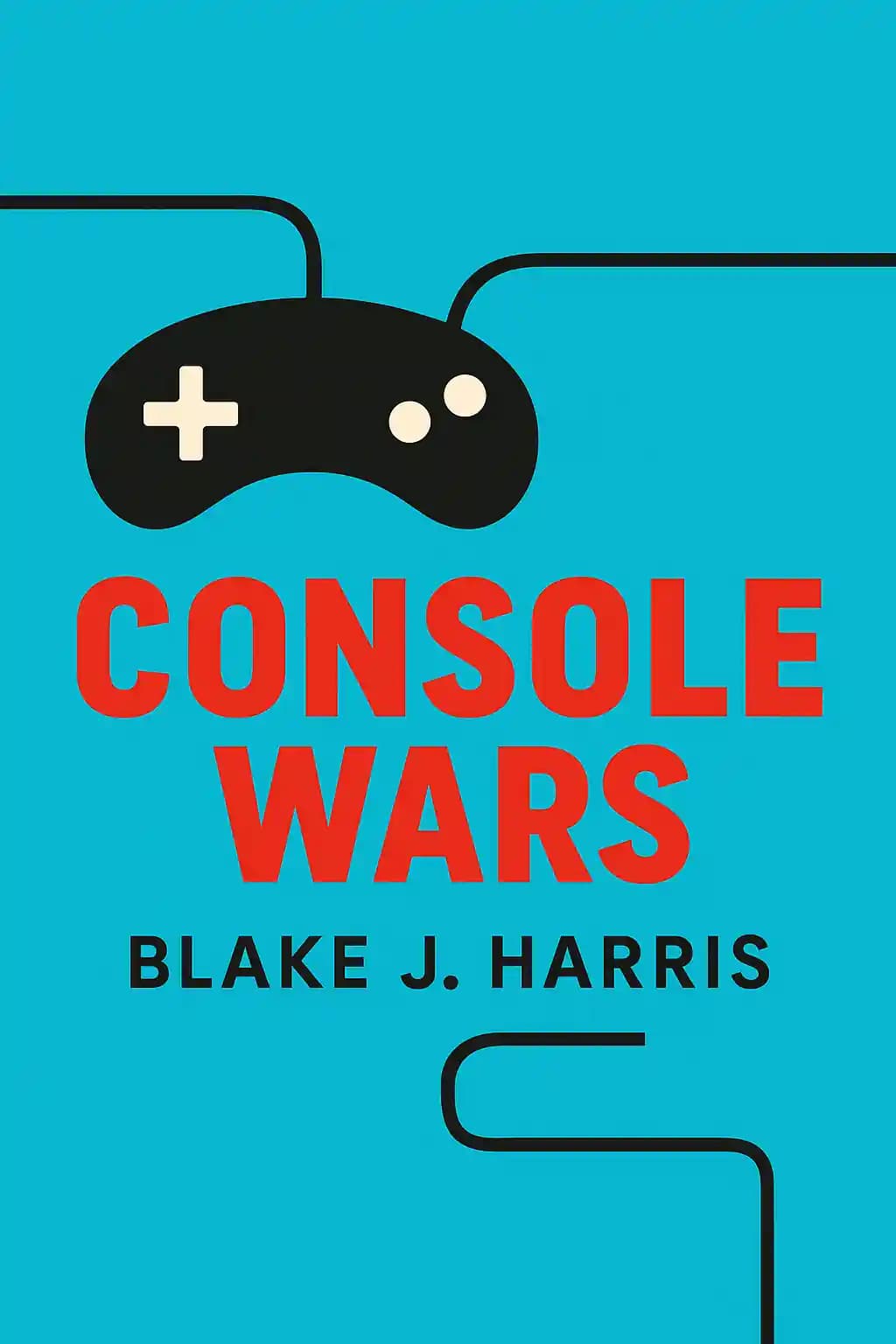
Dive into the epic corporate showdown that defined 90s gaming culture. "Console Wars" reveals how Tom Kalinske's underdog Sega team battled Nintendo through 200+ insider interviews. Soon to be a Seth Rogen film, it's the business thriller gamers can't stop discussing.
Blake J. Harris is the Wall Street Journal and USA Today bestselling author of Console Wars: Sega, Nintendo, and the Battle that Defined a Generation, establishing himself as a leading chronicler of video game history and corporate rivalries. Specializing in narrative nonfiction, Harris combines rigorous research with cinematic storytelling to explore business innovation and cultural shifts. He draws from over 300 interviews with industry executives for this definitive account of the 1990s gaming boom.
His follow-up work, The History of the Future, examines Oculus VR’s rise and the virtual reality revolution, further solidifying his expertise in tech-industry narratives. A Georgetown University graduate, Harris has written for Fast Company, ESPN, and The Huffington Post.
Harris regularly appears on Paul Scheer’s How Did This Get Made? podcast analyzing cult films. He co-directed the Paramount+ documentary adaptation of Console Wars, produced by Seth Rogen and Evan Goldberg, blending his investigative writing with visual storytelling. The book has become essential reading for gaming enthusiasts and business strategists, praised for its insider perspective on marketing wars and corporate creativity. Console Wars has been translated into multiple languages and inspired university case studies on disruptive innovation.
Console Wars chronicles the intense 1990s rivalry between Sega and Nintendo, detailing Sega’s rise as an underdog against Nintendo’s market dominance. Through a narrative-driven approach, Harris explores marketing strategies, corporate clashes, and the cultural impact of this era, highlighting figures like Tom Kalinske (CEO of Sega of America) and their battles over iconic franchises like Sonic and Mario.
This book appeals to gamers, business strategists, and pop culture enthusiasts. It offers insights into corporate competition, branding, and innovation, making it ideal for readers interested in tech history, marketing case studies, or nostalgic 90s gaming culture.
Yes, for its gripping storytelling and behind-the-scenes corporate drama. While criticized for length and fictionalized dialogue, it remains a compelling account of a pivotal era in gaming history, praised for its depth of research and nostalgic appeal.
Key themes include:
Harris blends factual events with dramatized scenes and dialogue, drawing criticism for oversimplifying corporate tensions and cultural nuances. However, core business decisions (e.g., Sega’s focus on edgy branding) are well-documented.
Critics note:
Briefly. The book mentions failed negotiations between Sega and Silicon Graphics (later pivotal for Sony’s PlayStation) but focuses primarily on the Sega-Nintendo rivalry.
Unlike dry corporate analyses (e.g., The Innovator’s Dilemma), Console Wars uses a novel-like style to humanize industry battles. However, it lacks the rigorous objectivity of academic works.
The book underscores timeless themes: disruptive innovation, corporate ego, and cultural shifts in tech. Its parallels to modern console wars (e.g., Xbox vs. PlayStation) resonate with current gaming discussions.
A documentary produced by Seth Rogen and Evan Goldberg was released in 2020, though the book itself remains a standalone deep dive into the era.
저자의 목소리로 책을 느껴보세요
지식을 흥미롭고 예시가 풍부한 인사이트로 전환
핵심 아이디어를 빠르게 캡처하여 신속하게 학습
재미있고 매력적인 방식으로 책을 즐기세요
They weren't just choosing game systems-they were declaring who they were.
Nintendo overcame this by brilliantly positioning the NES as a toy.
Winning requires changing the rules of the game entirely.
Nintendo's business practices were revolutionary and ruthless.
Nintendo's success was unprecedented in both scale and cultural impact.
Console Wars의 핵심 아이디어를 이해하기 쉬운 포인트로 분해하여 혁신적인 팀이 어떻게 창조하고, 협력하고, 성장하는지 이해합니다.
Console Wars을 빠른 기억 단서로 압축하여 솔직함, 팀워크, 창의적 회복력의 핵심 원칙을 강조합니다.

생생한 스토리텔링을 통해 Console Wars을 경험하고, 혁신 교훈을 기억에 남고 적용할 수 있는 순간으로 바꿉니다.
무엇이든 물어보고, 목소리를 선택하고, 진정으로 공감되는 인사이트를 함께 만들어보세요.

샌프란시스코에서 컬럼비아 대학교 동문들이 만들었습니다
"Instead of endless scrolling, I just hit play on BeFreed. It saves me so much time."
"I never knew where to start with nonfiction—BeFreed’s book lists turned into podcasts gave me a clear path."
"Perfect balance between learning and entertainment. Finished ‘Thinking, Fast and Slow’ on my commute this week."
"Crazy how much I learned while walking the dog. BeFreed = small habits → big gains."
"Reading used to feel like a chore. Now it’s just part of my lifestyle."
"Feels effortless compared to reading. I’ve finished 6 books this month already."
"BeFreed turned my guilty doomscrolling into something that feels productive and inspiring."
"BeFreed turned my commute into learning time. 20-min podcasts are perfect for finishing books I never had time for."
"BeFreed replaced my podcast queue. Imagine Spotify for books — that’s it. 🙌"
"It is great for me to learn something from the book without reading it."
"The themed book list podcasts help me connect ideas across authors—like a guided audio journey."
"Makes me feel smarter every time before going to work"
샌프란시스코에서 컬럼비아 대학교 동문들이 만들었습니다

Console Wars 요약을 무료 PDF 또는 EPUB으로 받으세요. 인쇄하거나 오프라인에서 언제든 읽을 수 있습니다.
In 1990, a blue hedgehog with attitude sparked a corporate battle that would transform entertainment forever. When Tom Kalinske took the helm at Sega of America, Nintendo controlled a staggering 90% of the video game market. Their mascot Mario was more recognizable to American children than Mickey Mouse, and the word "Nintendo" had become synonymous with video games themselves. Kalinske, fresh from revitalizing Mattel's Barbie line, was recruited by Sega's enigmatic Japanese president Hayao Nakayama during a family vacation in Hawaii. Initially reluctant, Kalinske was swayed by his five-year-old daughter's encouragement and the impressive technology Sega had developed-particularly the 16-bit Genesis console that technically outperformed Nintendo's aging 8-bit system. The problem wasn't Sega's technology but their approach. They were trying to beat Nintendo at their own game rather than carving a unique identity. Kalinske developed his revolutionary "Four-Point Plan": bundle Sonic the Hedgehog with the Genesis instead of selling it separately, slash the console's price from $189 to $149, create edgy marketing targeting teenagers instead of children, and develop games specifically for American audiences. When he presented this plan to Sega's Japanese board, they were horrified-until Nakayama silenced the room: "Everyone in here thinks you are nuts. But this is why I hired you. You may go ahead with the plan."