Former CBS anchor Michelle Gielan reveals how positive communication transforms lives, backed by stunning results - including a high school's graduation rate jumping from 41% to 89%. Featured in Oprah's Happiness course, this science-based guide promises 31% higher productivity through simple mindset shifts.
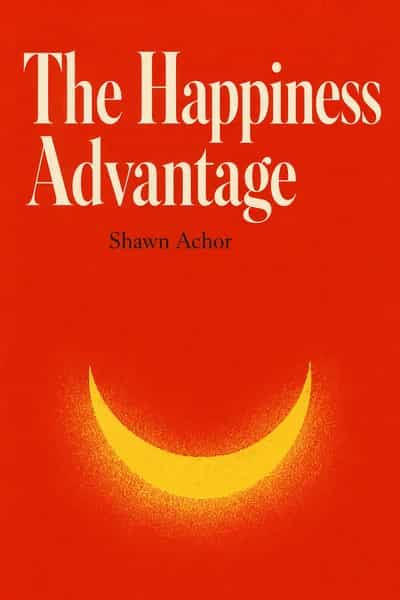
Michelle Gielan is the bestselling author of Broadcasting Happiness: The Science of Igniting and Sustaining Positive Change and a leading expert in positive psychology and strategic communication. A former national CBS News anchor, she holds a Master’s in Applied Positive Psychology from the University of Pennsylvania and founded the Institute for Applied Positive Research to study how optimism drives professional success.
Her book, a cornerstone in leadership and self-help genres, merges neuroscience with real-world case studies to show how positive messaging boosts productivity, sales, and workplace culture.
Gielan’s work as an executive producer of PBS’s The Happiness Advantage and her role in Oprah’s Happiness course underscores her authority. Her research, featured in The New York Times, Forbes, and Harvard Business Review, informs training programs at Fortune 500 companies like Microsoft and Bank of America.
With actionable frameworks proven to increase performance metrics by up to 37%, Broadcasting Happiness has influenced corporate strategies worldwide and reached millions through her PBS specials.
Broadcasting Happiness explores how positive communication drives success, reduces stress, and fosters resilience. Michelle Gielan combines neuroscience and positive psychology to show how reframing everyday messages can boost productivity by 31%, lower stress by 23%, and create contagious optimism in workplaces, schools, and homes. Key strategies include “power leads,” fact-checking negative thoughts, and rewriting mental narratives to fuel growth.
Leaders, educators, parents, and anyone seeking to improve communication while navigating challenges will benefit. The book offers actionable tools for managers aiming to enhance team performance, educators fostering student resilience, and individuals looking to transform personal or family dynamics through optimistic storytelling.
Yes—the book blends research-backed methods with real-world examples, such as raising a school’s graduation rate by 45% and boosting corporate revenue by millions. Gielan’s CBS News background and positive psychology expertise provide a unique, practical framework for creating lasting change through communication.
The book teaches teams to prioritize solutions-focused dialogue, which studies link to 37% higher sales and 25% better performance ratings. For example, sharing “positive flash memories” (success stories) can rewire team mindsets, as shown in a school district’s turnaround from a 41% to an 86% graduation rate.
A “positive broadcast” involves intentionally sharing stories, feedback, or data that highlight progress or opportunities. This approach, validated by neuroscience, strengthens social connections, increases influence, and primes others for collaborative problem-solving.
Gielan advises “strategic silence” to avoid amplifying others’ pessimism and suggests asking evidence-based questions like, “What’s one step we can take right now?” This reduces negative influence by 40% while maintaining empathy.
The book emphasizes storytelling as a tool to create “mental maps” that guide behavior. For instance, managers who share customer success stories in meetings see 31% higher employee commitment to organizational goals.
Gielan’s “Happy Week” initiative at CBS—focusing on hopeful stories during economic downturns—proved that media emphasizing solutions (not just problems) boosts viewer engagement. This inspired her research on positivity’s ripple effects.
Yes. Techniques like “the 5:1 positivity ratio” (sharing five positive interactions for every negative one) help couples and families build trust. The book also advises reframing critiques as growth opportunities, such as saying, “Here’s how we can improve”.
Gielan’s “stress inoculation” method involves writing down three factual reasons a challenge is manageable. Research shows this reduces cortisol levels by 23% within two weeks by shifting focus from threats to actionable steps.
Unlike generic advice, Gielan provides a journalism-tested “broadcast model” with metrics-driven strategies. For example, her PBS program Inspire Happiness and collaboration with Oprah’s courses offer proven tactics for sustaining change, not just temporary boosts.
저자의 목소리로 책을 느껴보세요
지식을 흥미롭고 예시가 풍부한 인사이트로 전환
핵심 아이디어를 빠르게 캡처하여 신속하게 학습
재미있고 매력적인 방식으로 책을 즐기세요
Happiness leads to sales.
The way we start conversations significantly impacts outcomes.
Every word counts, especially at the beginning of interactions.
Scientifically speaking, the best way to get to a good end is to have a good beginning.
Broadcasting happiness의 핵심 아이디어를 이해하기 쉬운 포인트로 분해하여 혁신적인 팀이 어떻게 창조하고, 협력하고, 성장하는지 이해합니다.
Broadcasting happiness을 빠른 기억 단서로 압축하여 솔직함, 팀워크, 창의적 회복력의 핵심 원칙을 강조합니다.

생생한 스토리텔링을 통해 Broadcasting happiness을 경험하고, 혁신 교훈을 기억에 남고 적용할 수 있는 순간으로 바꿉니다.
무엇이든 물어보고, 목소리를 선택하고, 진정으로 공감되는 인사이트를 함께 만들어보세요.

샌프란시스코에서 컬럼비아 대학교 동문들이 만들었습니다
"Instead of endless scrolling, I just hit play on BeFreed. It saves me so much time."
"I never knew where to start with nonfiction—BeFreed’s book lists turned into podcasts gave me a clear path."
"Perfect balance between learning and entertainment. Finished ‘Thinking, Fast and Slow’ on my commute this week."
"Crazy how much I learned while walking the dog. BeFreed = small habits → big gains."
"Reading used to feel like a chore. Now it’s just part of my lifestyle."
"Feels effortless compared to reading. I’ve finished 6 books this month already."
"BeFreed turned my guilty doomscrolling into something that feels productive and inspiring."
"BeFreed turned my commute into learning time. 20-min podcasts are perfect for finishing books I never had time for."
"BeFreed replaced my podcast queue. Imagine Spotify for books — that’s it. 🙌"
"It is great for me to learn something from the book without reading it."
"The themed book list podcasts help me connect ideas across authors—like a guided audio journey."
"Makes me feel smarter every time before going to work"
샌프란시스코에서 컬럼비아 대학교 동문들이 만들었습니다

Broadcasting happiness 요약을 무료 PDF 또는 EPUB으로 받으세요. 인쇄하거나 오프라인에서 언제든 읽을 수 있습니다.
A ten-year-old girl lies dead from gang violence. The cameras arrive, ready to capture grief, fear, and despair-the currency of modern news. But what if, in that same moment, another story exists? One of neighbors forming protective circles around children walking to school. Of mothers organizing midnight basketball leagues to keep teens off streets. Of slow, stubborn progress that refuses to surrender to chaos. Both stories are true. One paralyzes. The other ignites action. This choice-which truth to amplify-holds more power than we realize. Every conversation, email, and casual exchange broadcasts a signal that shapes how others see their world. We're not passive observers of reality; we're active architects, constantly transmitting information that either fuels possibility or feeds paralysis. Here's something that sounds impossible: spend one week pretending you're twenty years younger, and your body will believe you. Harvard researcher Ellen Langer proved exactly this when seventy-five-year-old men spent a week in an environment designed as 1959. They discussed current events from that year, watched old television shows, and treated their younger selves as present reality. After just seven days, their strength increased, posture straightened, flexibility improved, and even their eyesight sharpened by 10%. Strangers judged photographs of them as three years younger. Their bodies responded to the story their minds told. This isn't mysticism-it's neuroscience. When Gary Baker, president of Nationwide Brokerage Solutions, first heard about happiness research, he dismissed it as corporate fluff. Then revenues tripled from $350 million to over $1 billion after implementing positive psychology workshops. Optimistic salespeople outsell pessimists by 37%. Doctors with positive mindsets diagnose correctly 19% faster. Your mental broadcast doesn't just affect mood-it rewrites physical reality, transforms business outcomes, and predicts success better than talent or intelligence alone.