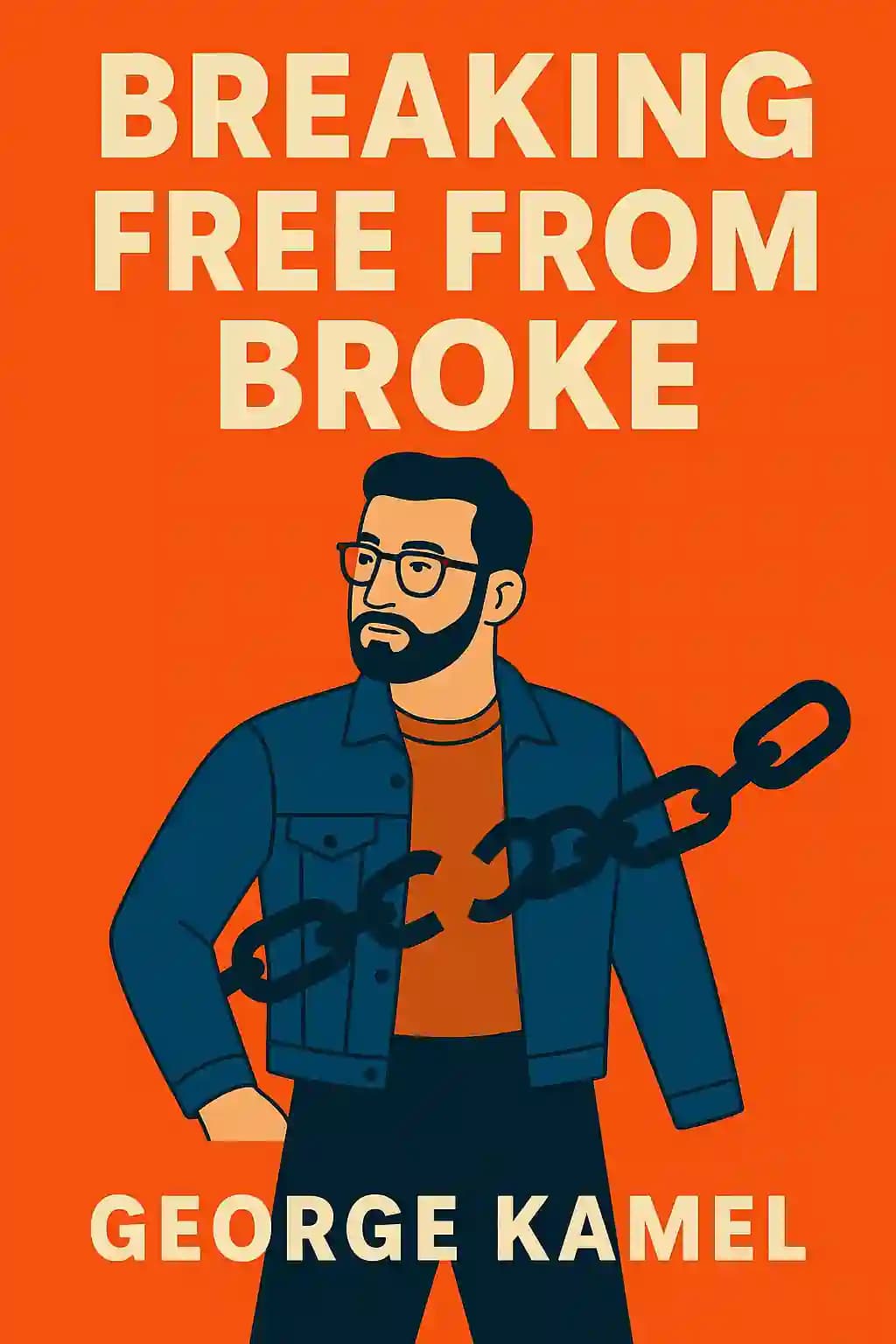
From $40,000 in debt to millionaire status, George Kamel's bestselling guide exposes the toxic money system keeping you broke. With snarky humor and proven strategies like the "debt snowball," discover why PUBLISHERS WEEKLY readers can't stop talking about this financial liberation blueprint.
George Kamel is the bestselling author of Breaking Free From Broke and a leading personal finance expert recognized for his counter-cultural approach to money management.
A prominent Ramsey Personality, Kamel co-hosts The Ramsey Show—America’s second-largest syndicated radio program—and hosts the EntreLeadership podcast, reaching millions with practical strategies to escape debt, build wealth, and avoid financial pitfalls.
His work at Ramsey Solutions, where he rose from a temporary role to a key leadership position, fuels his mission to help individuals achieve financial peace through disciplined budgeting and intentional spending. Kamel’s insights are amplified through his popular YouTube channel (355K+ subscribers) and social media platforms, where he blends humor with actionable advice.
A self-made millionaire who once started “broke,” he advocates for the “Ramsey Plan,” emphasizing zero-based budgeting via the EveryDollar app. Breaking Free From Broke distills his proven methods, reflecting his ethos of transparency and faith-driven stewardship. The book has become a cornerstone resource for readers seeking to transform their financial futures.
Breaking Free From Broke is a personal finance guide that exposes systemic myths keeping Americans trapped in debt, such as reliance on credit scores, student loans, and consumerism. George Kamel combines his journey from $40,000 in debt to millionaire status with actionable strategies like budgeting, intentional spending, and rejecting toxic financial norms. The book emphasizes escaping paycheck-to-paycheck living through Dave Ramsey’s Baby Steps and mindful money management.
This book is ideal for millennials and Gen Z readers drowning in debt, living paycheck-to-paycheck, or seeking financial independence. It’s also valuable for anyone disillusioned with conventional financial advice, credit card reliance, or societal pressure to overspend. Kamel’s humor and relatable anecdotes make complex topics accessible for beginners.
Yes—if you want actionable steps to eliminate debt, rebuild savings, and reject predatory financial systems. Kamel’s blend of personal storytelling, myth-busting, and Dave Ramsey-inspired principles offers a roadmap for financial peace. Critics praise its no-nonsense approach to credit cards, loans, and budgeting.
Kamel debunks myths like:
Kamel advocates Dave Ramsey’s Baby Steps, including building a $1,000 emergency fund, paying off debt via the debt snowball method, and investing 15% of income. He stresses living below your means, avoiding loans, and prioritizing cash purchases. His system targets mindset shifts to escape consumerist traps.
Kamel labels credit cards “financial heroin,” arguing they normalize debt and enable overspending. He advises cutting them up, using cash envelopes, and rebuilding spending habits without reliance on credit. This aligns with Ramsey’s philosophy of debt-free living.
Kamel shares his journey from a negative net worth (-$40,000 in student loans and consumer debt) to millionaire status in under 10 years. His relatable struggles with societal financial norms and eventual success via Ramsey’s principles add credibility and inspire readers to adopt similar discipline.
Some may find Kamel’s rejection of credit scores and loans overly rigid, particularly for those needing mortgages or business financing. Critics might argue his advice prioritizes short-term debt elimination over long-term credit-building strategies, though Kamel counters that cash-based living reduces systemic dependency.
These lines encapsulate Kamel’s emphasis on mindset shifts and systemic defiance.
Kamel blames marketing and social media for normalizing overspending, urging readers to quit comparison-driven purchases. He advocates a “values-based budget” that prioritizes savings, debt repayment, and experiences over material goods—a rejection of “keeping up with the Joneses” mentality.
Unlike generic advice, Kamel specifically targets millennials burdened by student loans and societal pressure. His snarky tone (e.g., calling credit cards “financial heroin”) and focus on systemic change—not just individual habits—set it apart. The book also integrates Ramsey’s Baby Steps with generational challenges like gig economy instability.
While both advocate debt snowballs and emergency funds, Kamel’s book adds a millennial lens—addressing student loans, side hustles, and digital-age consumerism. It’s seen as a modern companion to Ramsey’s principles, with sharper critiques of credit systems and relatable humor for younger readers.
저자의 목소리로 책을 느껴보세요
지식을 흥미롭고 예시가 풍부한 인사이트로 전환
핵심 아이디어를 빠르게 캡처하여 신속하게 학습
재미있고 매력적인 방식으로 책을 즐기세요
We've become passengers "in this Uber ride from hell."
College costs have increased 400% since the 1980s.
The key is a paradigm shift away from a system designed to steal your money.
"If your credit score is higher than your bank balance, you're headed in the wrong direction."
Credit cards function as a financial rite of passage and gateway drug to debt.
Breaking Free from Broke의 핵심 아이디어를 이해하기 쉬운 포인트로 분해하여 혁신적인 팀이 어떻게 창조하고, 협력하고, 성장하는지 이해합니다.
Breaking Free from Broke을 빠른 기억 단서로 압축하여 솔직함, 팀워크, 창의적 회복력의 핵심 원칙을 강조합니다.

생생한 스토리텔링을 통해 Breaking Free from Broke을 경험하고, 혁신 교훈을 기억에 남고 적용할 수 있는 순간으로 바꿉니다.
무엇이든 물어보고, 목소리를 선택하고, 진정으로 공감되는 인사이트를 함께 만들어보세요.

샌프란시스코에서 컬럼비아 대학교 동문들이 만들었습니다
"Instead of endless scrolling, I just hit play on BeFreed. It saves me so much time."
"I never knew where to start with nonfiction—BeFreed’s book lists turned into podcasts gave me a clear path."
"Perfect balance between learning and entertainment. Finished ‘Thinking, Fast and Slow’ on my commute this week."
"Crazy how much I learned while walking the dog. BeFreed = small habits → big gains."
"Reading used to feel like a chore. Now it’s just part of my lifestyle."
"Feels effortless compared to reading. I’ve finished 6 books this month already."
"BeFreed turned my guilty doomscrolling into something that feels productive and inspiring."
"BeFreed turned my commute into learning time. 20-min podcasts are perfect for finishing books I never had time for."
"BeFreed replaced my podcast queue. Imagine Spotify for books — that’s it. 🙌"
"It is great for me to learn something from the book without reading it."
"The themed book list podcasts help me connect ideas across authors—like a guided audio journey."
"Makes me feel smarter every time before going to work"
샌프란시스코에서 컬럼비아 대학교 동문들이 만들었습니다

Breaking Free from Broke 요약을 무료 PDF 또는 EPUB으로 받으세요. 인쇄하거나 오프라인에서 언제든 읽을 수 있습니다.
Imagine selling a financial book from your car trunk that eventually helps millions break free from financial bondage. That's exactly what happened with Dave Ramsey's "Financial Peace," which George Kamel has now transformed into a fresh guide for a new generation. Kamel's journey from broke 20-something drowning in student loans to debt-free millionaire by age 32 proves that financial freedom isn't just for the privileged few - it's available to anyone willing to challenge the system designed to keep us broke. The financial landscape for average Americans is bleak: 37% struggling financially, 43% having difficulty paying bills, 50% struggling with rent, 25% using credit cards for necessities, nearly 40% with zero savings, and over half worrying about money daily. We've become passive passengers "in this Uber ride from hell," letting a system determine our financial destination. This trap begins early with no financial education in school and money being taboo at home. We're indoctrinated to believe student loans are necessary "investments," while credit card companies target college students with free pizza. We finance cars and buy homes beyond our means, leaving us financially "tapped, trapped, strapped, capped, and zapped." The paradox is striking: despite living in history's most advanced society, we have less time and money than previous generations. The American Dream feels increasingly distant as college costs have increased 400% since the 1980s, housing prices have skyrocketed, and inflation has eroded purchasing power. But there's hope. The proven Baby Steps plan has helped over 10 million people: starting with a $1,000 emergency fund, paying off debt using the Debt Snowball, building 3-6 months of expenses, investing 15% for retirement, saving for college, paying off the mortgage, and finally building wealth and giving generously.