1장
Aging Well: The Science of Longevity in Your Later Years
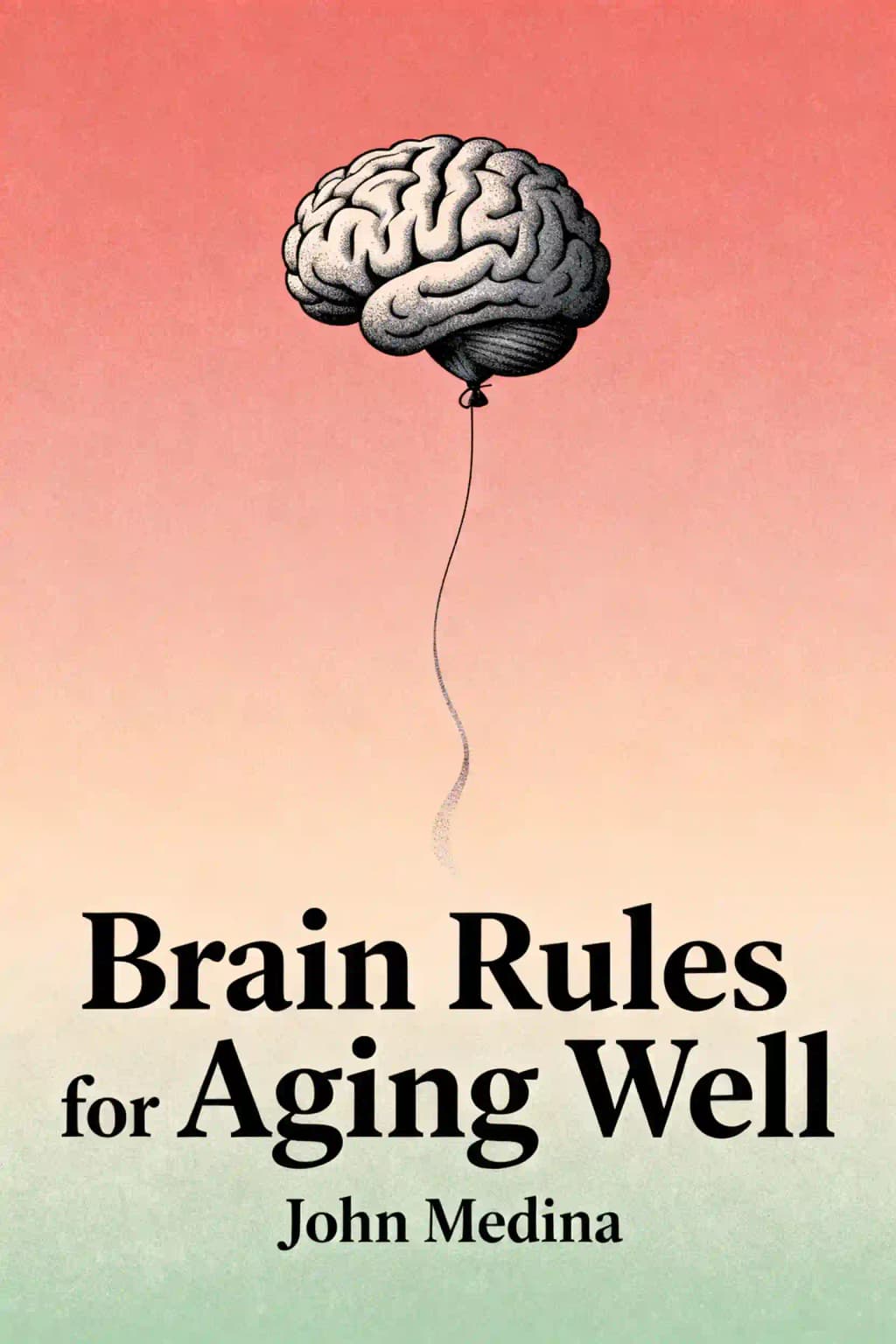
Ever wondered why some 90-year-olds still dance while others struggle to remember their grandchildren's names? Developmental molecular biologist John Medina's "Brain Rules for Aging Well" offers a fascinating glimpse into this mystery. The book gained prominence after Ellen Langer's groundbreaking "counterclockwise study" where seventy-year-old men lived in a monastery environment recreated to feel like 1959. After just five days immersed in this time warp, these men-who had entered shuffling with canes and poor vision-emerged transformed: standing straighter, gripping more firmly, with improved vision, hearing, and cognitive abilities. Some even spontaneously played touch football! This experiment demonstrated what neurologists now confirm: aging isn't just about inevitable decline.
The book has become required reading in gerontology programs nationwide and has influenced retirement planning approaches across industries. Medina's accessible style makes complex neuroscience digestible for general audiences while maintaining scientific integrity that has earned praise from researchers at institutions like the National Institute on Aging. Whether you're approaching retirement or caring for aging parents, this book challenges conventional wisdom about what's possible in our later years.
2장
The Social Brain: Why Friendship Is Your Best Anti-Aging Medicine
Friendships and social activities are perhaps the most powerful brain boosters available to aging adults. Research shows seniors who socialize experience a remarkable 70% less cognitive decline than their isolated counterparts. Even brief positive social interactions measurably improve processing speed and working memory. This isn't merely correlation-it's causal. The benefits work through two primary mechanisms: reducing stress (lowering allostatic load) and providing intensive mental exercise.
When we socialize, our brains engage in what researchers believe may be the most complex cognitive task we consciously perform. This mental workout builds "brain reserve" that buffers against cognitive decline, even in the face of conditions like Alzheimer's. Studies reveal that maintaining more social relationships correlates with increased gray matter volume in specific regions of the frontal lobe associated with "mentalizing" (Theory of Mind)-our ability to discern others' mental states. Tripling your social network can literally double your amygdala volume.
However, not all social interactions benefit the brain equally. Negative relationships-like those with emotionally controlling, meddlesome, or verbally aggressive people-provide no cognitive benefit and may even cause harm. The quality of social connections matters more than quantity, with competitive one-upmanship offering no advantages. The secret to brain-healthy socializing lies in consistently taking others' perspectives and actively seeking to understand different viewpoints.
Social isolation, by contrast, devastates seniors' wellbeing, eroding basic self-care abilities and triggering depression-the greatest risk factor for clinical depression in octogenarians. Physiologically, loneliness compromises immune function, raises stress hormones, increases blood pressure, and impairs cognition. Most dramatically, lonely seniors face a 45% higher mortality rate than their socially active peers, even controlling for physical ailments and depression.
Dancing offers particularly remarkable benefits for aging brains. In one study of adults aged 60-94 who took weekly dance classes for six months, hand-motor coordination improved by 8%, cognitive skills increased by 13%, and posture and balance improved by 25%-all while non-dancing controls showed decreases in these measures. The style didn't matter; tango, jazz, salsa, and ballroom dancing all produced benefits, as did other forms of ritualized movement like tai chi.
3장
The Happiness Paradox: Why Aging Makes You More Positive
Contrary to the deeply ingrained "grumpy old person" stereotype, happiness actually increases as we age. Comprehensive research shows seniors develop greater emotional stability, agreeableness, and conscientiousness-with people in their sixties scoring 69% higher on emotional stability than those in their twenties. When controlling for wealth, gender, race, education, and other factors, longitudinal studies from the National Institute on Aging reveal a clear upward trend in well-being across the lifespan, with happiness levels peaking between ages 65-85.
This positive shift stems from fundamental changes in how our brains process emotional information as we age. Research shows older adults pay significantly more attention to positive stimuli while almost actively avoiding negative ones - a phenomenon called the "positivity effect." In laboratory studies, seniors consistently remember more positive images and faces while showing reduced attention to negative stimuli. This isn't just behavioral but neurological, with researchers identifying "frontal-amygdalar age-related differences in emotion" (FADE) that physically alter how our brains process emotions. Brain imaging studies show reduced amygdala activation to negative stimuli in older adults, while maintaining robust responses to positive experiences.
Like Scrooge's transformation in "A Christmas Carol," aging fundamentally shifts our priorities from knowledge-based pursuits to emotional relationships. When young, we believe we'll live forever, focusing intensely on career advancement, status achievement, and knowledge acquisition. As we age and confront mortality, we naturally prioritize meaningful relationships and emotional satisfaction over achievement-a shift scientists call "socioemotional selectivity theory." This reprioritization manifests in concrete ways: older adults typically maintain smaller but closer social circles, invest more in family relationships, and report greater satisfaction from helping others.
The positive bias in aging brains has a concerning downside: increased vulnerability to manipulation and fraud. Seniors lose approximately 20% of their "reward prediction" ability, making them less able to detect when promised rewards won't materialize. This vulnerability stems from two key brain regions: the anterior insula (our "fraud detector") becoming less reactive with age, and the "Highway to Hell" circuit (AC/DC network) that affects probabilistic learning and risk assessment. These neurological changes help explain why elderly Americans lose an estimated $3 billion annually to scams, with financial fraud targeting seniors increasing by 400% in the last decade.
Depression and old age often intersect in complex ways, seemingly contradicting the happiness research. While clinical depression isn't typical for healthy seniors (8-15% prevalence), hospitalization or assisted living can spike rates to 40%. Health challenges dramatically increase depression risk, with hearing loss (increasing social isolation), vision loss (limiting independence), and various medical conditions being major contributors. The reality is that happiness increases with age only as long as seniors maintain reasonable health and social connections-but since health naturally declines with aging, depression rates tend to rise accordingly. This creates what researchers call the "paradox of aging": increasing emotional well-being occurs alongside declining physical health.
4장
Managing Stress: The Surprising Mental Advantage of Aging
Contrary to expectations, older people consistently report feeling less stressed than their younger counterparts across multiple studies and cultures. While 38 percent of millennials report increasing stress levels in their daily lives, only 25 percent of baby boomers and a mere 18 percent of the Greatest Generation feel similarly overwhelmed. Recent research shows that seniors report greater life satisfaction and significantly lower rates of depression and anxiety (with the notable exception of the "oldest old" - those over 85). This remarkable paradox exists despite well-documented age-related dysregulation of stress hormones and increased physical health challenges.
The stress response, a fundamental survival mechanism, evolved primarily to keep us alive long enough to reproduce through the fight-or-flight response. When faced with a stressor, the body immediately releases epinephrine and norepinephrine to prepare for physical action - increasing heart rate, dilating pupils, and directing blood flow to muscles. Cortisol, often called the "stress hormone," is secreted by the adrenal glands and helps control this energy-intensive response. The hippocampus contains dense clusters of cortisol receptors that act as a biological thermostat, signaling when to shut down the stress response once threats pass - a crucial function that gradually deteriorates with age.
With advancing years, three key changes occur in stress response systems: baseline cortisol levels begin rising (typically around age 40), acute stress responses become less vigorous, and the body requires significantly longer to return to baseline after stressful events. These age-related changes resemble a malfunctioning thermostat that can't properly regulate temperature. When cortisol remains chronically elevated, it damages multiple body systems and brain regions, particularly the hippocampus and prefrontal cortex, while paradoxically causing the amygdala to become more reactive and actually increase in size. Yet remarkably, seniors consistently report feeling less stressed than younger people, possibly because their amygdalae show reduced reactivity to negative stimuli, as demonstrated in numerous neuroimaging studies.
Mindfulness-based stress reduction techniques have shown remarkable benefits specifically for older adults - improving sleep quality by up to 50%, reducing depression and anxiety symptoms by 30-40%, decreasing feelings of loneliness, enhancing immune function, and promoting cardiovascular health through lowered blood pressure and heart rate variability. Cognitively, regular mindfulness practice improves attention (reducing "attentional blink" by approximately 30%), enhances visuospatial processing, strengthens working memory capacity, and increases verbal fluency. These effects appear to work through multiple mechanisms: lowering cortisol levels, reducing amygdala activation during stress, and strengthening the anterior cingulate cortex - a region crucial for emotional regulation.
Critically, mindfulness and other brain-healthy practices must be maintained as permanent lifestyle changes rather than temporary interventions. A landmark nursing home study dramatically demonstrated this principle: when weekly student visits and social engagement programs ended, seniors' mental and physical conditions deteriorated not just to baseline, but to levels significantly worse than before the program began. This highlights the vital importance of consistent, long-term engagement in stress-reduction practices for maintaining cognitive and emotional well-being in later life.
5장
Memory Systems: What Fades and What Flourishes
Memory isn't a single system but rather multiple interconnected systems that age differently. As we grow older, some memory functions decline while others remain robust or even improve. The challenge isn't total memory loss but understanding which specific systems change and how to compensate for these shifts.
Our brains contain multiple memory systems, each processing specific types of information-like separate hard drives working semi-independently. Memory can be organized by whether it involves conscious or unconscious retrieval. Declarative memory (conscious) includes semantic memory (facts) and episodic memory (remembering storylines). Procedural memory (unconscious) handles learned skills like driving that don't require conscious thought.
George Burns exemplifies how certain memory systems remain vibrant with age. Semantic memory (facts) doesn't erode but actually improves-vocabulary scores increase from your twenties through your sixties. Procedural memory (motor skills) remains steady or slightly improves with age. These preserved systems contribute to wisdom: seniors have access to broader knowledge for decision-making and tend to be less impulsive, weighing more options before acting.
Working memory-once called short-term memory-declines significantly with age. Like Dory from Finding Nemo, we increasingly struggle to temporarily hold and process information. Working memory scores drop dramatically from our twenties (0.6) to eighties (-0.6), resulting in misplaced keys, forgotten conversations, and lost trains of thought.
Long-term memory also faces challenges with age, particularly episodic memory-our ability to recall events with their context, characters, and timeline. While semantic memory remains relatively intact, source memory significantly deteriorates with age, with research showing a 33% drop from our twenties to seventies. This decline stems from deterioration in the hippocampus and default mode network (DMN).
The aging brain compensates creatively for memory decline. When language processing areas like Broca's region begin losing connectivity, the brain recruits neurons from the opposite hemisphere and prefrontal cortex-regions not normally associated with language. It also reorganizes electrical relationships between remaining neurons in language centers.
The most effective prescription for combating memory decline is lifelong learning. The Synapse Project found seniors learning demanding new skills like digital photography showed a 600% improvement in episodic memory compared to those merely socializing. Bilingual people perform better on cognitive tests regardless of when they learn new languages. Music training boosts executive function dramatically, with a four-month piano program showing significant improvements in seniors with no prior musical experience.
6장
Cognitive Processing: Speed, Attention, and Decision-Making
As we age, our cognitive processing speed, attention abilities, and decision-making skills naturally decline. Processing speed-the rate at which we perform mental and physical tasks-follows a predictable pattern across life. It increases rapidly from childhood through adolescence, peaks around college age (18-22), then begins a gradual decline after graduation, with more noticeable changes emerging after age forty. Research shows we lose approximately ten milliseconds of processing speed per decade past age twenty, which accumulates into significant differences over time. This manifests in everyday activities like driving, where older adults require longer to process and respond to sudden changes in traffic.
This cognitive slowing has both biological and environmental causes. Biologically, white matter-the crucial insulating material around neurons-deteriorates with age as specialized cells called oligodendrocytes die off and are replaced with inferior copies. This process compromises signal quality throughout the brain, similar to electrical wires losing their protective coating. The cerebellum, vital for motor control and cognitive processing, undergoes significant changes, including shrinking gray matter volume and degrading connections to regions like the parietal lobe, which affects spatial awareness and attention.
Our ability to filter out irrelevant information and maintain focus dramatically declines with age-from 82% effectiveness in our twenties to just 56% by our late sixties. This deterioration manifests in common experiences like "room amnesia," where minor interruptions can make us completely forget our original task or intention. Task-switching ability, often mischaracterized as "multitasking," also shows marked decline with age, particularly for complex activities requiring sustained attention. For instance, older adults take significantly longer to resume their primary task after checking email or answering a phone call.
Fluid intelligence-our capacity to solve novel problems independent of past experience-drops nearly 40% between ages twenty and seventy-five. This decline affects abilities like pattern recognition, abstract reasoning, and quick adaptation to new situations. However, crystallized intelligence (knowledge and skills gained from experience) remains relatively stable or even improves with age. This explains why seniors might struggle with learning new technology but excel at tasks drawing on accumulated wisdom and experience, such as strategic planning or vocabulary-based puzzles.
The emerging field of cognitive training, particularly through video games and brain training programs (BTPs), shows promising benefits for seniors' cognitive health. In a groundbreaking study, seniors who played a simple processing-speed game for just ten hours total showed 48% lower dementia rates when assessed ten years later. Specialized games like NeuroRacer, where seniors navigate virtual roads while responding to visual cues, produced remarkable cognitive improvements that persisted for six months post-training. Most impressively, trained seniors eventually outperformed untrained twenty-year-olds on specific cognitive tasks, demonstrating the brain's continued plasticity and capacity for improvement even in later life. These findings suggest that targeted cognitive training might help offset some age-related cognitive decline, though more research is needed to understand the optimal types and duration of such interventions.
7장
Understanding Alzheimer's: Beyond the Stereotypes
Alzheimer's disease creates terror among seniors, but differentiating normal aging from brain pathology represents one of medicine's greatest challenges. There exists a twilight zone between typical functioning and worrisome decline called mild cognitive impairment (MCI). Current estimates suggest 10-20% of people over sixty-five have MCI. Some people never progress beyond MCI, while others eventually develop dementia.
Alzheimer's may be one of the costliest diseases to strike the modern world. It ranks fifth among causes of death in developed countries but first in expense because patients can live a decade after diagnosis. The science remains controversial-not all patients diagnosed with Alzheimer's behavior show the same brain pathology, and not all with the pathology show the behavior.
The amyloid hypothesis compares Alzheimer's to a mob hit, where one protein orders the killing and another executes it. In healthy cells, proteins undergo post-translational modification after manufacture, but this process malfunctions in Alzheimer's, creating sticky amyloid fragments called A-beta (A) that form toxic clumps outside cells. These "Mafia boss" structures then trigger the production of modified tau proteins-the "hit men" that form tangles inside neurons, ultimately destroying them from within.
The Nun Study, launched in 1986 by Dr. David Snowdon, enlisted nearly 680 School Sisters of Notre Dame over age 75 to help understand Alzheimer's. Sister Mary, described as "the gold standard for successful cognitive aging," remained mentally sharp until her death at 101. Yet her autopsy revealed a brain filled with the plaques and tangles characteristic of Alzheimer's-a startling contradiction. Researchers discovered that 30% of people without dementia symptoms have brains laden with Alzheimer's pathology, while 25% of those with clinical Alzheimer's show minimal plaque accumulation.
Snowdon made a fascinating discovery when analyzing the autobiographies the nuns had written in their twenties. Through neurolinguistic examination of these essays, he found striking correlations with who later developed Alzheimer's. Eighty percent of nuns whose writings scored low on linguistic ability-particularly idea density-developed Alzheimer's six decades later. Only 10 percent of those with high linguistic scores developed the disease.
8장
The Body-Brain Connection: Exercise, Nutrition, and Sleep
Exercise and nutrition profoundly impact brain health as we age. Research consistently shows that seniors who exercise regularly score significantly higher on executive function tests than sedentary individuals. One study revealed a 30% boost in executive function after just three months of a walking regimen, with benefits sometimes lasting up to twenty-five years later.
Exercise literally builds brain volume in areas critical for executive function. The prefrontal cortex becomes more active and bulkier in seniors who exercise. The hippocampus shows even more dramatic changes-aerobic exercise increases hippocampal volume by 2%, while stretching exercises or inactivity lead to volume decreases. These regions don't just grow larger but denser, with the PFC developing more connections and the hippocampus potentially growing new neurons through neurogenesis.
Remarkably little exercise is needed to boost cognitive function in aging brains. Just thirty minutes of moderate aerobic activity two or three times weekly provides significant benefits. The effect is dose-dependent to a point, but researchers found a "ceiling effect" where seniors walking 72 blocks weekly gained the same gray matter increase as those walking 300 blocks.
The Mediterranean diet shows remarkable benefits for brain health beyond its known cardiovascular advantages. The PREDIMED study found people following this diet experienced significantly less cognitive decline. In one study, participants were divided into three groups: Mediterranean diet with extra-virgin olive oil, Mediterranean diet with nuts, and a control diet. After four years, the Mediterranean diet groups showed improved memory scores while controls declined.
Sleep is perhaps the single most important daily experience for optimizing brain health in aging. Sleep quality diminishes with age, with 44-70% of seniors reporting difficulties either falling or staying asleep. The sleep cycle functions like competing teams-the circadian arousal system (keeping you awake) versus the homeostatic sleep drive (making you sleep).
Sleep isn't primarily about energy restoration-it saves only about 120 calories, equivalent to a bowl of soup. Instead, it plays a crucial role in memory consolidation. During slow-wave sleep, the brain reactivates tagged memories, repeating their electrical patterns thousands of times to strengthen neural connections. Sleep also serves as the brain's garbage disposal system through the glymphatic system-a network that activates during slow-wave sleep to flush away neural waste.
9장
The Future of Aging: From Longevity Science to Meaningful Retirement
Scientists have made remarkable progress extending life in laboratory animals. The "Indy" gene was discovered in fruit flies and extends their lifespan significantly. In mice, researchers created the GHR-KO 11C specimen by knocking out a growth hormone receptor gene, extending its life to nearly five years-equivalent to 180 human years.
Leonard Hayflick discovered that healthy cells have a built-in limit to how many times they can divide before dying. This "Hayflick limit" functions through telomeres-protective caps at chromosome ends that shorten with each cell division. Some cells produce telomerase, an enzyme that can rebuild shortened telomeres, potentially enabling unlimited cell division. However, unrestricted telomerase activity would lead to cancer-cells dividing uncontrollably.
Despite remarkable scientific advances in understanding aging and longevity, practical immortality remains elusive. Gene therapies that extend life in lab animals often lead to cancer in humans, while pharmaceutical approaches may improve quality of life but won't grant immortality. Nevertheless, there's never been a better time in history to grow old, with numerous ways to make aging more comfortable.
Retirement may be one of the worst things you can do for your health. Research shows retirees face 40% higher risk of cardiovascular incidents, increased chances of cancer, diabetes, and arthritis. Mental decline is equally concerning-retirees perform half as well on fluid intelligence tests and score 25% lower on memory assessments than working peers. Depression risk increases by 40%, while dementia risk decreases 3.2% for each additional year worked after sixty.
Nostalgic experiences create powerful emotional connections. Research shows nostalgia promotes self-continuity, linking past and present selves. This process boosts social connectedness, increases eudaimonic well-being, and prioritizes positive memories. Brain imaging reveals nostalgia activates both memory systems in the hippocampus and reward centers like the substantia nigra and ventral tegmental area, which produce dopamine.
The FINGER study (Finnish Geriatric Intervention Study to Prevent Cognitive Impairment and Disability) showed remarkable results: those who simultaneously followed Mediterranean diet, vigorous exercise, and brain-training games for two years saw memory improve by 40%, executive function by 83%, and processing speed by an astounding 150% compared to controls, whose cognitive performance declined 30%.
Dan Buettner identified five global "Blue Zones" where people live extraordinarily long, healthy lives. The Blue Zones' common practices align perfectly with neuroscience findings: maintaining active social lives with family prioritization, observing stress-reducing practices, and cultivating lifelong friendships. Most Blue Zoners aren't actually retired-they continue working and contributing to their communities well into their later years.
With proper care (and genetic luck), our brains stay flexible enough to maintain fertile imaginations regardless of age. It's never too late to embrace friends, practice gratitude, or learn something new. Aging makes claims on our bodies but not necessarily on our minds.