Discover how 400,000 people rewired their brains with Dr. Schwartz's revolutionary OCD treatment. Leonardo DiCaprio consulted this method for "The Aviator." Can your mind literally fix your brain? PET scans prove this four-step approach changes neural pathways as effectively as medication.
Jeffrey M. Schwartz, M.D., is the author of Brain Lock: Free Yourself from Obsessive-Compulsive Behavior and a leading psychiatrist specializing in neuroplasticity and obsessive-compulsive disorder (OCD). Born in 1951, Dr. Schwartz is a research psychiatrist at UCLA School of Medicine.
He pioneered research demonstrating that the mind can alter brain chemistry through self-directed behavioral change. His influential four-step method—Relabel, Reattribute, Refocus, Revalue—has transformed clinical approaches to treating OCD and compulsive habits.
Dr. Schwartz has authored several acclaimed books, including The Mind and the Brain and You Are Not Your Brain. He has appeared on Oprah, 20/20, and Good Morning America, and served as consultant to Martin Scorsese for the 2004 film The Aviator, advising Leonardo DiCaprio on portraying Howard Hughes' OCD struggles. Brain Lock is widely prescribed by mental health professionals and remains a seminal resource in the field, establishing Dr. Schwartz as a world-leading expert in self-directed neuroplasticity.
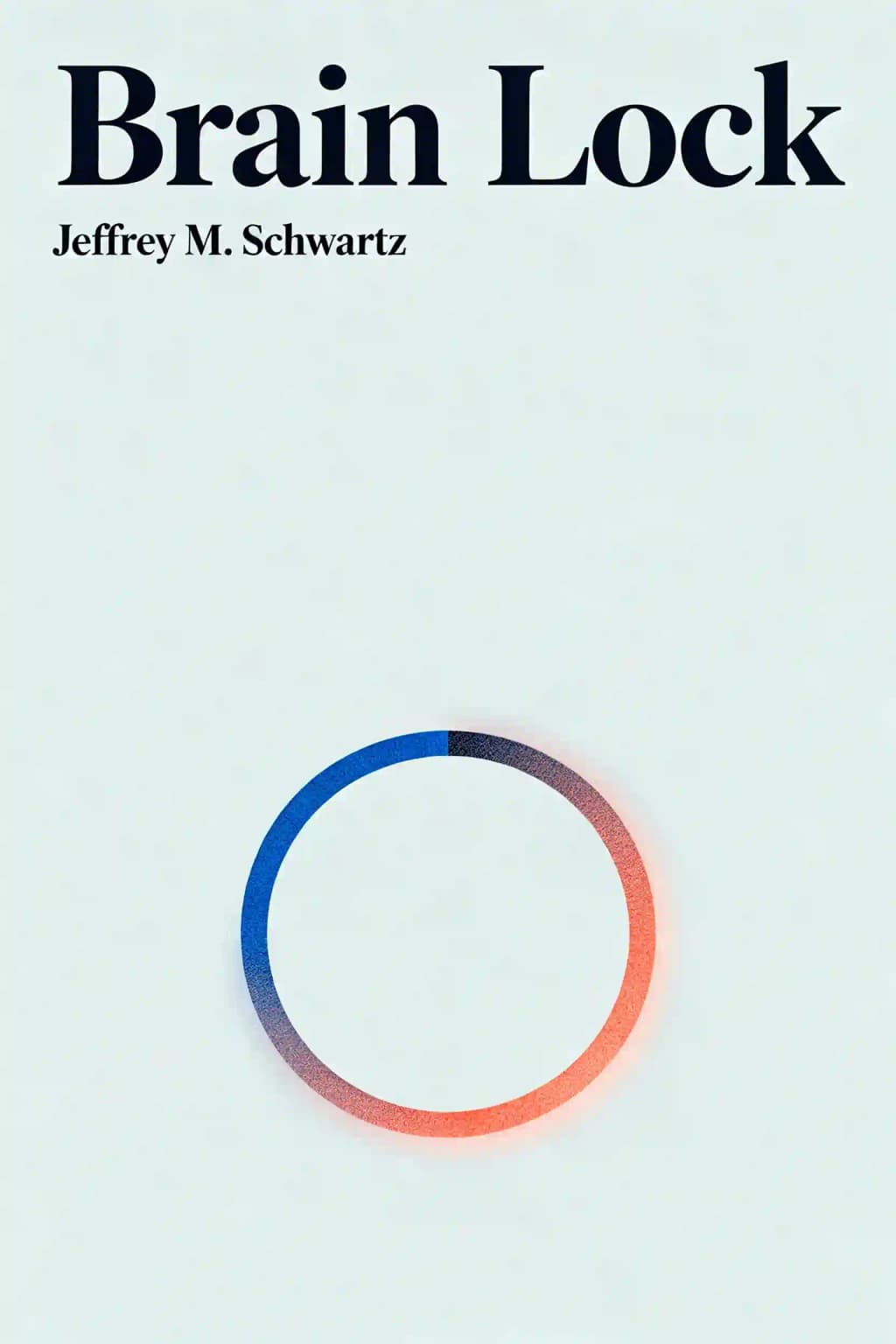
Brain Lock by Jeffrey M. Schwartz is a groundbreaking self-help book that presents a simple four-step cognitive-behavioral method for overcoming Obsessive-Compulsive Disorder (OCD). The book explains the neuroscience behind OCD, showing how specific brain structures become "locked" in repetitive patterns, and teaches readers how to use their minds to rewire their brains through neuroplasticity. With over 400,000 copies helping sufferers worldwide, it offers hope beyond medication alone.
Brain Lock is essential reading for anyone struggling with OCD, including the estimated 5 million Americans suffering from obsessive-compulsive disorder. Beyond OCD sufferers, the book benefits individuals dealing with bad habits, impulse control issues, or compulsive behaviors like procrastination. Mental health professionals, family members supporting loved ones with OCD, and anyone interested in neuroplasticity and cognitive-behavioral therapy will find valuable insights in Jeffrey M. Schwartz's evidence-based approach.
Brain Lock is worth reading because it provides a scientifically proven, medication-free treatment method now used in academic treatment centers worldwide. Brain imaging tests have confirmed that Schwartz's Four-Step Method actually alters brain chemistry and "cools off" overheated brain regions associated with OCD. While some readers note the book can be repetitive, the practical four-step framework delivers actionable strategies that have transformed lives. The real-life patient stories provide inspiration and demonstrate the method's effectiveness.
The Four-Step Method in Brain Lock consists of Relabel, Reattribute, Refocus, and Revalue. Relabel means identifying intrusive thoughts as OCD symptoms rather than reality. Reattribute involves recognizing these symptoms stem from a biochemical brain imbalance, not personal failings. Refocus redirects attention to constructive activities instead of giving in to compulsions. Revalue teaches you to dismiss obsessive thoughts as worthless distractions, ultimately reducing their power over your life.
Brain Lock explains that OCD occurs when the orbital cortex—located above the eyes—becomes "overheated" and sends persistent "something is wrong" signals. These signals get "stuck" in the caudate nucleus and putamen, which normally act as filters and transmission centers. In healthy brains, these structures coordinate appropriate behavioral responses and filter out repetitive messages, but in OCD brains, the malfunctioning filter allows the same messages through repeatedly. This creates the cyclical "brain lock" pattern of obsessive thoughts and compulsive behaviors.
"Brain Lock" describes the cyclical state where obsessive thoughts become entrenched in an individual's mind, creating a feeling of being mentally "locked" into distressing thought patterns and compulsive actions. Jeffrey Schwartz coined this term to explain how key brain structures become stuck, preventing normal filtering of repetitive worry signals. The phenomenon reflects the overwhelming grip OCD has on the mind, trapping sufferers in loops that consume significant time and energy, interfering with work, relationships, and quality of life.
The Relabel step in Brain Lock teaches you to identify intrusive thoughts and urges as symptoms of OCD, not as accurate reflections of reality. Instead of believing thoughts like "I must wash my hands again" represent legitimate concerns, Jeffrey M. Schwartz instructs patients to consciously recognize them as obsessions caused by their condition. This cognitive shift creates psychological distance from the thought's content and reduces its emotional impact. Relabeling puts you on notice to run through all four steps rather than cave to compulsive urges.
The Refocus step in Brain Lock involves redirecting your attention to constructive activities instead of engaging in compulsive behaviors. After relabeling and reattributing OCD symptoms to brain malfunction, you deliberately shift focus to positive tasks that work around the urges. This step requires "mindful effort" and manual control—like shifting a manual transmission instead of relying on an automatic one. By consistently refocusing attention away from obsessions, you begin rewiring brain patterns and breaking the cycle of compulsive responses.
Brain Lock's Four-Step Method can effectively address bad habits, impulse control problems, and addictive behaviors beyond OCD. The principles of relabeling, reattributing, refocusing, and revaluing apply to any compulsive pattern where the brain gets stuck in unhealthy loops. Readers have successfully used Jeffrey M. Schwartz's approach for issues like procrastination and other impulse control challenges. The book teaches valuable lessons about the neuroscience behind habits and compulsions that benefit anyone seeking behavioral change.
The main criticism of Brain Lock is its excessive repetitiveness, with quotes and concepts repeated multiple times throughout the book. Some readers feel the content is "bloated" and seems designed to hit a word count rather than deliver concise information. Sentences from earlier chapters are directly copied into later sections, which can frustrate readers. However, critics acknowledge this repetition may intentionally help readers internalize the four steps, and the core advice remains valuable and scientifically sound despite the redundancy.
Brain Lock demonstrates that consistent practice of the Four-Step Method literally rewires the brain through neuroplasticity. Brain imaging studies show that patients who apply Relabel, Reattribute, Refocus, and Revalue techniques can alter their brain's chemistry and "cool off" the overheated orbital cortex associated with OCD. Jeffrey M. Schwartz's research proves individuals can change their brain's wiring without medication by using cognitive self-therapy and behavior modification. This groundbreaking approach shows the mind can actively fix the brain.
Brain Lock offers a proven medication-free approach to treating OCD, which is significant because 30 percent of patients don't respond to drugs like Prozac, and symptoms return when medication stops. Jeffrey M. Schwartz's Four-Step Method relies entirely on cognitive self-therapy and behavior modification rather than psychopharmaceuticals. Brain imaging tests confirm this behavioral approach actually changes brain chemistry without medication. However, Schwartz acknowledges medication can be helpful in extreme cases as a supplementary treatment.
저자의 목소리로 책을 느껴보세요
지식을 흥미롭고 예시가 풍부한 인사이트로 전환
핵심 아이디어를 빠르게 캡처하여 신속하게 학습
재미있고 매력적인 방식으로 책을 즐기세요
It's not me, it's my OCD.
It's not me-it's my OCD.
These aren't productive habits or amusing quirks.
I know checking my door lock seventeen times makes no logical sense.
Brain Lock의 핵심 아이디어를 이해하기 쉬운 포인트로 분해하여 혁신적인 팀이 어떻게 창조하고, 협력하고, 성장하는지 이해합니다.
생생한 스토리텔링을 통해 Brain Lock을 경험하고, 혁신 교훈을 기억에 남고 적용할 수 있는 순간으로 바꿉니다.
무엇이든 묻고, 학습 스타일을 선택하고, 나에게 맞는 인사이트를 함께 만들어보세요.

샌프란시스코에서 컬럼비아 대학교 동문들이 만들었습니다
"Instead of endless scrolling, I just hit play on BeFreed. It saves me so much time."
"I never knew where to start with nonfiction—BeFreed’s book lists turned into podcasts gave me a clear path."
"Perfect balance between learning and entertainment. Finished ‘Thinking, Fast and Slow’ on my commute this week."
"Crazy how much I learned while walking the dog. BeFreed = small habits → big gains."
"Reading used to feel like a chore. Now it’s just part of my lifestyle."
"Feels effortless compared to reading. I’ve finished 6 books this month already."
"BeFreed turned my guilty doomscrolling into something that feels productive and inspiring."
"BeFreed turned my commute into learning time. 20-min podcasts are perfect for finishing books I never had time for."
"BeFreed replaced my podcast queue. Imagine Spotify for books — that’s it. 🙌"
"It is great for me to learn something from the book without reading it."
"The themed book list podcasts help me connect ideas across authors—like a guided audio journey."
"Makes me feel smarter every time before going to work"
샌프란시스코에서 컬럼비아 대학교 동문들이 만들었습니다

Brain Lock 요약을 무료 PDF 또는 EPUB으로 받으세요. 인쇄하거나 오프라인에서 언제든 읽을 수 있습니다.
Imagine being trapped in a mind that constantly sounds false alarms. Your hands feel contaminated even though you've washed them twenty times today. You're certain you left the stove on despite checking it repeatedly. You know these thoughts are irrational, yet you can't escape them. This is the reality for millions living with Obsessive-Compulsive Disorder - not the quirky organizing habit that popular culture often portrays, but a debilitating condition affecting approximately one in forty Americans. True OCD manifests as persistent, intrusive thoughts creating overwhelming anxiety, followed by repetitive behaviors performed to temporarily quiet the mind. The sufferer typically recognizes the irrationality of their actions but feels powerless to stop. As one patient described, "I know checking my door lock seventeen times makes no logical sense, but the anxiety of not doing it feels like being buried alive." Modern brain imaging reveals the biological underpinnings: hyperactivity in the orbital cortex (the brain's error-detection system) alongside dysfunction in the caudate nucleus (which helps regulate cognitive gear-shifting). This creates a self-reinforcing cycle where the brain repeatedly sends false alarm signals that no amount of compulsive behavior can permanently quiet. Each time someone gives in to compulsions, they strengthen these neural pathways, making the condition progressively worse - like a car with its transmission stuck in gear, unable to shift to neutral.
"Brain Lock" revolutionized OCD treatment by showing patients could alter their brain chemistry without medication. Published in 1996, it challenged the belief that brain disorders required pharmaceuticals, offering instead a self-directed behavioral therapy that empowers patients to rewire neural pathways. The four steps - Relabel, Reattribute, Refocus, and Revalue - provide a structured approach to breaking free from OCD. Unlike traditional psychotherapy exploring childhood origins, this method pragmatically focuses on changing responses to obsessive thoughts in the present moment. This approach bridges neuroscience and psychology, acknowledging OCD's biological basis while emphasizing neuroplasticity - the brain's lifelong ability to form new neural connections. Patients who consistently practice these steps literally change their brain function, confirmed by PET scans showing normalized activity in previously hyperactive regions. The most profound insight is that conscious mental effort physically changes brain structure, challenging assumptions about neural rigidity.
The first step toward freedom involves developing "mindful awareness" - recognizing obsessive thoughts as symptoms of a medical condition rather than messages requiring action. This cognitive shift is captured in the mantra: "It's not me - it's my OCD." This distinction matters because OCD thoughts feel incredibly urgent and real, presenting as genuine danger rather than a neurological condition. Relabeling requires developing what philosopher Adam Smith called "the impartial spectator" - observing your thoughts objectively. Anna, who suffered from pathological jealousy, learned to recognize: "This isn't a legitimate concern - this is my OCD creating false danger signals." The Reattribute step explains these disturbing thoughts as symptoms of a medical condition caused by biochemical imbalance. This understanding liberates patients who've blamed themselves. As Jill explained: "Learning that my brain was sending me false messages helped me stop blaming myself and start fighting back." Research by E.T. Rolls showed the orbital cortex functions as an "error-detection system" that becomes chronically activated in OCD, creating persistent intrusive thoughts.
The Refocus step initiates brain chemistry changes. When the brain's automatic "gearshift" malfunctions, patients must manually redirect attention instead of performing compulsions. Remember: "It's not how you feel, it's what you do that counts." Like a martial art, step aside from OCD rather than confronting it directly. Follow the fifteen-minute rule by engaging in activities requiring concentration-exercise, reading, socializing, or hobbies-instead of rituals. The goal isn't eliminating obsessive thoughts but working around them, like ignoring a car alarm while continuing to read. Christopher, who feared contamination, deliberately picked up dirt while walking neighbors' dogs, then focused on the task without washing until truly necessary. Through this exposure with Refocusing, he gradually overcame his fears. The Revalue step emerges naturally from practicing the first three steps. Patients learn to recognize obsessive thoughts as worthless distractions-mental junk mail to discard. This perspective shift builds through repeatedly resisting compulsions and seeing that dreaded consequences don't materialize.
OCD devastates entire families, not just individuals. Untreated patients often become secretive about disturbing thoughts, creating what researchers call "interactional dynamite" within families. Family members frequently accommodate OCD to extreme degrees - like Karen's husband allowing junk to accumulate until only narrow paths remained in their home. Spouses face tantrums when refusing to participate in rituals, and their energy becomes consumed by managing the illness. Children suffer significantly when parents have OCD. Jill's contamination fears led her to cut off contact with her family for sixteen years. Her daughters endured elaborate decontamination rituals, couldn't have friends visit, and learned to hide their mother's behavior. The essential principle for families is straightforward: don't enable OCD symptoms - enable behavior therapy instead. Family members must reclaim their lives by refusing to participate in enabling behaviors while supporting OCD sufferers through understanding and encouragement with the Four Steps.
UCLA research shows OCD involves "Brain Lock" primarily in the right brain. During symptoms, increased metabolic activity in the orbital cortex creates a self-reinforcing cycle with the caudate nucleus, thalamus, and cingulate gyrus. Behavior therapy effectively unlocks these structures. Studies of eighteen subjects revealed three key findings: decreased caudate nucleus metabolism (especially right-sided), alleviation of "Brain Lock" correlations between brain regions, and a strong connection between orbital cortex changes and symptom improvement. This demonstrates cognitive-behavioral therapy alone can systematically change brain function by creating "new brain grooves" and disrupting OCD's "fixed-worry circuit." This research challenges the notion that mind merely emerges from brain. By showing focused mental effort creates measurable brain changes, "Brain Lock" suggests we have greater control over our neurological destiny. Our capacity for mindful awareness - observing thoughts and consciously choosing responses - may be our most powerful healing tool.
Those who overcome OCD often experience profound personal transformation, developing greater self-awareness, compassion, and spiritual growth. As one patient reflected: "OCD taught me to look inside myself in ways I never would have otherwise." Benjamin, whose PET scan appears on the book jacket, exemplifies this journey. Once trapped in six-hour car washing rituals, he took "major risks" through therapy like leaving drawers open. His struggle made him "more sensitive and empathetic." Though his OCD is now 80 percent controlled, he continues working on relationships: "I want to be more useful to other people... I've gone through a major value shift." "Brain Lock" offers hope by distinguishing between OCD's false messages and our authentic selves. The Four-Step Method builds personal mastery through constructive resistance to OCD feelings, enhancing self-esteem and conscious choice-making. In a world focused on brain chemistry determining behavior, this approach offers a revolutionary perspective: we aren't helpless victims of our neurology. Through mindful awareness, we can change both our behaviors and brain function.