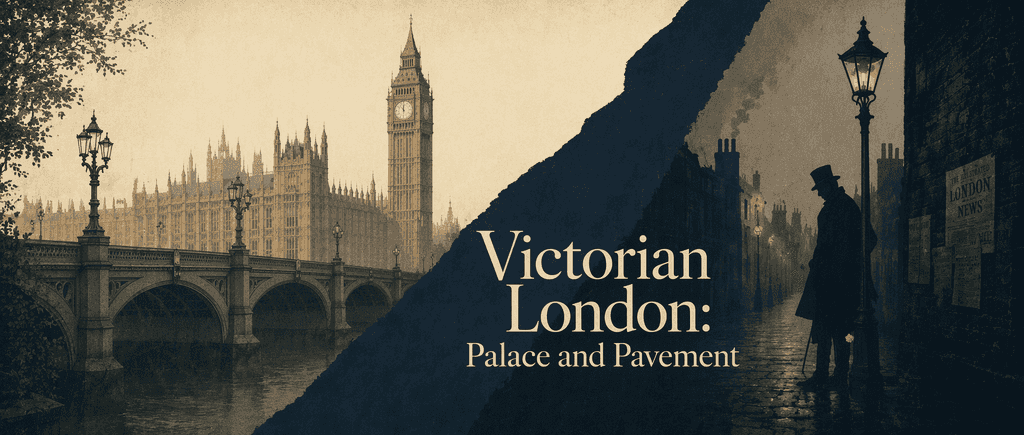
In Dickens' masterpiece "Bleak House," fog-shrouded London's corrupt legal system destroys lives through endless litigation. This scathing critique of Victorian injustice directly influenced 1870s legal reforms, pioneered urban Gothic atmosphere, and remains a cornerstone of detective fiction with its groundbreaking dual-narrator structure.
Charles John Huffam Dickens (1812–1870), the celebrated Victorian novelist and social critic, authored Bleak House, a cornerstone of 19th-century literature that critiques societal inequities through its piercing satire of the legal system. Born in Portsmouth, England, Dickens drew inspiration from his childhood hardships—including his father’s debt imprisonment and his own labor in a boot-blacking factory—to craft narratives exposing poverty, bureaucracy, and class divides.
Bleak House, a legal and psychological drama, exemplifies his mastery of serialized storytelling, intricate plots, and memorable characters like Esther Summerson and Inspector Bucket.
Renowned for classics such as Great Expectations, A Tale of Two Cities, and Oliver Twist, Dickens pioneered serial publication, making his novels accessible to mass audiences while addressing themes of justice, resilience, and human connection. His works remain fixtures in global curricula, and Bleak House has been adapted for television, film, and radio, cementing its status as a literary landmark.
Bleak House by Charles Dickens centers on the interminable legal case Jarndyce v Jarndyce, exposing the corruption and inefficiency of England’s Court of Chancery. Through interconnected narratives—including Esther Summerson’s coming-of-age, Lady Dedlock’s concealed past, and Richard Carstone’s obsession with the lawsuit—Dickens critiques institutional neglect, social inequality, and the human toll of bureaucratic stagnation.
Fans of Victorian literature, legal dramas, and social critiques will find Bleak House compelling. It appeals to readers interested in Dickens’ intricate plotting, themes of justice and identity, and layered characters like the resilient Esther Summerson and tragic Lady Dedlock. Scholars of 19th-century societal structures also gain insights into systemic legal flaws.
Yes. Ranked among Dickens’ greatest works, Bleak House offers a masterful blend of satire, mystery, and moral urgency. Its dual narrative (partly voiced by Esther Summerson), vivid depictions of London’s underclass, and critique of legal bureaucracy remain influential, making it essential for literary enthusiasts and historians alike.
Key themes include:
Dickens also examines obsession, redemption, and the destructive power of secrets.
Dickens condemns the Court of Chancery through the endless Jarndyce v Jarndyce case, which drains heirs like Richard Carstone financially and emotionally. Lawyers profit while claimants suffer, illustrating how institutional greed and procedural delays perpetuate injustice—a scathing indictment of 19th-century legal practices.
Esther, the novel’s co-narrator and moral anchor, is an orphan raised in secrecy who becomes housekeeper at Bleak House. Her resilience, compassion, and pursuit of truth contrast with societal corruption. Her hidden lineage ties her to Lady Dedlock, deepening the novel’s exploration of identity and forgiveness.
The lawsuit symbolizes systemic failure: its decades-long stagnation destroys lives, including Richard Carstone’s descent into obsession and financial ruin. Dickens uses it to critique legal systems prioritizing procedure over humanity, where justice becomes inaccessible to those it claims to protect.
Class divisions are stark: the Dedlocks’ opulence contrasts with Jo’s destitution and Krook’s grimy shop. Dickens underscores how wealth shields the privileged (e.g., Sir Leicester’s ignorance of poverty) while the poor face neglect, as seen in Jo’s death and Esther’s marginalized upbringing.
The Court epitomizes bureaucratic decay, enabling the Jarndyce case to languish for generations. Lawyers like Mr. Tulkinghorn exploit its complexities, while heirs like Ada and Richard inherit despair. Dickens frames it as a vampiric institution draining societal vitality.
Its innovative structure (mixing first-person and omniscient narration), rich symbolism (e.g., the fog symbolizing legal obscurity), and unflinching social critique cement Bleak House as a landmark work. Characters like Inspector Bucket and themes of institutional reform remain culturally resonant.
Lady Dedlock’s secret past—as Esther’s mother and Nemo’s former lover—drives the novel’s central mystery. Her flight from society and tragic death highlight Victorian hypocrisy, while her ties to the Jarndyce case reveal hidden connections between aristocracy and marginal figures.
Modern parallels in bureaucratic inefficiency, wealth disparity, and institutional distrust echo Dickens’ critiques. The novel’s focus on resilience (via Esther) and systemic reform resonates in discussions about legal transparency and social equity, ensuring its enduring relevance.
저자의 목소리로 책을 느껴보세요
지식을 흥미롭고 예시가 풍부한 인사이트로 전환
핵심 아이디어를 빠르게 캡처하여 신속하게 학습
재미있고 매력적인 방식으로 책을 즐기세요
no man alive knows what it means
perpetual stoppage
mountains of costly nonsense
no one exists in isolation
Bleak House의 핵심 아이디어를 이해하기 쉬운 포인트로 분해하여 혁신적인 팀이 어떻게 창조하고, 협력하고, 성장하는지 이해합니다.
Bleak House을 빠른 기억 단서로 압축하여 솔직함, 팀워크, 창의적 회복력의 핵심 원칙을 강조합니다.

생생한 스토리텔링을 통해 Bleak House을 경험하고, 혁신 교훈을 기억에 남고 적용할 수 있는 순간으로 바꿉니다.
무엇이든 물어보고, 목소리를 선택하고, 진정으로 공감되는 인사이트를 함께 만들어보세요.

샌프란시스코에서 컬럼비아 대학교 동문들이 만들었습니다
"Instead of endless scrolling, I just hit play on BeFreed. It saves me so much time."
"I never knew where to start with nonfiction—BeFreed’s book lists turned into podcasts gave me a clear path."
"Perfect balance between learning and entertainment. Finished ‘Thinking, Fast and Slow’ on my commute this week."
"Crazy how much I learned while walking the dog. BeFreed = small habits → big gains."
"Reading used to feel like a chore. Now it’s just part of my lifestyle."
"Feels effortless compared to reading. I’ve finished 6 books this month already."
"BeFreed turned my guilty doomscrolling into something that feels productive and inspiring."
"BeFreed turned my commute into learning time. 20-min podcasts are perfect for finishing books I never had time for."
"BeFreed replaced my podcast queue. Imagine Spotify for books — that’s it. 🙌"
"It is great for me to learn something from the book without reading it."
"The themed book list podcasts help me connect ideas across authors—like a guided audio journey."
"Makes me feel smarter every time before going to work"
샌프란시스코에서 컬럼비아 대학교 동문들이 만들었습니다

Bleak House 요약을 무료 PDF 또는 EPUB으로 받으세요. 인쇄하거나 오프라인에서 언제든 읽을 수 있습니다.
A lawsuit that has consumed generations. Lawyers who profit from confusion. An inheritance that promises everything but delivers only ruin. Welcome to the Court of Chancery, where justice doesn't just move slowly-it doesn't move at all. Dickens plunges us into a world where fog isn't just weather; it's the very air society breathes, obscuring truth, corrupting institutions, and destroying lives one legal document at a time. While Victorian England celebrated its Crystal Palace and industrial triumphs, Dickens turned his gaze to the streets of "perishing blind houses" and asked: What good is progress when children die illiterate in the gutter? Through the endless case of Jarndyce and Jarndyce, he reveals a society trapped in "perpetual stoppage," where everything constantly begins but nothing ever ends. This isn't just a story about a broken legal system-it's about how institutions designed to protect us become the very machines that grind us down.