1장
The Trillion-Dollar Empire Reshaping Our World
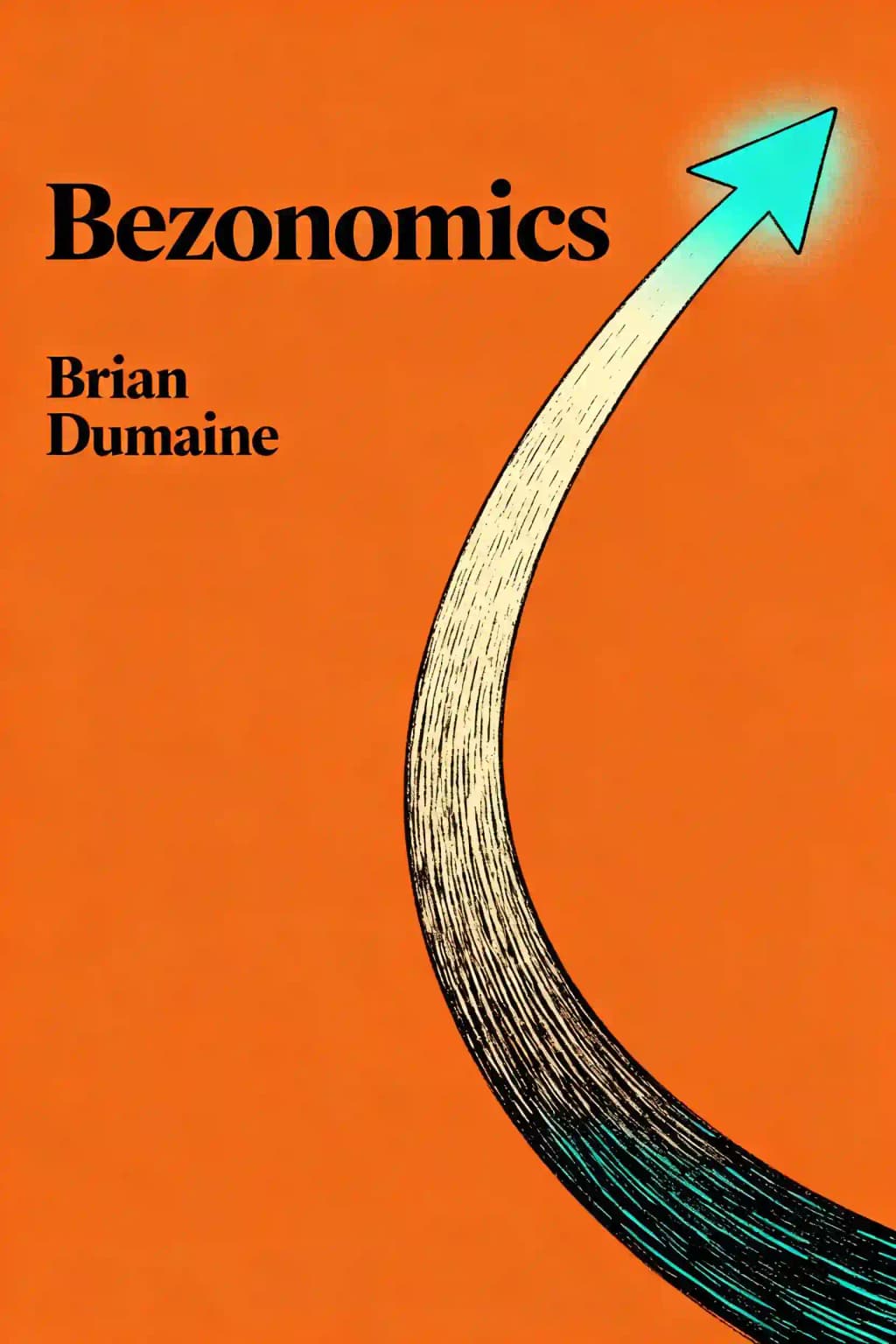
Amazon's transformation from a small online bookstore to a trillion-dollar juggernaut has been nothing short of extraordinary. In 1994, Jeff Bezos launched the company from his garage; by 2017, Amazon's all-hands meetings required Seattle's KeyArena with its 17,459-person capacity. Despite achieving unprecedented success, Bezos runs Amazon as if bankruptcy looms around every corner, telling employees that "Amazon is not too big to fail" and predicting the company's eventual demise to prevent complacency. This paradoxical mindset has propelled Amazon to become the world's most valuable company, with over 150 million Prime members globally and a near-40% share of U.S. online retail. Consistently ranked as the most trusted brand worldwide, Amazon has become so embedded in daily life that when journalist Kashmir Hill attempted to live without it for a week, she discovered avoiding its services was virtually impossible-she had to block over 23 million Amazon-controlled IP addresses, cutting herself off from Netflix, HBO, Airbnb, and essential work tools like Slack. The question is no longer whether Amazon will reshape our economy, but how profoundly its AI-powered business model-"Bezonomics"-will transform how we live, work, and shop.
2장
The Operating System for Modern Living
Amazon has evolved from a simple online retailer into an operating system for modern life, touching virtually every aspect of our daily routines. From morning Alexa commands to evening Prime Video entertainment, the company has created genuine dependencies among its 350 million global shoppers. Amazon captures 2.1% of all U.S. household spending, with Prime members paying $119 annually for privileges that keep them locked into the ecosystem.
This widespread adoption has created powerful psychological hooks. Amazon's 1-Click purchasing creates a dopamine feedback loop-one hit when clicking to purchase and another when the package arrives-potentially fueling shopping addiction with serious financial consequences. Some shoppers have accumulated massive debt, like Constance from Long Island who filed for bankruptcy after amassing $150,000 in debt, describing shopping as "her crack."
The company's selection is staggering-approximately 600 million products worldwide, eight times Walmart's offering-including everything from toilet night-lights to multi-ton power lathes with free delivery. Amazon leverages its vast data to create private label brands (growing from 20 in 2016 to over 140 by 2018), projected to reach $25 billion in sales by 2022.
Behind this retail empire stands an equally impressive logistics network with 175 global warehouses shipping 4.4 billion packages annually-12 million daily. The company continues pushing delivery times shorter-from Prime's original two-day shipping to same-day and even nine-minute deliveries in some markets. To support this, Amazon is building its own shipping empire with container ships, 70 cargo jets, and thousands of delivery vans.
Beyond retail, Amazon has transformed its internal capabilities into new business lines: AWS cloud computing ($35 billion revenue), Prime Video (spending $7 billion annually on original content), Amazon Music, and Echo with Alexa (50 million devices sold). The company continues expanding into finance, healthcare, and advertising-applying its AI flywheel to disrupt industry after industry.
What makes Amazon truly unique is its willingness to sacrifice short-term profits for long-term market dominance. When Diapers.com emerged as a competitor, Amazon slashed diaper prices dramatically, losing an estimated $100 million over three months until the company sold to Amazon. This relentless focus on growth over immediate profits has allowed Amazon to continuously reinvest in infrastructure that widens its competitive moat, creating a self-reinforcing cycle that becomes increasingly difficult for competitors to overcome.
3장
The Man Behind the Empire
Jeff Bezos embodies fascinating contradictions. He's created over half a million jobs while threatening millions with robotics and AI. He runs Amazon with penny-pinching frugality-using old doors as desktops-yet owns a $66 million private jet, multiple estates totaling 400,000 acres, and an $80 million Manhattan property. He portrays himself as a family man who makes blueberry-chocolate chip pancakes, yet divorced his wife of 25 years for a helicopter-flying former news anchor. He pledged $2 billion for education and homelessness while being perceived as a ruthless capitalist seeking tax breaks.
Three characteristics separate Bezos from other entrepreneurs: he values resourcefulness above all, faces truth regardless of consequences, and thinks in terms of decades and centuries rather than years. These qualities explain his contradictions and define his essence.
At his grandfather's Texas ranch, young Jeff learned crucial lessons about self-reliance as Pop Gise had him build fences, fix windmills, and even perform veterinary work with homemade suture needles. This environment taught him the importance of resourcefulness, a trait that would define his approach to business and life.
From childhood, Bezos demonstrated extraordinary focus. In Montessori school, teachers had to physically move him and his chair when he became too absorbed in tasks. In sixth grade, when his mother refused to buy him a $20 Infinity Cube, he simply purchased the parts and built it himself. After graduating from Princeton with a 4.2 GPA, Bezos worked on Wall Street before founding Amazon.
His criterion for choosing a spouse was resourcefulness-someone who could get him out of a third-world prison. He found that in MacKenzie Tuttle, who later helped with Amazon's accounting, hiring, and operations. They raised their children with the same philosophy, letting them use knives at four and power tools by eight.
Bezos left a promising career at hedge fund D.E. Shaw to start Amazon after discovering the internet was growing at 2,300% annually. When wrestling with this life-changing decision, he used what he calls a "regret minimization framework," imagining himself at age 80 looking back at his life. He knew he'd regret not trying more than he'd regret failing.
This long-term thinking distinguishes Bezos from most business leaders. While others focus on quarterly results, Bezos thinks in decades and centuries. His first 1998 shareholder letter emphasized "It's All About the Long Term" and prioritized market leadership over short-term profits. His controlling stake in Amazon (16%) gives him unusual freedom to operate this way, spending only six hours annually speaking with long-term investors while ignoring short-term traders.
Perhaps the ultimate symbol of Bezos's long-term vision is the 10,000-year clock he's building inside a mountain he owns in Texas. Built with titanium and high-tech ceramics, it will tick once yearly, with a century hand advancing every 100 years. This $42 million project encourages the "long now" perspective Bezos believes is needed to solve humanity's greatest challenges.
4장
Truth-Seeking and the Six-Pager Process
Bezos values resourcefulness above all when hiring, seeking diverse talent from Rhodes scholars to professional figure skaters. But what truly drives Amazon's success is his unwavering commitment to truth and data-driven decision making. Signs outside managers' offices read "In God we trust. All others must bring data," reflecting Bezos's philosophy that facts should always trump hierarchy.
The cornerstone of Amazon's decision-making process is the infamous "six-pager"-a document that every employee must write before pitching a new product or service. These memos start by explaining the customer impact, followed by an FAQ section detailing implementation. Teams may spend weeks perfecting these documents, ensuring all crucial facts are included.
The six-pager process functions like an internal venture capital system, allowing Amazon's brightest minds to pitch ideas that receive rigorous scrutiny. During meetings, Bezos insists everyone spend twenty minutes reading the memo before engaging in animated, confrontational discussions that challenge every premise. All major Amazon innovations-Prime, Alexa, AWS-survived this crucible.
Amazon's culture encourages truth-telling at all levels. When a manager named Marilyn challenged Bezos's database numbers about book sales, insisting they were inflated, Bezos eventually discovered the system was counting shopping cart additions rather than completed purchases. This flat organizational structure allows anyone to challenge leadership without repercussion, creating an environment where facts matter more than titles.
Bezos surrounds himself with a loyal cadre of executives called the S-team who rarely leave the company. Many were once his "shadows"-promising executives who follow him full-time for up to two years, learning his thought processes. Andy Jassy, who built and now runs AWS despite having no technical background, was Bezos's first full shadow. This program helps create a deep bench of executives who understand Bezos's methods and could potentially succeed him.
While Bezos's confrontational style can lead to "nutters" when employees are unprepared, many executives see these as necessary pressure that distinguishes between criticizing performance versus criticizing the person. Not everyone thrives in this environment-Marc Lore, who sold Diapers.com to Amazon, eventually left because he preferred Walmart's culture of "social cohesion where feelings matter" over Amazon's relentless pursuit of truth.
This relentless pursuit of truth can be a double-edged sword. Like Steve Jobs and Ray Dalio, Bezos's "brutal honesty" drives excellence but can create a harsh environment. The New York Times once described Amazon's culture as "purposeful Darwinism" where workers are encouraged to tear apart each other's ideas and work long hours. While Bezos disputed this characterization, employees acknowledge the culture is extremely demanding.
5장
The AI Flywheel: Amazon's Secret Weapon
Amazon's Seattle headquarters sprawls across 47 uniquely-named buildings, including the iconic Spheres-giant glass biospheres containing 40,000 plant species where employees work amid a rainforest atmosphere. The campus design deliberately avoids the suburban corporate campus model. Instead, Amazon's buildings are scattered throughout downtown Seattle, functioning as a federation of independent nations.
This structure embodies Bezos's counterintuitive belief that too much communication and coordination between business units impedes innovation. In 2002, he implemented his legendary "two-pizza teams"-groups small enough to be fed by two pizzas (no more than ten people), minimizing bureaucracy and corporate communications.
From the outside, hundreds of small teams operating independently across downtown Seattle seems chaotic, but it works because Bezos has instilled the principles of Bezonomics-customer obsession, extreme innovation, and long-term management. The secret to maintaining these principles is what Bezos calls the "flywheel"-a virtuous cycle where Amazon focuses on improving customer experience rather than competition. By lowering costs, Amazon attracts more customers, which draws more independent sellers to the platform, generating more revenue and economies of scale that further reduce prices, perpetuating the cycle.
The flywheel concept emerged during a critical period in 2001 when Amazon's stock had plummeted from $107 to just $5.97 per share amid the dot-com bust. Management guru Jim Collins visited Seattle to coach Amazon's executive team, introducing the flywheel as a mental model for sustained growth. Bezos immediately embraced this framework, creating a sketch showing how lowering costs attracts more customers, which draws more sellers, creating economies of scale that enable further price reductions.
In recent years, Bezos has revolutionized the flywheel concept by applying artificial intelligence and machine learning. This "AI flywheel" analyzes data from 300 million customers to make autonomous decisions about inventory, pricing, and logistics. As Jeff Wilke, Amazon's CEO of Worldwide Consumer explains, they've automated repetitive intellectual processes that previously required human judgment, such as placing buy orders for millions of items automatically based on complex demand signals.
Before machine learning, Wilke conducted weekly retail reviews with sixty managers negotiating purchases and distribution. Now algorithms handle these decisions automatically, analyzing shipping error rates, consumer demand shifts, and supply chain timing. This automation enables consistent decision-making across all Amazon businesses worldwide, making the AI-driven flywheel extraordinarily powerful.
Amazon's recommendation system has evolved from simple book suggestions to a sophisticated engine driving an estimated 35% of online revenues. The system enables same-day or even eight-minute delivery in some markets by predicting customer behavior before purchases occur. This AI-driven flywheel is transforming multiple industries-retail, media, healthcare, banking, shipping-creating a profound shift in how successful 21st-century businesses operate.
Other tech giants like Facebook, Google, Netflix, Alibaba, and Tencent have built similar AI-driven flywheels. Google's search algorithms improve with more users, attracting more advertisers and resources to further enhance search capabilities. This model creates enormous challenges for traditional companies lacking comparable data and AI expertise, explaining why computer science graduates command $110,000 starting salaries.
6장
Prime: The Ultimate Customer Lock-In
Amazon Prime has become so pervasive that escaping its reach is nearly impossible. The organizing principle behind Amazon's ecosystem is Prime, which has become the most powerful force driving Amazon's AI flywheel. Despite being launched in 2005, Prime continues to accelerate, with 2018 seeing record new membership signups.
Prime members represent Amazon's most valuable customers-they spend more, consume more content, and pay $119 annually for membership privileges. They're affluent, loyal, and rarely cancel memberships except when households consolidate accounts. Amazon has invested tens of billions in systems to track and serve these members effectively.
Prime's origins trace back to Amazon's experiments with free shipping during the 2000-2001 holiday seasons for orders over $99. The success of this promotion led Bezos to create Super Saver Shipping in 2002, offering year-round free shipping options.
In 2004, Amazon engineer Charlie Ward suggested creating a subscription club for customers who needed items quickly and were willing to pay for expedited shipping. Ward proposed that customers could pay a flat fee upfront and then receive free shipping for the rest of the year. Bezos immediately embraced this concept, launching it as a secret project called "Futurama" before officially introducing Amazon Prime in February 2005 for $79 annually.
Despite internal debate about potentially losing money on shipping costs, Bezos believed changing the psychology of shoppers would be worth the risk. His gamble paid off spectacularly-Prime members now spend an estimated $1,300 annually compared to $700 for non-members. Prime has evolved from a shipping service into a comprehensive ecosystem with video streaming, music, cloud storage, and grocery discounts that keeps customers locked into Amazon's platform.
Prime isn't built on a "breakage model" where businesses profit from customers not using services they've paid for. Instead, Amazon actively encourages maximum engagement with all Prime benefits. The company meticulously tracks "frequency of touch points"-how often members use any Prime service-and constantly works to increase these interactions.
Prime Video has transformed from a simple membership perk into a major Hollywood player, with Amazon spending approximately $7 billion on programming in 2019. The company applies its data-driven approach to content decisions, calculating exactly how each show contributes to Prime membership growth.
Confidential documents revealed that Amazon tracks which shows attract new subscribers. For example, "The Man in the High Castle" cost $72 million to produce but attracted 1.15 million new Prime members whose first interaction was watching the show-a customer acquisition cost of just $63 per subscriber. Conversely, "Good Girls Revolt" cost $81 million but only attracted 52,000 new members ($1,500 per subscriber) and was canceled.
As Bezos succinctly put it: "Every time we win a Golden Globe award, we sell more shoes." This integration of entertainment and retail exemplifies Amazon's holistic approach to customer relationships-each service reinforces the others, creating an ecosystem that becomes increasingly difficult to leave.
7장
Alexa: The Voice Revolution
Humans have long been fascinated with talking machines, from Pope Sylvester II's mythical brass head in AD 1000 to Bell Labs' "Audrey" in the 1950s that recognized single digits. Voice recognition technology languished for decades due to computing limitations until Moore's law made processing power affordable enough for Apple to launch Siri in 2010, followed by Google Voice Search.
By the early 2010s, with Prime gaining traction, Bezos sought the next tool to accelerate Amazon's AI flywheel. The company, filled with Star Trek enthusiasts, envisioned replicating the Enterprise's talking computer. In November 2014, Amazon launched Echo with its AI assistant Alexa, allowing customers to order products, download media, and control their environment through voice commands.
The product was an immediate hit, with over 100 million Alexa-enabled devices sold by 2019. During the 2018 holiday season, Amazon sold out of $29 Echo Dots despite rush-shipping them on 747s from Hong Kong. Beyond Echo, Amazon convinced hundreds of manufacturers to embed Alexa in everything from microwave ovens to security systems, thermostats, and lightbulbs.
Alexa represents the biggest shift in personal computing since the iPhone, responding to 500 million questions daily across 80+ countries by 2019. Amazon has invested billions in voice technology, with approximately 10,000 employees working to make Alexa faster, smarter and more conversational.
For Amazon, voice-driven gadgets serve as efficient data collectors. Nearly 70% of Echo users connect at least one household accessory like thermostats or security systems, generating valuable data about users' daily lives. This information helps Amazon target additional devices and services to receptive consumers.
Despite early expectations, shopping remains a minimal use case, with only 6% of Echo owners using it for purchases. Amazon remains optimistic that voice shopping will eventually take off, especially as devices with screens like the Echo Show make visual shopping possible. Industry experts predict voice shopping could grow from $2 billion in 2018 to $40 billion by 2022.
Voice technology raises significant privacy concerns. Smart speakers occasionally malfunction, as when Amazon mistakenly sent a Portland couple's conversation to an employee, or when a German customer received 1,700 Alexa recordings from a stranger. These recordings revealed intimate details about the stranger's life, habits, and social circle.
Despite concerns about diminishing literacy and attention spans, voice technology offers democratizing benefits. It helps those with physical limitations like Parkinson's disease, visual impairments, or technological challenges access the internet. This accessibility expands Amazon's potential customer base while transforming how humans and machines interact.
8장
The Automation Revolution
Unlike purely digital tech giants like Facebook and Google that primarily employ highly-skilled workers, Amazon operates extensively in the physical world through its retail business. With approximately 650,000 employees compared to Alphabet's 98,000 or Facebook's 36,000, Amazon stands at the forefront of workplace automation and disruption.
Amazon leads adoption of the Internet of Things-the digitization of physical objects through connected devices like Echo speakers, microwaves, thermostats, warehouse robots, and delivery vehicles. By 2022, connected devices will number 29 billion worldwide, four times the global population. As tech giants like Alibaba, JD.com, and Alphabet follow Amazon's lead, the implications for blue-collar jobs grow increasingly dire.
Bezonomics represents a revolutionary business paradigm comparable to Ford's assembly line, the microchip, or the HTTP internet standard. Each of these innovations initially created economic growth while eventually eliminating entire categories of work-from craftsmen to accountants to newspaper publishers.
Amazon faces growing criticism for widening wealth gaps, threatening jobs, and destroying Main Street businesses. McKinsey estimates automation could replace 800 million workers-30 percent of the global workforce-by 2030. While economic growth might eventually create replacement jobs, the interim disruption will be immense as displaced warehouse workers, cashiers and drivers struggle to transition to new careers.
Inside Amazon's vast warehouses, workers endure demanding shifts in environments that many find dehumanizing despite competitive wages and benefits. The company offers career advancement through its Career Choice program, funding 95% of training costs for in-demand fields. Since 2012, some 16,000 employees have utilized this program, designed to make warehouse jobs stepping stones to better careers.
Brad Porter, Amazon's robotics program leader, explains that automation remains limited by the "deep bin picking problem"-robots struggle to select odd-shaped items from jumbled bins, a task humans excel at through evolved hand-eye coordination. Porter notes that while robots can pick standardized items like phone boxes, they lack algorithms to handle Amazon's vast product variety with necessary accuracy.
Beyond Amazon, companies worldwide are pioneering advanced warehouse automation. Britain's Ocado operates facilities where over a thousand washing machine-sized robots zip across grid-like rails at 9 mph, controlled by a 4G network. These robots retrieve grocery crates stacked seventeen high, completing orders in minutes instead of hours.
China's JD.com operates an even more advanced warehouse outside Shanghai that processes 200,000 packages daily with just four human employees. Without the typical employee parking lot, this facility uses robotic arms, conveyor belts, and mobile robots resembling red footstools to handle standardized packages completely autonomously-potentially operating in total darkness.
Amazon's automation extends beyond warehouses into retail with its Amazon Go stores. These cashierless markets allow customers to simply scan their phones upon entry, take what they want, and walk out-automatically charging their Amazon accounts. The system combines ceiling cameras tracking customer movements with weight-sensing shelves to determine what items are taken. While human employees still prepare food and check IDs for alcohol purchases, the stores eliminate checkout lines and cashiers entirely.
9장
Amazon-Proofing Your Business
The era of simply opening store doors and expecting customers has ended. Retailers now face existential questions about what constitutes a store in the modern age. While the outlook appears bleak for generic retailers, those who outflank rather than confront Amazon directly can thrive. Successful retailers focus on four key strategies: creating seamless online-offline experiences, offering exclusive curated products, investing heavily in technology and social media, and embracing meaningful social missions that resonate with customers.
Companies like Nike have revolutionized retail by creating stores that transcend mere shopping. Nike's 68,000-square-foot "House of Innovation 000" on Fifth Avenue features lab-coated staff, the data-driven Nike Speed Shop that stocks according to local preferences, and the exclusive Nike Expert Studio for NikePlus members. The store offers custom sneaker design, personal styling, and smartphone-based conveniences like product reservations and cashier-less checkout.
Despite Amazon's aggressive investments in high-end fashion, Bezos struggles to create a truly luxurious experience on a platform known for its "down-market vibe." Retailers like Williams-Sonoma thrive by offering exclusive, hard-to-find selections (like an $800 French copper stockpot versus Amazon's $43.99 cookware sets), controlling their own inventory, and building robust online operations that generate over half their revenue.
Crate & Barrel succeeds by avoiding price wars through product differentiation-95% of their items are unique-and offering in-store experiences where customers can physically interact with furniture and receive design consultation. Similarly, Best Buy survived Amazon's threat by implementing its "Renew Blue" strategy, focusing on products requiring advice and installation services through its Geek Squad, while maintaining competitive pricing through in-store partnerships with tech brands.
To compete with Amazon, retailers must become tech companies with the mindset that "the algorithm is king." Sephora exemplifies this approach, deploying technologies like Color IQ to scan customers' faces and recommend perfect makeup shades, creating the Beauty Insider Community social network, and developing the Virtual Artist app for virtually trying on products.
Women's fashion retailer Lulus thrives through curated selections and sophisticated social media marketing. Their ambassador network of influencers and fans creates content on Instagram and Pinterest, making #Lulus one of retail's top hashtags alongside luxury brands. Nearly 33% of Instagram users who tap to learn more about Lulus products visit the site, helping build a 1.3 million following by 2019.
Warby Parker demonstrates how social conscience can differentiate a brand from Amazon. Founded in 2010 after co-founder David Gilboa balked at paying $700 for replacement glasses, the company sells high-quality eyewear for around $100 while donating a pair to the developing world for each one sold. By manufacturing their own glasses and selling primarily online, they cut out middlemen markups. Their social mission attracts talented employees who receive trips to witness the impact of their giving program after three years.
10장
The Future of Bezonomics
Amazon's expansion into new industries has created widespread anxiety among CEOs wondering how to "Amazon-proof" their businesses. Unlike the failed conglomerates of the past, Amazon doesn't acquire large businesses in different sectors but builds them organically, sometimes making strategic acquisitions under $1 billion to acquire talent or technology. With Wall Street's blessing, Amazon can sustain losses for years in new ventures, keeping prices artificially low until achieving market dominance.
Amazon targets industries vulnerable to AI disruption where costly human labor can be replaced by smart machines. Their advertising business, valued at $125 billion by Morgan Stanley in 2019, leverages unparalleled customer data-tracking purchases, preferences, addresses, and media consumption. This advantage has made Amazon the starting point for over half of all shopping searches, displacing Google.
Beyond advertising, Amazon has set its sights on revolutionizing the $3.5 trillion U.S. healthcare market. The company announced HIPAA compliance for Alexa in 2019, allowing transmission of sensitive patient information through its devices. Amazon envisions "Prime Health" as an add-on membership offering discounts on health products, access to medical records, and AI-powered recommendations for treatments and physicians.
Amazon's acceptance of Health Savings Account debit cards signals its move toward becoming a financial services provider. Amazon Lending, launched in 2011, provides loans to small businesses selling on its platform, using algorithms to assess creditworthiness based on sales data and reviews. By 2017, the program was lending $1 billion annually to over 20,000 businesses across multiple countries.
As the richest man in the world, Jeff Bezos became a political target in September 2018 when Senator Bernie Sanders introduced the Stop BEZOS Act, requiring companies like Amazon to reimburse the government for welfare benefits their employees received. Bezos responded decisively by implementing a company-wide $15 minimum wage for all 350,000 hourly employees, including seasonal workers. While this move cost Amazon approximately $1.5 billion annually, it was both politically shrewd-defusing Sanders' attacks-and strategically brilliant, allowing Amazon to attract better workers while putting competitors at a disadvantage.
A growing chorus of critics from across the political spectrum has begun questioning Amazon's size and power. Senator Elizabeth Warren proposed splitting Amazon's website from its retail business, arguing the company has an unfair advantage by both operating a marketplace and competing with third-party sellers on it. In mid-2019, the European Union launched a formal antitrust investigation into Amazon, with EU competition commissioner Margrethe Vestager arguing a conflict of interest exists because Amazon acts both as a direct seller and as a platform provider.
Despite these challenges, Amazon's AI flywheel will continue transforming industry after industry. The distinction between digital and traditional economies is disappearing, creating both opportunities and challenges. The explosive growth of data collection raises privacy concerns, while the "black box" nature of AI decision-making creates accountability issues. Without proper oversight, we risk creating global AI oligopolies controlling commerce, entertainment, healthcare, and finance.
As we move forward, the most pressing question isn't whether Amazon will continue growing, but how society will adapt to the profound changes Bezonomics brings to our economy, our communities, and our daily lives. The future belongs to those who understand and harness the power of the AI flywheel-whether that's Amazon itself or the next generation of innovators building on the foundation Bezos has created.