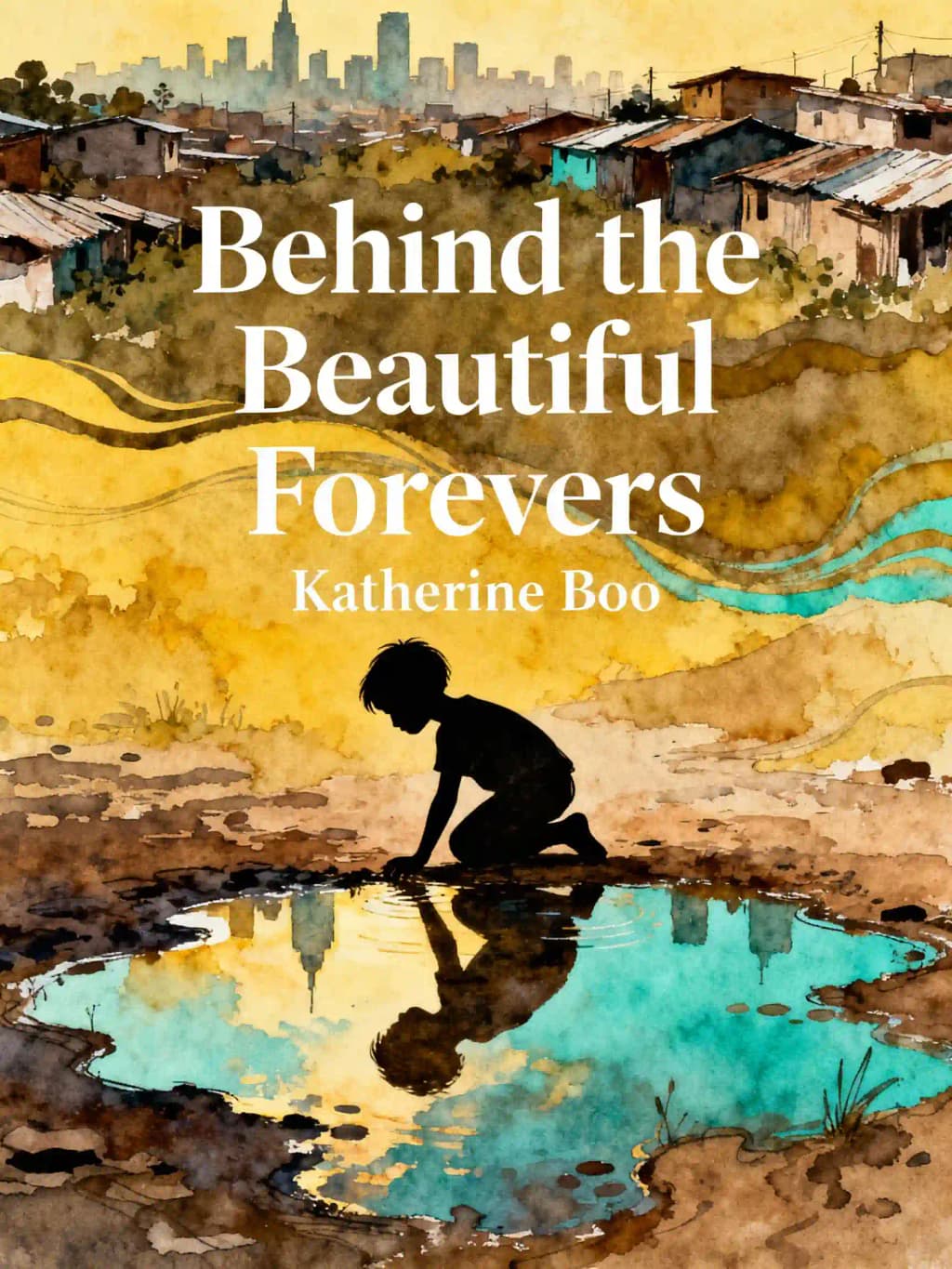
Step into Mumbai's Annawadi slum, where dreams persist amid crushing poverty. This National Book Award winner captivated Bill Gates and became a London stage sensation. Katherine Boo's immersive reporting reveals: can hope survive when corruption and globalization collide in modern India?
Katherine J. Boo, Pulitzer Prize-winning investigative journalist and MacArthur Fellow, is the acclaimed author of Behind the Beautiful Forevers: Life, Death, and Hope in a Mumbai Undercity, a National Book Award-winning work of narrative nonfiction.
Specializing in chronicling marginalized communities, Boo combines meticulous reporting with vivid storytelling to explore themes of systemic inequality, resilience, and globalization. A longtime staff writer for The New Yorker and former Washington Post reporter, her career spans groundbreaking investigations into poverty and disability rights—including her Pulitzer-winning 2000 series on Washington D.C.’s flawed social services.
Born in 1964 and educated at Barnard College, Boo spent three years embedded in Mumbai’s Annawadi slum to research Behind the Beautiful Forevers, which has been translated into 15 languages and adapted for theater. Her work is celebrated for humanizing statistical realities through intimate portraits of individuals navigating broken systems, cementing her reputation as a leading voice in social justice journalism.
Behind the Beautiful Forevers by Katherine Boo chronicles life in Annawadi, a Mumbai slum near the airport, through interconnected stories of residents like Abdul, a garbage trader, and Asha, an aspiring politician. The book exposes systemic corruption, economic inequality, and resilience amid globalization’s paradox, where luxury hotels and poverty coexist.
This book suits readers interested in narrative nonfiction, global poverty studies, or Mumbai’s socio-economic contrasts. It appeals to those exploring themes of resilience, corruption, and the human cost of urbanization.
Yes—Boo’s Pulitzer Prize-winning work combines rigorous journalism with novelistic storytelling, offering a raw, empathetic portrayal of slum life. Critics praise its unflinching examination of hope and betrayal in extreme conditions.
Key themes include:
Boo spent four years in Annawadi, interviewing residents, reviewing public records, and observing daily life. Her immersive approach blends investigative journalism with intimate storytelling, ensuring authenticity.
Abdul, a Muslim garbage trader, faces false assault accusations after neighbor Fatima self-immolates. His family’s legal battles reveal India’s corrupt judiciary, forcing them to pay bribes while their recycling business collapses.
Asha manipulates government aid programs to gain power, while her daughter Manju pursues education—a tension between traditional expectations and modern aspirations. Women navigate limited agency in a patriarchal slum hierarchy.
Some readers find the unrelenting bleakness overwhelming, while others note confusion due to the large cast. However, Boo’s vivid storytelling and ethical reporting are widely praised.
The slum thrives on recycling waste from affluent areas, yet residents remain excluded from Mumbai’s economic boom. Boo critiques how global capital entrenches inequality instead of alleviating it.
Abdul reflects on moral compromises in survival, while Asha’s political schemes yield limited gains. The slum endures, embodying resilience and stagnation.
Its themes of economic disparity, bureaucratic failure, and climate vulnerability resonate in discussions about urban poverty and sustainable development.
저자의 목소리로 책을 느껴보세요
지식을 흥미롭고 예시가 풍부한 인사이트로 전환
핵심 아이디어를 빠르게 캡처하여 신속하게 학습
재미있고 매력적인 방식으로 책을 즐기세요
a hive of hope and ambition
a place of festering grievance and ambient envy.
canny mediators
dulled with age and disappointment
Behind the beautiful forevers의 핵심 아이디어를 이해하기 쉬운 포인트로 분해하여 혁신적인 팀이 어떻게 창조하고, 협력하고, 성장하는지 이해합니다.
Behind the beautiful forevers을 빠른 기억 단서로 압축하여 솔직함, 팀워크, 창의적 회복력의 핵심 원칙을 강조합니다.

생생한 스토리텔링을 통해 Behind the beautiful forevers을 경험하고, 혁신 교훈을 기억에 남고 적용할 수 있는 순간으로 바꿉니다.
무엇이든 물어보고, 목소리를 선택하고, 진정으로 공감되는 인사이트를 함께 만들어보세요.

샌프란시스코에서 컬럼비아 대학교 동문들이 만들었습니다
"Instead of endless scrolling, I just hit play on BeFreed. It saves me so much time."
"I never knew where to start with nonfiction—BeFreed’s book lists turned into podcasts gave me a clear path."
"Perfect balance between learning and entertainment. Finished ‘Thinking, Fast and Slow’ on my commute this week."
"Crazy how much I learned while walking the dog. BeFreed = small habits → big gains."
"Reading used to feel like a chore. Now it’s just part of my lifestyle."
"Feels effortless compared to reading. I’ve finished 6 books this month already."
"BeFreed turned my guilty doomscrolling into something that feels productive and inspiring."
"BeFreed turned my commute into learning time. 20-min podcasts are perfect for finishing books I never had time for."
"BeFreed replaced my podcast queue. Imagine Spotify for books — that’s it. 🙌"
"It is great for me to learn something from the book without reading it."
"The themed book list podcasts help me connect ideas across authors—like a guided audio journey."
"Makes me feel smarter every time before going to work"
샌프란시스코에서 컬럼비아 대학교 동문들이 만들었습니다

Behind the beautiful forevers 요약을 무료 PDF 또는 EPUB으로 받으세요. 인쇄하거나 오프라인에서 언제든 읽을 수 있습니다.
What does it mean to be good when survival itself demands compromise? In Annawadi, a Mumbai slum nestled between luxury hotels and an international airport, three thousand people navigate this impossible question daily. They live behind a wall plastered with advertisements for Italian floor tiles promising "BEAUTIFUL FOREVER"-a cruel irony for families whose homes could vanish with the next monsoon or government bulldozer. This is where Abdul Husain, a sixteen-year-old garbage sorter, has mastered an essential philosophy: keep your head down, trust no one, and never get involved in your neighbors' troubles. He believes the better he knows someone, the more he'll dislike them-a survival strategy born from watching how quickly friendship turns to betrayal when everyone is desperate. His world consists of sorting bottle caps with plastic linings from pure aluminum, earning rupees while dodging corrupt police and sick goats nosing through his recyclables. Yet even Abdul's careful distance cannot protect him from the violence that erupts when proximity and poverty collide.