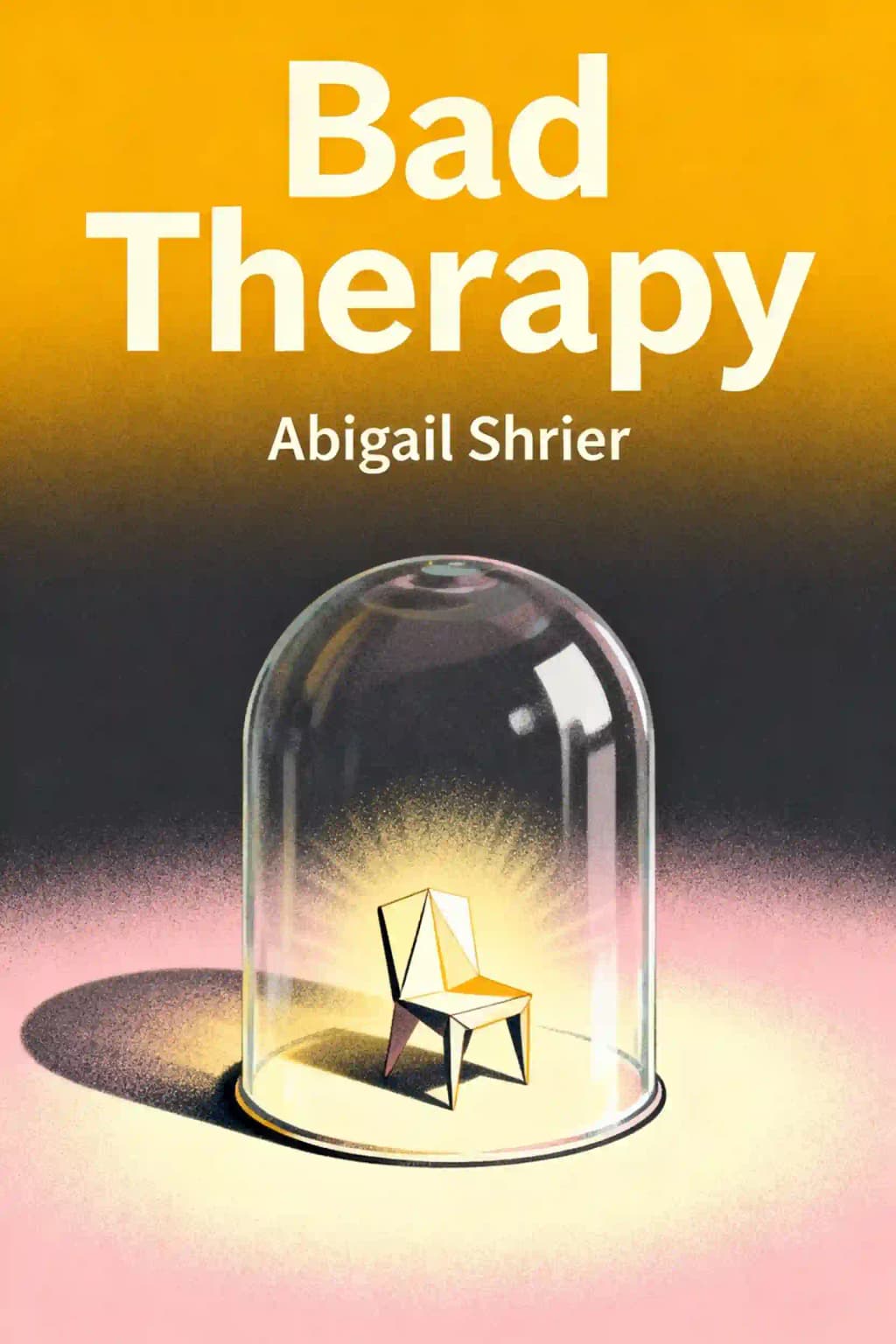
In "Bad Therapy," Abigail Shrier boldly challenges modern parenting's over-therapization. Endorsed by Joe Rogan and featuring Jordan Peterson, this provocative critique asks: What if our "gentle" approaches are actually preventing kids from growing up? A cultural lightning rod that's reshaping how we raise resilient children.
저자의 목소리로 책을 느껴보세요
지식을 흥미롭고 예시가 풍부한 인사이트로 전환
핵심 아이디어를 빠르게 캡처하여 신속하게 학습
재미있고 매력적인 방식으로 책을 즐기세요
What if the very thing we're told will help our children is actually making them worse? Between 1950 and today, we've witnessed an unprecedented expansion of mental health services-therapists in every school, apps on every phone, medications for every mood. Yet during this same period, teen suicide rates quadrupled, anxiety diagnoses skyrocketed, and each generation reports feeling more psychologically fragile than the last. This isn't just correlation-it's a warning sign we've been ignoring. Any powerful intervention carries risk. We understand this instinctively with surgery or chemotherapy, yet somehow therapy gets a pass as harmless conversation. The medical term is "iatrogenesis"-harm caused by the healer. Consider psychological debriefing for trauma victims, once considered best practice, now known to worsen PTSD symptoms in 40% of cases. Police officers who received mandatory counseling after witnessing violence showed 41% more anxiety symptoms than colleagues who processed the experience naturally. Burn victims given therapy exhibited higher rates of post-traumatic stress than those left alone to heal. The pattern repeats: well-intentioned intervention disrupting the body's innate recovery mechanisms. The risks extend beyond immediate harm. Therapy can reorganize someone's entire identity around a diagnosis, creating what psychologists call the "sick role"-a permanent patient mentality that replaces resilience with dependency. It encourages rumination, that toxic mental loop where we rehearse grievances until they calcify into permanent wounds. It can fracture families by reframing normal conflicts as abuse. Most troubling, therapy often goes unmeasured and unmonitored. Unlike physicians who track side effects and obtain informed consent about risks, therapists rarely warn clients that treatment might make things worse. Studies suggest up to 10% of therapy clients experience significant deterioration-highest among those with milder initial symptoms, the very people with least to gain and most to lose.
Bad Therapy의 핵심 아이디어를 이해하기 쉬운 포인트로 분해하여 혁신적인 팀이 어떻게 창조하고, 협력하고, 성장하는지 이해합니다.
Bad Therapy을 빠른 기억 단서로 압축하여 솔직함, 팀워크, 창의적 회복력의 핵심 원칙을 강조합니다.
생생한 스토리텔링을 통해 Bad Therapy을 경험하고, 혁신 교훈을 기억에 남고 적용할 수 있는 순간으로 바꿉니다.
무엇이든 물어보고, 목소리를 선택하고, 진정으로 공감되는 인사이트를 함께 만들어보세요.

샌프란시스코에서 컬럼비아 대학교 동문들이 만들었습니다
"Instead of endless scrolling, I just hit play on BeFreed. It saves me so much time."
"I never knew where to start with nonfiction—BeFreed’s book lists turned into podcasts gave me a clear path."
"Perfect balance between learning and entertainment. Finished ‘Thinking, Fast and Slow’ on my commute this week."
"Crazy how much I learned while walking the dog. BeFreed = small habits → big gains."
"Reading used to feel like a chore. Now it’s just part of my lifestyle."
"Feels effortless compared to reading. I’ve finished 6 books this month already."
"BeFreed turned my guilty doomscrolling into something that feels productive and inspiring."
"BeFreed turned my commute into learning time. 20-min podcasts are perfect for finishing books I never had time for."
"BeFreed replaced my podcast queue. Imagine Spotify for books — that’s it. 🙌"
"It is great for me to learn something from the book without reading it."
"The themed book list podcasts help me connect ideas across authors—like a guided audio journey."
"Makes me feel smarter every time before going to work"
샌프란시스코에서 컬럼비아 대학교 동문들이 만들었습니다

Bad Therapy 요약을 무료 PDF 또는 EPUB으로 받으세요. 인쇄하거나 오프라인에서 언제든 읽을 수 있습니다.