1장
Discovering Your Reason for Being: The Japanese Art of Ikigai
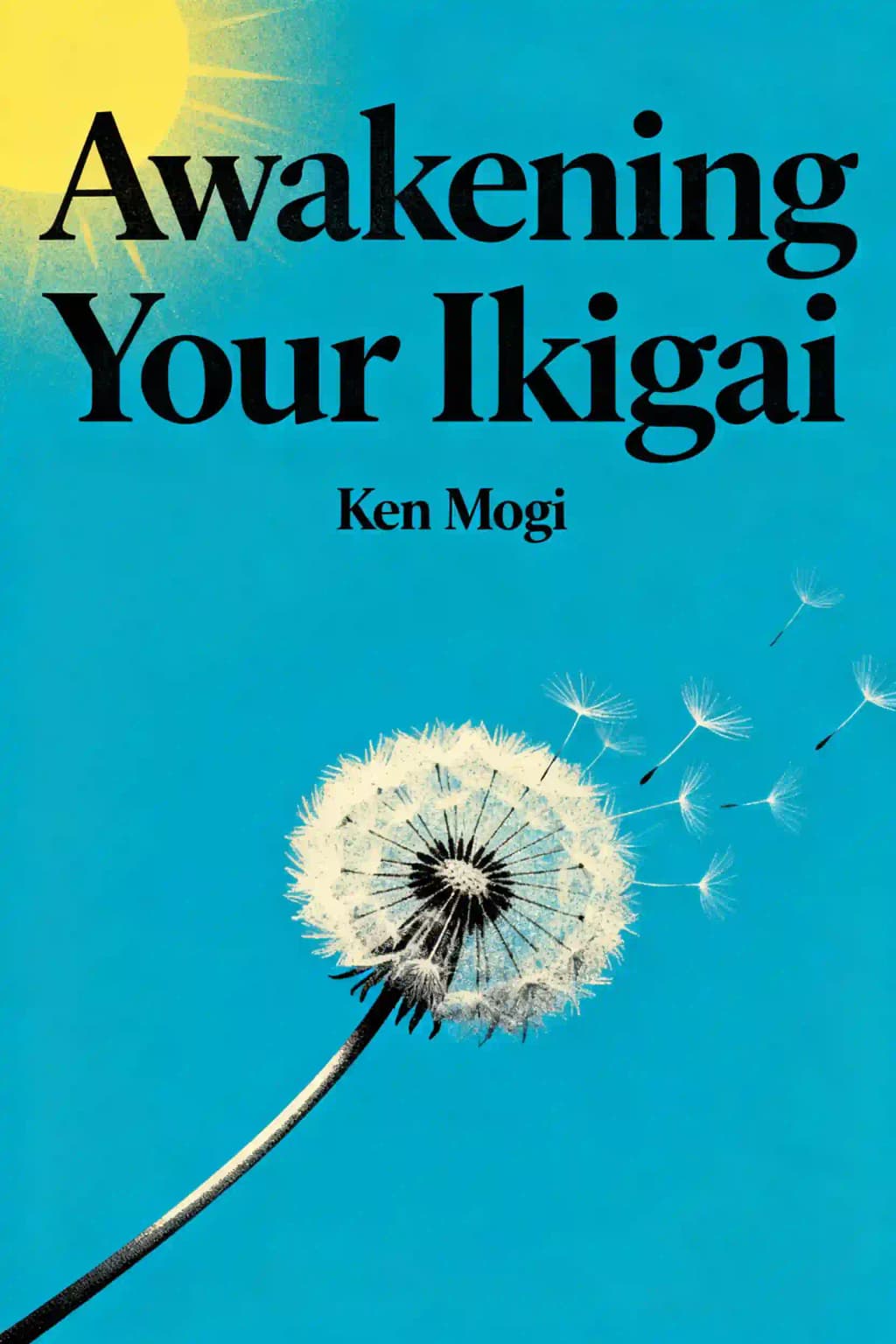
In a world obsessed with grand achievements and meteoric success, the Japanese concept of ikigai offers a refreshing alternative. This philosophy has captivated millions worldwide, including Steve Jobs who reportedly visited Japan over 25 times seeking inspiration. When former First Lady Michelle Obama discussed her post-White House journey in her memoir "Becoming," she referenced ikigai as a guiding principle. The book "Awakening Your Ikigai" by Ken Mogi has become a cultural touchstone, translated into over 20 languages and frequently cited by wellness experts like Arianna Huffington. What makes this concept so universally appealing? Perhaps it's the promise that a meaningful life doesn't require extraordinary circumstances-just extraordinary attention to the ordinary moments that comprise our days.
2장
The Five Pillars of a Life Worth Living
At the heart of ikigai are five interconnected pillars: starting small, releasing yourself, harmony and sustainability, the joy of small things, and being in the here and now. These elements aren't hierarchical or exhaustive, but they form the supportive framework that allows ikigai to flourish in our lives.
Ikigai () combines "iki" (to live) and "gai" (reason), describing both life's pleasures and meanings. Unlike Western notions of success that often demand grand achievements, ikigai resides equally in small experiences-from savoring your morning coffee to receiving professional recognition. It's fundamentally democratic, available to everyone regardless of status or wealth.
Consider 92-year-old Jiro Ono, the world's oldest three-Michelin-star chef who served President Obama in 2014. His ikigai exists equally in a presidential compliment, his prestigious stars, serving perfect tuna, or feeling the morning chill before heading to the fish market. When asked about retirement, Ono expressed his wish to die while making sushi-a profound testament to finding meaning in what others might view as monotonous work.
This connection between ikigai and longevity isn't coincidental. In his TED talk "How to live to be 100+," Dan Buettner identified Okinawa, Japan as having the world's highest life expectancy. Interviews with centenarians revealed ikigai in simple activities: a 102-year-old practicing karate, a 100-year-old fishing three times weekly, another finding joy in holding her great-great-great-granddaughter. A 2008 Tohoku University study involving nearly 55,000 participants confirmed significant correlations between having ikigai and lower mortality rates, particularly from cardiovascular disease-likely because those with ikigai exercised more and maintained better health habits.
The path to ikigai often begins with small steps. Jiro Ono built his world-famous restaurant from modest beginnings, choosing sushi initially because it required minimal equipment. At every stage, ikigai supported his relentless pursuit of quality through incremental improvements-designing special containers, refining tools, making small advancements that accumulated into mastery.
3장
Your Morning Motivation: Finding Reasons to Rise
What gets you out of bed each morning? For some, it's natural; for others, a struggle. Ikigai provides that essential motivation-an ongoing appetite for life that makes each day worth embracing.
In Japanese culture, early rising connects deeply with ikigai. Consider Hiroki Fujita, a tuna trader at Tokyo's Tsukiji market who rises at 2:00 AM daily to select the finest specimens for elite sushi restaurants. His dedication stems from mastering the intricate art of examining just a caudal fin's cut surface to identify perfect tuna. "People think red, fresh-looking tuna is best," he explains, "but the best tuna actually has a more subdued appearance."
This morning-oriented culture has neurological benefits-after sleep consolidates memories, our refreshed minds are primed to absorb new information. It also has historical roots in Japan's agricultural past, where about 80% of Japanese were farmers during the Edo era (1603-1868). Though farmers now comprise just 1.5% of the population, the emperor still plants and harvests rice by hand in Imperial Palace fields, broadcast on national television.
Beyond farming traditions, Japanese culture embraces morning activities like radio taiso-short calisthenics exercises set to music established in 1928. Today, seniors gather in parks at precisely 6:30 AM when NHK Radio 1 broadcasts the theme music. Despite perceptions of Japanese conformity, these gatherings show remarkable individuality-participants move at their own pace, chat while exercising, and come and go freely.
Finding your own morning ikigai might involve something sweet with green tea or coffee, creating dopamine release that reinforces the act of getting up. During my high school commutes, I'd regularly see office workers playing shogi (Japanese chess) together before work-a perfect example of using community to enhance morning motivation. Whether through exercise, reading, or preparing a special breakfast, the joy of small things can help you start each day with purpose.
4장
Kodawari: The Art of Meaningful Obsession
Japan has become an increasingly popular tourist destination, with visitors consistently praising its high-quality service, attention to detail, and efficiency. This excellence stems from kodawari-often inadequately translated as "commitment" or "insistence"-which represents taking extraordinary care of small details without necessarily justifying the effort through grand schemes.
Kodawari embodies the first pillar of ikigai: starting small. Japan's numerous small-scale restaurants and bars exemplify this principle, each with signature dishes reflecting their owners' personal standards and pride. The transformation of Chinese ramen noodles into countless perfected Japanese varieties demonstrates kodawari in action, as humorously depicted in Juzo Itami's film Tampopo, where every aspect of ramen preparation becomes an art form.
What makes kodawari special is pursuing goals beyond reasonable market expectations. While most businesses stop at "good enough" quality once the effort-to-improvement ratio diminishes, those with kodawari continue refining their craft beyond apparent rationality-what might be called "creative insanity." This persistence often leads to breakthroughs, creating entirely new categories of products that command premium prices for previously unimagined qualities.
Japanese fruit producers exemplify this through their pursuit of "perfect fruit." Sembikiya, Japan's premium fruit shop dating back to 1834, sells muskmelons for $200+ each, grown using the "one stalk one fruit" method where superfluous fruits are removed to concentrate nutrients. These fruits represent biological art produced through dedicated farmers' kodawari.
Perhaps no example better illustrates this principle than the quest for the yohen tenmoku or "starry bowl." Soukichi Nagae the Ninth imported forty tons of soil from China, continuing his father's quest to replicate these rare 10th-13th century treasures. Though fragments of authentic starry bowls were discovered in Hangzhou in 2009, the reproduction quest continues-a dedication that embodies the Japanese capacity for absorbing foreign influences while pursuing perfection with meticulous attention.
5장
The Sensory Richness of Present Moment Awareness
The Japanese reverence for sensory beauty manifests in their extraordinary passion for objects like the starry bowls, which would fetch millions at auction despite being functionally identical to ordinary bowls. These tenmoku tea bowls, with their distinctive starry glaze patterns, exemplify how Japanese aesthetics elevate everyday objects into profound artistic expressions. This appreciation connects to Japan's uniquely rich onomatopoeic language-with over 4,500 sound symbolic expressions describing subtle sensory experiences. Words like "kirakira" (sparkling), "sarasara" (rustling), and "fuwa-fuwa" (fluffy) reflect a cultural attentiveness that nurtures both traditional craftsmanship and high-precision manufacturing excellence.
This sensory awareness dates back centuries, deeply embedded in Japanese literary and cultural traditions. Sei Shonagon's thousand-year-old essays in The Pillow Book demonstrate an early form of mindfulness through her attention to life's small details: "A child's face painted on a melon. A young sparrow hopping toward an imitated mouse squeal." Her observations extend to the changing seasons, the quality of light at different times of day, and the subtle emotions evoked by everyday encounters. By focusing on present sensory experiences rather than herself, she embodies the fifth pillar of ikigai-being in the here and now-and connects to the second pillar of releasing oneself from self-centered concerns.
At Eihei-ji temple, one of Japan's most important Zen Buddhist monasteries, disciples exhibit deep self-absorption while immersed in an unbroken flow of sensory beauty. The monastery's daily routine involves careful attention to every action, from washing rice to sweeping floors. Despite minimal material comforts and no ego satisfaction, the exquisite architecture-with its carefully positioned windows capturing seasonal light and shadows, precisely arranged rock gardens, and harmonious wooden structures-creates an atmosphere of timeless bliss. This sensory pleasure connects to Nicholas Humphrey's theory that consciousness gives us reason to live-even death row inmates carefully select their final meals, demonstrating how fundamental sensory experience is to human existence.
In neuroscience, these sensory qualities are called "qualia"-the subjective, conscious experiences that constitute the greatest unsolved mystery in science. Japanese culture has developed numerous practices that cultivate this awareness, from the tea ceremony's attention to texture and temperature to the art of forest bathing (shinrin-yoku), which engages all five senses. By relieving ourselves of self-burden, we open to infinite sensory pleasures, a connection Japanese culture has cultivated through its rich descriptive language and mindful practices, nurturing a robust ikigai system that enriches daily life through moment-to-moment awareness.
6장
Finding Flow: When Work Becomes Joy
Self-negation becomes positive when understood within ikigai's context, allowing achievement of "flow"-a state where people are so involved in activity that nothing else matters. In flow, work becomes pleasurable for its own sake rather than a means to an end. This corresponds to the "releasing oneself" pillar, where you identify with your work in a joyous, symbiotic relationship.
Hayao Miyazaki, the legendary anime creator, embodies flow through his painstaking dedication to animation despite modest financial rewards. His films radiate quality and bliss that captivate children-consumers of absolute honesty. Miyazaki maintains his inner child, understanding the precious value of present moments, as illustrated by his regret over not giving a child visitor a convertible ride during light rain.
Japanese whiskey production exemplifies this labor of love. Despite lacking traditional whiskey ingredients like barley and peat, Japanese distillers have created internationally acclaimed spirits through dedication and patience. Suntory's chief blender Seiichi Koshimizu maintains rigorous personal discipline-eating identical lunches daily to preserve his tasting abilities-while working on blends whose results he may never witness in his lifetime. His philosophy reveals how elements too strong individually can contribute beautifully when blended with others-much like life itself.
The tea ceremony embodies all five pillars of ikigai. The master meticulously prepares ornaments and selects appropriate flowers (starting small), maintains a spirit of humility regardless of experience level (releasing oneself), uses centuries-old wares that harmonize with each other (harmony and sustainability), creates a relaxed atmosphere to enjoy sensory details (the joy of little things), and cultivates mindfulness within the tea room's inner cosmos (being in the here and now).
Japanese shot bars represent another unique cultural institution embodying ikigai principles. Est!, a legendary bar in Tokyo run by Akio Watanabe for nearly four decades, exemplifies the relentless pursuit of quality without seeking recognition. Despite serving notable clientele including actors, editors, and even once the legendary novelist Yukio Mishima, Watanabe remains humble and publicity-shy. He has worked seven days a week for years, taking only two weeks of holiday annually, giving meticulous attention to every drink he serves.
Even more striking is the imperial household's gagaku tradition-ancient court music and dance performed for over 1,300 years. Musicians from families like the Togis, who have preserved this tradition since the 8th century, often perform elaborate ceremonies with no audience present. They play deep into the night in the Imperial Palace's tranquility, feeling as if deceased emperors' spirits descend to enjoy the music. This poignant example shows how an audience becomes unnecessary when one achieves blissful concentration in the present moment.
7장
The Sustainable Path: Harmony Through Generations
The Japanese conception of ikigai emphasizes reservation, self-restraint, and harmony with others. Unlike cultures with flamboyant displays of success, Japan maintains a subdued expression of wealth, with most citizens historically identifying as middle class. This restraint has been transformed into an aesthetic of modest beauty (wabi sabi)-evident in untreated wood sushi counters, fragrant hinoki baths, and nature-inspired design.
Japan's culture of sustainability extends to remarkable institutional longevity. The Japanese emperor represents the world's oldest hereditary monarchy, with Emperor Akihito being the 125th in line. Many family businesses have maintained specific cultural and economic traditions for centuries: the Ikenobo family has practiced ikebana (flower arrangement) since at least 1462; the Sen families have preserved tea ceremony traditions for over 400 years; Toraya sweets maker has operated for nearly 500 years; and Kongo Gumi, founded in 578, remains the world's oldest operating company.
The Ise Shrine exemplifies sustainability through its remarkable 1,200-year tradition of complete rebuilding every twenty years. This process requires extraordinary foresight: the shrine maintains reserves of hinoki trees nationwide, as some structural elements require trees over 200 years old. The buildings are constructed without a single nail using special carpentry techniques passed between generations. About 100 Shinto priests and 500 staff support the shrine's operations, alongside countless carpenters, craftsmen and forestry workers.
Similarly, the Meiji Shrine in Tokyo sits within a 170-acre forest that began as barren land in 1920. Three botanists meticulously designed this ecosystem, selecting tree species with ecological succession in mind. Following their plans, 120,000 trees of 365 species were donated from across Japan. Nearly a century later, this artificial forest feels ancient and natural, hosting rare species including nesting goshawks. Staff maintain the forest with extraordinary care-sweeping paths each morning and returning fallen leaves around tree roots to replenish the soil.
True sustainability requires appreciating ordinary people's efforts, as Japanese philosophy recognizes that seemingly mediocre tasks can reach perfection. From rebuilding shrines to maintaining forests to running bullet trains, sustainability depends on valuing all contributions rather than just celebrating those at the top. The Japanese concept of wa-modulating desires in harmony with one's environment-reduces unnecessary conflicts and promotes peace.
8장
Finding Purpose Beyond Success and Failure
Sumo wrestling, Japan's traditional sport dating back to the 6th century CE, offers unexpected insights into sustainability and purpose in life. Though often misunderstood internationally as merely a contest between large men, sumo's complex traditions and rituals reveal deeper cultural values about perseverance, dignity, and finding meaning beyond conventional success. Of approximately 700 active wrestlers, only about 70 reach sekitori status in the top two divisions-a mere one in ten success rate. This creates a stark divide in privileges and treatment, with top-ranked wrestlers enjoying private quarters, higher salaries, and personal attendants, while lower-ranked wrestlers share dormitories and perform menial tasks.
Despite the financial logic of retiring into potentially lucrative post-sumo careers like restaurant ownership or television commentary, many wrestlers continue despite minimal wages and strenuous assistant duties. Veteran wrestlers like 46-year-old Hanakaze (31 years in the sport) and 18-year-old Hattorizakura (with a dismal 1-68 record) persist despite never reaching sekitori status. The magic of sumo-its rich cultural traditions, elaborate pre-bout ceremonies, distinctive hairstyles, traditional dress, and tight-knit community-keeps them engaged. Satonofuji, a 39-year-old wrestler with modest performance, has found his ikigai performing the prestigious bow-twirling ceremony that closes each tournament day, demonstrating how meaning can be found in supporting roles that preserve tradition.
The democratic nature of ikigai extends beyond sumo to other demanding disciplines like classical ballet, where corps de ballet dancers find deep satisfaction despite lower pay and recognition than principal dancers. Manuel Legris, former Paris Opera Ballet Etoile, emphasized that dancers in back rows have crucial roles requiring exceptional skill, precision, and dedication. Their synchronized movements create the spectacular visual effects that make classical ballet magical. Finding ikigai is a form of adaptation-accepting your situation while discovering ways to excel within its constraints.
Even in highly restrictive environments like North Korea's mass games, where thousands perform synchronized gymnastics, participants experience personal joy and purpose within collective performances. The documentary "A State of Mind" reveals how young gymnasts find individual excitement in mastering difficult moves and contributing to the spectacle, despite the collectivist nature of their performances. This demonstrates humans' remarkable resourcefulness to discover ikigai in any circumstance, whether in Kafka's oppressive fictional worlds or real-life challenges. The essence of ikigai lies in transcending binary concepts of success and failure to find meaning in small daily acts, personal growth, and contributing to something larger than oneself.
This perspective challenges Western notions of achievement and suggests that true fulfillment often comes from embracing one's role, however modest, and finding ways to perform it with dedication and grace. The examples from sumo, ballet, and even mass gymnastics show how individuals can craft meaningful lives within seemingly rigid structures, proving that ikigai is accessible to everyone, regardless of status or circumstance.
9장
Resilience Through Adversity: The Strength of Ikigai
One of ikigai's greatest benefits is developing resilience-essential when facing tragedy. The 2011 earthquake and tsunami that claimed over fifteen thousand lives in Japan demonstrated this quality profoundly. The Japanese spirit of resilience is captured in the fishermen's saying "Under the board, there is hell"-acknowledging nature's dangers while continuing to venture out to make a living.
Japan's resilience stems from centuries of confronting natural disasters: the Mt. Unzen eruption in 1792 that caused a megatsunami killing nearly fifteen thousand people; Mt. Fuji's last eruption in 1707; the Great Kanto earthquake of 1923 that claimed over one hundred thousand lives; Typhoon Vera in 1959 resulting in more than five thousand casualties; and human-made disasters like the Great Fire of Meireki in 1657 that destroyed 70 percent of Edo and killed 100,000 people. Yet today, these devastated areas show no trace of past destruction, having fully recovered through Japanese resilience.
This resilience draws from multiple sources, including social norms, education, and family ties. Children learn core values early through popular culture-the manga magazine Weekly Shonen Jump promotes friendship, struggle, and victory, instilling ikigai principles in young readers. Religion plays a fundamental role through the concept of "eight million gods," where meaning comes from infinite sources rather than a single deity. This approach embraces diversity and mindfulness of nature, influenced by Buddhist meditation, Confucian respect, and Zen philosophy.
The Japanese integrate religious elements into secular daily life, seeing deities in everything from mountains to household items. This flexible religious attitude, once criticized, now appears advantageous in a world divided by extremism. The Japanese "swamp" mentality-a rich ecosystem of diverse beliefs-creates resilience through embracing multiple sources of meaning rather than rigid adherence to one principle.
10장
The Modern Expression of Ikigai
The stereotype of the self-sacrificing Japanese salaryman is giving way to more balanced approaches to work and life. The concept of karoshi (death from overwork) has entered international vocabulary, but the old ethic of blind company devotion is becoming unacceptable even in Japan. For robust ikigai, balance between work and life is essential.
New alternatives are emerging, including uniquely Japanese trends like datsusara-when office workers leave secure but unfulfilling corporate jobs to pursue their passions through running bars, farming, or becoming artists. These career shifts represent extended ikigai-earning a living while doing something personally meaningful.
Modern Japanese workers often find fulfillment through hobbies unrelated to their day jobs. The comiket (comic market) phenomenon exemplifies this, with the largest gathering attracting 550,000 attendees. Self-published manga creators called "circles" compete for limited exhibition space, selling their works from tiny stalls. Despite its massive scale and growing international attention, Comiket maintains distinctly Japanese values-there's no star system, all participants receive equal treatment regardless of popularity, and participants are motivated by the joy of creation rather than financial gain or fame.
Ikigai connects deeply to happiness, though not in ways most people assume. Scientific research contradicts common "focusing illusions" about happiness prerequisites-money beyond basic comfort, children, marriage, social status, and academic success don't necessarily increase happiness. These focusing illusions create self-imposed unhappiness when we believe specific missing elements are required for contentment.
The truth is there's no universal happiness formula-one can be happy in countless life circumstances. The key is accepting yourself exactly as you are, which paradoxically requires releasing attachment to an illusory ideal self. Like in Maeterlinck's "The Blue Bird," where children search far and wide for happiness only to find it was at home all along, happiness resides within our unique condition rather than in greener pastures elsewhere.
11장
Embracing Your Authentic Self
The Japanese wisdom of maintaining a subdued public appearance while nurturing inner uniqueness stems from Edo period practices when wealthy merchants complied with luxury restrictions outwardly while secretly expressing individuality. This approach has mixed results in modern Japan-it inhibits disruptive innovation and educational diversity, as most Japanese pursue individual ikigai privately rather than publicly.
Yet there's liberation in knowing that seemingly conformist people may harbor rich inner lives and unique approaches. Individual uniqueness isn't merely assumed but discovered and developed. Finding ikigai means being an individual in harmony with society without needing to loudly announce your presence. Acceptance of self is the greatest secret of ikigai-each person must seek their own path through their unique individuality, ideally with a healthy dose of laughter and metacognition that helps us see ourselves objectively.
Returning to the Five Pillars of ikigai-starting small, releasing yourself, harmony and sustainability, the joy of small things, and being in the here and now-we're invited to reflect on our journey. Though Japanese in origin, ikigai transcends national borders, potentially having similar concepts in other languages. Like what literary critic Hideo Kobayashi called the "universal motor" of a yacht-not powerful but steady and reliable-ikigai helps navigate life's difficulties, providing a safe haven from which to begin anew.
Ikigai derives not from grand purpose or divine decree but from the resonance of small things. The values surrounding it inspire gradual, evolutionary change rather than revolutionary transformation. Because ikigai reinforces already-held intuitions, its impact is modest and gradual-much like life itself. In embracing these principles, we find not a dramatic transformation but a gentle awakening to the meaning that already exists in our everyday lives.