1장
From Atoms to Awe: The Universe's Improbable Journey
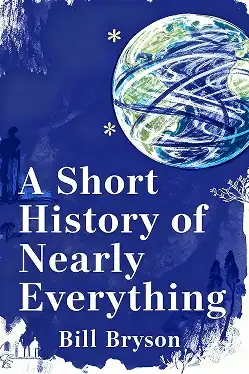
Welcome to an extraordinary journey through existence itself. Bill Bryson's "A Short History of Nearly Everything" isn't just a science book-it's a love letter to human curiosity and the universe's grand design. Since its publication in 2003, this masterpiece has captivated millions, from science enthusiasts to casual readers seeking to understand their place in the cosmos.
What makes this book so special? Perhaps it's how Bryson transforms complex scientific concepts into accessible, often humorous narratives that anyone can understand. Or maybe it's the way he captures the wonder of existence-the sheer improbability that atoms would arrange themselves in just the right way to create you, reading these words right now.
The book has achieved cult status among science communicators and educators. Neil deGrasse Tyson called it "one of the most significant nonfiction books of all time," while countless readers cite it as the book that kindled their love for science. Even former President Barack Obama listed it among his favorite reads, praising its ability to make "science accessible without sacrificing complexity."
As we embark on this journey through cosmic history, prepare to be amazed by the strange miracle of your existence-a testament to billions of years of fortunate events, from the Big Bang to the formation of our planet, to the emergence of life itself. Let's begin with gratitude for the atoms that chose, however briefly, to be us.
2장
The Birth of Everything: From Singularity to Universe
Imagine a point with no dimensions that suddenly, inexplicably, expands to create everything-space, time, matter, and energy. This is the Big Bang, not an explosion in space but an explosion of space itself. The universe didn't expand into anything; it simply began expanding, creating the very fabric of reality as it grew.
In the first fraction of a second after the Big Bang, the universe underwent a period of hyperinflation, expanding faster than the speed of light. This rapid expansion smoothed out the universe, making it remarkably uniform in all directions. Had this expansion been just slightly faster or slower, we wouldn't be here to contemplate it. If it had been slower by one part in a million million, the universe would have collapsed back on itself before stars could form. If it had been faster by the same tiny margin, matter would have dispersed too quickly for galaxies to coalesce.
The delicate balance required for our existence extends beyond just the expansion rate. Physicist Martin Rees identified six fundamental constants that needed to be precisely calibrated for life to exist. If the strong nuclear force were just slightly weaker, hydrogen atoms wouldn't exist. If it were slightly stronger, hydrogen would convert entirely to helium. Either way, chemistry as we know it-and therefore life-would be impossible.
Consider the electromagnetic force that holds atoms together. If it were slightly stronger, electrons would bind too tightly to nuclei; if weaker, they wouldn't bind at all. The universe seems almost suspiciously fine-tuned for our existence. As Freeman Dyson once remarked, "The universe knew we were coming."
This apparent fine-tuning has led some physicists to propose the multiverse theory-the idea that our universe is just one of countless others, each with different physical laws. In this view, we exist in the one universe where conditions happen to be right for life, simply because we couldn't exist in any of the others to observe them. It's a form of cosmic natural selection.
What's particularly mind-bending is that we can't see the entire universe. The observable universe-everything we can potentially see-is limited by the speed of light and the age of the universe. Beyond that boundary lies... more universe, stretching perhaps infinitely in all directions. When we gaze at the night sky, we're looking at the universe as it was, not as it is, because light takes time to reach us. The light from the Andromeda galaxy left when our ancestors were still learning to use stone tools.
3장
Cosmic Detectives: Discovering Our Universe's Secrets
In 1964, two Bell Labs scientists, Arno Penzias and Robert Wilson, were puzzled by a persistent hum in their radio antenna. They tried everything to eliminate this annoying noise-even cleaning out pigeon droppings they thought might be causing interference. What they'd actually discovered was the cosmic microwave background radiation-the afterglow of the Big Bang itself, permeating all of space.
The discovery was accidental. Penzias and Wilson weren't looking for evidence of the Big Bang; they were trying to conduct radio astronomy experiments. Meanwhile, just a few miles away at Princeton University, physicist Robert Dicke was specifically searching for this radiation. When Penzias and Wilson contacted him about their mysterious signal, Dicke famously told his research team, "Boys, we've been scooped."
This radiation is remarkably uniform-the same temperature (about 2.7 Kelvin) in all directions, which supports the theory that the early universe underwent that period of rapid inflation. The tiny fluctuations that do exist in this background radiation provided the seeds for all cosmic structure-the galaxies, stars, and eventually planets that would form.
What's particularly fascinating is how this discovery changed our understanding of time itself. Before the cosmic microwave background was detected, some scientists supported the "steady state" theory, which held that the universe had always existed and always would. The confirmation of the Big Bang meant the universe had a beginning-and therefore, might have an end.
Have you ever wondered why the night sky is dark? In an infinite, eternal universe filled with stars, every line of sight should eventually hit a star, making the night sky as bright as the surface of the Sun. This paradox, known as Olbers' paradox, is resolved by the Big Bang theory-the universe isn't infinite in time, and light from distant stars hasn't had time to reach us yet.
The universe continues to surprise us. In the 1990s, astronomers discovered that the expansion of the universe is accelerating, driven by a mysterious force called dark energy. This finding contradicted the expectation that gravity should be slowing the expansion. The nature of dark energy, which makes up about 68% of the universe, remains one of the greatest mysteries in physics.
4장
Star Hunters: The Cosmic Detectives Among Us
Nestled in the Blue Mountains of Australia, Reverend Robert Evans spends his evenings scanning the night sky from his back deck. With nothing more than a modest telescope and an extraordinary memory, he's discovered more supernovae-exploding stars-than most professional astronomers with sophisticated equipment.
Evans has an astonishing ability to memorize the patterns of thousands of galaxies and instantly spot when something has changed-when a star that wasn't there before suddenly appears. Imagine memorizing thousands of pages in a book and being able to notice immediately if a single period was replaced with an exclamation mark. That's essentially what Evans does, night after night.
What makes this feat even more remarkable is that supernovae are incredibly rare events. In our galaxy, a star might explode once every 30 to 50 years. Evans must scan thousands of galaxies to catch these fleeting cosmic fireworks. When he does spot one, he's witnessing the death throes of a star that may have exploded millions of years ago, its light only just reaching Earth.
These stellar explosions are more than just cosmic spectacles-they're the reason we exist. The elements that make up our bodies-carbon, nitrogen, oxygen, and others-were forged in the hearts of stars and scattered across space when those stars exploded. As astronomer Carl Sagan famously said, "We are made of star stuff."
The science of supernovae owes much to the eccentric Swiss-American astronomer Fritz Zwicky. Working at Caltech in the 1930s, Zwicky first recognized these explosions for what they were and coined the term "supernova." He also predicted the existence of neutron stars-incredibly dense stellar remnants-decades before they were discovered.
Zwicky was notorious for his combative personality, often referring to colleagues as "spherical bastards" (because they were bastards no matter which way you looked at them). Despite his abrasive nature, his scientific intuition was remarkable. He also proposed the existence of dark matter decades before others took the idea seriously.
Today, automated telescopes scan the skies for supernovae, but they haven't rendered Evans obsolete. There's something deeply human about his approach-the direct connection between observer and cosmos, the patient vigilance, the moment of discovery. In an age of big data and artificial intelligence, Evans reminds us that sometimes the most powerful instrument is the human mind, trained through years of dedicated practice.
5장
Earth's Measure: The Quest to Define Our World
In 1735, the French Royal Academy of Sciences dispatched an expedition to the Andes to measure the shape of the Earth. Led by Charles Marie de La Condamine and Pierre Bouguer, the team endured incredible hardships-disease, altitude sickness, hostile locals, and even murder-all to determine whether the Earth bulged at the equator as Isaac Newton had predicted.
This wasn't just academic curiosity. Accurate knowledge of Earth's shape was crucial for navigation, mapmaking, and understanding gravity. Newton had theorized that the Earth wasn't a perfect sphere but rather an "oblate spheroid"-slightly flattened at the poles and bulging at the equator due to its rotation. French scientists, following Descartes, believed the opposite-that Earth was elongated at the poles like an egg.
The expedition's findings confirmed Newton's prediction, but at tremendous cost. The team spent nine years in South America. One member went insane, another died, and La Condamine himself nearly perished multiple times. When they finally returned to France, they found that a competing expedition to Lapland had already confirmed Newton's theory in just a fraction of the time.
The quest to measure Earth continued with increasingly sophisticated methods. In the 1790s, French scientists defined the meter as one ten-millionth of the distance from the North Pole to the equator. Their measurements, conducted during the turmoil of the French Revolution, were remarkably accurate.
Perhaps the most extraordinary measurement came from Henry Cavendish in 1798. Using a delicate apparatus designed by John Michell, Cavendish managed to "weigh the Earth" by measuring the tiny gravitational attraction between lead balls. His result-that the Earth weighs about 6 billion trillion metric tons-was within 1% of the modern value.
Cavendish himself was painfully shy, communicating with his housekeeper through notes and fleeing when visitors arrived. He would observe his experiments through a telescope from another room to avoid disturbing the sensitive equipment with his body heat. Despite his eccentricities, his experiment was a triumph of precision and ingenuity.
These early scientists remind us that knowledge doesn't come easily. They endured incredible hardships, risked their lives, and dedicated years to answering questions that many of their contemporaries considered trivial. Their stories reveal that science is not just about brilliant insights but also about perseverance, courage, and sometimes a touch of madness.
6장
The Stone-Breakers: Uncovering Earth's Ancient Story
In the early 19th century, a remarkable cast of characters began to piece together Earth's deep history through the study of rocks and fossils. These early geologists came from diverse backgrounds-clergymen, physicians, lawyers-united by their fascination with the stones beneath their feet.
Roderick Murchison, once a military man and fox-hunting enthusiast, became obsessed with geology after attending a lecture by the charismatic William Buckland. Murchison went on to define the Silurian period and became one of Britain's most respected scientists. His contemporary, Charles Lyell, revolutionized geology with his principle of uniformitarianism-the idea that the same gradual processes we see today (erosion, sedimentation, volcanic activity) shaped Earth throughout its history.
Lyell's approach directly challenged the prevailing catastrophism, which held that Earth's features were formed by sudden, violent events like Noah's flood. His masterwork, "Principles of Geology," influenced a young naturalist named Charles Darwin, who took the first volume with him on his voyage aboard the HMS Beagle.
The debates among these early geologists were often heated. The "Great Devonian Controversy" saw Murchison and Adam Sedgwick, once friends, become bitter rivals over the classification of certain rock formations. Their dispute lasted decades and involved accusations of plagiarism and betrayal. Science, it turns out, has always been a deeply human endeavor, shaped by personalities and rivalries as much as by evidence.
Perhaps the most contentious question was Earth's age. Archbishop James Ussher had famously calculated, based on biblical genealogies, that Earth was created in 4004 BC. By the mid-19th century, geologists knew this couldn't possibly be correct-the processes they observed would require millions of years. But how many millions?
In 1862, physicist Lord Kelvin calculated that Earth could be no older than 100 million years, based on cooling rates. This posed a serious problem for Darwin's theory of evolution, which required much more time. The debate wasn't resolved until the discovery of radioactivity in the early 20th century, which revealed that Earth's interior was heated by radioactive decay-invalidating Kelvin's calculations and opening the door to an Earth billions, not millions, of years old.
What's remarkable about these geological pioneers is how much they got right despite their limited tools. They recognized that Earth had experienced multiple ice ages, that continents had somehow moved, and that life had changed dramatically over time. They laid the groundwork for our modern understanding of Earth as a dynamic, ever-changing planet with a history spanning billions of years.
7장
Bone Wars: The Dramatic Birth of Paleontology
The discovery of dinosaurs transformed our understanding of Earth's past, revealing a world more fantastic than anyone had imagined. But the story of how these ancient creatures were brought to light is itself a tale of ambition, rivalry, and sometimes outright deception.
Gideon Mantell, a country doctor in Sussex, England, made one of the first dinosaur discoveries in the 1820s when his wife found an unusual tooth while he was visiting a patient. Mantell recognized it as belonging to a giant herbivorous reptile, which he later named Iguanodon. His discovery was initially met with skepticism from the scientific establishment, particularly from the influential anatomist Richard Owen.
Owen, brilliant but unscrupulous, would later coin the term "dinosaur" (meaning "terrible lizard") and became the leading authority on extinct reptiles. He systematically undermined Mantell's work, even having some of Mantell's discoveries reassigned to himself. Mantell ended his life in poverty and pain, his spine deformed from a carriage accident, while Owen went on to found what would become the Natural History Museum in London.
But the most infamous paleontological rivalry played out in America between Edward Drinker Cope and Othniel Charles Marsh. Their "Bone Wars" began in the 1870s and lasted for decades, as both men raced to discover and name new dinosaur species in the American West.
Their methods were ruthless. Marsh's field crews would destroy fossil sites after extracting what they wanted, to prevent Cope from finding anything useful. Cope's teams would spy on Marsh's excavations and try to bribe his workers. Both men rushed to publish, sometimes describing species based on fragmentary remains, leading to numerous errors.
Despite their unethical tactics, Cope and Marsh made enormous contributions to paleontology, discovering and naming more than 130 new dinosaur species between them. Their findings included iconic dinosaurs like Triceratops, Stegosaurus, and Allosaurus. The wealth of fossils they uncovered helped establish American museums as world leaders in paleontology.
The cost was tremendous, however. Both men exhausted their fortunes in their quest for paleontological supremacy. Cope died relatively young, his health broken by years of hardship in the field. In his final bizarre gesture, he donated his body to science, hoping his skull would become the "type specimen" for Homo sapiens-a request that was never fulfilled.
These early dinosaur hunters remind us that scientific discovery isn't always a noble pursuit of truth. It can be driven by ego, ambition, and the desire for recognition. Yet even flawed individuals can make lasting contributions to our understanding of the world.
8장
Chemical Mysteries: From Alchemy to Modern Chemistry
The journey from alchemy to chemistry was marked by curious experiments, accidental discoveries, and sometimes deadly missteps. In 1675, German alchemist Hennig Brand became the first person to discover an element when he boiled down 60 buckets of urine in search of the philosopher's stone. Instead, he produced a waxy white substance that glowed in the dark and spontaneously caught fire-phosphorus.
Brand kept his method secret, hoping to sell phosphorus to wealthy patrons. But the secret eventually leaked out, and phosphorus became a scientific curiosity across Europe. This pattern-discovery, secrecy, and eventual dissemination-characterized much early chemical research.
The 18th century saw remarkable progress in identifying elements, particularly through the work of Swedish chemist Carl Scheele. Working in a small apothecary shop, Scheele discovered oxygen, chlorine, manganese, and several other elements. Unfortunately, he was slow to publish, and others often received credit for his discoveries. Scheele had a dangerous habit of tasting the substances he worked with-a practice that likely contributed to his early death at age 43.
Chemistry began to mature as a science under Antoine Lavoisier, who introduced precise measurement and systematic experimentation. Lavoisier disproved the phlogiston theory (which held that combustible materials contained a substance called phlogiston that was released during burning) and established the law of conservation of mass. He also created the first modern chemical nomenclature, giving us terms we still use today.
Tragically, Lavoisier's scientific career was cut short by the French Revolution. Despite his contributions to science and public health, he was guillotined in 1794, prompting mathematician Joseph-Louis Lagrange to remark, "It took them only an instant to cut off that head, and a hundred years may not produce another like it."
The 19th century saw chemistry become increasingly organized and systematic. John Dalton proposed his atomic theory, suggesting that elements consisted of indivisible particles of different weights. Dmitri Mendeleev created the periodic table, arranging elements by atomic weight and leaving gaps for elements yet to be discovered. His predictions of the properties of these unknown elements proved remarkably accurate when they were later discovered.
The discovery of radioactivity by Marie and Pierre Curie opened a new chapter in chemistry, revealing that atoms were not indivisible after all. Marie Curie paid a heavy price for her pioneering work, eventually dying from aplastic anemia caused by radiation exposure. Her notebooks remain so radioactive that they are kept in lead boxes and can only be handled with protective equipment.
These chemical pioneers remind us that scientific progress often comes at a personal cost. They worked with dangerous substances without understanding the risks, driven by curiosity and the desire to understand the fundamental nature of matter.
9장
The Mighty Atom: Unveiling the Subatomic World
The atom, once thought to be the smallest indivisible unit of matter, turned out to contain a universe of its own. The journey to understand this miniature cosmos transformed our view of reality itself.
If you could magnify an atom to the size of a cathedral, its nucleus would be no bigger than a fly. The vast majority of an atom is empty space, with electrons orbiting the nucleus at immense distances relative to their size. If atoms were scaled so that electrons were the size of dust motes, the nucleus would be the size of a person, and the distance between them would be about 10 miles.
This emptiness raises a puzzling question: If atoms are mostly empty space, why doesn't matter pass through other matter? Why can't we walk through walls? The answer lies in the electromagnetic forces between atoms, which create the illusion of solidity. What we perceive as the "hardness" of matter is actually a force field repelling other atoms.
The early 20th century saw a revolution in our understanding of the atom. Ernest Rutherford discovered the nucleus through his famous gold foil experiment, where he observed that some alpha particles bounced back from a thin sheet of gold-like firing a 15-inch shell at tissue paper and having it bounce back at you. This led to the planetary model of the atom, with electrons orbiting the nucleus like planets around the sun.
But this model had a fatal flaw: according to classical physics, orbiting electrons should radiate energy and spiral into the nucleus, causing atoms to collapse. Niels Bohr resolved this paradox by proposing that electrons could only occupy specific energy levels or "shells," and could jump between these levels by absorbing or emitting energy in discrete packets called quanta.
This was the beginning of quantum mechanics, which would prove to be one of the most successful yet counterintuitive theories in science. At the quantum level, particles don't have definite positions until they're observed; they exist as probability waves. An electron isn't in one place until you look for it-it exists as a cloud of possibilities.
Even more bizarrely, quantum mechanics revealed that particles can be entangled, with the state of one instantly affecting another, regardless of the distance between them. Einstein called this "spooky action at a distance" and rejected it, but experiments have repeatedly confirmed that entanglement is real.
The implications are profound. At the most fundamental level, reality isn't deterministic but probabilistic. The universe doesn't consist of tiny billiard balls bouncing off each other according to fixed laws; it's a sea of possibilities that only resolve into definite states when observed. As physicist Richard Feynman famously said, "If you think you understand quantum mechanics, you don't understand quantum mechanics."
10장
Earth in Motion: The Revolutionary Theory of Plate Tectonics
For most of human history, mountains, valleys, and continents were seen as fixed features of our planet, perhaps shaped by catastrophic floods or divine intervention but essentially stable. The idea that continents might move seemed absurd. Yet today, we know that the ground beneath our feet is in constant motion, with continents drifting across the face of the Earth at about the same rate as your fingernails grow.
The theory of continental drift was first seriously proposed by Alfred Wegener in 1912. A German meteorologist, Wegener noticed the striking jigsaw-puzzle fit between the coastlines of South America and Africa. He also observed similar fossil plants and animals on continents now separated by vast oceans. Wegener proposed that all continents were once joined in a supercontinent he called Pangaea, which had broken apart and drifted to their current positions.
The scientific community ridiculed Wegener's ideas. How could massive continents possibly plow through the solid ocean floor? Wegener couldn't explain the mechanism, and without one, his theory was dismissed. He died in 1930 during an expedition to Greenland, his ideas largely rejected.
The vindication of continental drift came from an unexpected direction-the ocean floor. In the 1950s and 1960s, oceanographers mapping the seafloor discovered a global system of underwater mountain ranges-mid-ocean ridges-that circled the planet like the seams on a baseball. These ridges were sites of volcanic activity where new seafloor was being created.
Harry Hess of Princeton University proposed the theory of seafloor spreading: new oceanic crust forms at mid-ocean ridges and spreads outward, pushing continents apart. This process is balanced by subduction zones, where oceanic crust dives beneath continents or other oceanic plates and is recycled into the Earth's mantle.
The final piece of the puzzle came from studies of the Earth's magnetic field. When lava cools, magnetic minerals align with Earth's magnetic field, preserving a record of its orientation. Researchers discovered that the magnetic orientation in rocks on either side of mid-ocean ridges formed symmetrical patterns, indicating that the seafloor was indeed spreading from these ridges.
By the late 1960s, these discoveries had coalesced into the theory of plate tectonics. The Earth's outer shell, or lithosphere, is divided into several large plates that float on the semi-fluid asthenosphere beneath. These plates move, driven by convection currents in the mantle, carrying continents with them.
Plate tectonics explains not just the movement of continents but also earthquakes, volcanic activity, mountain building, and the distribution of certain mineral resources. It's one of the great unifying theories in Earth science, comparable to evolution in biology or relativity in physics.
The story of plate tectonics reminds us that scientific revolutions often come from unexpected directions and that ideas ahead of their time may be dismissed until the evidence becomes overwhelming. Wegener didn't live to see his vindication, but his insight fundamentally changed our understanding of our dynamic planet.
11장
Dangerous Beauty: Earth's Catastrophic Powers
On May 18, 1980, Mount St. Helens in Washington state exploded with the force of 500 Hiroshima bombs, devastating 230 square miles of forest in seconds. The lateral blast, traveling at speeds up to 300 miles per hour, flattened trees like matchsticks and killed 57 people, despite weeks of warnings and evacuations.
What makes this eruption particularly significant is that it occurred in a well-monitored region of a developed country, yet scientists were still surprised by its power and direction. The eruption didn't follow the expected pattern of a vertical explosion; instead, an earthquake triggered a massive landslide on the mountain's north face, releasing pressure and causing a lateral blast that no one had anticipated.
Volcanoes are just one of many natural hazards that remind us of Earth's immense power. Earthquakes can release energy equivalent to thousands of nuclear bombs, reshaping landscapes in minutes. The 1960 Valdivia earthquake in Chile-the most powerful ever recorded-released energy equivalent to 178,000 Hiroshima bombs and created tsunamis that traveled across the Pacific Ocean.
These catastrophic events are the visible manifestations of Earth's internal heat engine, powered largely by radioactive decay in the core and mantle. This heat drives plate tectonics, causing continents to collide, mountains to rise, and new ocean floor to form. Without this internal heat, Earth would be a geologically dead world like the Moon, with no volcanoes, earthquakes, or mountain building.
What's particularly sobering is that the events we've witnessed in recorded history are relatively minor compared to some past catastrophes. The Yellowstone caldera, for instance, is a supervolcano that has erupted with forces hundreds of times greater than Mount St. Helens. Its last major eruption, about 640,000 years ago, covered much of North America in ash. When-not if-it erupts again, it could dramatically alter climate patterns and food production globally.
Similarly, Earth has experienced massive asteroid impacts that have caused global extinctions. The Chicxulub impact that contributed to the dinosaurs' demise released energy equivalent to 100 trillion tons of TNT, causing tsunamis, global wildfires, and years of darkness as dust blocked the sun.
These natural disasters highlight our planet's dual nature-it's both the nurturing cradle of life and a place of tremendous destructive power. The same processes that created our continents, atmosphere, and oceans can also unleash forces far beyond human control.
Perhaps most humbling is the realization that many of these processes operate on timescales far longer than human civilization. The tectonic plates that shape our continents move at just a few centimeters per year. Supervolcanoes may remain dormant for hundreds of thousands of years between eruptions. We're living on a planet whose rhythms and cycles vastly exceed our brief historical memory.
12장
Life's Improbable Journey: From Molecules to Complexity
The origin of life remains one of science's greatest mysteries. Stanley Miller's groundbreaking 1953 experiment demonstrated that basic organic molecules, including amino acids, could form naturally under simulated early Earth conditions. However, the gap between these simple molecules and living cells is vast, with challenges like the astronomical improbability of proteins forming by chance and the paradox of DNA-protein interdependence. The "RNA world" hypothesis offers a potential solution, suggesting RNA preceded both DNA and proteins.
Life emerged surprisingly quickly on Earth. With evidence of liquid water by 4.4 billion years ago and earliest life signs around 3.8 billion years ago, this rapid appearance suggests life might be a probable outcome given suitable conditions. Life's adaptability is demonstrated by extremophiles thriving in harsh environments, from hot springs to nuclear reactors, expanding our understanding of potential habitats beyond Earth.
The evolution of complexity was a slower process. Single-celled organisms dominated Earth for 3 billion years before the Cambrian explosion 541 million years ago brought diverse animal life. The Burgess Shale fossils reveal remarkable creatures from this period, sparking debate about evolution's predictability. While Stephen Jay Gould emphasized evolution's contingency, others like Simon Conway Morris point to convergent evolution-such as the repeated emergence of eyes-as evidence of predetermined pathways.
Life's journey reflects both random events (like asteroid impacts) and natural selection's consistent pressures. Our existence, though highly improbable at the individual level, may have been inevitable given life's remarkable adaptability and the vast timescale of evolution.
13장
The Human Story: Our Brief but Remarkable Existence
Our species, Homo sapiens, has existed for a mere 300,000 years-a blink in Earth's 4.5-billion-year history. Yet in that brief time, we've transformed the planet in ways no other species has. Our journey from African origins to global dominance is a tale of remarkable adaptability, technological innovation, and sometimes troubling impact.
The human lineage diverged from other primates about 7 million years ago. Early hominins like Sahelanthropus and Australopithecus were bipedal but had ape-sized brains. The genus Homo emerged about 2.8 million years ago, with Homo habilis showing the first evidence of tool use. Homo erectus, appearing about 1.9 million years ago, was the first hominin to leave Africa, spreading across Asia and Europe.
For much of human prehistory, multiple human species coexisted. Neanderthals occupied Europe and western Asia from about 400,000 to 40,000 years ago. They had larger brains than modern humans, created sophisticated tools, and may have had language and symbolic thought. The diminutive Homo floresiensis ("hobbits") lived on the Indonesian island of Flores until about 50,000 years ago. The recently discovered Denisovans left few fossils but contributed DNA to modern human populations in Asia and Oceania.
Our own species emerged in Africa around 300,000 years ago. By 60,000 years ago, Homo sapiens had begun spreading out of Africa, eventually reaching every continent except Antarctica. This migration coincided with the disappearance of other human species and many large animal species, raising questions about our role in these extinctions.
The story of human migration is being rewritten by new discoveries and technologies. Ancient DNA has revealed complex patterns of interbreeding between Homo sapiens, Neanderthals, and Denisovans. Most non-African humans carry 1-4% Neanderthal DNA, while some Oceanian populations have up to 6% Denisovan ancestry.
The transition from hunter-gatherer lifestyles to agriculture began about 12,000 years ago in multiple regions independently. This Agricultural Revolution allowed for permanent settlements, population growth, and social stratification, but also brought new diseases, poorer nutrition for many, and greater inequality.
The pace of human innovation has accelerated dramatically in recent centuries. The Scientific Revolution, Industrial Revolution, and Information Age have transformed how we live, work, and understand the world. We've split the atom, decoded the human genome, landed on the Moon, and created global networks of instantaneous communication.
Yet our success has come at a cost. We're in the midst of what many scientists call the Sixth Mass Extinction, with species disappearing at rates far above the background level. Climate change, habitat destruction, pollution, and overexploitation threaten ecosystems worldwide. The Anthropocene-a proposed geological epoch defined by human impact-may be the shortest and most transformative period in Earth's recent history.
Our understanding of our place in nature has evolved along with our scientific knowledge. We now know that we share a common ancestor with all living things, that our existence depends on complex ecological relationships, and that our actions have consequences that extend far beyond our immediate surroundings and lifetimes.
The human story is still being written. With our unprecedented capacity for both destruction and creation, the choices we make in the coming decades will shape not just our own future but that of countless other species with whom we share this planet.
14장
A Cosmic Perspective: Our Extraordinary Opportunity
As we reach the end of our journey through cosmic history, from the Big Bang to human consciousness, it's worth reflecting on the extraordinary privilege of our existence. The atoms in your body were forged in the hearts of stars that exploded billions of years ago. The carbon, nitrogen, and oxygen that form your tissues, the calcium in your bones, the iron in your blood-all were created through nuclear fusion in stellar furnaces or during the violent deaths of massive stars.
These atoms have existed since shortly after the universe began. They've been part of gas clouds, stars, planets, and perhaps countless other organisms before becoming, temporarily, you. As physicist Richard Feynman once observed, "The atoms that make up your body are traceable to the crucibles of stars. We are star stuff."
Our planet occupies a "Goldilocks zone" around our star-not too hot, not too cold, but just