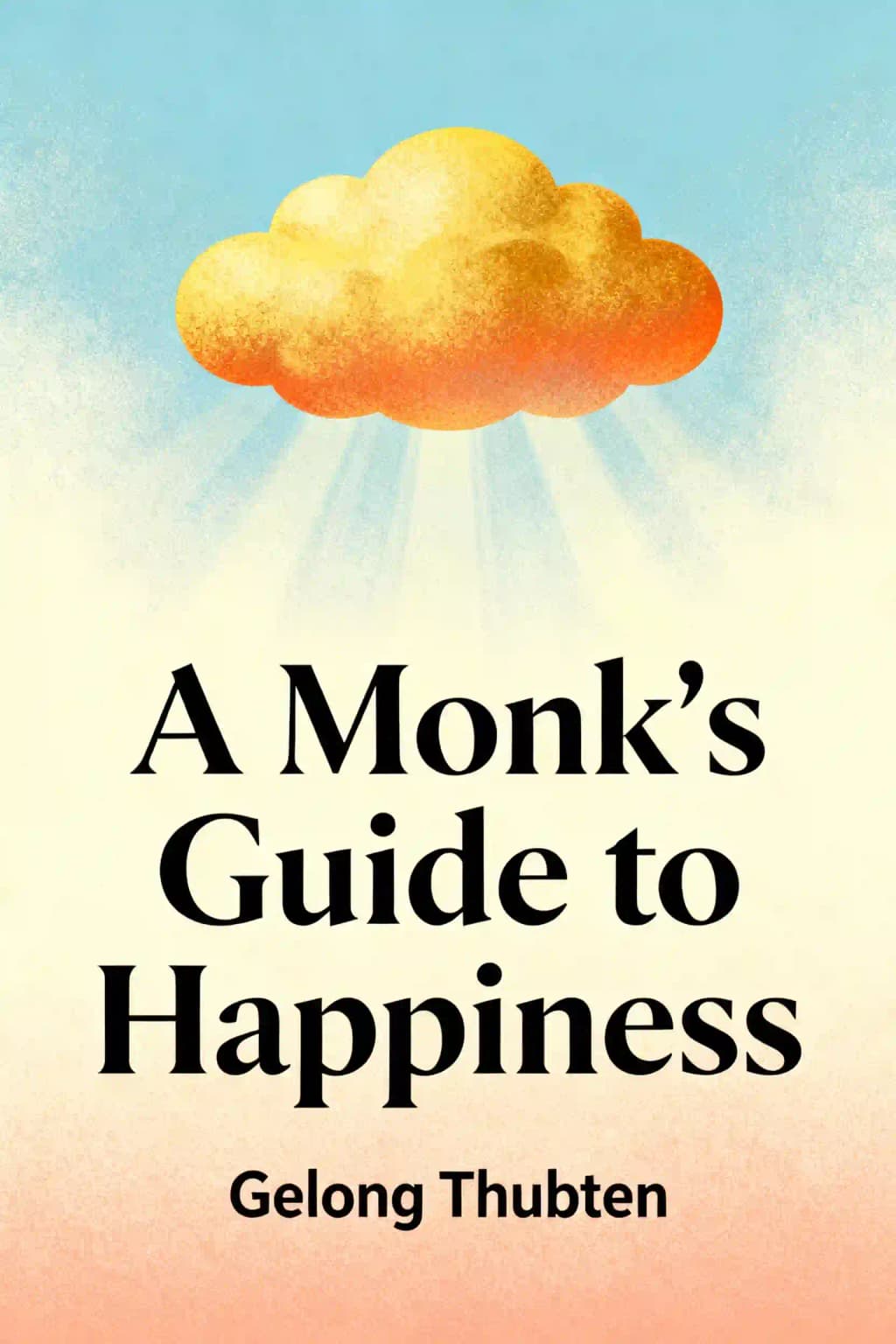
A monk's practical guide to happiness in our tech-saturated world. Endorsed by Benedict Cumberbatch and taught to Silicon Valley elites, Thubten's "micro-moments" of meditation transform chaos into calm. Can five minutes daily really rewire your anxious mind?
Gelong Thubten, bestselling author of A Monk’s Guide to Happiness, is a Buddhist monk and meditation teacher with over 30 years of monastic training, including six years in isolated retreats. His book, blending mindfulness and self-help, explores themes of inner peace, present-moment awareness, and freedom from emotional suffering—concepts rooted in his decades of practice and teachings at organizations like Google, the United Nations, and Oxford University.
Thubten’s work extends beyond writing. He co-founded meditation centers and the humanitarian charity ROKPA International, and his methods were used to train actors in Marvel’s Dr. Strange.
His follow-up book, Handbook for Hard Times, further addresses resilience through Buddhist principles. A sought-after speaker featured on ITV’s This Morning and Mindvalley, Thubten combines academic rigor (he studied English literature at Oxford) with practical wisdom. A Monk’s Guide to Happiness became a Sunday Times bestseller, solidifying his reputation as a leading voice in modern mindfulness.
A Monk's Guide to Happiness explores meditation as a tool for inner peace in modern life, blending Buddhist principles with secular practices. Gelong Thubten emphasizes happiness as an internal state achieved through mindfulness, emotional awareness, and compassion. The book includes practical exercises like "micro-meditations" and debunks myths about meditation requiring hours of practice.
This book suits busy individuals seeking stress relief, mindfulness beginners, and those curious about non-religious meditation. It’s particularly valuable for readers overwhelmed by technology or emotional turbulence, offering actionable steps to cultivate calm without monastic retreats.
Yes, for its accessible approach to meditation and relatable anecdotes from Thubten’s 25 years as a monk. While some critics note repetitive themes, most praise its practicality, especially the focus on "mindful gaps" during daily tasks.
True happiness is described as a state of presence, inner calm, and freedom from attachment to external outcomes. Thubten argues it arises from recognizing intrinsic contentment rather than chasing transient pleasures.
Thubten advocates brief, frequent "micro-meditations" (e.g., focusing on breath for 30 seconds) and compassion-centered practices. He prioritizes quality over duration, encouraging mindfulness during routine activities like walking or washing dishes.
The author reframes technology as a reminder to practice mindfulness, suggesting using notifications as prompts for breath awareness. He emphasizes balancing digital engagement with intentional mental pauses.
Compassion is central, presented as a skill that reduces self-criticism and fosters connection. Thubten guides readers to cultivate it through meditation focused on wishing others well, even during conflicts.
No. Thubten distills Buddhist concepts into secular practices, avoiding dogma. He positions meditation as a universal tool for mental well-being, relevant to atheists and religious readers alike.
Some reviewers desire more structured meditation routines or deeper dives into neuroscience. A few note overlaps with mainstream mindfulness content, though most praise its fresh perspective on applying ancient wisdom.
Start with 1–2 minute "mindfulness anchors" (e.g., mindful tea drinking) and label emotions without judgment. Thubten also suggests ending interactions by silently wishing others happiness.
Unlike apps focused on relaxation, Thubten prioritizes self-inquiry and emotional resilience. It complements clinical mindfulness books by linking practices to philosophical insights about lasting fulfillment.
저자의 목소리로 책을 느껴보세요
지식을 흥미롭고 예시가 풍부한 인사이트로 전환
핵심 아이디어를 빠르게 캡처하여 신속하게 학습
재미있고 매력적인 방식으로 책을 즐기세요
But this approach is enslavement, not happiness.
Ultimately, we are more than our problems and pain.
We become enslaved by thoughts and feelings we can't control.
Nothing external can match our hardwired internal bliss.
A Monk's Guide to Happiness의 핵심 아이디어를 이해하기 쉬운 포인트로 분해하여 혁신적인 팀이 어떻게 창조하고, 협력하고, 성장하는지 이해합니다.
A Monk's Guide to Happiness을 빠른 기억 단서로 압축하여 솔직함, 팀워크, 창의적 회복력의 핵심 원칙을 강조합니다.

생생한 스토리텔링을 통해 A Monk's Guide to Happiness을 경험하고, 혁신 교훈을 기억에 남고 적용할 수 있는 순간으로 바꿉니다.
무엇이든 물어보고, 목소리를 선택하고, 진정으로 공감되는 인사이트를 함께 만들어보세요.

샌프란시스코에서 컬럼비아 대학교 동문들이 만들었습니다
"Instead of endless scrolling, I just hit play on BeFreed. It saves me so much time."
"I never knew where to start with nonfiction—BeFreed’s book lists turned into podcasts gave me a clear path."
"Perfect balance between learning and entertainment. Finished ‘Thinking, Fast and Slow’ on my commute this week."
"Crazy how much I learned while walking the dog. BeFreed = small habits → big gains."
"Reading used to feel like a chore. Now it’s just part of my lifestyle."
"Feels effortless compared to reading. I’ve finished 6 books this month already."
"BeFreed turned my guilty doomscrolling into something that feels productive and inspiring."
"BeFreed turned my commute into learning time. 20-min podcasts are perfect for finishing books I never had time for."
"BeFreed replaced my podcast queue. Imagine Spotify for books — that’s it. 🙌"
"It is great for me to learn something from the book without reading it."
"The themed book list podcasts help me connect ideas across authors—like a guided audio journey."
"Makes me feel smarter every time before going to work"
샌프란시스코에서 컬럼비아 대학교 동문들이 만들었습니다

A Monk's Guide to Happiness 요약을 무료 PDF 또는 EPUB으로 받으세요. 인쇄하거나 오프라인에서 언제든 읽을 수 있습니다.
What if everything you believed about happiness was fundamentally wrong? After emerging from a four-year meditation retreat in 2009, Buddhist monk Gelong Thubten was struck by how dramatically the world had accelerated-smartphones everywhere, people constantly distracted, stress levels soaring. Drawing from his extraordinary journey from Oxford-educated actor to Buddhist monk, Thubten reveals a profound truth: happiness isn't a fleeting sensation to chase but a skill we can cultivate through mental training. This isn't just spiritual theory-it's backed by neuroscience showing we're literally "hardwired for bliss." The problem isn't that happiness eludes us; it's that we've been looking in all the wrong places, chasing external circumstances when the true source lies within. What would change in your life if you discovered that lasting happiness was already available to you, requiring no outside conditions to be met?