1장
Murder in a Winter Wonderland: A Fatal Collision of Secrets and Lies
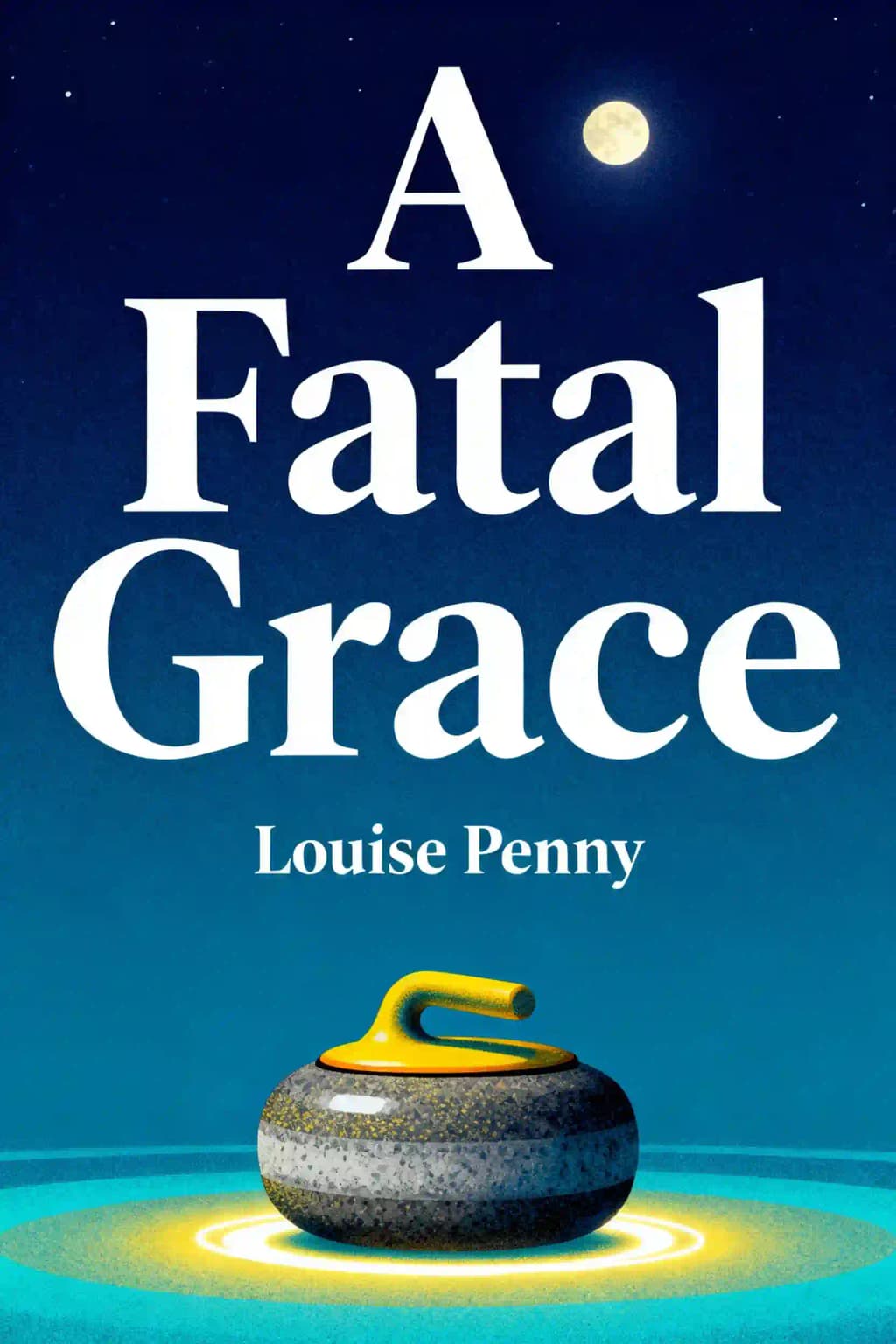
When Louise Penny's "A Fatal Grace" was first published in 2007 (titled "Dead Cold" in the UK), it quickly established itself as more than just another mystery novel. This second installment in the Chief Inspector Armand Gamache series won the 2007 Agatha Award for Best Novel and cemented Penny's reputation as a master of the "cozy mystery" genre with psychological depth. The book has gained a devoted following among readers who appreciate its blend of atmospheric setting, complex characters, and moral questions that linger long after the final page. Even Hillary Clinton has named Louise Penny among her favorite authors, and Penny's Three Pines series has been adapted for television, with Alfred Molina portraying the beloved Inspector Gamache. What makes this particular murder mystery so compelling is how it transforms a picturesque Quebec village into a snow-covered stage where the darkest human emotions play out against a backdrop of seemingly perfect small-town life.
2장
The Village of Three Pines: Where Beauty Masks Darkness
Three Pines exists as a paradox - a place so idyllic it doesn't appear on any map, yet harbors the darkest human impulses beneath its charming exterior. The village emerges as a character itself, with its bistro serving perfect meals, bookstore offering literary refuge, and homes exuding warmth against the bitter Canadian winter. At Olivier's Bistro, locals gather around the crackling fireplace, sharing fresh croissants and cafe au lait while discussing everything from art to murder. The aroma of Sarah's pine needle soup and Gabri's famous quiche fills the air, creating an atmosphere that draws people in like moths to a flame.
For Clara Morrow, an artist struggling with self-doubt, Three Pines represents the magical village from Ogilvy's department store Christmas display she'd dreamed of as a child - a place "guarded by kindness" where dancing bears and skating ducks lived in harmony. Her own home, a rambling structure filled with half-finished canvases and splattered paint, reflects the village's artistic soul. The morning light streaming through her studio windows illuminates both her masterpieces and her failures, much like the village itself reveals both light and shadow.
Myrna Landers, a former Montreal psychologist, discovered Three Pines by accident while fleeing her own burnout and disillusionment. Finding it wasn't even on her map, she was enchanted by its "peace, companionship, and perfect combination of croissants, books, and contentment." Her bookstore became more than just a business - it transformed into a sanctuary where villagers could lose themselves in stories while finding themselves in conversation. The old wooden shelves, carefully curated collection, and comfortable reading chairs invite both escape and introspection.
Yet this same enchanted village sits in the shadow of the Hadley house - a decrepit Victorian mansion perched on the hill like a carrion bird watching its prey. The house's broken windows and weathered facade serve as a constant reminder that darkness lurks at the edges of paradise. Local children whisper stories about its haunted halls, while adults avert their eyes from its accusatory gaze.
The village's geography creates a natural amphitheater for murder, with the green at its heart surrounded by homes that watch like spectators at an ancient arena. The frozen lake where the curling match takes place becomes both a community gathering spot and the perfect stage for a public execution - its smooth surface reflecting both the winter stars and human malice. The bistro serves as both sanctuary and interrogation room, where Inspector Gamache can observe suspects while they unconsciously reveal their secrets over bowls of onion soup.
Even the church, with its austere stone walls and delicate stained glass, plays its part in this dance of light and shadow. During the Christmas Eve service, where an angelic voice briefly transcends human pettiness, the same pews that comfort the faithful become witness to a mother's cruel destruction of her daughter's spirit. Through these contrasts, Penny explores how beauty and brutality often exist side by side, how the most picturesque settings can harbor the most disturbing secrets, and how communities that appear perfect from the outside may be rotting from within - like the Hadley house slowly decaying on its hill.
3장
CC de Poitiers: The Perfect Victim
CC de Poitiers emerges as one of literature's most unlikable murder victims - a woman so universally despised that her death prompts celebration rather than mourning. From her first appearance, CC reveals herself as manipulative, cruel, and pathologically self-centered. At fifty-two, Saul Petrov, her photographer and reluctant lover, despises both CC and himself for the cruelty he shows in her company. Her book, ironically titled "Be Calm," reflects nothing of her anxious, impatient nature. Despite her frozen exterior, calm is the last word anyone would use to describe her.
CC's particular brand of cruelty reaches its apex in her treatment of her daughter, Crie. During the Christmas Eve service at St. Thomas's church, the congregation witnesses Crie's angelic singing voice, a moment of pure beauty that briefly transforms the overweight, awkward girl. Yet immediately afterward, they overhear CC viciously berating her daughter in the shadows, calling her "fat and ugly and lazy" and mocking her singing. The congregation stands frozen, horrified yet unable to intervene as CC crushes her daughter's spirit.
Her self-published book reveals a philosophy as hollow as its author - a "flaccid mishmash of ridiculous self-help philosophies" centered around "Li Bien," which she claims is an ancient oriental philosophy passed down through her French diplomatic family's colonial connections in Vietnam. In reality, it's a fabrication built on misappropriated concepts and outright lies, much like CC herself.
What makes CC such a compelling victim is that her death elicits not sorrow but relief. As Gabri bluntly declares, "The monster's dead and the villagers are celebrating." This moral complexity forces readers to confront uncomfortable questions: Can murder ever be justified? Is killing someone who causes immense suffering to others an act of evil or mercy? Through CC's character, Penny explores how victims can sometimes be perpetrators, how the lines between good and evil blur, and how our sympathy can shift depending on whose perspective we adopt.
4장
The Art of Deception: Identities Real and Imagined
Throughout "A Fatal Grace," characters construct elaborate false identities to hide painful truths. CC de Poitiers claims descent from Eleanor of Aquitaine and Henri de Poitiers - historical figures from the 12th century - rather than acknowledge her humble origins. She creates an entire philosophy, "Li Bien," supposedly passed down through generations of her diplomatic family, when in reality it's a fabrication designed to sell books and products. Her corporate logo, a screaming eagle, is stolen directly from Eleanor of Aquitaine's emblem, further evidence of her desperate need to claim a noble lineage.
Agent Yvette Nichol similarly lives within a web of family mythology. Her father, Ari Nikolev, has constructed an elaborate fiction about Uncle Saul and communist persecution in Czechoslovakia - a fiction he now can't undo without losing his daughter's admiration. When Nichol rushes into a burning building to save "Uncle Saul," she's acting on this fabricated family history, risking her life for a narrative that never existed.
Even the Three Graces - Emilie, Mother Bea, and Kaye - maintain their own deceptions. Mother Bea has built an entire meditation center around a misquoted biblical passage: "Be Calm, and know that I am God" instead of "Be still, and know that I am God." This subtle change reflects her own need to control rather than surrender. Kaye has spent her entire life trying to decode her father's final words, building her identity around solving a mystery that ultimately had nothing to do with her.
Clara Morrow, too, experiences a moment of identity confusion when she believes a homeless woman who compliments her art might actually be God in disguise - a moment of magical thinking that provides comfort when she most needs it. The revelation that this woman was actually CC's mother, "L," forces Clara to confront reality rather than retreat into fantasy.
Through these layered deceptions, Penny explores how humans construct narratives to make sense of their lives, how we cling to stories that protect us from painful truths, and how the gap between who we pretend to be and who we actually are can become deadly when those fabrications begin to unravel.
5장
The Psychology of Cruelty: Cycles of Abuse
At the heart of "A Fatal Grace" lies a profound exploration of how cruelty perpetuates itself across generations. When Myrna discusses child abuse with Gamache, she explains that there are typically three parties: the abused (Crie), the abuser (CC), and the bystander (Richard) who fails to protect the child. This triangle of abuse reveals how complex these dynamics become, with each role enabling the others.
CC's own cruelty toward her daughter Crie manifests most dramatically after the Christmas Eve service, when she viciously berates her daughter for singing beautifully, calling her "fat and ugly and lazy." This public humiliation represents just one instance in what we understand to be a pattern of sustained emotional abuse. As Myrna explains, "We become our beliefs, and Crie believes something horrible about herself."
Yet CC herself was likely a victim of similar treatment. The novel reveals a rare private moment of vulnerability when CC cries in her hotel room, clutching her "Be Calm" book and remembering a traumatic Christmas from her childhood involving her hysterical mother and a single Christmas ornament with three pine trees painted on it. This glimpse suggests CC's cruelty may have roots in her own childhood wounds, creating a cycle of abuse that continues through generations.
Richard Lyon, CC's husband, represents the complicit bystander - a nervous, indecisive man who struggles to project confidence and cannot even remember his daughter's age when asked. His failure to protect Crie from CC's abuse makes him partially responsible for her suffering. When Gamache compares Lyon to their old dog Sonny - "eager to please, hungry for company" with "a good heart" - Reine-Marie warns him that good hearts can get hurt, broken, and then lash out, suggesting that even Lyon's passivity may have darker origins.
The novel ultimately suggests that breaking these cycles requires intervention - sometimes dramatic intervention. When the Three Graces decide to kill CC, they do so believing they're saving Crie from a slow death "suffocating beneath layers of fat and fear and silence." Their actions, while criminal, stem from a desperate desire to break a cycle they see no other way to end. Through these complex dynamics, Penny explores how abuse travels through families like a contagion, how bystanders become complicit through inaction, and how sometimes the most loving act can appear, on its surface, to be the most cruel.
6장
The Burden of Secrets: What We Hide and Why
Secrets form the currency of Three Pines, with each character harboring information that could destroy themselves or others. CC de Poitiers keeps her humble origins secret, fabricating an aristocratic lineage to support her fraudulent self-help philosophy. Her greatest secret - that she murdered her own homeless mother, "L" - emerges only after her death, revealing the depths of her shame and self-loathing.
The Three Graces - Emilie, Mother Bea, and Kaye - share the secret code "B KLM" representing "Be Calm" (Bea, Kaye, L, and Em). This innocent childhood connection becomes deadly when they conspire to murder CC to save her daughter Crie. Their willingness to sacrifice themselves in the snowstorm represents the ultimate keeping of a secret - they would rather die than reveal who actually killed CC.
Agent Nichol's secret communications with someone monitoring Gamache suggest institutional corruption reaching to the highest levels of the Surete. This subplot connects to Gamache's own past with the Arnot case, where he exposed police corruption at great personal cost. His reflection that "the Arnot case isn't over" hints at dangers still to come from secrets not yet fully revealed.
Clara keeps secret her belief that she encountered God disguised as a homeless woman outside Ogilvy's - a private spiritual experience she's reluctant to share even with Gamache. This withholding reveals how even positive secrets can create distance between people who otherwise trust each other.
The most devastating secret belongs to Crie, who methodically planned and executed her mother's murder as an act of self-preservation after years of abuse. Her scientific brilliance, hidden beneath layers of apparent submission and silence, enabled her to create the perfect murder weapon - an electrified chair that would kill only her mother with her unique metal-soled boots.
Through these interwoven secrets, Penny explores how what we hide defines us as much as what we reveal, how secrets can both protect and destroy, and how the act of keeping secrets creates bonds between people that can be stronger than family ties or legal obligations.
7장
The Nature of Justice: When the Law Falls Short
"A Fatal Grace" presents a profound moral dilemma: what happens when legal justice fails to protect the most vulnerable? Throughout the novel, characters take justice into their own hands when formal systems prove inadequate. The Three Graces - Emilie, Mother Bea, and Kaye - conspire to murder CC after witnessing her emotional abuse of Crie, believing they're saving a child when no one else will intervene. As Emilie explains, they watched CC "murder" Crie's spirit on Christmas Eve, and felt compelled to act.
Crie herself ultimately delivers the most direct form of vigilante justice by engineering her mother's electrocution. As Gamache eventually realizes, this brilliant but damaged girl used her scientific knowledge to create the perfect murder weapon - one that would only kill someone wearing metal-soled boots like her mother's. Her act represents both self-defense and retribution after years of sustained abuse.
Gamache himself embodies the tension between formal and moral justice. As a police officer, he's sworn to uphold the law, yet his compassion often leads him to understand, if not condone, actions that technically violate it. When he finds the Three Graces attempting suicide on the frozen lake, he respects Emilie's letter begging him to let them die like "Inuit elders who walked onto an ice flow." Though he ultimately rescues them, his momentary hesitation acknowledges their right to choose their own end.
The Arnot case, referenced throughout the novel, represents Gamache's own struggle with institutional justice. Having exposed corruption within the Surete at great personal cost, he continues to face backlash from colleagues who prioritized loyalty over truth. His reflection that "the Arnot case isn't over" suggests justice remains incomplete even when formally administered.
Through these intersecting moral dilemmas, Penny explores the limitations of legal systems in addressing profound human suffering, how communities develop their own codes of justice when formal ones fail, and how those tasked with upholding the law must sometimes look beyond it to serve a higher moral purpose.
8장
The Power of Community: Healing and Harm
Three Pines functions as both sanctuary and prison for its inhabitants - a place where deep connections form but where escape from one's past proves impossible. The village's physical isolation (it doesn't even appear on maps) creates a forced intimacy among its residents. They gather daily at Olivier's bistro, sharing croissants and cafe au lait while exchanging village gossip. They attend services at Saint Thomas's church, participate in community events like the curling match fundraiser, and collectively endure the bone-chilling Canadian winters. These shared rituals - from impromptu dinner parties to morning coffee klatches to holiday celebrations - weave an intricate social fabric that sustains them through personal tragedies and collective challenges.
For Clara and Peter Morrow, the village represents the fulfillment of childhood dreams - the enchanted place from Ogilvy's Christmas window display come to life. Their artist's cottage, with its crooked floors and garden full of wild roses, embodies the romantic ideal of village life they've long pursued. For Myrna, the former psychologist, Three Pines offers reinvention after an emotionally draining career in Montreal. Her bookstore becomes not just a business but a sanctuary where villagers seek both literature and informal counsel. For Gabri and Olivier, the village provides acceptance of their relationship that might be harder to find in larger communities. Their bistro serves as the village's living room, where residents gather to share meals, celebrations, and sorrows. Even Ruth Zardo, the brilliantly cantankerous poet, finds her place in this imperfect community that tolerates her sharp edges and values her artistic genius.
Yet this same close-knit structure enables collective action with darker purposes. When Gabri declares "The monster's dead and the villagers are celebrating," he articulates the community's tacit approval of CC's murder. The shared meals, the daily encounters, the intimate knowledge of each other's lives - all create an environment where secrets can be kept and justice can be pursued outside official channels. The Three Graces' conspiracy to kill CC emerges directly from their decades of friendship and mutual understanding - they act together because they've weathered countless storms as one.
The novel explores how communities respond to outsiders through multiple lenses. CC de Poitiers and her family never integrate into Three Pines, remaining perpetual strangers despite owning the old Hadley house. Their isolation makes them both threatening and vulnerable - they neither understand nor respect the village's unwritten social codes. Similarly, Agent Nichol's inability to connect with Gamache's team leaves her susceptible to outside influence, potentially compromising the investigation. Her social awkwardness and failure to read interpersonal cues mirror CC's fatal lack of emotional intelligence.
Through these intricate community dynamics, Penny explores how humans need connection to survive, how shared experiences create moral frameworks that sometimes transcend conventional ethics, and how communities can both heal and harm those within their boundaries. The village becomes a microcosm of human society, where the lines between protection and suffocation, justice and revenge, loyalty and complicity blur in the shadows of ancient maples and century-old stones.
9장
The Redemptive Power of Art: Finding Light in Darkness
Throughout "A Fatal Grace," art serves as both refuge and revelation for characters struggling with trauma and isolation. Clara Morrow's paintings, particularly "The Three Graces" depicting the three elderly women with a deliberate "crack," embody Leonard Cohen's lyric: "There's a crack in everything, that's how the light gets in." This artistic philosophy - that imperfection creates space for illumination - provides a framework for understanding the novel's approach to human brokenness.
When Gamache visits Clara's studio, he's stunned by her remarkable artwork, particularly this painting of the elderly women. Clara explains her artistic theme of imperfection and her worry about being her husband Peter's sole emotional vessel. This moment of vulnerability reveals how art allows Clara to express truths she struggles to articulate in everyday life.
Ruth Zardo's poetry similarly transforms personal pain into universal insight. Her collection "I'm FINE" (potentially an acronym for "Fucked-up, Insecure, Neurotic, and Emotional") contains verses about childhood sadness that resonate deeply with Clara and Myrna. When Ruth recites poetry about parents' lingering influence even after death - "Why do they not teach you that you are dying, instead they tell you about sin" - she articulates the novel's central theme about how parental wounds shape children's lives.
Even Crie finds momentary transcendence through art when her angelic singing voice emerges during the Christmas Eve service. For that brief moment, she escapes her mother's cruelty and connects with something larger than herself. The congregation's witness to this beauty makes CC's subsequent verbal abuse all the more devastating.
The Li Bien Christmas ornament with three pine trees painted on its inside rather than outside represents another form of artistic expression. Peter describes its luminous quality, created by painting from within - a technique that parallels the novel's exploration of how inner lives manifest in external actions.
Through these artistic expressions, Penny explores how creativity can transform suffering into meaning, how art creates connections between otherwise isolated individuals, and how beauty persists even in the darkest circumstances.
10장
The Mystery of Human Connection: What Binds Us Together
At its core, "A Fatal Grace" examines the mysterious forces that connect and divide human beings. The relationships between characters reveal both the healing and destructive potential of human bonds. Gamache and Beauvoir's relationship demonstrates the profound connection between mentor and protege. When Beauvoir falls ill with flu, Gamache tends to him with fatherly care - running him a bath, tucking him into bed, providing tea and crackers, and placing hot water bottles at his feet. This tenderness reveals depths of affection neither man openly acknowledges.
Similarly, the bond between the Three Graces - Emilie, Mother Bea, and Kaye - represents lifelong friendship that transcends individual self-interest. Their willingness to die together in the snowstorm rather than reveal Crie's guilt demonstrates the ultimate loyalty. Their childhood code "B KLM" (Be Calm) represents their enduring connection across decades of shared experience.
In contrast, CC and Richard's marriage exemplifies connection without intimacy. Though legally bound, they remain emotional strangers, with Richard unable to protect their daughter from CC's cruelty. CC's relationship with her daughter Crie represents the darkest form of connection - one based on dominance and destruction rather than nurturing.
The village itself functions as a web of connections, with each resident playing a specific role in the community's ecosystem. Gabri and Olivier provide hospitality, Myrna offers wisdom from her psychology background, Ruth contributes artistic insight despite her prickly exterior, and Clara and Peter represent the creative spirit. These interconnected relationships create a resilience that sustains the community through tragedy.
Perhaps most poignantly, the novel explores the connection between parents and children - both biological and chosen. CC's relationship with her mother Eleanor ("L") ended in murder when L's homeless appearance threatened CC's carefully constructed identity. Gamache's paternal relationship with his officers, particularly Beauvoir, demonstrates how chosen families can heal wounds created by biological ones.
Through these complex relationships, Penny explores how humans simultaneously crave and fear genuine connection, how the bonds we form define who we become, and how even the most damaged individuals seek some form of belonging in an indifferent universe.