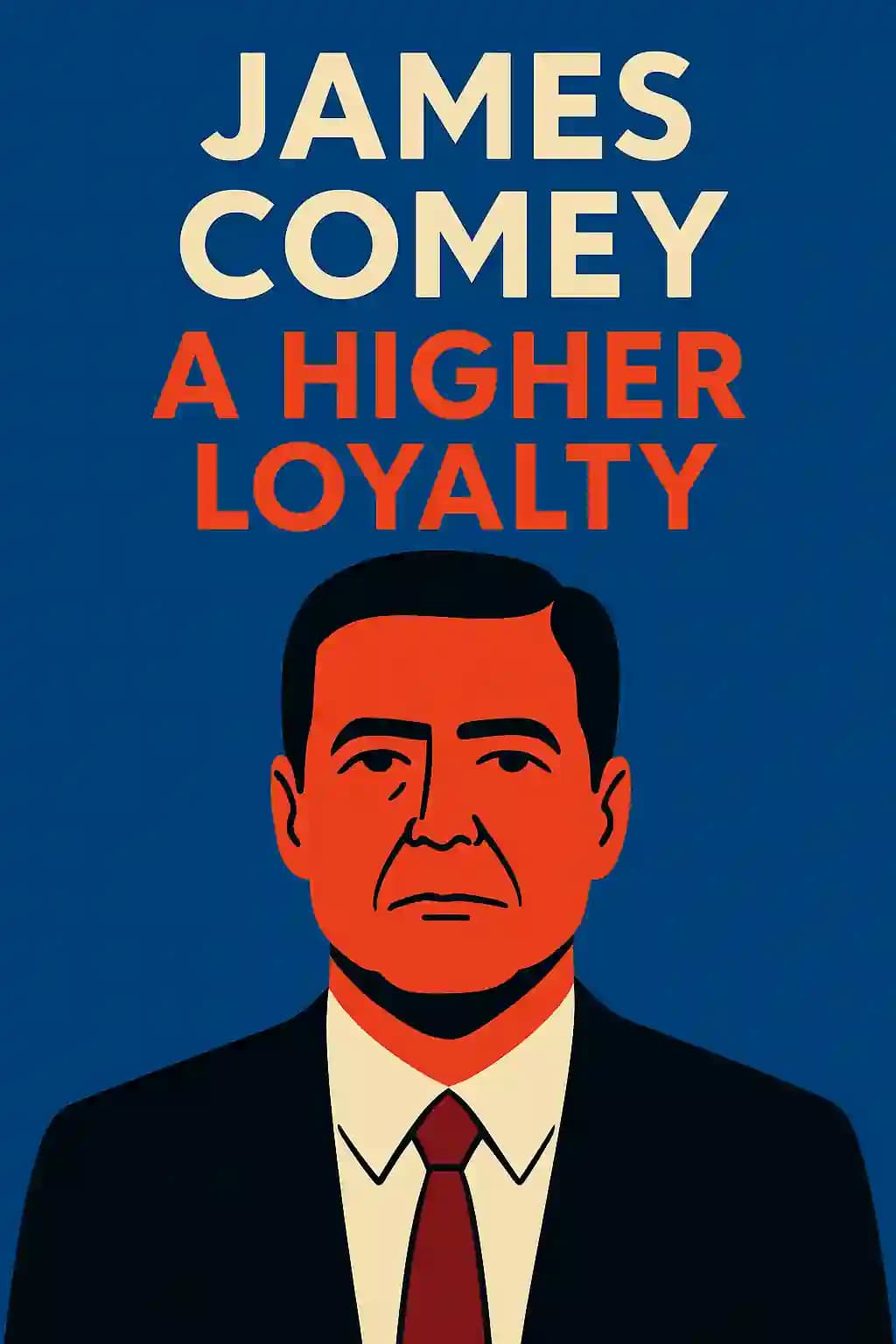
Former FBI Director James Comey's explosive memoir exposes Trump's mafia-like leadership demands and the ethical crisis dividing America. Topping bestseller lists instantly, this controversial insider account sparked presidential Twitter storms and redefined the national conversation about loyalty to truth over power.
James Brien Comey Jr. is the former Director of the Federal Bureau of Investigation (FBI) and the author of the memoir A Higher Loyalty: Truth, Lies, and Leadership. He is renowned for his decades-long career in law enforcement and his principled stance on ethical governance.
Comey is a graduate of the College of William & Mary and the University of Chicago Law School. He served as U.S. Attorney for the Southern District of New York, spearheading high-profile cases like the prosecutions of Martha Stewart and Adelphia Communications’ John Rigas. Later, he served as Deputy Attorney General under President George W. Bush.
His memoir blends personal narrative with insights into leadership, detailing his controversial handling of the Hillary Clinton email investigation and his abrupt 2017 firing by President Donald Trump. The book underscores themes of integrity, institutional accountability, and the tensions between justice and political influence.
Comey’s career, spanning public service and private-sector roles at Lockheed Martin and Bridgewater Associates, reflects his commitment to nonpartisan leadership—a principle that led him to renounce party affiliation in 2016. A Higher Loyalty became a New York Times bestseller, resonating globally as a case study in moral decision-making within polarized institutions.
A Higher Loyalty is James Comey’s memoir exploring ethical leadership through his career as FBI Director, detailing high-stakes decisions under Presidents Bush, Obama, and Trump. It defends his handling of the 2016 Clinton email investigation and recounts confrontations with Trump over loyalty demands and the Michael Flynn case, framing these events through lessons on integrity and institutional norms.
This book appeals to readers interested in political memoirs, leadership ethics, or behind-the-scenes accounts of U.S. intelligence controversies. It’s particularly relevant for those analyzing the Trump administration’s early days, FBI protocols, or bipartisan challenges in governance.
Yes, for its insider perspective on pivotal modern political events, though critics argue Comey’s self-portrayal as an ethical idealist overlooks misjudgments, such as his October 2016 letter reopening the Clinton investigation. The book balances vivid White House anecdotes with reflections on accountability and power.
Critics contend Comey’s narrative selectively justifies his actions, downplays consequences like election interference, and displays moral rigidity. Some highlight his failure to hold Bush-era officials accountable for surveillance overreach while critiquing his self-comparisons to historical figures like Caesar’s assassins.
Comey frames ethical leadership as prioritizing integrity over loyalty to individuals, emphasizing transparency, and resisting pressure to politicize institutions. He contrasts Trump’s demand for personal loyalty with Obama’s detached, process-driven approach, arguing leaders must uphold values even amid crisis.
Comey claims Trump repeatedly demanded personal loyalty, stating, “I need loyalty. I expect loyalty,” during a private dinner. This clashed with Comey’s view of impartial law enforcement, leading him to document their interactions in memos later cited in the Mueller investigation.
Comey defends his 2016 decisions, arguing protocol required public updates on the Clinton probe. He admits regret for reopening the case days before the election but insists he aimed to protect the FBI’s apolitical reputation, despite backlash over its electoral impact.
Comey praises Obama’s intellectual rigor and restraint, contrasting it with Trump’s transactional style. He notes Obama avoided private meetings to prevent perceived coercion, though critiques Obama’s public exoneration of Clinton as premature.
Unlike memoirs focused solely on policy, Comey’s book blends career lessons with whistleblower-style revelations about Trump. It shares similarities with Bob Woodward’s investigative accounts but centers on institutional ethics rather than broader administration dynamics.
Comey details Trump’s request to “let Flynn go,” interpreting it as obstruction of justice. He frames his refusal as a defense of the FBI’s independence, though critics argue his handling of the case exemplified flawed judgment.
Key lessons include humility, moral clarity, and resisting “groupthink.” Comey cites childhood experiences with bullying and later career moments—like resisting Bush-era surveillance policies—as shaping his commitment to ethical decision-making.
The book remains a touchstone for debates on executive overreach, FBI neutrality, and balancing transparency with discretion. Its themes resonate amid ongoing discussions about accountability in intelligence agencies and political leadership.
저자의 목소리로 책을 느껴보세요
핵심 아이디어를 빠르게 캡처하여 신속하게 학습
True loyalty is not blind obedience to a person or party.
Concealing the reopened investigation would have been catastrophic.
Leadership sometimes requires making difficult decisions.
We are facing a crisis of values in our country.
A Higher Loyalty의 핵심 아이디어를 이해하기 쉬운 포인트로 분해하여 혁신적인 팀이 어떻게 창조하고, 협력하고, 성장하는지 이해합니다.
A Higher Loyalty을 빠른 기억 단서로 압축하여 솔직함, 팀워크, 창의적 회복력의 핵심 원칙을 강조합니다.

무엇이든 물어보고, 목소리를 선택하고, 진정으로 공감되는 인사이트를 함께 만들어보세요.

샌프란시스코에서 컬럼비아 대학교 동문들이 만들었습니다
"Instead of endless scrolling, I just hit play on BeFreed. It saves me so much time."
"I never knew where to start with nonfiction—BeFreed’s book lists turned into podcasts gave me a clear path."
"Perfect balance between learning and entertainment. Finished ‘Thinking, Fast and Slow’ on my commute this week."
"Crazy how much I learned while walking the dog. BeFreed = small habits → big gains."
"Reading used to feel like a chore. Now it’s just part of my lifestyle."
"Feels effortless compared to reading. I’ve finished 6 books this month already."
"BeFreed turned my guilty doomscrolling into something that feels productive and inspiring."
"BeFreed turned my commute into learning time. 20-min podcasts are perfect for finishing books I never had time for."
"BeFreed replaced my podcast queue. Imagine Spotify for books — that’s it. 🙌"
"It is great for me to learn something from the book without reading it."
"The themed book list podcasts help me connect ideas across authors—like a guided audio journey."
"Makes me feel smarter every time before going to work"
샌프란시스코에서 컬럼비아 대학교 동문들이 만들었습니다

A Higher Loyalty 요약을 무료 PDF 또는 EPUB으로 받으세요. 인쇄하거나 오프라인에서 언제든 읽을 수 있습니다.
From my earliest days growing up in Yonkers, New York, I was taught the importance of integrity and standing up for what's right. My parents instilled in me a deep respect for truth and justice, values that would shape my entire career in law enforcement and public service. As I reflect on my journey from a young prosecutor to the Director of the FBI, I'm struck by how these core principles guided me through some of the most challenging moments in recent American history. I remember vividly the day I decided to become a prosecutor. I was sitting in a courtroom, watching two government lawyers present a case with passion and purpose. Their commitment to justice, regardless of politics or personal gain, inspired me. I realized then that I wanted to dedicate my life to serving a cause greater than myself. Throughout my career, I've tried to embody what I call "ethical leadership." This means always striving to do the right thing, even when it's difficult or unpopular. It means being willing to stand alone, if necessary, to uphold the rule of law and the principles of our democracy. As I often told my teams at the FBI, our job was not to win, but to do the right thing in the right way.