Here's where the science gets fascinating. Mindfulness training literally rewires the brain's leadership circuits. Dr. Richard Davidson's research, cited in "Mindfulness," shows that eight weeks of practice shifts brain activity toward what neuroscientists call the "approach system"-associated with curiosity, engagement, and resilience rather than threat detection and withdrawal.
This neuroplasticity has profound implications for leadership. When your default neural networks favor approach over avoidance, you naturally create psychological safety for your team. Your nervous system's calm becomes contagious-what researchers call "co-regulation." Team members unconsciously synchronize with your physiological state, creating either collective stress or collective calm.
"The Stress Prescription" reveals that this effect extends beyond immediate interactions. Leaders with high stress resilience create what Epel calls "stress buffers" for their entire organization. Their ability to maintain challenge mindset during uncertainty helps others reframe difficulties as growth opportunities rather than existential threats. This isn't just feel-good psychology-teams with stress-resilient leaders show measurably better performance, creativity, and retention.
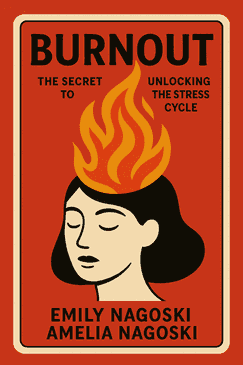
The Nagoski sisters add another layer: understanding Human Giver Syndrome in leadership contexts. Many leaders, particularly women, exhaust themselves trying to be perpetually available, positive, and self-sacrificing. This creates a dangerous model where leadership equals self-depletion. Breaking this pattern requires what they call "completing the stress cycle" and setting boundaries that model sustainable high performance rather than heroic burnout.