第1章
The Business Bible That Changed Corporate America
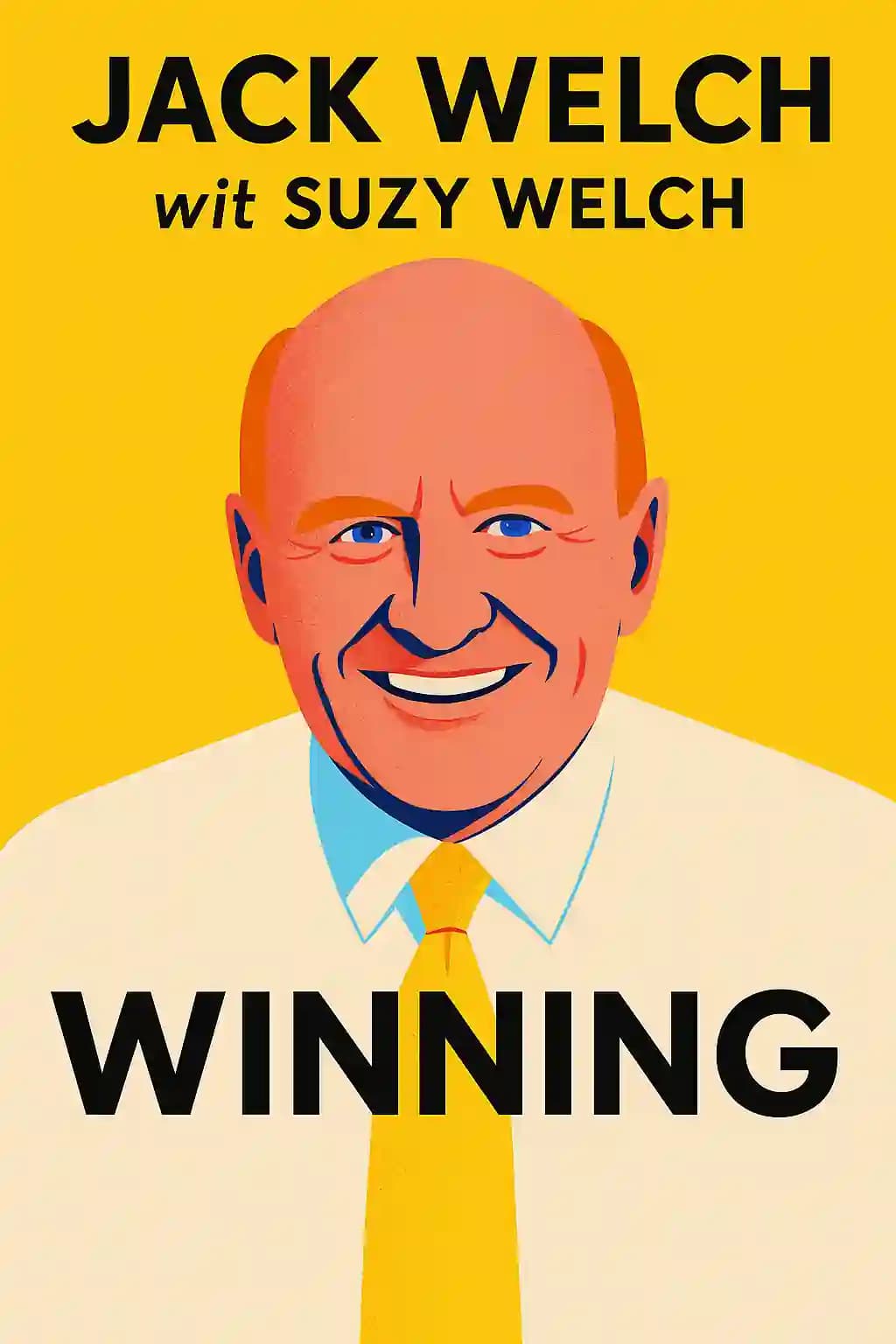
When Jack Welch's "Winning" hit bookshelves in 2005, business leaders everywhere scrambled to get their hands on it. The legendary CEO who increased GE's market value by $400 billion wasn't just sharing management tips-he was revealing the playbook that transformed American business culture. Oprah Winfrey called it "the best business book she'd ever read," while Warren Buffett praised its practical wisdom. Beyond the business elite, "Winning" resonated with everyone from frontline workers to mid-level managers seeking to navigate corporate America's complexities. What makes this book enduringly relevant is Welch's straightforward approach to success: candor, differentiation, and relentless people development. In a world where corporate speak often obscures simple truths, Welch cuts through the noise with a refreshing directness that explains why, nearly two decades later, "Winning" remains required reading in business schools and corporate training programs worldwide.
第2章
Mission and Values: The Foundation of Winning Organizations
Every organization needs a clear mission and concrete values to succeed. Unfortunately, most companies get this fundamentally wrong. They create vague mission statements filled with noble-sounding platitudes that leave employees directionless and cynical. An effective mission statement answers one simple question: "How do we intend to win in this business?" It should balance ambition with practicality, giving clear direction while inspiring people to stretch.
At GE, Welch's mission was straightforward: become "the most competitive enterprise in the world" by being #1 or #2 in every market. This concrete mission drove decisive action-fixing, selling, or closing underperforming businesses. It wasn't just words on a wall; it was a daily decision-making framework that everyone understood.
Values are equally important but require a different approach. Unlike mission statements, which should come from top leadership, values must involve everyone. The process should be iterative-leadership drafts initial versions, then refines them through company-wide input. This participation creates buy-in and ownership.
The most effective values are remarkably specific. When Welch discovered Bank One's approach under Jamie Dimon, he was initially overwhelmed by their detailed behavior lists for each value. For example, "We treat customers the way we would want to be treated" included specific behaviors like "Never let profit center conflicts get in the way" and "Don't forget to say thank you." This level of specificity eliminated ambiguity about expectations.
For values to work, they must have teeth. At GE, even high-performing managers who didn't live the values were asked to leave. This sent a powerful message throughout the organization that values weren't optional. Employee surveys showed increasing commitment to company values over time, which correlated with improved financial results.
The most devastating examples of mission-values disconnects were Arthur Andersen and Enron. Andersen abandoned its century-old auditing mission for consulting excitement, while Enron transformed from a pipeline company to a trading company without establishing appropriate values. Both collapses resulted in thousands losing their jobs and billions in shareholder value. The lesson is clear: defining meaningful missions and concrete values takes time and commitment, but this foundation is essential for sustainable success.
第3章
Candor: The Ultimate Competitive Advantage
Lack of candor might be the biggest dirty little secret in business. It blocks smart ideas, fast action, and good people from contributing fully. Yet most organizations suffer from people withholding comments, avoiding conflict, sugarcoating bad news, and hoarding information. This silence isn't just frustrating-it's expensive.
When candor exists, everything operates faster and better. It brings more people and minds into conversations, generating richer ideas and better solutions. It accelerates speed-when ideas are openly debated, they can be rapidly improved and acted upon. And it dramatically cuts costs by eliminating meaningless meetings, unnecessary reports, and fancy presentations, replacing them with real conversations about strategy, products, or performance.
So why don't we practice candor? We're socialized from childhood to soften bad news. People avoid speaking their minds because it creates messes-anger, pain, confusion-that require cleanup. While many justify this as kindness, it's actually self-interest. Avoiding candor to curry favor ultimately destroys trust and erodes both society and business.
The importance of candor in business is relatively new. Until the early 1980s, large American companies operated without it, protected by limited global competition and collegial industry relationships. Companies had layers of bureaucracy and formal social codes that discouraged confrontation. Decisions happened behind closed doors, poor performers were warehoused until retirement, and people with initiative were labeled troublemakers.
Despite candor's vital importance to winning, instilling it in any organization remains difficult and time-consuming. The key is making candor a cultural value: reward it, praise it, make heroes of those who demonstrate it, and most importantly, demonstrate it yourself. Rather than sitting through meetings where people avoid real issues, ask candid questions that transform self-congratulatory sessions into stimulating working discussions.
Though candid comments initially shock people in formal organizations, the risk is worth taking. Even without positional power, you can start introducing candor-as Welch did early in his career at Noryl. Though repeatedly cautioned about his candor being "abrasive," he credits it with making his career work by bringing more voices and energy into the conversation. Candor ultimately unclutters organizations, making them more effective despite being an unnatural act.
第4章
Differentiation: The Courage to Make Distinctions
Differentiation pushes buttons like no other management value-some swear by it while others condemn it as cruel and Darwinian. At its core, differentiation is simply resource allocation-investing where payback is highest and cutting losses elsewhere. It applies to both businesses ("hardware") and people ("software"), requiring leaders to make tough but necessary choices about where to direct limited resources.
For businesses, differentiation requires a transparent framework for investment decisions. At GE, this meant focusing on businesses that were #1 or #2 in their markets, fixing, selling, or closing the rest. This discipline stopped the ineffective practice of "sprinkling money everywhere" and eliminated emotional attachments to underperforming units. For example, GE divested numerous businesses that didn't meet these criteria, including its small appliances division and insurance operations, while heavily investing in power systems and aviation where it held market leadership.
The more controversial aspect involves separating employees into three performance categories: top 20 percent, middle 70, and bottom 10. The key is not just making these distinctions mentally, but acting on them decisively. Top performers receive abundant rewards-including substantial bonuses (often 20-40% above target), significant stock options, extensive praise, and priority access to training programs-making stars unmistakable. The middle 70%, representing the majority of valuable employees, need systematic engagement through structured training programs, regular positive feedback, and thoughtful goal setting that stretches their capabilities without breaking their spirit. The bottom 10% must go, though in candid organizations with clear expectations, these individuals typically recognize their situation and often find better fits elsewhere before formal action is needed.
Critics argue that differentiation is corrupted by politics, favoring those who kiss up to bosses. While this can happen in poorly led organizations, a candid performance system with clear expectations, multiple raters, and documented metrics prevents abuse. Regular calibration sessions where managers must defend their ratings with specific examples help ensure fairness. Another criticism is that differentiation is mean and bullying, but it's actually fair-people know where they stand, which is liberating compared to organizations where performance distinctions exist but aren't acknowledged.
Some managers claim they're "too nice" to implement 20-70-10, but protecting underperformers ultimately hurts everyone, especially the underperformers themselves who are often blindsided by eventual layoffs. This false kindness also demoralizes top performers who see mediocrity tolerated and excellence unrewarded.
Critics also argue differentiation undermines teamwork, but successful sports teams like the Yankees and top consulting firms function as cohesive units despite transparent salary differences. Many international managers claim cultural barriers prevent implementation, but GE found differentiation worked equally well globally once properly introduced with cultural sensitivity and clear communication.
The most legitimate concern involves the middle 70%, who may feel stuck in limbo. This forces better management practices, including clearer development plans, more frequent feedback, and specific guidance on improvement areas. Many middle performers, when given this clarity, find motivation to improve - some even rising to the top 20%. Ultimately, differentiation isn't just about efficiency-it's about creating an environment where everyone knows where they stand and what they need to do to improve, fostering both individual growth and organizational performance.
第5章
Leadership: The Ultimate Balancing Act
Leadership fundamentally changes your focus from growing yourself to growing others. While leaders come in many varieties, Welch identifies eight rules that consistently worked throughout his career. These rules aren't just theoretical-they're practical guidelines for navigating leadership's inherent paradoxes.
The first rule is relentlessly upgrading your team. Just as the Boston Red Sox won the World Series with the best players, successful leaders invest most of their time evaluating (ensuring the right people are in the right jobs), coaching (helping people improve performance), and building self-confidence (providing encouragement and recognition). People development shouldn't happen just in annual reviews but daily through every interaction. Budget reviews, customer visits, plant tours, even coffee breaks-all are opportunities to develop people.
The second rule is making people live the vision. Creating a vision isn't enough-leaders must make it come alive through constant communication. When Northwestern Memorial Hospital focused on "excellent patient care-from the patient's perspective," every employee from investment officers to clerks lived this mission. For vision to truly work, rewards must align with it-"Show me a company's various compensation plans, and I'll show you how its people behave."
The third rule is exuding positive energy and optimism. A leader's mood is contagious-"the fish rots from the head." Upbeat managers create upbeat teams, while pessimists breed unhappy tribes that struggle to win. Even when facing legitimate challenges, leaders must fight negativism with a can-do attitude.
The fourth rule is establishing trust through candor, transparency, and credit. Leadership can be a power trip for some who hoard information and control, but this drains trust from a team. True leaders never steal credit for others' ideas or "kiss up and kick down." They take responsibility in bad times and distribute praise generously in good times.
The fifth rule is having courage to make unpopular decisions and gut calls. Consensus builders and people-pleasers struggle as leaders because tough decisions inevitably create resistance. Leaders must listen and explain clearly but move forward without dwelling or cajoling. "You are not a leader to win a popularity contest-you are a leader to lead."
The sixth rule is probing with curiosity that borders on skepticism. As a leader, your job is having questions, not answers. You must be comfortable looking like "the dumbest person in the room," constantly asking "What if?" and "Why not?" But questioning alone isn't enough-you must ensure your concerns trigger action.
The seventh rule is inspiring risk-taking and learning by example. Leaders must create environments where people feel safe taking intelligent risks. This means celebrating attempts, not just successes, and sharing your own failures and lessons learned.
The eighth rule is celebrating achievements. There's simply not enough celebrating happening in workplaces anywhere. Celebrating makes people feel like winners and creates an atmosphere of recognition and positive energy. Work is too much a part of life not to recognize moments of achievement.
第6章
Hiring: The Foundation of Winning Teams
Nothing matters more in winning than getting the right people on the field. All the clever strategies and advanced technologies in the world are nowhere near as effective without great people to put them to work. The foundation of successful hiring begins with three essential screens that every candidate must pass: integrity (people who consistently tell the truth, keep their word, and take responsibility for both successes and failures), intelligence (which extends beyond formal education to encompass intellectual curiosity, problem-solving ability, and adaptability), and maturity (demonstrated through the ability to handle stress, setbacks, and success with equal parts joy and humility, while maintaining professional composure).
Beyond these foundational elements, Welch's 4-E (and 1-P) framework has proven consistently effective across businesses and borders, regardless of industry or culture. The first E is positive energy-people who naturally thrive on action and activity, relish change rather than resist it, and genuinely love both work and play. These individuals bring an infectious enthusiasm that elevates team performance and creates momentum.
The second E is the ability to energize others-inspiring teams to take on seemingly impossible challenges and enjoy the journey. Charlene Begley exemplified this trait, rising from financial trainee to CEO of GE's rail business through her remarkable ability to galvanize teams. She consistently transformed underperforming units by creating an environment of possibility and achievement. Similar success stories include Jeff Immelt, who energized GE's medical systems business, and Dave Calhoun, who revitalized multiple GE divisions through his ability to inspire teams.
The third E is edge-the courage to make tough yes-or-no decisions without complete information, avoiding the common trap of analysis paralysis. This includes making difficult personnel decisions, killing failing projects early, and pursuing opportunities when others hesitate. The fourth E is execute-the ability to get jobs done through resistance and obstacles, turning plans into results consistently. Finally, look for passion-authentic excitement about work, colleagues winning, and continuous learning. Passionate people usually aren't just excited about work-they have juice for life in their veins, pursuing interests and challenges both inside and outside the workplace.
When hiring senior-level leaders, four highly developed characteristics matter beyond the basic framework: authenticity (genuine self-confidence and conviction that makes leaders bold, decisive, and naturally likable), the ability to see around corners (a sixth sense to anticipate market changes and adapt before competitors), surrounding themselves with people smarter than they are (having the confidence and courage to assemble teams that challenge them and drive innovation), and heavy-duty resilience (the ability to learn from mistakes, rebound with renewed conviction, and maintain optimism through challenges).
For effective interviewing, follow these proven practices: never rely on one meeting or interviewer's opinion, have multiple people interview candidates from different perspectives, deliberately exaggerate job challenges to test responses and commitment, and thoroughly check references beyond those provided, including informal network connections. The single most revealing interview question explores why candidates left previous jobs-their detailed answers reveal expectations, values, and true motivations. Every hiring mistake is ultimately the manager's responsibility to fix quickly, and even the most experienced leaders only get it right about 80% of the time. This reality underscores the importance of continuous evaluation and swift action when mistakes become apparent.
第7章
Strategy: A Living, Breathing Game
Strategy is often portrayed as a high-brain scientific methodology requiring arduous intellectualized number crunching and hundred-page reports. In reality, strategy is straightforward: you pick a general direction and implement like hell. When stripped of all noise, strategy is simply resource allocation-making clear-cut choices about how to compete.
You cannot be everything to everybody, regardless of your business size. Even corner stores understand this-like Upper Crust Pizza focusing entirely on product excellence despite cramped space and minimal service, or Gary Drug thriving against CVS through personalized service and neighborhood-specific inventory. At GE, the actual strategy was moving away from commoditized businesses toward high-value technology products and services while upgrading human resources. This strategy lasted twenty years because it was based on two powerful principles: commoditization is evil and people are everything.
Making strategy real requires figuring out the big "aha" to gain sustainable competitive advantage. A powerful example is GE's medical business in 1976, when Walt Robb's team created the Continuum Series of CT scanners that could be upgraded rather than replaced-changing the playing field and making GE number one for decades.
Any strategy, no matter how brilliant, fails without the right people implementing it. When GE pushed toward product services, they demonstrated commitment by appointing Ric Artigas, a respected PhD and engineering leader, to head a separate P&L for Power Systems' services. Strategy implementation also requires matching people to business types. In commoditized businesses like motors, detail-oriented fighters like Lloyd Trotter excel. For differentiated products like jet engines, visionaries like Brian Rowe thrive-he was outspoken, passionate about aviation, and willing to place billion-dollar bets on long-term investments.
Contrary to conventional wisdom, best practices can provide sustainable competitive advantage when companies continually improve upon them. GE borrowed great ideas from companies like Wal-Mart and Toyota, while also transferring successful practices internally. Yum! Brands demonstrates the power of best practice sharing across its five restaurant chains. CEO David Novak considers each outlet a "laboratory of ideas" and sees sharing learning as the major advantage of scale. When Taco Bell improved drive-through service time from 240 to 148 seconds, KFC immediately adopted these practices and improved their own service time by 30 seconds.
Strategy execution requires finding the right "aha," putting the right people in place, and relentlessly executing through best practices that continuously improve-making strategy as straightforward as running a corner store with sauce that customers love.
第8章
Work-Life Balance: A Personal Equation
Work-life balance has evolved from primarily a working mothers' issue to a broader concept about priorities and values for everyone. Welch outlines five realities about how bosses view work-life balance: First, a boss's top priority is competitiveness, not your happiness. While they want you to be happy, their primary goal is making your job so exciting that your personal life becomes less compelling. They fundamentally want all of you-your brain, energy, and commitment-to compete effectively.
Second, most bosses will accommodate work-life challenges if you've earned it with performance. The workplace operates on a chit system-people with great performance accumulate chits they can trade for flexibility. Susan Peters' story illustrates this perfectly: after years of stellar performance at GE, when she finally needed flexibility for family reasons, the company readily accommodated her. Contrast this with "Carl," who requested working from home for yoga after just one year of unremarkable performance.
Third, work-life policies in company brochures are mainly for recruiting purposes. Real work-life arrangements happen through one-on-one negotiations between bosses and individuals. Those who constantly invoke "But the company says...!" regarding policies get branded as clock-watchers who care more about logging hours than winning.
Fourth, people who publicly struggle with work-life balance get pigeonholed as ambivalent, entitled, uncommitted, or incompetent. Companies may initially tiptoe around self-identified "work-life poster children" to appear politically correct, but eventually these constant moaners get held back. Top performers rarely complain about balance issues-they're typically too smart and organized to let problems persist.
Fifth, even the most accommodating bosses believe that work-life balance is your problem to solve. Only you can determine your values, priorities, and acceptable trade-offs. The best practices for achieving balance include: keeping your head in whatever game you're at (compartmentalizing work and home); having the mettle to say no to demands outside your chosen balance plan; and ensuring your plan doesn't create an "everyone's-happy-but-me syndrome" where you fulfill everyone else's needs but your own.
Ultimately, balance is iterative-you improve with experience until "it's just what you do." Work-life balance isn't about finding perfect equilibrium but making conscious choices about what matters most to you and accepting the consequences of those choices. It's a personal swap-a deal you make with yourself about what you keep and what you give up.
第9章
The Legacy of Leadership: Making Others Better
Throughout "Winning," Welch returns to a fundamental truth: business is about people. The best leaders understand that their success isn't measured by personal achievements but by how many people they help grow and succeed. Leadership isn't just about you-it's about them. This principle guided Welch's decisions at GE, from restructuring divisions to implementing development programs that became industry standards.
This perspective transforms how we approach every aspect of business. It means creating environments where candor flourishes, where differentiation happens fairly, where missions inspire and values guide behavior. At GE, Welch instituted "Work-Out" sessions where employees could challenge their bosses' ideas openly, and managers had to respond on the spot. He championed the "vitality curve" for performance reviews, ensuring transparent feedback and fair advancement opportunities. It means hiring for energy and passion, promoting based on performance, and celebrating achievements generously through recognition programs and meaningful rewards.
The most powerful companies aren't just financially successful-they're vehicles for human growth and community improvement. When GE pushed into West Africa despite high AIDS rates among workers, they demonstrated how winning companies can launch education programs, provide medical facilities, and subsidize expensive drugs, improving hundreds of lives. The program became a model for corporate healthcare initiatives in developing regions. In Slovakia, Chris Navetta transformed a money-losing state enterprise into a profitable operation while building hospital wings, remodeling schools, and refurbishing orphanages. These initiatives didn't just improve communities; they created loyal workforces and sustainable business environments.
Welch hopes his legacy isn't about the $400 billion in market value he helped create at GE, but about helping people understand that leadership means helping others grow and succeed. He implemented the "Session C" review process, where leaders spent thousands of hours annually discussing talent development. He wants to be remembered as an advocate for candor, meritocracy, and believing everyone deserves a chance. His leadership philosophy emphasized that success comes from unleashing people's potential through honest feedback, clear expectations, and genuine opportunities for growth.
Despite his remarkable success, Welch readily acknowledges his mistakes-bad acquisitions like Kidder Peabody, wrong hires in key positions, missed opportunities in emerging markets, and two failed marriages. His humility reminds us that leadership isn't about perfection but about learning, growing, and helping others do the same. He often shared these failures in leadership development sessions, using them as teaching moments.
In the end, winning in business isn't just about financial results-it's about creating organizations where people thrive, where work has meaning, and where everyone has the opportunity to grow. Under Welch's leadership, GE became known as "CEO factory," producing more top executives for other major companies than any other organization. It's about building something that matters, something that makes a difference in people's lives. That's the true measure of winning, and it's achieved through developing leaders who understand that their success lies in the success of others.