第1章
A Dystopian Vision That Predicted Our Surveillance Society
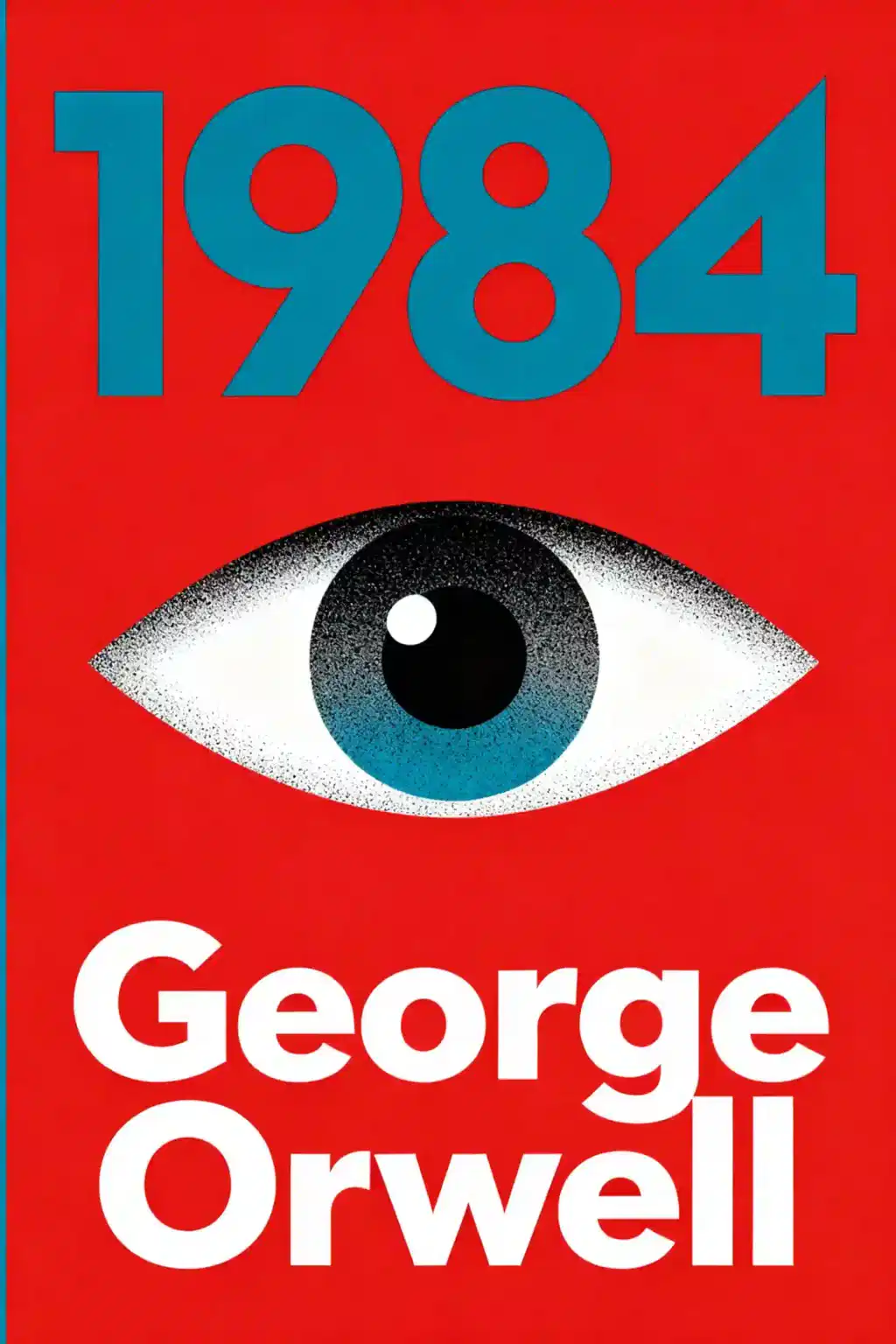
In 1921, a Russian naval engineer named Yevgeny Zamyatin completed a manuscript that would never be published in his homeland. Written during the tumultuous aftermath of the Russian Revolution, "We" became the first novel banned by the Soviet censorship board. George Orwell, who read a French translation, credited it as the direct inspiration for "1984." Aldous Huxley, though he denied having read it, created a remarkably similar world in "Brave New World." Kurt Vonnegut acknowledged its influence on his own work. This pioneering dystopian novel, written nearly a century ago, anticipated our modern surveillance society with uncanny precision. When Apple used imagery from "1984" for its famous Super Bowl commercial, they were unwittingly paying homage to Zamyatin's original vision. Today, as we navigate a world of digital surveillance, algorithmic control, and the tension between security and freedom, "We" remains not just relevant but prophetic.
第2章
The Perfect Society: Mathematics, Transparency, and the Abolition of Freedom
In the United State of "We," life has achieved mathematical perfection. Citizens are no longer individuals but "Numbers," each assigned an alphanumeric designation. Our narrator, D-503, is the brilliant engineer designing the Integral-a spaceship that will export the State's perfect rationality to other planets. The society functions with mechanical precision, every action governed by the Tables of Hourly Commandments that dictate when to eat, work, walk, and even have sex.
"We have established that happiness and freedom are incompatible," D-503 explains with mathematical certainty. "In their savage state, primitive humans foolishly chose freedom, and what did it bring them? Centuries of misery." The United State has solved this equation by eliminating choice entirely. Citizens live in glass apartments where privacy is not merely discouraged but criminalized-transparency is both literal and metaphorical. The only time curtains may be lowered is during scheduled "sexual hours," allotted via pink tickets from the Sexual Bureau.
This world has evolved beyond the chaotic individualism that once plagued humanity. The collective "We" has replaced the primitive "I." Even language has been purged of possessive pronouns-nothing belongs to anyone because everyone belongs to the State. The Well-Doer (the translator's approximation of a term closer to "Benefactor") rules with absolute authority, annually "elected" in a unanimous ceremony that reaffirms the State's perfect unity.
What makes Zamyatin's vision so disturbing is D-503's genuine enthusiasm for this system. He doesn't see himself as oppressed but liberated from the burden of choice. "The Tables have transformed us from wild beasts into mathematical precision," he rhapsodizes. "Every morning, millions wake at the same hour, millions begin work at the same second. One united body with millions of hands, we merge into a single magnificent equation!"
When we first meet D-503, he believes with religious fervor in the righteousness of his society. The ancient concept of privacy seems as barbaric to him as human sacrifice might to us. His mathematical mind finds beauty in straight lines, right angles, and perfect predictability. The messy irrationality of nature-the -1 that cannot be calculated-represents everything he fears. Yet this is precisely where his transformation begins.
第3章
The Awakening: Desire, Jealousy, and the Forbidden Soul
D-503's perfectly ordered world begins to unravel when he meets I-330, a woman who defies categorization. Unlike the childlike, round O-90 assigned as his sexual partner, I-330 is angular, sharp, and unpredictable. She speaks in cryptic statements, smokes cigarettes (forbidden), drinks alcohol (forbidden), and wears provocative ancient clothing (absolutely forbidden). Most dangerously, she thinks for herself.
"When you press against her," D-503 writes, "you feel as if you're falling into a sweet abyss." Their encounters awaken something primitive within him-what he describes as "hairy paws" emerging from beneath his civilized exterior. He begins experiencing unfamiliar emotions: jealousy when he suspects I-330 has other lovers, possessiveness though nothing should be possessed, and desire that extends beyond designated sexual hours.
The medical authorities diagnose him with a terminal condition: he has developed a "soul"-an ancient ailment they thought had been eradicated. This soul manifests as imagination, emotion, and individuality-all dangerous threats to the collective harmony. The doctor explains his condition with clinical detachment: "Your case is serious. It appears that a film has formed over your mind's surface, making you susceptible to infection. You're no longer a perfect mirror, reflecting only what is shown to you-you've begun to generate images of your own."
As D-503 falls deeper into forbidden love, his journal entries (which form the novel's structure) become increasingly fragmented and poetic. The mathematician who once found beauty only in equations now sees wonder in clouds, birds, and the unpredictable movements of I-330's eyebrows. He begins to question the fundamental premises of his society: "If human happiness has been fully solved, why do I feel this strange ache? If our mathematical system is perfect, why does she haunt my dreams?"
Through D-503's awakening, Zamyatin explores how authentic humanity resists even the most comprehensive systems of control. The novel suggests that what makes us human-our capacity for love, creativity, and doubt-cannot be permanently suppressed, even by the most sophisticated social engineering. The "soul" emerges despite all efforts to eradicate it.
第4章
Beyond the Green Wall: Nature, Freedom, and the Mephi Revolution
The United State is separated from the natural world by the Green Wall-a massive transparent barrier that keeps wilderness at bay. Citizens are taught that nothing exists beyond this wall except savage, primitive life forms. The Two Hundred Years' War eliminated all but 0.2% of the global population, leaving only the perfectly rational citizens of the United State.
In one of the novel's most powerful sequences, I-330 takes D-503 beyond this wall to meet the "Mephi"-humans who escaped the United State and live in harmony with nature. Named after Mephistopheles, the revolutionary spirit that challenges established order, these people represent everything the United State has rejected: emotion, spontaneity, and biological connection.
"Look at them," I-330 tells D-503 as they observe people with hair-covered bodies dancing around a fire. "They preserved the warmth of chaotic energy while you were becoming perfect machines." The Mephi explain their philosophy: the universe exists in constant tension between entropy (order, stasis, death) and energy (chaos, creation, life). The United State represents entropy's ultimate triumph-perfect order achieved through the elimination of all unpredictability.
The forest beyond the Wall overwhelms D-503's senses. Having lived his entire life among straight lines and right angles, the chaotic profusion of trees, plants, and animals initially terrifies him. "Everything was unequation, irrationality, menace," he writes. Yet gradually, he begins to see beauty in this disorder-a different kind of mathematics based on spirals, fractals, and organic growth rather than the rigid geometry of the United State.
This section reveals Zamyatin's profound ecological awareness, unusual for 1921. The Green Wall symbolizes modern humanity's separation from nature, our attempt to create perfectly controlled environments that deny our biological origins. The novel suggests this separation is both impossible and destructive-our "hairy paws" remain beneath the surface, connecting us to the natural world we try to transcend.
The Mephi aren't primitive regressives but represent a synthesis-people who embrace technology while remaining connected to their natural humanity. They plan to use the Integral, D-503's spaceship, not to colonize other planets with mathematical perfection but to liberate the United State itself. "We are the half you have lost," I-330 explains. "Like hydrogen and oxygen separated, we must reunite to create the water of life."
第5章
The Operation: Surgical Happiness and the Death of Imagination
As the Mephi revolution gains momentum, the Well-Doer announces the "Great Operation"-mandatory brain surgery to remove the "center of fancy" through X-ray treatment. This procedure will eliminate imagination permanently, creating "hundred percent happiness" by removing the capacity for doubt, creativity, or dissatisfaction. The announcement sends shockwaves through the One State, with many citizens eagerly embracing what they see as liberation from the burden of individual thought.
"Tomorrow," the State newspaper proclaims, "we eliminate the last barrier to mathematical perfection. The ancient dreamers spoke of a time when humans would no longer know desire or suffering. We have achieved what they could only imagine-and tomorrow, we will eliminate imagination itself." The propaganda machine works overtime, presenting the Operation as the culmination of human progress, the final step in achieving the perfect society where uncertainty and emotional turmoil become relics of the past.
The Operation represents the novel's most chilling prediction, made more disturbing by its voluntary nature. While Zamyatin couldn't have anticipated modern neuroscience, he foresaw how technology might target the biological foundations of human consciousness. His vision eerily prefigures contemporary developments in neurotechnology, from deep brain stimulation to mood-regulating implants. Today's debates about mood-altering drugs, brain-computer interfaces, and neurological manipulation echo his fundamental question: Would perfect happiness be worth the sacrifice of what makes us human? The novel suggests that the price of such happiness - the loss of creativity, free will, and individual identity - is catastrophically high.
D-503 initially celebrates the Operation as salvation from his painful awakening, viewing it as an escape from the torment of his newfound emotions and forbidden love. "I shall be like everyone else," he writes with relief. "I will no longer feel this strange splitting of consciousness, no longer hear that voice questioning everything." His internal struggle intensifies as the Operation date approaches, representing the broader conflict between conformity and individuality. When I-330 gives him an ultimatum-choose between the Operation's "hundred percent happiness" or her-he chooses her, despite knowing this means continued suffering, highlighting the profound value of authentic human experience over artificial contentment.
The novel's tragic power emerges as citizens voluntarily march toward their own mental mutilation. Zamyatin describes the process in haunting detail, showing how people willingly surrender their humanity for the promise of perpetual peace of mind. "They were like tractors in human form," D-503 observes of the first operated patients. "Their eyes were empty of thought... they no longer looked like humans but like human-shaped mechanisms." Yet these mechanisms are perfectly content, freed from doubt and desire, raising disturbing questions about the nature of happiness itself.
This section contains some of Zamyatin's most philosophical passages, exploring whether consciousness itself might be an evolutionary mistake-a cosmic error that brought suffering to beings that might otherwise have remained in animal contentment. The Well-Doer argues that consciousness created an unbridgeable gap between humans and happiness, and the Operation merely corrects nature's mistake. This perspective challenges readers to consider whether the capacity for suffering is inseparable from the capacity for joy, and whether true human fulfillment requires the full spectrum of emotional experience, including pain and uncertainty.
第6章
Revolution and Betrayal: The Fragility of Freedom
As the Day of Unanimity approaches-when citizens will "elect" the Well-Doer for another term-I-330 and the Mephi prepare their revolution with meticulous planning and growing support among the Numbers. The historic moment arrives when, for the first time in the United State's history, hands rise in opposition during the election. This unprecedented act of defiance triggers immediate chaos as the perfectly calibrated social machine experiences its first major malfunction. Birds, symbols of untamed nature and freedom, breach the Green Wall, which has been strategically damaged in several sections. Numbers who haven't yet undergone the Operation suddenly experience forbidden emotions, engaging in spontaneous gatherings, forming unauthorized relationships, and participating in activities outside the rigid framework of the Tables.
D-503's experience of this temporary freedom is deeply conflicted and transformative. He oscillates between moments of pure joy and paralyzing terror, his mathematical mind struggling to process events that defy logical explanation. "Everything certain has ended," I-330 tells him, her eyes shining with revolutionary fervor. "Nobody knows what will happen tomorrow-isn't that wonderful?" This uncertainty, which I-330 embraces as liberation, represents D-503's greatest psychological challenge. His mathematical mind, trained to seek patterns and predictability, craves the comfort of equations and defined outcomes, even as his newly awakened soul experiences glimpses of authentic freedom.
The revolution's inherent fragility becomes increasingly apparent as the State demonstrates its overwhelming capacity for control. The Guardians implement a systematic crackdown, methodically identifying and detaining anyone without Operation certificates. They erect a sophisticated temporary electric wall to contain the uprising, effectively isolating different sectors of the city. The Well-Doer's execution machine stands ready in the city center, a stark reminder of the consequences of dissent, as public executions become more frequent.
In this atmosphere of mounting tension and uncertainty, D-503 makes a decision that will have far-reaching consequences. Torn between his passionate love for I-330 and the deep-rooted conditioning of his entire life, he visits the Bureau of Guardians to make a full confession. This act, which he perceives as a form of psychological suicide that might lead to personal redemption, instead becomes his ultimate betrayal of the revolutionary cause. The ironic twist comes when he discovers that S-, the Guardian to whom he's been confessing, is actually a member of the resistance, rendering his confession not just meaningless but potentially devastating to the revolution.
This section powerfully illustrates how revolutions often collapse from within, undermined by personal betrayals, strategic miscalculations, and the persistent pull of ingrained social conditioning. Zamyatin, writing in the aftermath of the Russian Revolution's transformation into authoritarian control, provides a prescient analysis of how quickly revolutionary ideals can be corrupted or abandoned. The novel suggests that true freedom isn't a fixed destination but rather an ongoing struggle against both external oppression and our internal yearning for certainty and security. The psychological complexity of D-503's betrayal serves as a mirror for the larger societal tensions between the desire for freedom and the comfort of controlled existence.
第7章
The Torture Chamber: Technology, Pain, and Resistance
After the revolution fails, I-330 is captured and brought to the Gas Chamber-the United State's technologically advanced torture facility. Unlike the crude methods of ancient inquisitors who relied on physical implements of pain, this chamber represents the pinnacle of scientific progress turned toward human subjugation. The facility employs precisely calibrated gas mixtures to inflict maximum pain without killing the victim, allowing for repeated sessions. The process is clinical, scientific, and considered entirely humane by the State, which views it as medical treatment for the disease of dissent, much like how a doctor might treat a bacterial infection.
D-503, now "cured" by the Operation that removed his imagination, watches with empty eyes as I-330 endures multiple sessions under the Bell. "She was very pale, and her eyes were closed," he reports without emotion, his clinical observations a stark contrast to his former passionate descriptions of her. "When they removed her, her lips were bitten through, yet she did not speak." Even after three sessions-which break most prisoners immediately-she remains resolute in her silence, refusing to betray her comrades in the MEPHI resistance movement.
This scene forms the novel's emotional core, though D-503 himself can no longer feel its significance. The operated narrator describes with mechanical precision the torture of the woman he once loved, unable to connect with his former passion or recognize the profound tragedy unfolding before him. His reports read like scientific observations: "The face grew whiter, the eyes larger, the lips bluer." The clinical language makes the horror more acute-we feel what D-503 cannot, creating a devastating dramatic irony that heightens the scene's impact.
Zamyatin's portrayal of torture anticipates how modern authoritarian regimes would medicalize punishment, treating dissent as mental illness rather than political opposition. The Gas Chamber, with its pristine white walls, scientific apparatus, and white-coated medical staff, represents the perversion of technology from serving human needs to controlling human beings. This transformation of torture into "treatment" mirrors real-world practices in various totalitarian states, where psychiatric hospitals became tools of political repression. The Well-Doer explains this philosophy directly: "True love for humanity must be inhuman and cruel. Like fire, which burns what it touches, truth's inevitable mark is pain."
Through I-330's resistance, Zamyatin offers his most powerful statement about human dignity and the indomitable nature of the human spirit. Even as her body fails under repeated torture sessions, her will remains unbroken, demonstrating that physical control does not equate to spiritual dominance. She embodies what the State cannot calculate or control-the capacity for self-sacrifice that transcends rational self-interest and mathematical precision. Her silence in the face of torture speaks more eloquently than any confession, becoming a testament to the limitations of technological control over human consciousness.
第8章
The Aftermath: Reason's Hollow Victory
The novel's final entries, written after D-503's Operation, reveal a man transformed into a mechanical shell of his former self. His writing, once rich with metaphor, emotional depth, and philosophical musings, becomes clinically flat and devoid of imagination. "I am healthy," he reports with mechanical precision. "I smile continuously, as is normal for a normal human being." The splinter in his mind-his soul-has been surgically excised, leaving him feeling "light and empty," a haunting echo of his former passionate self.
With chilling detachment characteristic of the newly "cured," he describes betraying I-330 and his former companions to the authorities. Where once he agonized over loyalty and love, he now states with disturbing simplicity, "I cannot understand why this once seemed difficult." He sits alongside the Well-Doer, methodically identifying other dissidents with the same emotional distance one might apply to solving a mathematical equation. The State has erected a temporary Wall of high-voltage waves around the city, and the Guardians process the remaining rebels with ruthless efficiency, like a machine sorting defective parts.
The psychological transformation of D-503 is particularly evident in his changed relationship with numbers and rationality. Before the Operation, he found beauty in mathematics while still struggling with human emotions. Now, his mathematical precision serves only to highlight the complete erasure of his humanity. His reports become like computer logs - precise, factual, and utterly soulless.
The novel ends with D-503's mathematical certainty: "Reason must prevail." Yet this victory rings devastatingly hollow. The human being whose profound awakening we've witnessed - who discovered love, freedom, and the beauty of uncertainty - has been reduced to a mere recording instrument, a perfect cog in the State's machinery. His final words-"We shall win. For Reason must prevail"-contain a tragic irony that he himself can no longer comprehend, having lost the capacity to recognize irony itself.
Zamyatin leaves us with the image of a society that has achieved perfect stability through the most pyrrhic of victories - by eliminating the very essence that makes life worth living. The United State continues its mechanical existence, perhaps eternally, having solved the human equation by removing its most essential variable-humanity itself. The price of perfect order is revealed to be the death of joy, creativity, and love.
Yet subtle hints suggest the revolution isn't entirely defeated. Birds still fly freely over the Wall, symbols of natural freedom that persist despite the State's control. The Mephi remain beyond its boundaries, representing the unconquerable wild spaces of human possibility. Most significantly, I-330's unbroken silence under torture suggests that something in the human spirit remains fundamentally inviolable. The mathematical perfection of the United State contains an unsolvable problem-the irrational, incalculable essence of human consciousness that will eventually resurface, no matter how thoroughly it's suppressed. These small acts of resistance suggest that the cycle of rebellion and repression will continue, as integral to human nature as the imagination the State seeks to destroy.
第9章
The Legacy: Prophetic Warnings for Our Digital Age
Written a century ago, "We" anticipated the central conflicts of our digital era with uncanny precision. Zamyatin foresaw a world where privacy would be eliminated not primarily through force but through ideology-the belief that transparency serves the collective good. The glass apartments of his United State find their equivalent in our voluntary self-exposure on social media, our acceptance of constant surveillance, and our willingness to trade privacy for convenience.
The Tables of Hourly Commandments that dictate every action in the United State resemble our algorithmic recommendations that increasingly shape our choices. The pink tickets that regulate sexual relationships parallel our dating apps that quantify and systematize human connection. Even the Operation that removes imagination has its echo in technologies that promise to optimize human experience by eliminating "negative" emotions.
Most profoundly, Zamyatin anticipated how happiness itself would become weaponized against freedom. "We have convinced our citizens that freedom is a disease," the Well-Doer explains, "and happiness is the cure." This framing-happiness versus freedom rather than happiness through freedom-defines many contemporary debates about technology, security, and social organization.
The novel's enduring power comes from its refusal to offer simple answers. Zamyatin acknowledges the genuine appeal of the United State's perfect order. D-503's initial happiness isn't feigned-he truly believes in the mathematical beauty of his world. The chaos beyond the Green Wall isn't romanticized as perfect either; it contains its own dangers and suffering. The novel asks whether the messy, painful experience of being fully human is worth preserving in a world that offers painless, perfect contentment.
"We" stands as both warning and affirmation-a caution against surrendering our complicated humanity for algorithmic perfection, and a testament to the persistent, irrational human spirit that continues to ask questions even when all answers have been provided. In our age of artificial intelligence, digital surveillance, and engineered consent, Zamyatin's century-old vision speaks with renewed urgency about what we might lose in our pursuit of frictionless existence. The square root of minus one-that irrational element that cannot be calculated-remains our most precious possession.