第1章
A Nightmare Vision of Totalitarian Control
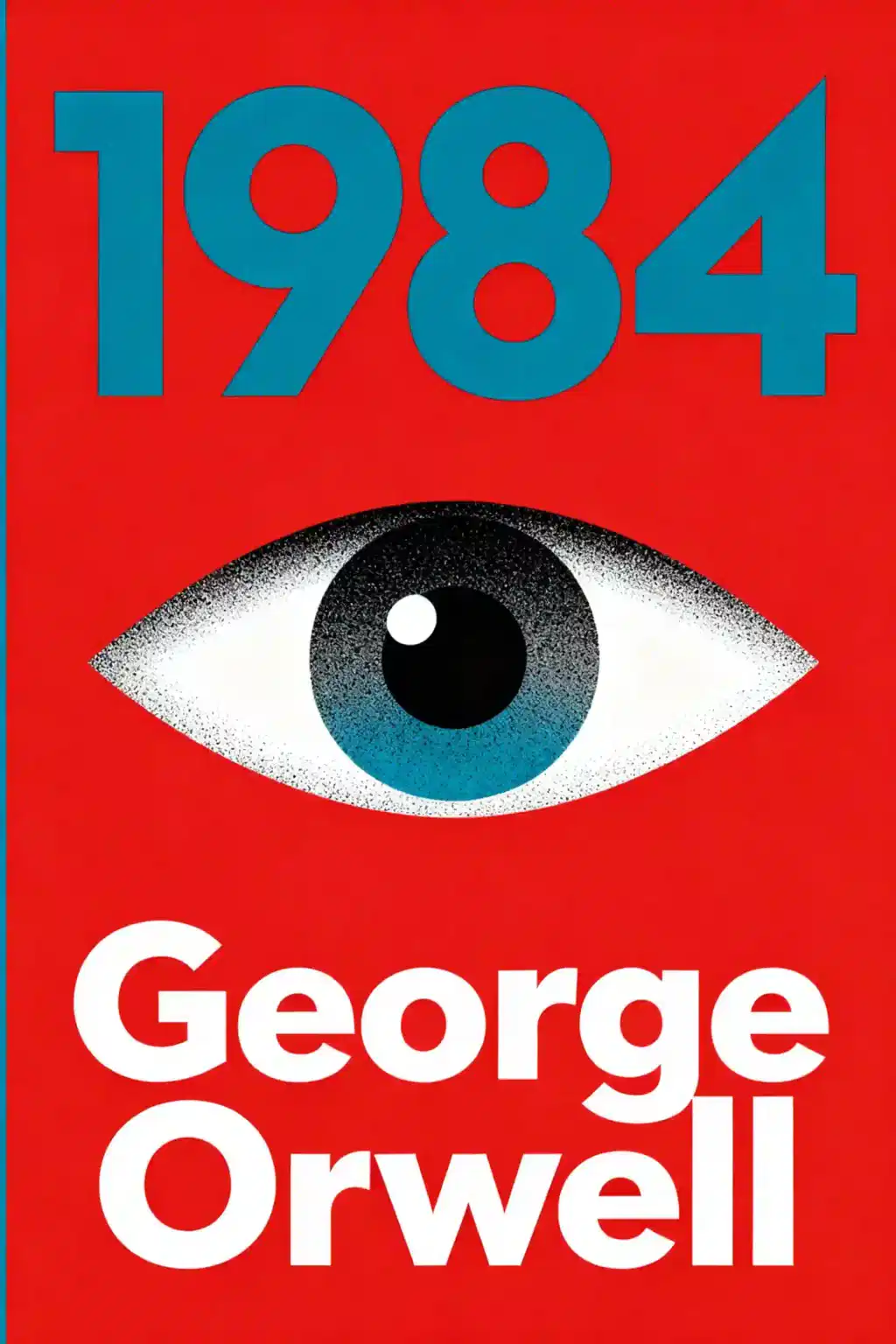
Imagine waking up in a world where your every thought is monitored, where history changes daily according to government whims, and where loving another person is the most dangerous act of rebellion possible. This is the haunting reality George Orwell created in his masterpiece "1984," a work so profound that its concepts-Big Brother, doublethink, thoughtcrime-have permeated our cultural consciousness. Published in 1949 as Orwell lay dying from tuberculosis, this dystopian vision has sold over 30 million copies worldwide and remains eerily relevant. The novel has been embraced across the political spectrum, with figures from Christopher Hitchens to Glenn Beck citing its warnings. When Edward Snowden revealed mass surveillance programs in 2013, sales of "1984" skyrocketed 9,500%, suggesting Orwell's nightmare continues to resonate with readers confronting modern threats to privacy and truth.
第2章
The Oppressive World of Oceania
Winston Smith exists in a dystopian reality where three massive superstates wage endless war, governments monitor every breath, and truth itself is malleable. As a low-ranking member of the ruling Party in London - now absorbed into the superstate Oceania - Winston performs the Orwellian task of falsifying reality at the Ministry of Truth. His daily work involves meticulously altering historical documents, photographs, and news articles to match the Party's constantly shifting narrative. Those who disappear in midnight raids become "unpersons," and Winston must carefully erase their entire existence from every record, article, and photograph - effectively removing them from history itself.
The physical deterioration of society mirrors its moral decay. Victory Mansions, Winston's apartment building, stands as a crumbling monument to neglect, permeated by the stench of boiled cabbage and deteriorating rag mats. The building's elevator functions sporadically, forcing residents to climb seven flights of stairs. Omnipresent telescreens - devices that simultaneously blast propaganda and monitor citizens' every movement and whisper - cover every wall, their surveillance inescapable. Even Winston's small acts of rebellion carry enormous risk, like his diary purchased from a prole district junk shop - its blank pages representing both hope and certain death if discovered.
The Party's psychological control proves far more insidious than its physical dominance. Citizens must master complex mental gymnastics to survive. "Crimestop" requires instantaneous self-censorship, detecting and halting thoughtcrime before it fully forms in the mind. "Doublethink" demands the ability to simultaneously accept two contradictory beliefs as true - a cognitive dissonance elevated to an art form. The Party's three primary slogans perfectly encapsulate this manipulation: "War is Peace" (constant war maintains domestic peace), "Freedom is Slavery" (independence leads to misery), and "Ignorance is Strength" (blind faith empowers the collective). The Party further tightens its grip through Newspeak - a systematically simplified language that eliminates words for complex concepts, making it increasingly impossible to even conceive of rebellion or freedom.
Winston's initial acts of resistance seem almost pathetically small - purchasing a diary, writing his private thoughts, maintaining a small corner of mental independence. Yet in Oceania, these tiny gestures represent monumental defiance. When he writes "DOWN WITH BIG BROTHER" in his diary, each letter represents a potential death sentence. His private thoughts and memories become the last fortress of his humanity, a small flame of individual consciousness in a world engineered to extinguish it. These small acts of defiance mark the beginning of his journey toward larger rebellion, though even Winston suspects they will inevitably lead to his destruction by the Thought Police.
第3章
Love as Revolutionary Act
In a society where human connection has been systematically destroyed, Winston's relationship with Julia represents the ultimate rebellion. Their first meeting is charged with tension and paranoia - Winston initially suspects Julia is a member of the Thought Police, trained to entrap dissidents. When she secretly passes him a note reading "I love you," it marks the beginning of both their romance and their inevitable doom. This simple act of passing a note demonstrates the extreme risks they're willing to take for genuine human connection.
Their love affair unfolds in stolen moments, each rendezvous carefully planned to avoid detection. They meet first in the countryside, where Julia leads Winston to a clearing surrounded by trees. "Here we are," she says, "in the middle of a wood." This natural setting contrasts sharply with the artificial, surveilled environment of London, with its omnipresent telescreens and hidden microphones. Here, among wildflowers and birdsong, they can momentarily escape the Party's reach, making love in an act of political defiance as much as physical desire. The woods become their first taste of freedom - a place where nature's rhythms replace the Party's rigid control.
Later, they rent a room above Mr. Charrington's antique shop - a dangerous indulgence they know cannot last. The room becomes their sanctuary, containing treasures from the past: a glass paperweight with coral inside, an old-fashioned clock, a print of St. Clement's Church. These artifacts represent a connection to history that the Party works tirelessly to sever. Each object becomes a silent witness to their rebellion, physical proof of a world before Ingsoc. The coral paperweight particularly fascinates Winston, representing a miniature world preserved in glass - much like their love creates a protected space within the totalitarian state.
What makes their relationship revolutionary is not just its forbidden nature but its authenticity. In a world of fabricated emotions and mandatory hatred, Winston and Julia create something genuine. Their conversations range from mundane daily details to profound political insights. "They can make you say anything," Julia observes about torture, "but they can't make you believe it... They can't get inside you." This belief - that an inner self remains inviolable - forms the core of their resistance. Their physical intimacy becomes an act of reclaiming their bodies from state control.
Their love creates a private world that exists alongside the public one, demonstrating how personal relationships can undermine totalitarian control. When Winston watches a prole woman singing while hanging laundry, he's struck by her natural, unforced joy - something Party members never experience. This moment reveals what the Party has destroyed: spontaneous human expression untainted by ideology. Through their relationship, Winston and Julia recover some of this lost authenticity, proving that even in the most oppressive circumstances, the human capacity for love and connection persists. Their affair becomes not just a personal rebellion but a testament to the resilience of human nature against systematic dehumanization.
第4章
The Brotherhood and the Promise of Resistance
Winston's hopes for resistance center on the Brotherhood, a shadowy organization led by Emmanuel Goldstein, the Party's principal enemy. Goldstein appears daily in the "Two Minutes Hate," where citizens direct their rage at his image on telescreen. With his Jewish features and bleating voice, Goldstein represents everything the Party opposes-intellectual freedom, historical truth, and human dignity.
When O'Brien, an Inner Party member, subtly indicates shared dissent, Winston believes he's found a connection to the Brotherhood. The meeting in O'Brien's luxurious apartment marks Winston's formal commitment to rebellion. O'Brien's ability to turn off his telescreen-"We have that privilege"-demonstrates the hypocrisy of Inner Party members who impose restrictions they themselves ignore.
O'Brien questions Winston and Julia's commitment to the cause: Would they commit murder? Betray their country? Throw acid in a child's face? They agree to everything except separating from each other. "You are prepared to lose your identity and live out your life as a waiter or a dock-worker," O'Brien says. "You are prepared to commit suicide, if and when we order you to do so." Their willingness to accept these terms reveals their desperate need to believe resistance is possible.
The Brotherhood's manifesto comes in the form of Goldstein's book, "The Theory and Practice of Oligarchical Collectivism." This dense political treatise explains how the world divided into three superstates-Oceania, Eurasia, and Eastasia-that maintain perpetual war not for conquest but to consume excess production and preserve social hierarchy. The book reveals the Party's ultimate goal: to arrest history and maintain power indefinitely through controlled insanity.
What Winston doesn't realize is that the Brotherhood, like so much in his world, may be another Party fabrication designed to entrap dissidents. The resistance he seeks might be nothing more than bait in an elaborate trap.
第5章
The Manipulation of Reality and History
"Who controls the past controls the future; who controls the present controls the past." This Party slogan encapsulates how thoroughly reality is manipulated in Oceania. Winston's job at the Ministry of Truth involves altering historical documents to match the Party's current narrative. When Oceania suddenly switches enemies from Eurasia to Eastasia during Hate Week, Winston and his colleagues work frantically to rewrite history, eliminating all evidence that they had ever been at war with Eurasia.
The Party's control extends beyond written records to memory itself. Citizens must practice "doublethink"-holding contradictory beliefs simultaneously while forgetting they are doing so. When the chocolate ration is reduced from thirty grams to twenty, the announcement claims it has been increased to twenty grams, and people cheer the "good news." Winston wonders if he alone remembers the truth.
This manipulation creates profound uncertainty. Winston can't even be sure of the year-he thinks it's 1984, but can't verify this. His attempts to learn about pre-Revolution life prove futile. When he questions an elderly man in a pub about the past, the man can only recall trivial personal details, unable to make meaningful comparisons between past and present.
The Party's assault on objective reality reaches its zenith when O'Brien holds up four fingers and demands Winston see five. This isn't merely forcing Winston to lie-it's breaking his connection to physical reality itself. "Sometimes, Winston," O'Brien explains, "it is four. Sometimes it is five. Sometimes it is three. Sometimes it is all of them at once."
What makes this control so insidious is that it targets not just public behavior but private thought. The goal is to make independent thinking literally impossible by eliminating the language and concepts necessary for dissent. As Syme, a philologist working on the Newspeak dictionary, explains: "The Revolution will be complete when the language is perfect."
第6章
The Proles: Hope or Illusion?
"If there is hope," Winston writes in his diary, "it lies in the proles." The proletariat - comprising 85% of Oceania's population - exists outside the Party's rigorous thought control system. While the Party maintains constant surveillance over its own members through telescreens and the Thought Police, the proles are merely monitored for potential troublemakers but otherwise left to pursue their basic entertainments: beer, gambling, football, and lottery tickets. The Party's dismissive attitude toward them is perfectly encapsulated in the slogan: "Proles and animals are free."
Winston develops an almost romantic idealization of the proles as a potentially revolutionary force, believing their overwhelming numbers could topple the Party if they ever became conscious of their collective power. He's particularly moved by glimpses of authentic human experience among them - a robust woman singing while hanging laundry, children playing in the streets, the sound of a thrush's natural song in the countryside. These moments represent to him an existence untouched by Party ideology, a connection to genuine human nature that the Party has failed to corrupt.
Yet the proles remain stubbornly apolitical and politically inert. Winston witnesses their capacity for collective action when women riot over saucepans in the market, but never over anything truly significant like political oppression or social inequality. Their natural energy and discontent are carefully channeled into harmless outlets like the state lottery, popular music, and sensational newspapers filled with crime stories and astrology. Their understanding of politics remains deliberately superficial, limited to accepting whatever version of reality the Party presents. As Winston observes with frustration, "Until they become conscious they will never rebel, and until after they have rebelled they cannot become conscious."
The novel presents this as a tragic paradox at the heart of any potential resistance: those with the numerical power to rebel (the proles) lack the political awareness to do so, while those with the awareness and understanding of their oppression (Party members like Winston) lack the power to effect change. The Party has created an almost perfect system of control by carefully separating consciousness from capability - keeping the aware powerless and the powerful unaware.
Even Winston's faith in the proles eventually wavers as he confronts harsh realities. Without access to accurate historical records or any means of comparing their current condition with the past, the proles cannot know whether their lives have improved or deteriorated under Party rule. The Party's systematic destruction of historical memory means that with each passing generation, the memory of freedom and alternative ways of living fades further, making the possibility of rebellion increasingly remote. Their contentment with simple pleasures and lack of political consciousness becomes not just a current condition but a self-perpetuating cycle that serves the Party's interests.
第7章
The Betrayal and Room 101
Winston's capture unfolds with devastating suddenness when a metallic voice from a concealed telescreen pronounces, "You are the dead." The sanctuary he believed he'd found above Mr. Charrington's shop-his secret refuge with Julia-reveals itself as an elaborately constructed trap. Mr. Charrington's transformation is particularly chilling; the elderly, gentle antiques dealer sheds his disguise like a snake shedding its skin. His stooped posture straightens, his wrinkles seem to fade, and his cockney accent vanishes entirely. Most disturbing is the disappearance of his spectacles, revealing sharp, cold eyes that had been observing Winston's every move.
The Ministry of Love-ironically abbreviated as "Miniluv"-stands as the physical manifestation of the Party's power to crush dissent. This is the place "where there is no darkness" from Winston's recurring dreams, though the reality proves far more terrifying than his nightmares. Prisoners undergo a methodical process of dehumanization, stripped not only of their dignity but of their very identity. The cells are crowded with a revolving cast of broken individuals, including Winston's former colleagues. Ampleforth, the poet who couldn't bring himself to remove the word "God" from a Kipling poem, sits in desperate confusion. More shocking is the presence of Parsons, the enthusiastically loyal Party member, arrested after his seven-year-old daughter reported him for muttering "Down with Big Brother" in his sleep-a testament to how thoroughly the Party has corrupted even the most intimate family bonds.
The revelation of O'Brien's true identity delivers the most crushing blow to Winston's spirit. The man Winston believed to be his conspirator and hope for resistance appears as his chief torturer, explaining with casual cruelty, "They got me a long time ago." This betrayal cuts deeper than any physical torture-it reveals that even Winston's acts of rebellion were orchestrated by the Party, his hope itself a carefully constructed trap.
O'Brien's explanations of the Party's philosophy during the torture sessions are methodical and terrifying in their logic. "We do not merely destroy our enemies; we change them," he explains, outlining how the Party has perfected what previous totalitarian regimes failed to achieve. Rather than creating martyrs whose deaths might inspire future resistance, the Party ensures complete psychological submission before physical destruction. "We shall squeeze you empty, and then we shall fill you with ourselves," O'Brien promises-a process of psychological annihilation and reconstruction.
The culmination of this process takes place in the dreaded Room 101, which contains each prisoner's personalized nightmare-"the worst thing in the world." For Winston, this manifests as a cage of starving rats, poised to be attached to his face. When confronted with this primal terror, Winston's final resistance crumbles completely. His desperate cry-"Do it to Julia! Not me! Julia!"-represents the ultimate betrayal, not just of his love but of his essential humanity. In this moment, Winston betrays not only Julia but everything he once held sacred, including his own identity and principles. The Party's victory is absolute; they have not merely stopped Winston's rebellion but have fundamentally altered who he is at his core.
第8章
The Hollow Victory
The novel's final section presents a transformed Winston Smith after his "rehabilitation" in Room 101. Physically, he appears healthier - cleaner, noticeably heavier, his persistent varicose ulcer finally healed. Yet this improved exterior masks a profound inner defeat. Mentally, he has surrendered completely to Party doctrine, accepting even the most absurd contradictions without question. His days are spent in alcoholic stupor at the Chestnut Tree Cafe, occasionally engaging in meaningless tasks related to Newspeak translation - work that once filled him with quiet rebellion but now elicits only passive compliance.
Winston's chance encounter with Julia in the park serves as a devastating illustration of how thoroughly the Party has destroyed their relationship. Their meeting is devoid of the passion that once defined their forbidden romance. "I betrayed you," she says with chilling detachment. "And you betrayed me," he responds with equal emotional flatness. Through this exchange, they acknowledge the terrible truth about torture: when confronted with your worst fear - in Winston's case, the rats; in Julia's case, something never revealed - you will sacrifice anyone and anything to save yourself. Their once revolutionary love affair, which had represented a profound act of rebellion against the Party, has been reduced to an awkward conversation between two hollow strangers who can barely stand to look at each other.
The novel reaches its devastating climax with Winston's final surrender - an emotional rather than intellectual capitulation that proves far more complete than any forced confession. While sitting in the Chestnut Tree Cafe, hearing news of an Oceanian military victory over Eurasia, Winston feels genuine love for Big Brother welling up inside him. This represents the ultimate victory of doublethink: Winston simultaneously knows the Party's claims are lies while genuinely believing in them. "He had won the victory over himself," Orwell writes in the haunting final line. "He loved Big Brother."
This ending embodies the Party's ultimate triumph - the complete conquest of the human spirit. Not satisfied with mere outward obedience or forced compliance, they have penetrated and conquered Winston's inner self - the last refuge of humanity he believed they could never reach. The glass paperweight he once treasured, which symbolized his private world preserved "in a sort of eternity," has been literally and metaphorically shattered. Nothing remains of his rebellion except the Party's version of it, a cautionary tale of thoughtcrime detected and corrected. The victory is complete because Winston not only obeys but loves his oppressor - the final goal of totalitarian control.
第9章
The Enduring Warning
Orwell's vision remains disturbingly relevant, perhaps even more so in our contemporary digital landscape. The novel's exploration of surveillance has proven remarkably prescient, anticipating a world where our devices track our movements, algorithms predict our behaviors, and social media platforms monitor our interactions. Privacy, once considered a fundamental right, now seems increasingly obsolete as we willingly share our personal data in exchange for convenience and connectivity.
The examination of propaganda and "alternative facts" resonates powerfully with our current information ecosystem. Social media echo chambers, targeted misinformation campaigns, and the deliberate manipulation of public opinion mirror the Ministry of Truth's operations. The concept of Newspeak - reducing language to limit thought - finds disturbing parallels in modern political discourse, where complex issues are reduced to hashtags and sound bites, and nuanced debate gives way to polarizing rhetoric.
What makes "1984" truly terrifying is not its technological predictions but its deep psychological insights into human nature and power dynamics. Orwell understood that totalitarianism's ultimate goal extends beyond mere physical control to achieve complete psychological domination - making people not just accept but actively love their oppression. As O'Brien explains to Winston, "Power is not a means; it is an end." This insight illuminates modern methods of social control, from subtle manipulation through advertising to more overt forms of political propaganda.
The novel confronts us with profound questions that feel increasingly urgent: How much personal freedom would we trade for perceived security? How easily could we be manipulated into accepting falsehoods as truth when they're repeated constantly across multiple platforms? What happens to society when objective reality becomes subject to political convenience? The rise of deepfake technology and AI-generated content makes these questions even more pressing.
Winston's initial act of rebellion - writing in his diary - represents more than just defiance; it embodies the fundamental human need for self-expression, authentic connection, and truth-telling. His final capitulation in Room 101 demonstrates how fragile these essential human qualities become when systematically attacked through psychological manipulation, physical torture, and social isolation. The tragedy of "1984" lies not just in Winston's personal defeat, but in the implication that the system crushing him will continue unchallenged, potentially forever.
The novel's ending serves as both warning and call to vigilance. It reminds us that freedom requires constant defense against encroachment, that truth matters even when it's inconvenient, and that preserving our humanity sometimes means actively resisting the forces - technological, political, or psychological - that would diminish it. Winston's crucial realization before his capture remains powerful: "Being in a minority, even a minority of one, did not make you mad. There was truth and there was untruth, and if you clung to the truth even against the whole world, you were not mad." This message resonates particularly strongly in an era where truth itself seems increasingly under siege from multiple directions.