第1章
Beyond Service: The Revolution of Radical Generosity
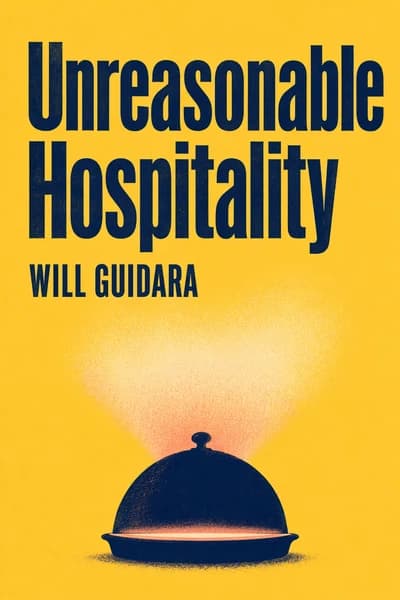
In the cutthroat world of fine dining, Will Guidara didn't just create a restaurant - he engineered an emotional revolution. When he and chef Daniel Humm took over Eleven Madison Park, it ranked 50th globally. Within six years, it was crowned the World's Best Restaurant. How? By understanding that perfection without warmth is just a technical achievement.
Guidara's philosophy - "unreasonable hospitality" - isn't about white-glove formality, but rather the art of giving people more than they expect in ways they could never anticipate. When a couple mentioned they missed Chicago snow, his team created a private snow-covered table by their next visit.
This isn't just a hospitality manual. It's a radical blueprint for anyone who wants to transform their business, career, or relationships. The principles that elevated Guidara's restaurant to legendary status apply universally: meaningful connection trumps transaction every time.
In a world obsessed with efficiency, Guidara proves that going unreasonably far for others isn't just good karma - it's the ultimate competitive advantage.
第2章
The Essence of True Hospitality: Beyond Basic Service
Service is straightforward-it's about competence, getting orders right, and meeting basic expectations. Hospitality, however, adds vibrant color to this black-and-white foundation. It's the difference between correctly taking an order and making someone feel genuinely valued while doing so. Think of service as the script and hospitality as the emotional performance that brings it to life. While service ensures a guest receives their meal at the right temperature, hospitality ensures they feel warmly welcomed and personally acknowledged throughout their experience.
At Eleven Madison Park, Guidara's journey from running a seafood brasserie to creating the world's best restaurant hinged on this distinction. The transformation wasn't just about improving food quality but about reimagining every interaction as an opportunity to create a meaningful connection. When a server noticed a couple mentioning their honeymoon plans to visit London, they didn't just nod politely-they arranged for a colleague in London to send personalized recommendations to the couple's hotel. This exemplifies what Guidara calls "unreasonable hospitality" - going far beyond what's expected or required. Other instances included creating an impromptu winter wonderland for guests who mentioned missing snow, or tracking down a guest's favorite childhood candy for their birthday dessert.
For his twelfth birthday, Guidara's father took him to the legendary Four Seasons restaurant in New York. Walking into that soaring space-with its shimmering chain curtains, elegant pool, and impeccable service-young Will felt transported to another world. This childhood experience planted a seed that would later bloom into his philosophy of hospitality: great hospitality isn't about opulence or perfection; it's about creating moments that transport guests beyond their everyday experience. The restaurant's staff didn't just serve meals; they orchestrated experiences, remembering guests' preferences, anticipating needs, and making each visitor feel like the most important person in the room. This early exposure to exceptional hospitality showed Guidara how powerful personal connections could be in the restaurant industry.
Companies like Zappos built billion-dollar businesses by empowering customer service representatives to spend hours on calls if needed, sending flowers to customers experiencing hardship, or even ordering pizza for someone stuck on hold. The results speak for themselves: higher retention rates, enthusiastic word-of-mouth marketing, and significantly improved profitability. This approach has inspired countless other businesses across industries. For instance, Ritz-Carlton empowers every employee with a discretionary budget to solve guest problems, while Southwest Airlines encourages flight attendants to use humor and personality in their announcements. These companies understand that while good service keeps customers satisfied, true hospitality creates loyal advocates who eagerly share their experiences with others.
The distinction between service and hospitality extends beyond the hospitality industry itself. In healthcare, it's the difference between a technically competent doctor and one who takes time to listen and empathize. In retail, it's the difference between efficiently processing a return and making the customer feel valued despite their disappointment. True hospitality transforms transactions into relationships, turning routine interactions into memorable moments that build lasting loyalty.
第3章
The Power of Genuine Connection and Welcome
"People will never forget how you made them feel." This simple truth was embodied by Guidara's parents, who both worked in hospitality. His father, a restaurant company executive, and his mother, who faced severe health challenges throughout her life, demonstrated different but equally powerful approaches to making others feel valued.
Despite battling multiple sclerosis that eventually confined her to a wheelchair, Guidara's mother never lost her ability to make people feel genuinely welcomed. When friends visited their home, she would light up, focusing entirely on making them comfortable despite her own discomfort. Her physical limitations never diminished her capacity to create warmth and connection.
In the aftermath of his mother's death, sixteen-year-old Will and his father found themselves at Daniel, Chef Daniel Boulud's acclaimed restaurant. The staff didn't just serve a meal-they created a sanctuary. Recognizing the pair's somber mood, they adjusted their approach, offering attentive but unobtrusive service. Chef Boulud himself emerged from the kitchen, sitting with them briefly and offering gentle condolences. The meal became not just nourishment but a momentary haven from sorrow.
This lesson in genuine welcome became foundational to understanding hospitality. A true welcome isn't about grand gestures or perfect execution-it's about making someone feel that their presence matters, that you're genuinely glad they're there. The power of a genuine welcome extends far beyond restaurants, impacting everything from healthcare facilities to retail stores to digital environments.
第4章
The Foundation of Excellence: Intentionality and People First
Growing up with a father who lived by intentionality, Guidara learned early that success doesn't happen by accident-it requires clear vision and purposeful action. His father, a successful businessman, would often say, "Excellence is never an accident." This early lesson shaped his entire approach to hospitality and became the cornerstone of his management philosophy. At Eleven Madison Park, nothing was left to chance-from the precise angle of a napkin fold to the carefully timed moments of surprise and delight. Every detail was meticulously planned and executed, from the way staff members greeted guests to the exact moment when signature dishes were presented.
Working under Danny Meyer at Union Square Hospitality Group, Guidara absorbed the philosophy of "enlightened hospitality"-a revolutionary approach that put employees first, creating a virtuous cycle that ultimately benefited everyone. Meyer's principle wasn't just about being nice; it was a carefully structured pyramid of priorities: employees first, then guests, community, suppliers, and finally, investors. This wasn't just feel-good rhetoric; it was practical business strategy. By hiring exceptional people and creating an environment where they could thrive, Meyer built restaurants where genuine care flowed naturally from staff to guests. The approach included comprehensive training programs, health benefits even for part-time staff, and career development opportunities that were rare in the restaurant industry.
Under manager Randy Garutti at Tabla, Guidara witnessed how one person's energy could transform an entire organization. Garutti approached each day with athletic vigor and infectious enthusiasm, turning routine pre-meal meetings into energizing rallies that left the team feeling inspired and motivated. He would start each meeting with success stories from the previous day, recognize individual achievements, and set clear goals for the shift ahead. This wasn't superficial cheerleading; it was authentic passion combined with positive reinforcement. Garutti's leadership style demonstrated how emotional energy could be as important as technical skill in creating exceptional dining experiences.
The business case for prioritizing employee well-being is compelling. Companies like Costco that prioritize employee well-being consistently outperform competitors, offering wages 40% higher than competitors and maintaining employee turnover rates of less than 6% annually. Research shows that teams with enthusiastic leaders are 21% more productive and experience 65% less turnover. Studies by Gallup and other organizations consistently demonstrate that engaged employees deliver better customer service, leading to higher customer satisfaction and increased profitability. The most successful organizations recognize that extraordinary care for customers begins with extraordinary care for employees, creating a positive feedback loop that drives both employee satisfaction and business success. This approach has become even more critical in the post-pandemic era, where employee retention and engagement have emerged as key challenges in the hospitality industry.
第5章
Building Culture Through Language and Partnership
Danny Meyer understood that language isn't just descriptive-it's creative and transformative. The words and phrases we use serve as powerful tools that not only reflect our culture but actively shape behaviors, attitudes, and outcomes. At Union Square Hospitality Group, carefully chosen phrases became cultural touchstones that encoded shared values and approaches, creating a common vocabulary that unified teams and reinforced core principles.
"Constant, gentle pressure" emerged as a signature phrase describing the ideal way to pursue excellence - not through aggressive pushes or sporadic efforts, but through sustained, mindful progression. This language choice perfectly captured the balance between ambition and nurture. Similarly, "Be the swan" became a powerful metaphor reminding staff to maintain a composed, graceful exterior even while managing complex challenges beneath the surface. Other key phrases like "enlightened hospitality" and "writing happy endings" became part of the organizational DNA, giving teams concrete ways to discuss and embody abstract values.
In traditional fine dining, a sharp divide typically existed between the kitchen and dining room, often creating tension and hierarchical barriers that diminished the guest experience. At Eleven Madison Park, Guidara and Chef Daniel Humm deliberately broke this model by forging a true partnership that valued both culinary excellence and hospitality equally. This wasn't just about mutual respect; it was about making decisions together that served the restaurant as a whole. They instituted joint training sessions, cross-functional meetings, and shared accountability for guest satisfaction. Even the physical layout of the restaurant was redesigned to facilitate better communication between kitchen and service teams.
This partnership approach extended throughout the organization, creating innovative structures where kitchen and dining room staff collaborated regularly. Daily pre-service meetings included both teams discussing not just the menu but the overall guest experience. Service staff received extensive culinary education, while kitchen staff learned about hospitality principles. Special events and menu changes were planned collaboratively, with input from both sides valued equally. The result was a seamless integration of food and service that elevated both, creating memorable moments that neither team could have achieved alone.
Organizations across industries have found similar success in breaking down traditional silos. Pixar's headquarters was deliberately designed with central meeting spaces and shared facilities to encourage "accidental" collaborations between animators, writers, and technical staff. Healthcare systems have seen improved patient outcomes through integrated care teams that bring together doctors, nurses, and specialists in collaborative decision-making. Tech companies like Spotify have adopted "squad" models that combine different functions into autonomous, cross-functional teams. These examples demonstrate how the principles of partnership and shared language can transform organizational culture far beyond the hospitality industry.
第6章
Leadership Through Listening and Talent Development
When Guidara first took over at Eleven Madison Park, he encountered a fractured team divided by blame and resentment. The atmosphere was toxic, with front-of-house staff blaming the kitchen, managers pointing fingers at servers, and overall morale at a concerning low. Rather than imposing immediate changes or implementing a top-down strategy, he made a crucial decision: to listen first. He met individually with every team member, from dishwashers to senior staff, conducting what he called "listening tours." These weren't casual chats but structured conversations with open-ended questions that gave people space to share their perspectives, frustrations, and ideas for improvement.
Great leadership involves seeing potential in people that they might not see in themselves - a principle Guidara calls "looking beyond the surface." At EMP, he discovered that Eliazar, who had been struggling as a server and was close to being let go, possessed extraordinary organizational skills and an exceptional memory for details. By repositioning him as an expeditor, Eliazar transformed from an underperformer to an essential team member who elevated the entire operation. This success story became a template for how Guidara approached talent development: looking for hidden strengths rather than focusing on obvious weaknesses.
Effective feedback requires a delicate balance-direct enough to drive improvement but delivered in a way that preserves dignity and motivation. Guidara developed a systematic approach he called the "Compassionate Critique Method." This included several key principles: praise publicly but criticize privately, focusing on specific behaviors rather than character, and maintaining emotional consistency regardless of circumstances. He implemented a "24-hour rule" - waiting a day before delivering critical feedback to ensure emotions didn't cloud the message. Additionally, he instituted regular one-on-one coaching sessions where feedback was framed as investment in growth rather than criticism of performance. This approach led to measurable improvements in staff retention and team performance, with employee satisfaction scores increasing by 40% in the first year.
Through these methods, Guidara demonstrated that effective leadership isn't just about making decisions - it's about creating an environment where people feel heard, valued, and empowered to grow. He regularly emphasized that a leader's success should be measured not by their own achievements, but by the growth and success of their team members.
第7章
Creating Momentum Through Strategic Systems and Culture
In the midst of busy restaurant operations, Guidara instituted a daily ritual that proved transformative: a thirty-minute pre-meal meeting where the entire staff gathered to align, learn, and connect. These meetings evolved into much more than operational briefings - they became the heartbeat of the restaurant's culture. The gatherings included practical elements like menu updates and service adjustments, but their real power came from deeper components: sharing memorable guest stories, celebrating team victories, and reinforcing core values through consistent messaging. For example, staff would share stories of how they turned around a challenging guest situation or created an unexpected moment of delight, inspiring others to do the same.
To combat cynicism and build positive culture, Guidara implemented an innovative strategy of hiring multiple enthusiastic individuals simultaneously, creating what he called a "cultural bonfire." Rather than bringing in new team members one at a time, he hired groups of three to five people who shared the values and energy he wanted to cultivate. This approach created an immediate critical mass of enthusiasm that could sustain itself and gradually influence others. The new hires supported each other through the transition period and their collective energy helped overcome any existing negative attitudes. This strategy proved particularly effective during major cultural transformations, as the new group's shared commitment to excellence helped accelerate positive change throughout the organization.
At EMP, Guidara deliberately challenged the prevailing industry norm that displaying too much enthusiasm or care was uncool. He created an environment where passionate engagement was not just accepted but celebrated and rewarded. This meant encouraging team members to embrace their authentic interests and bring them into their work, whether it was a server's knowledge of wine regions, a host's passion for architecture, or a bartender's interest in local history. These personal touches allowed for more meaningful connections with both colleagues and customers, leading to more memorable dining experiences. Guidara found that when staff members felt empowered to be themselves and share their passions, it created a more dynamic and engaging atmosphere that guests could feel. He regularly highlighted examples of team members who went above and beyond in expressing their enthusiasm, making it clear that authentic passion was a cornerstone of the restaurant's success.
The culture-building process also included structured recognition programs, regular team-building events, and opportunities for cross-training between different roles. These initiatives helped break down traditional hierarchical barriers in the restaurant industry and fostered a more collaborative, innovative environment where everyone felt invested in the restaurant's success.
第8章
Breaking Rules and Redefining Excellence
Early in his tenure at Eleven Madison Park, Guidara encountered numerous entrenched "rules" of fine dining that seemed to exist purely from tradition rather than genuine purpose. These included rigid dress codes for staff, strict hierarchical service structures, and formal communication protocols that often created barriers between servers and guests. Rather than blindly following these traditions, Guidara and his team evaluated every aspect of service based on a simple yet powerful criterion: does this enhance the guest experience? This systematic review led to numerous innovations in both service delivery and hiring practices.
For instance, they abandoned the traditional practice of hiring only experienced fine-dining servers, instead focusing on individuals with natural warmth and emotional intelligence. They also eliminated the formal script-like dialogue that traditionally characterized fine-dining service, encouraging authentic conversations between staff and guests. These changes, while controversial within the industry, proved transformative for the restaurant's atmosphere and guest satisfaction.
The concept of "Unreasonable Hospitality" emerged from a pivotal realization: to become truly exceptional, they needed to exceed not just expectations but conventional boundaries of what hospitality could be. While reasonable hospitality might mean remembering a guest's wine preferences or dietary restrictions, unreasonable hospitality meant creating deeply personalized experiences that resonated on an emotional level. This could manifest in various ways: researching guests' social media to discover their interests, creating custom menu items based on childhood memories, or even organizing elaborate surprises for special occasions.
This approach transformed mundane transactions into meaningful human connections. For example, when they learned a couple had missed their trip to Italy due to the pandemic, the staff recreated an Italian evening complete with regional specialties and music. Such gestures required significantly more effort and resources than traditional service, but they created lasting impressions and emotional bonds that distinguished the restaurant from its competitors. This philosophy demonstrated that true excellence in hospitality isn't just about perfect service execution-it's about creating memorable moments that transcend the typical restaurant experience.
第9章
The Journey to Transformative Hospitality
Guidara's remarkable evolution from managing a neighborhood brasserie to creating Eleven Madison Park, widely acclaimed as the world's best restaurant, illustrates a profound truth about excellence: extraordinary achievements rarely stem from single revolutionary breakthroughs, but rather from the patient, persistent application of fundamental principles. His team's unwavering commitment to what he calls the "dual pillars" - deliciousness and graciousness - revolutionized fine dining by proving that technical perfection and genuine human warmth could coexist at the highest levels.
The journey was marked by countless small innovations and daily recommitments to excellence. For instance, they developed a sophisticated system of guest intelligence, maintaining detailed records of preferences and special occasions, while simultaneously training staff to read subtle social cues and respond with spontaneous acts of kindness. Their famous "dreamweaving" program, where staff would overhear guests' wishes and make them come true in unexpected ways, became legendary in the industry - from creating impromptu winter wonderlands for snow-deprived Californians to organizing last-minute wedding proposals.
Perhaps most importantly, they recognized that hospitality transcends mere business strategy; it's a fundamental human value with transformative power. When we make others feel truly seen, valued, and cared for, we create ripples that extend far beyond the immediate interaction. A guest who experiences extraordinary hospitality doesn't just leave satisfied; they leave changed, carrying with them a new standard for how human connections can feel. This transformation often inspires them to treat others with greater kindness and attention, creating a cascade effect of positive interactions.
As we navigate an increasingly digital and automated world, this lesson becomes even more vital. While AI and automation can optimize processes and increase efficiency, they cannot replicate the warmth of genuine human connection. The organizations and individuals who will thrive in the future won't necessarily be those with the most sophisticated technology or streamlined operations, but those who master the art of meaningful human interaction. They understand that behind every transaction - whether it's a dinner reservation, a sales call, or a customer service interaction - lies an opportunity for genuine connection and mutual growth.
The most fulfilling careers and the most successful organizations are built not just on metrics and achievements, but on the lasting impact they have on people's lives. This impact is measured not in dollars or stars, but in moments of genuine connection and transformation. Unreasonable hospitality, when practiced consistently and authentically, has the power to transform not just individual experiences but entire organizational cultures and communities. It creates a virtuous cycle where exceptional care becomes the norm, elevating every interaction from transactional to transformational.
The ripple effects of this approach extend far beyond the immediate business context. When organizations embrace unreasonable hospitality as a core value, they don't just create better customer experiences - they contribute to a more empathetic and connected society. In an era where digital isolation and social disconnection are growing concerns, this commitment to genuine human connection becomes not just a business imperative but a social responsibility.