第1章
The Dark Side of Happiness: Embracing Your Full Emotional Range
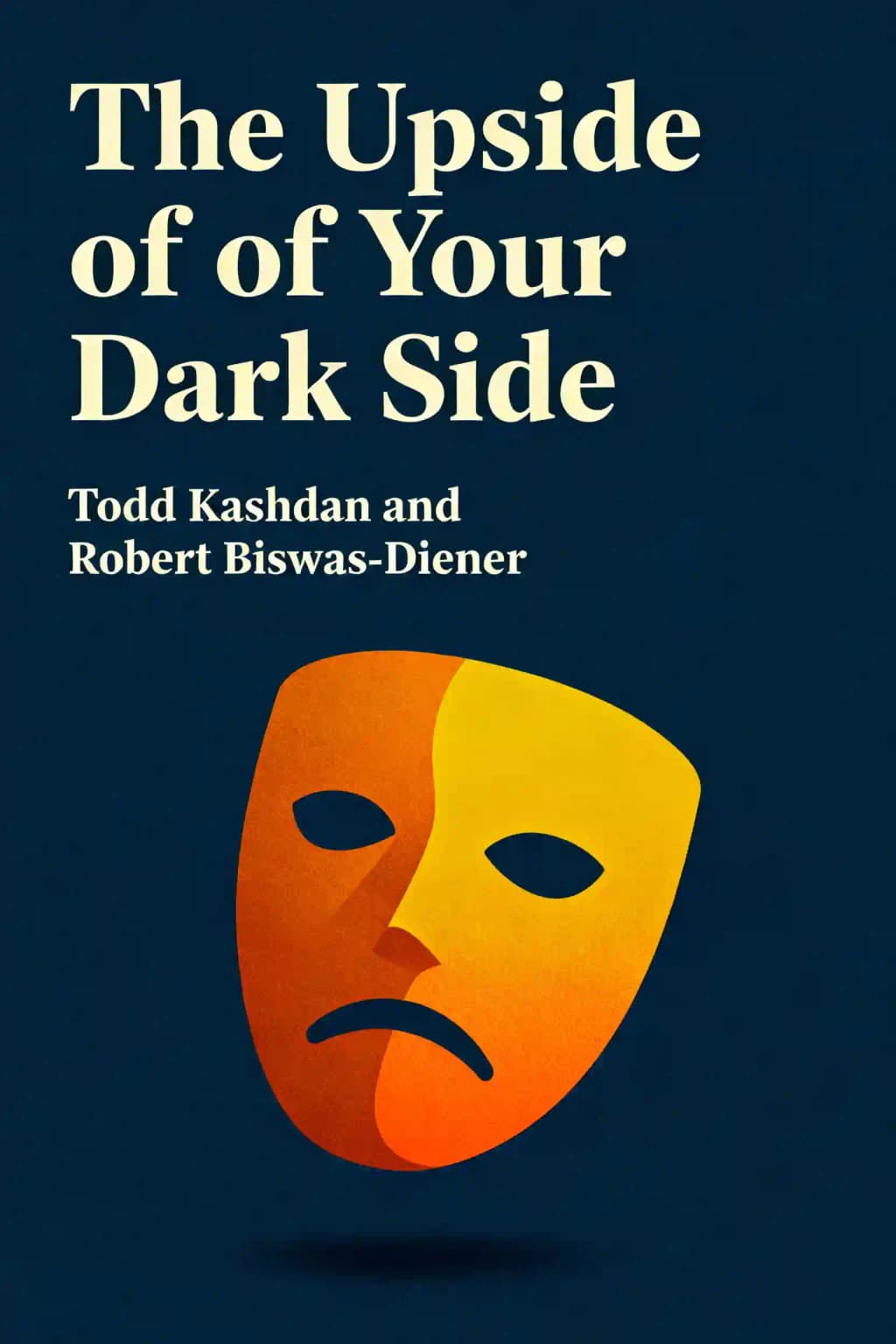
Have you ever wondered why Navy SEAL candidates endure a simple jog with no known endpoint? It's not about physical fitness but about testing their ability to handle psychological uncertainty. This "distress tolerance" predicts success not just in elite military training, but in marriages, business negotiations, and parenting. While our culture obsessively pursues happiness and positivity, groundbreaking research reveals that our darker emotions-anger, guilt, anxiety-contain hidden superpowers essential for living a full life. Todd Kashdan and Robert Biswas-Diener's "The Upside of Your Dark Side" challenges our happiness-obsessed culture with a revolutionary idea: every emotion serves a purpose, and those who can access their full emotional range-both positive and negative-are actually healthier, more successful, and ultimately happier in a deeper, more resilient way.
第2章
The Happiness Trap: Why Positivity Isn't Always Positive
Despite thousands of years of philosophical wisdom about achieving happiness and a multi-billion dollar industry dedicated to its pursuit, only 17 percent of Americans are psychologically flourishing according to comprehensive research. Our modern approach to happiness is fundamentally flawed. We've become increasingly uncomfortable with discomfort itself, creating a society where even mild psychological pain is pathologized and avoided at all costs, from medicating minor anxieties to protecting children from necessary disappointments.
The problem begins with our psychological blind spots, particularly our inability to predict how events will affect our future emotional states - what researchers call "affective forecasting." We consistently overestimate the impact of positive outcomes (like winning the lottery) and underestimate our capacity to handle difficulties (like job loss or relationship breakups). Most damning, groundbreaking studies by psychologist Iris Mauss show that actively valuing and pursuing happiness makes people feel significantly lonelier and produces lower progesterone levels-a hormone associated with social bonding and trust. The very pursuit of happiness often backfires spectacularly, creating a self-defeating cycle of disappointment.
Laboratory experiments reveal the extent of this paradox. When participants listened to uplifting music while actively trying to make themselves happy, they ended up 4.5 times less happy than those who simply listened without agenda. Even more striking, those who tracked their happiness levels while attempting to increase them felt 7.5 times worse. This makes psychological sense because the single-minded pursuit of happiness is inherently self-focused and analytical, undermining the spontaneous relationships and experiences that contribute most to our well-being.
We've developed what the authors call "comfort addiction"-an increasingly prevalent aversion to any form of discomfort that paradoxically makes us less resilient and more fragile. Unlike our psychologically tougher ancestors who were told to "keep calm and carry on" during wartime bombardments, we've created a culture where even minor inconveniences - from slight temperature discomfort to temporary internet outages - feel unbearable. This systematic avoidance of both pleasure and pain has become the defining issue of our time, stunting our emotional growth, psychological maturity, and ability to find deeper meaning in life's challenges.
The alternative isn't embracing suffering for its own sake, but developing what psychologists call "wholeness"-the emotional agility to match our response, whether from the bright or dark side of our nature, to life's varied challenges. Whole people can draw on seemingly opposite traits: serious and playful, passionate and objective, selfless and selfish. They benefit from refusing to discard qualities that society might deem less valuable, understanding that true psychological health comes from integration rather than elimination of our various aspects. This wholeness allows us to navigate life's ups and downs with greater resilience and authenticity, rather than constantly pursuing an elusive state of pure happiness.
第3章
The Hidden Benefits of Negative Emotions
Imagine you're watching a Lakers game where coach Pat Riley, frustrated with his team's lackluster performance, throws a fit at halftime and soaks star player Kareem Abdul-Jabbar with water. The guilt-stricken teammates rally to overcome a twenty-point deficit and win. This real example illustrates how negative emotions can be powerful motivational tools.
Research by psychologist Roy Baumeister shows we react more strongly to negative life events than positive ones-and for good reason. People in depressed moods notice more details, particularly subtle facial expressions that happier people might miss. This heightened attention can be valuable in high-stakes environments. Would you prefer a happy, easy-going attorney or a somewhat grumpier one who catches every problem in a contract?
Anger, despite its bad reputation, dramatically alters others' behavior, typically causing retreat. Research shows only 10% of angry episodes lead to violence. Anger increases optimism, creativity, and effective performance. Studies reveal angry people take bigger risks and feel more control over outcomes. In negotiations, authentic anger (not feigned) provides leverage, with angry buyers receiving 20-33% discounts.
To express anger effectively, use a "discomfort caveat"-acknowledge difficulty communicating clearly while emotional before stating your concerns. Small physical displays like pushing hands on a table can reinforce your message. Suppressing genuine anger carries health costs-studies show those who hide anger face more bronchitis, heart attacks, and earlier death than those who express it appropriately.
Guilt, when distinguished from its harmful cousin shame, serves important functions. Guilt-prone people feel moderate pain but maintain a sense of personal control, feel tension and remorse, and are motivated to repair damage. Shame-prone people feel extreme distress with no sense of control, wanting to hide or escape. They blame others and attack themselves.
A striking study by Dr. Jessica Tracy revealed newly sober adults who showed shame during interviews about their drinking consumed an average of 117.89 drinks over four months, while those showing no shame averaged just 7.91 drinks. Shame creates a destructive cycle rather than recovery.
Anxiety, like other negative emotions, offers surprising benefits when experienced in appropriate amounts. When anxious, we gain heightened perception, enhanced problem-solving abilities, and can suddenly recognize potential hiding places or safety options that normally wouldn't occur to us. Anxious people serve as valuable sentinels through the "five S's": they Scare (remain on high alert), Startle (react quickly to danger), Share (warn others), Scout (gather information), and Squat (suppress basic needs to focus on problems).
第4章
The Surprising Downsides of Happiness
While happiness is widely celebrated and linked to numerous benefits like better health, higher income, and stronger relationships, extensive research reveals its unexpected dark side. Happy people consistently demonstrate less persuasive abilities due to their superficial information processing style. Unlike their unhappy counterparts who meticulously analyze concrete details and potential pitfalls, happy individuals tend to focus on broader patterns and rely more heavily on mental shortcuts. In controlled studies, unhappy people created arguments that were 25% more impressive and 20% more concrete than happy people's, with specific examples and detailed supporting evidence rather than general statements.
Happy people show marked deficiencies in detecting deception across various contexts. In comprehensive studies where participants evaluated recorded interviews to identify liars, those in happy moods were accurate only 49% of the time (worse than random chance), while those in sad moods achieved 62% accuracy. This "sadness advantage" extends beyond laboratory settings - HR professionals in more somber moods made hiring decisions that resulted in 13% better employee retention rates, and negotiators in neutral-to-negative moods reached more favorable agreements by detecting subtle signs of dishonesty.
The phenomenon of "lazy thinking" among happy individuals manifests in multiple ways. Research shows they're 50% more likely to accept and recall false information without questioning its validity, 25% more likely to incorporate false details into eyewitness testimony, and three times more likely to rely on stereotypes when making quick decisions under pressure. While happy people generally display admirable traits like kindness and gratitude, their cognitive patterns make it significantly harder to overcome ingrained biases or notice critical details that might contradict their positive outlook.
Leadership effectiveness varies dramatically based on emotional display. In controlled experiments where leaders expressed either happiness or sadness while delivering identical instructions, the results were striking: teams under happy leaders performed 200% better on creative and brainstorming tasks, but those under unhappy leaders achieved 400% better results on analytical problems and detail-oriented work. These performance differences emerged purely from exposure to the leader's emotional expressions, with no variation in actual guidance or support.
The impact of leader emotions becomes particularly clear in high-stakes scenarios. During a sophisticated air traffic control simulation, participants monitoring potential plane collisions performed significantly better under leaders who acknowledged the task's tedious nature and shared in their frustration, compared to those who maintained constant cheerful encouragement. Not only did the teams with commiserating leaders catch more potential conflicts, but they also reported 30% higher task satisfaction and showed 40% better sustained attention spans.
These findings suggest a crucial lesson for organizational culture: rather than promoting blanket positivity, organizations should cultivate environments where authentic emotions appropriate to specific tasks are valued and expressed. This might mean encouraging focused seriousness during analytical work while embracing enthusiasm during creative sessions, ultimately leading to more effective and genuine workplace dynamics.
第5章
Beyond Mindfulness: The Power of Mindlessness
Mindfulness-conscious, nonjudgmental awareness of the present moment-has gained immense popularity, with scientific evidence supporting its benefits for happiness, emotional intelligence, and stress management. Yet despite these benefits, humans evolved to spend significant time being mindless. Our conscious mind simply cannot handle the overwhelming complexity of moment-to-moment processing required for daily functioning.
Three types of mindlessness can propel us toward greater success and well-being: harnessing autopilot, taking impulsive action, and trusting mindless decision making. The most psychologically flexible and successful people can switch between mindfulness and mindlessness rather than remaining fixed in either mode.
Our brains use heuristic thinking-automatic cognitive shortcuts-to conserve mental resources. This mindless processing allows us to make remarkably accurate judgments about others in just one-tenth of a second, with approximately 70% accuracy. We respond positively when others subtly mirror our posture and emotions, but inappropriately timed mimicry creates discomfort. In one study, participants felt physically colder when a formal person mimicked them or when a friendly person failed to mirror them-our bodies intuitively detect these social misalignments.
While businesses invest heavily in creativity training focused on mindfulness and conscious performance, research suggests that mindlessness and mind-wandering are actually essential for innovation. Mind-wandering, which occupies nearly 50% of our waking hours, produces tangible rewards when measured against personally meaningful goals. What appears as distraction often allows us to access key insights or make sense of troubling events. Research confirms that doodlers show a 25% improvement in memory retention compared to non-doodlers. Similarly, pilots who took brief naps made 34% fewer mistakes and were 20% faster in decision-making.
Split-second decisions dominate our lives, despite our belief in careful deliberation. While we value laborious approaches like cost-benefit analyses, research shows that unconscious processing often produces better results for complex decisions. For complex decisions like apartment hunting, the optimal approach combines both modes: brief conscious contemplation followed by unconscious processing during an unrelated activity produces dramatically better results (58% accuracy) than either approach alone (30%).
Rather than increasing self-awareness, we can achieve better results through unconscious processing strategies. Simple environmental cues can dramatically improve performance without conscious awareness. In a call center experiment, employees viewing photographs of smiling telemarketers raised 85% more money than those viewing neutral office buildings, with effects lasting an entire work week.
第6章
The Teddy Effect: Strategic Darkness
Theodore Roosevelt embodied the perfect balance of light and dark personality traits-sneaking away from security to camp with John Muir, swimming naked in the Potomac, and giving an hour-long speech after being shot. His bravado, daring and willingness to embrace his dark side made him extraordinarily effective. Research shows that American presidents with more psychopathic tendencies-especially fearlessness-were better performers, more persuasive in crises, and more willing to take risks. Roosevelt ranked first in fearlessness and second in grandiose narcissism among all presidents.
The "Teddy Effect" consists of three components that can be strategically beneficial: Machiavellianism, narcissism, and psychopathy. Machiavellianism involves being emotionally detached when making decisions so short-term happiness doesn't derail long-term plans. It's about developing situational awareness and the flexibility to shift between honesty and deception, aggression and kindness depending on circumstances.
Narcissism, while often perceived negatively, has positive aspects. It's defined by a grandiose sense of self-importance and entitlement. Narcissists' belief in their own specialness gives them confidence to pursue unique paths and ambitious goals that others might dismiss as impossible.
Psychopathy allows performance unaffected by fear and emotions that might paralyze others. Like the dentist who can emotionally detach when treating patients, this ability to dial down emotions can be beneficial in certain situations.
We all engage in "dark" behaviors to some extent. Research shows this starts early-in one study, 80% of four-year-olds peeked at a forbidden toy when left alone, and 90% lied about it afterward. Interestingly, higher IQ correlated with more sophisticated deception.
Manipulation carries negative connotations, but it's everywhere in society. Charitable organizations strategically craft appeals to maximize donations. Police officers demonstrate effective manipulation through de-escalation techniques-approaching drug dealers with respect rather than force to convince them to relocate their operations.
Research by Jack Goncalo's team at Cornell University revealed that teams with exactly two narcissists performed better than those with more or fewer. In their study of 73 four-person teams acting as organizational consultants, groups with two narcissists showed optimal group dynamics and creativity.
Narcissists excel in creative settings because they challenge assumptions and social norms. Their sense of specialness makes them willing to consider ideas others might dismiss as absurd. One narcissist in a group gets ignored; two become a powerful minority that can't be dismissed. They inspire even non-narcissistic team members to challenge the status quo.
第7章
The Art of Emotional Differentiation
How we process and articulate our emotions significantly impacts our resilience. Research from the authors' laboratory reveals remarkable benefits of emotional differentiation-people who precisely identify their emotions consume 40% less alcohol when socializing, are 40% less aggressive when provoked, and show reduced neural activity in pain centers when rejected. These findings demonstrate that the simple act of naming our feelings with precision can have profound physiological and behavioral effects.
This emotional clarity transforms negative emotions and prevents unhealthy coping strategies like binge drinking or aggression. For example, instead of broadly labeling an emotion as "bad," someone might recognize they feel "disappointed" about a missed opportunity, "frustrated" with a colleague's response, or "anxious" about an upcoming presentation. Unlike rumination (getting stuck dwelling on feelings), emotion differentiation involves observing emotions as information without becoming entangled with them, similar to a scientist collecting data rather than a critic making judgments.
Many people struggle with this skill because they naturally categorize emotions in broad terms, missing the nuanced differences between related feelings. For instance, "anger" might actually be irritation, indignation, or resentment, each requiring different responses. By moving beyond simplistic "positive vs. negative" classifications toward a differentiated emotional vocabulary, we gain greater psychological agility and resilience in facing life's challenges. Research shows that individuals who can distinguish between subtle emotional states like "dejected" versus "disappointed" are better equipped to choose appropriate coping strategies.
Americans have a deep-seated positivity bias that manifests in frequent smiling (considered odd in places like France) and inflated evaluations of broad categories. This cultural optimism contrasts sharply with other cultures like Japan, where people are 2.5 times more likely to expect negative events. This difference extends to workplace cultures, where American companies often emphasize positive thinking and motivation, while Japanese organizations may focus more on potential problems and continuous improvement.
However, this American positivity isn't always beneficial. "Defensive pessimists" who "hope for the best but expect the worst" often perform better in stressful situations by transforming anxiety into action. These individuals use their concerns constructively, mentally rehearsing potential challenges and developing contingency plans. Research shows defensive pessimism helps women overcome gender stereotypes in testing situations and helps minority students achieve better grades. For example, students who anticipate potential obstacles and prepare accordingly typically outperform those who rely solely on positive thinking. This strategy proves particularly effective in high-stakes situations where careful preparation and realistic expectations are crucial for success.
The key to emotional resilience lies not in maintaining constant positivity but in developing a nuanced understanding of our emotional landscape. This includes recognizing that both positive and negative emotions serve important functions and that the ability to differentiate between similar emotional states enables more effective responses to life's challenges.
第8章
Embracing Wholeness: The Path to True Well-Being
True happiness must be more than fleeting feelings of pleasure. The good life consists of two primary dimensions: pleasure/meaning and novelty/stability. Rather than viewing psychological states as simply positive or negative reactions to external events, we should see them as tools to be deployed based on their usefulness in specific situations.
The debate between hedonia (pleasure-seeking) and eudaimonia (virtuous living and developing potential) has created an unnecessary academic divide. Research shows people are actually "short-term hedonists and long-term saints"-preferring pleasure in the immediate future but meaning in the distant future. When asked to choose between pleasure without meaning or meaning without pleasure, people consistently choose pleasure for shorter timeframes and meaning for longer ones.
This time-dependent preference reveals we're neither exclusively pleasure-seekers nor meaning-pursuers. The formula for wholeness combines present-focused pleasure with future-oriented growth and sacrifice. A whole person has "one foot rooted in the present, mindfully appreciative of what they have, and another foot reaching toward the future with its undiscovered sources of meaning."
Both novelty and stability are essential for a fulfilling life. Stability provides calm and requires fewer mental resources, but excessive stability leads to boredom. However, boredom can be beneficial; in Hindu and Buddhist traditions, it's seen as a precursor to insight. When children experience boredom, they discover interests and channel energy creatively.
The danger lies in constantly avoiding boredom through smartphones and entertainment, preventing the serendipitous growth that occurs when minds wander freely. Meanwhile, too much novelty provokes anxiety. The key is understanding their relationship to time: novelty operates in "fast time" where we feel fully alive and present, while stability works in "slow time" allowing for reflection and appreciation.
While we naturally strive to improve our lives, our culture has mistakenly conflated personal growth with comfort and positivity. This simplistic approach fails to address life's true complexity. You cannot-and should not-banish your darker qualities. Suppressing experiences divorces you from life's full richness and is psychologically destructive.
True personal growth requires becoming aware of all aspects of yourself, including darker tendencies, and developing the agility to integrate them into your behavioral repertoire when needed. Don't repress or ignore these darker gifts-appreciate them and, when appropriate, harness them. Only by embracing your whole self, including the uncomfortable parts, can you access genuine well-being and avoid being enslaved by fear. Make the most of your one certain life by becoming whole.
第9章
The Balanced Life: Finding Your Edge Through Integration
Americans' obsession with happiness has created a peculiar blindspot. We've become increasingly uncomfortable with discomfort itself, creating artificial environments where even minor inconveniences feel unbearable. From temperature-controlled buildings to on-demand entertainment, we've engineered away natural stressors that once built resilience. This comfort addiction extends to our emotional lives, where we pathologize normal feelings like sadness, anxiety, and anger, often reaching for quick fixes through medication or avoidance strategies.
The alternative to this happiness obsession isn't suffering for its own sake, but developing what the authors call "wholeness"-the emotional agility to access your full psychological range and respond effectively to life's challenges. Whole people can draw on seemingly opposite traits as needed: they can be serious and playful, passionate and objective, selfish and selfless. This integration allows them to navigate complex situations with greater nuance and effectiveness. For instance, a leader might need to be both compassionate and firm when handling a struggling employee, or a parent might balance nurturing with boundary-setting.
Research consistently shows that people comfortable with both positive and negative emotions, who can draw from the full range of human feelings, are the healthiest and often most successful. Studies of successful entrepreneurs reveal they regularly experience anxiety and excitement simultaneously during crucial business decisions. This isn't about rejecting happiness, but about understanding that every emotion-even painful ones-serves a purpose. Anger defends rights and maintains boundaries. Embarrassment signals small corrections are needed. Guilt indicates violations of our moral code. Fear keeps us safe and motivates preparation.
The most compelling finding is that therapy success begins when clients become comfortable experiencing mixed emotions, not just when they feel more positive. Those who can tolerate both positive and negative emotions about their lives show the greatest gains in well-being, suggesting that wholeness, not just happiness, provides the greatest advantage. For example, someone grieving a lost loved one might simultaneously feel sadness about the loss and gratitude for the time shared - both emotions are valid and valuable.
This balanced approach extends beyond emotions to thinking styles. While mindfulness has clear benefits, mindlessness-our automatic pilot-is equally valuable. The most psychologically flexible people can switch between mindfulness and mindlessness as circumstances demand. Sometimes we need focused attention, like during critical negotiations; other times, we benefit from letting our minds wander and trusting our intuition, such as when solving creative problems or processing complex emotions.
Even our darker personality traits-the strategic use of Machiavellianism, narcissism, and psychopathy-can be beneficial when deployed appropriately. Research shows that teams with exactly two narcissists performed better than those with more or fewer, likely because they provided healthy competition without overwhelming group dynamics. Presidents with more psychopathic tendencies were more persuasive in crises, possibly due to their ability to remain calm under pressure and make tough decisions without excessive emotional involvement.
The path to true well-being isn't eliminating negative emotions or dark personality traits, but integrating them into a cohesive whole. This integration requires accepting that we contain multitudes - the ambitious and the lazy, the kind and the cruel, the confident and the insecure. By embracing your full range of experiences-both light and dark-you gain access to your complete psychological toolkit, allowing you to respond more effectively to life's challenges and ultimately experience a deeper, more resilient form of happiness. This wholeness enables better decision-making, stronger relationships, and more authentic self-expression.