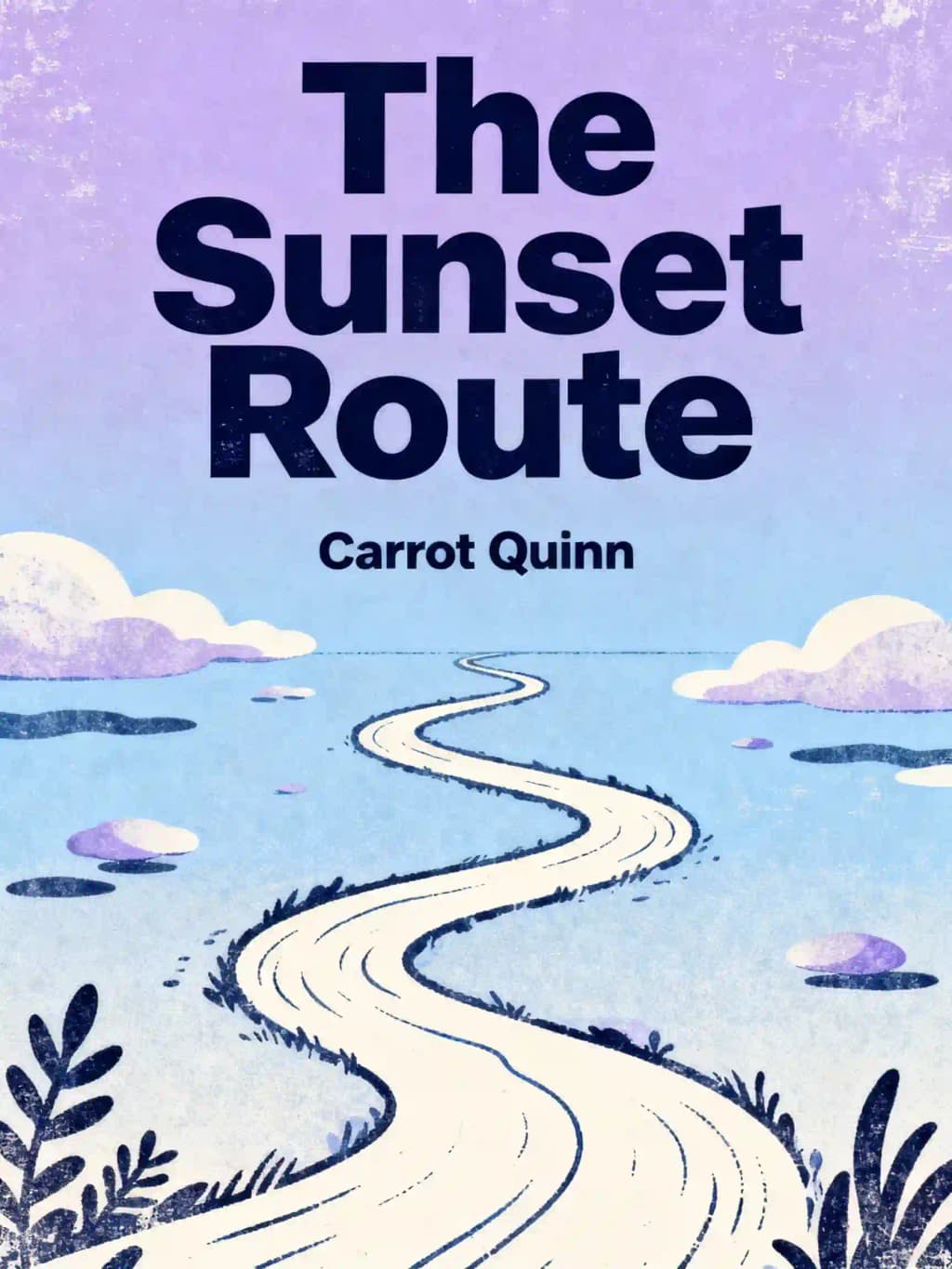
Escape alongside Carrot Quinn from Alaskan trauma to freight-train freedom in this acclaimed memoir praised by bestselling authors. How does a neglected child find belonging among anarchists and wilderness? A raw journey through America's forgotten margins that The Philadelphia Inquirer named a best book.
Carrot Quinn, author of The Sunset Route: Freight Trains, Forgiveness, and Freedom on the Rails of the American West, is a celebrated adventurer and memoirist known for unflinchingly honest narratives of survival and self-discovery.
Her work blends raw autobiographical accounts with themes of resilience, nature’s healing power, and liberation from trauma, rooted in her upbringing in Alaska under the care of a schizophrenic mother and later her conservative Catholic grandparents.
Quinn’s expertise stems from years of train-hopping, foraging, and thru-hiking iconic trails like the Pacific Crest Trail twice—experiences chronicled in her debut memoir, Thru-Hiking Will Break Your Heart.
She maintains a devoted following through her candid blog essays and Instagram presence, where she shares visceral reflections on nomadic life. The Sunset Route earned recognition as a Philadelphia Inquirer Best Book of the Year, resonating with readers of Wild and Educated for its unvarnished portrayal of forging identity through radical freedom.
The Sunset Route is a raw memoir exploring Carrot Quinn’s escapes from an unstable Alaskan childhood marked by homelessness and a mother with schizophrenia. It chronicles her freight train-hopping adventures, survival through dumpster diving, and quest for belonging among anarchist communities, while grappling with trauma and finding solace in nature’s freedom.
This book resonates with readers of gritty memoirs like Wild or Educated, offering insights into resilience, unconventional lifestyles, and healing from familial trauma. Fans of adventure narratives, mental health journeys, or stories about marginalized communities will find it compelling.
Yes—Quinn’s vivid storytelling blends unflinching honesty with poetic reflections on nature and self-discovery. Its unique perspective on train-hopping subcultures and emotional depth make it a standout in travel memoirs.
Quinn portrays a turbulent bond marked by her mother’s delusions (believing herself the Virgin Mary) and neglect. This dynamic fuels Quinn’s longing for stability, driving her to seek independence through nomadic living while wrestling with shame and unresolved love.
She navigates hunger, police evasion, and harsh weather, relying on dumpster diving and transient communities. Emotional struggles—loneliness and childhood ghosts—underscore her physical survival, revealing resilience amid constant risk.
Nature acts as both sanctuary and teacher, offering Quinn spiritual grounding during her travels. From Alaskan winters to desert trainscapes, environmental immersion helps her process trauma and reclaim agency.
Her prose balances vivid adventure descriptions with introspective rawness, using stark imagery and unfiltered emotion to immerse readers in the grit and beauty of marginalized existence.
She connects with straight-edge anarchists, punk housemates, and fellow train-hoppers—groups that teach survival skills and foster fleeting but profound camaraderie, contrasting her isolated upbringing.
Unlike her Pacific Crest Trail memoir (Thru-Hiking Will Break Your Heart), this book delves deeper into childhood trauma and urban survival, though both emphasize self-discovery through extreme journeys.
Quinn illustrates forgiveness as a path to liberation—releasing anger toward her mother and past hardships to embrace self-acceptance and the transient beauty of her chosen lifestyle.
She unflinchely details scavenging food, squatting, and societal invisibility, challenging stereotypes by framing homelessness as both adversity and a catalyst for resourcefulness and community-building.
Its focus on freight-train subcultures, unromanticized portrayal of homelessness, and intersection of mental health and wanderlust set it apart, offering a lens into rarely documented American marginalia.
著者の声を通じて本を感じる
知識を魅力的で例が豊富な洞察に変換
キーアイデアを瞬時にキャプチャして素早く学習
楽しく魅力的な方法で本を楽しむ
learning that there is no bottom to how alone a person can feel.
I feel more alive than I do in the city where I'm weighed down by fear and shame.
moves through the world without making herself small, constantly asking questions with visible curiosity.
『Sunset Route』の核心的なアイデアを分かりやすいポイントに分解し、革新的なチームがどのように創造、協力、成長するかを理解します。
『Sunset Route』を素早い記憶のヒントに凝縮し、率直さ、チームワーク、創造的な回復力の主要原則を強調します。

鮮やかなストーリーテリングを通じて『Sunset Route』を体験し、イノベーションのレッスンを記憶に残り、応用できる瞬間に変えます。
何でも質問し、声を選び、本当にあなたに響く洞察を一緒に作り出しましょう。

"Instead of endless scrolling, I just hit play on BeFreed. It saves me so much time."
"I never knew where to start with nonfiction—BeFreed’s book lists turned into podcasts gave me a clear path."
"Perfect balance between learning and entertainment. Finished ‘Thinking, Fast and Slow’ on my commute this week."
"Crazy how much I learned while walking the dog. BeFreed = small habits → big gains."
"Reading used to feel like a chore. Now it’s just part of my lifestyle."
"Feels effortless compared to reading. I’ve finished 6 books this month already."
"BeFreed turned my guilty doomscrolling into something that feels productive and inspiring."
"BeFreed turned my commute into learning time. 20-min podcasts are perfect for finishing books I never had time for."
"BeFreed replaced my podcast queue. Imagine Spotify for books — that’s it. 🙌"
"It is great for me to learn something from the book without reading it."
"The themed book list podcasts help me connect ideas across authors—like a guided audio journey."
"Makes me feel smarter every time before going to work"

Sunset Routeの要約をPDFまたはEPUBで無料でダウンロード。印刷やオフラインでいつでもお読みいただけます。
A six-year-old girl learns never to answer the ringing phone. Her mother, Barbara, sits chain-smoking, hands trembling, telling stories about their past life in Alaska's Chugach Mountains and her conversations with the Virgin Mary. After her parents' divorce, Quinn and her brother Jordan bounce between foster care and their mother's custody, where poverty becomes as constant as Barbara's cycling moods-manic productivity one week, crushing depression the next. Sometimes Barbara forgets to maintain their food stamps. The children search empty cupboards, and when Quinn cries from hunger pains, Barbara slaps her. Their Anchorage apartment becomes a prison of neglect where Quinn stays too small to carry milk gallons or open pickle jars, walks to school in freezing darkness, and sleeps with all lights blazing because no one reminds her it's bedtime or that teeth need brushing. Behind the apartment, she builds snow caves in the forest, finding sanctuary under a spruce tree whose boughs cradle her with the love absent at home. Eventually, Barbara announces she isn't just speaking to the Virgin Mary-she is the Virgin Mary reincarnated. At the public library, Quinn discovers a book on schizophrenia that names her mother's condition, bringing waves of terror and embarrassment as she recognizes Barbara's symptoms in clinical case studies. When Jordan runs away and enters custody, Quinn learns "there is no bottom to how alone a person can feel."