第1章
From Lost to Found: A Journey Through Wilderness and Self
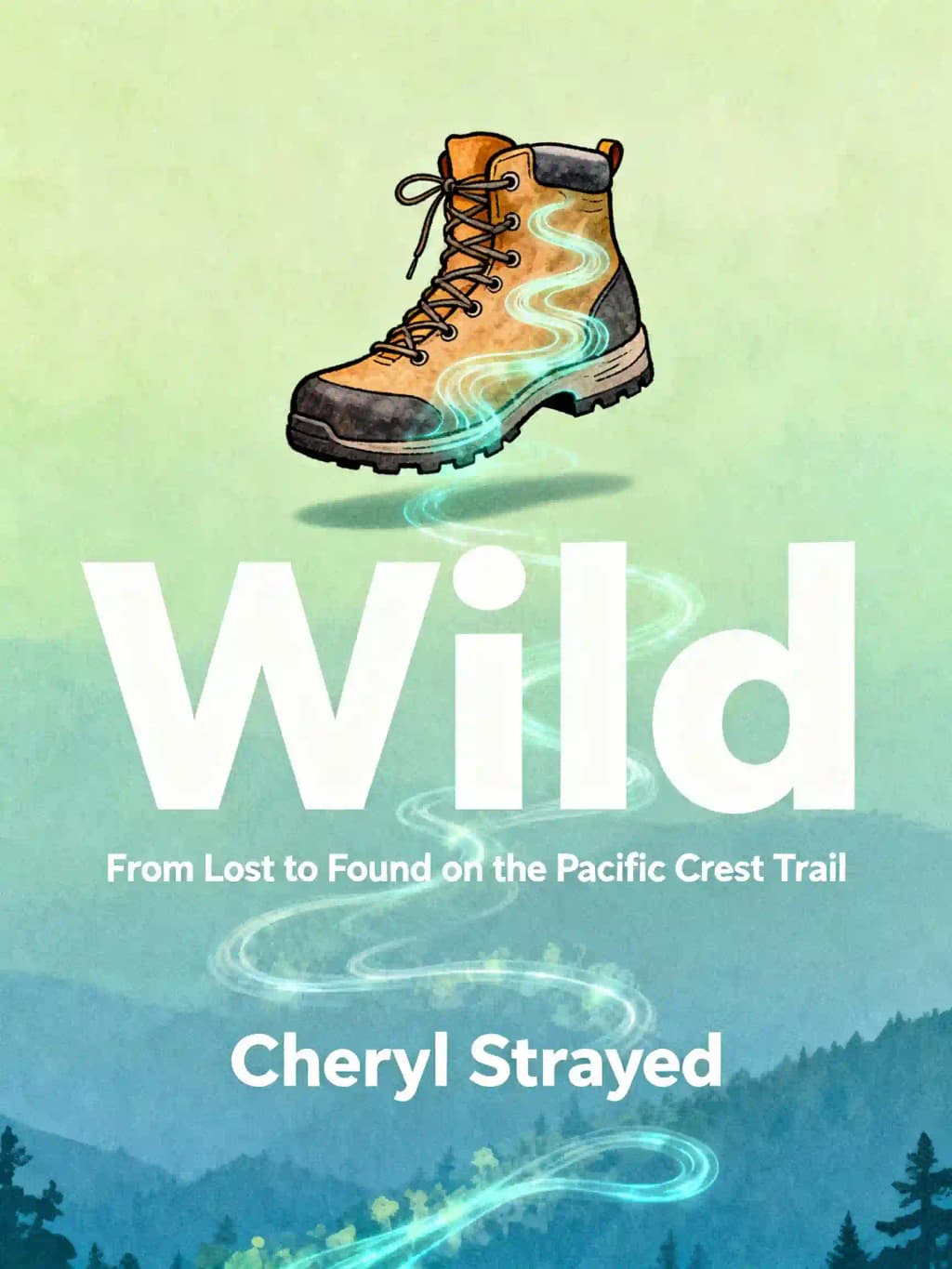
Oprah Winfrey called it "one of the most powerful, honest, and affecting books" she'd ever read. Reese Witherspoon was so moved that she not only starred in but produced the film adaptation, earning herself an Oscar nomination. "Wild" has sold millions of copies worldwide and spent seven weeks atop The New York Times Best Seller list, transforming Cheryl Strayed from an unknown writer to a literary phenomenon almost overnight. What makes this memoir so compelling is not just the physical journey of hiking 1,100 miles of the Pacific Crest Trail, but the raw emotional pilgrimage of a woman shattered by grief who finds herself one step at a time. In a culture obsessed with quick fixes and instant transformations, Strayed offers something radical: healing through endurance, wisdom through suffering, and the profound realization that sometimes we must get thoroughly lost before we can be found.
第2章
The Catalyst of Unbearable Loss
The story begins with an ending - the death of Cheryl's mother at just 45 years old. Cancer ravaged her body with merciless speed, leaving Cheryl clutching at the fragments of her former life. Her mother had been her North Star, the center of her universe, and without that gravitational pull, Cheryl's world began to spin out of control.
Her mother's life had been one of resilience and optimism despite hardship. She had escaped an abusive marriage, raised three children in rural poverty, built a homestead with her bare hands, and created a life filled with love despite material scarcity. She embodied a fierce joy that made even the simplest moments sacred.
When the cancer diagnosis came, it was brutal and swift. Within weeks, her mother transformed from vibrant to bedridden. Cheryl recalls sitting by her hospital bed, desperately willing time to slow, bargaining with unseen forces for just one more day, one more hour. The intensity of their connection made the impending loss all the more devastating.
"Watching my mother die was like being burned alive," Cheryl writes, capturing the searing quality of grief that would later propel her onto the trail. The death wasn't just the loss of a beloved parent but the collapse of Cheryl's entire foundation. Her mother had been the family's emotional core, and without her, the remaining connections - to her stepfather and siblings - quickly unraveled.
Have you ever experienced a loss so profound that it seemed to alter your very DNA? This is what happened to Cheryl. Her grief wasn't just emotional but physical, a constant ache that made the world look different, taste different. In the aftermath, she found herself adrift in a landscape she no longer recognized, including her own reflection in the mirror.
第3章
Spiraling Into Darkness
The four years following her mother's death became a map of Cheryl's disintegration. She moved restlessly across America - Minnesota to Portland to New York and back again - as if geographic change could somehow outrun her grief. But pain, as she would learn, is a patient traveler.
Her marriage to Paul, a man she deeply loved, began to fracture under the weight of her anguish. Unable to articulate her pain, she sought oblivion instead. She had affairs with strangers, each encounter a momentary escape from the hollowness inside. When Paul discovered her infidelities, their attempts at reconciliation only highlighted how far she had drifted from the person she once was.
Most alarming was her descent into heroin use with a man named Joe. What began as experimentation quickly became a dangerous habit. Cheryl describes shooting up in dingy apartments, the needle a direct line to temporary numbness. Friends staged an intervention, their concern piercing briefly through her fog of self-destruction.
"I didn't know who I was anymore," she admits. The promising college student with dreams of becoming a writer had vanished, replaced by someone reckless and unrecognizable. She was, in her own words, "the woman with the hole in her heart."
The decision to hike the Pacific Crest Trail wasn't born of careful planning or lifelong ambition. Instead, it came as a flash of inspiration - or perhaps desperation - while standing in line at an outdoor store. Flipping through a guidebook, she was struck by an image of the trail cutting through the wilderness. Something about that solitary path called to her broken spirit.
Isn't it fascinating how sometimes our most transformative decisions arrive not through careful deliberation but through what feels like cosmic intervention? For Cheryl, the PCT wasn't just a hiking trail; it was a lifeline thrown to a drowning woman.
第4章
Preparing for the Unknown
The gap between deciding to hike the PCT and actually doing it was filled with practical preparations that Cheryl approached with characteristic determination and naivety. She had never backpacked before, not even for a single night. Yet here she was, planning to walk from the Mojave Desert in California to the Bridge of the Gods in Oregon - over 1,100 miles of some of America's most challenging terrain.
Her shopping trip to REI became a comedy of errors as she faced the bewildering array of equipment needed for such a journey. The experienced staff gently guided this obvious novice, helping her select a tent, sleeping bag, cooking stove, and the infamous backpack she would later name "Monster." She spent nearly her entire savings on gear, believing that proper equipment would compensate for her lack of experience.
In her apartment, she conducted practice runs, setting up her tent and testing her stove. She dehydrated food and packed resupply boxes to be mailed to stops along the trail. She pored over maps and guidebooks, trying to absorb their wisdom. But no amount of reading could prepare her for the physical reality of the trail.
The morning she finally shouldered her pack in the motel room marked a moment of reckoning. Monster was so heavy she could barely lift it. Standing naked before the mirror, she confronted not just her physical vulnerability but the emotional weight she was carrying. "The woman with the hole in her heart" was about to test her limits in ways she couldn't imagine.
Have you ever felt simultaneously terrified and exhilarated at the threshold of a new beginning? This was Cheryl's state as she prepared to step onto the trail - afraid of what lay ahead but even more afraid of what would happen if she stayed where she was.
第5章
First Steps on Unfamiliar Ground
The journey began with a hitchhike to the trailhead at Tehachapi Pass in the Mojave Desert. Even this preliminary step filled Cheryl with anxiety. As a woman traveling alone, she was acutely aware of her vulnerability. Yet she had no choice - hitchhiking would be necessary throughout her journey to reach resupply points.
Her first ride came from a father and son in a minivan, their reluctance to pick up a hitchhiker overcome by curiosity about her massive backpack. This pattern would repeat throughout her journey: initial wariness giving way to kindness once people understood her mission.
Standing at the official start of her PCT section, Cheryl experienced a surge of emotion. She signed the trail register, making her presence official. "I was starting my hike on the Pacific Crest Trail," she writes, the simple statement belying the magnitude of what she was undertaking.
The reality of hiking quickly asserted itself. Monster was brutally heavy, pulling her off balance with every step. The desert heat was relentless, baking the exposed trail. Her new boots, not properly broken in, began to rub blisters on her feet. Within hours, she was questioning her sanity in undertaking this journey.
Yet there was also beauty that took her breath away. The vast desert landscape stretched to the horizon, dotted with Joshua trees and yucca plants. The silence was profound, broken only by the sound of her own breathing and footsteps. For perhaps the first time since her mother's death, Cheryl was fully present in the moment, her attention consumed by the immediate challenges of the trail.
That first night alone in her tent marked a milestone. Despite her exhaustion and discomfort, she had done it - taken the first steps on a journey that would either break her or heal her. As she drifted off to sleep under a canopy of stars, she couldn't know which outcome awaited, only that there was no turning back.
第6章
The Physical and Emotional Toll
The PCT quickly revealed itself as both physically brutal and emotionally cathartic. Each day brought new challenges: blistered feet that left bloody footprints in her boots, shoulders rubbed raw by Monster's straps, muscles that screamed with every uphill climb. The physical pain was constant, unavoidable, and strangely purifying.
Water became her obsession. In the desert sections, sources were scarce and often miles apart. She learned to ration carefully, sometimes carrying six liters or more to ensure survival between reliable springs. The weight added to her burden, but the alternative was unthinkable.
Food was another constant concern. Despite her careful planning, she often found herself hungry, her body burning calories faster than she could replace them. She dreamed of cheeseburgers and milkshakes, simple pleasures that became mythic in their absence.
The trail itself was ever-changing. From the scorching Mojave Desert, she climbed into the Sierra Nevada, where late-season snow presented new dangers. She faced rockslides, rattlesnakes, and the constant threat of getting lost. Each obstacle demanded her complete attention, leaving little room for the rumination that had plagued her since her mother's death.
This was perhaps the first gift of the trail - it forced her into the present moment. When you're navigating a treacherous mountain pass or searching desperately for water, past regrets and future anxieties fade into the background. The trail demanded everything she had, and in giving it, she began to find pieces of herself she thought were lost forever.
Yet the emotional journey was equally demanding. In the vast silence of the wilderness, memories surfaced with vivid clarity. She recalled her mother's love for horses, particularly a mare named Lady who had been her pride and joy. After her mother's death, Cheryl and her brother had been forced to put Lady down, a traumatic experience that became symbolic of their inability to preserve what their mother had loved.
These memories, once too painful to face, now flowed through her like the streams she crossed. The physical exertion seemed to open emotional pathways, allowing grief to move rather than remain stagnant. "I was crying over all of it," she writes, "over the unraveling of my life, the things I'd done to cope with that, and all the things I didn't know."
第7章
Finding Community on the Trail
Though Cheryl began her journey seeking solitude, the PCT revealed an unexpected community of fellow hikers, trail angels, and kind strangers who would profoundly impact her experience. The trail had its own culture, a loose network of individuals connected by their shared challenge.
Her first significant encounter was with Greg, an experienced hiker who offered practical advice about the snow conditions ahead. Their brief companionship provided not just information but a sense that she wasn't entirely alone in her endeavor. When they parted ways, she felt both the loss of his company and a renewed determination to continue.
At Kennedy Meadows, a crucial resupply point, Cheryl encountered a group of hikers who welcomed her into their temporary community. They helped her lighten her pack, shared meals, and exchanged trail stories. Among them were Doug and Tom, whose privileged backgrounds contrasted with Cheryl's hardscrabble upbringing, yet the trail created a common ground that transcended these differences.
Trail angels - people who offer assistance to hikers - appeared at critical moments. There was Ed at Kennedy Meadows, who provided a hot meal when she was famished. Christine and Jeff in Belden Town welcomed her into their home, offering a shower and food when she was at her lowest point. A man named Paco gifted her a Bob Marley t-shirt, suggesting she was on a "spirit walk" - a phrase that resonated with her growing sense of her journey's deeper purpose.
Perhaps most significant were the Three Young Bucks, a trio of hikers from Minnesota who adopted Cheryl as their "Queen of the PCT." Their youthful energy and genuine affection provided emotional sustenance during the challenging Oregon section of her hike. Their presence reminded her that connection was still possible, even after the isolation of grief.
These encounters challenged Cheryl's perception of herself as fundamentally alone. The kindness of strangers - often appearing when she most needed help - suggested a world more benevolent than the one she had come to expect after her mother's death. Each interaction left her a little more open, a little more willing to trust both others and herself.
第8章
Confronting the Past
As Cheryl's body adapted to the rigors of the trail, her mind began the equally demanding work of processing her past. The physical journey became a metaphor for her emotional one - each difficult mile mirroring an aspect of her life that needed examination.
Her relationship with her absent father, who had abandoned the family when she was young, surfaced in unexpected moments. She recalled his violence, his drinking, the fear he had instilled in her mother and siblings. Yet she also remembered moments of connection, complicated feelings that had no simple resolution. The trail offered no answers about her father, only the space to acknowledge the complexity of her feelings toward him.
Her failed marriage to Paul remained a source of profound regret. She had loved him deeply but had been unable to remain faithful in the chaos following her mother's death. On the trail, she found herself writing his name in the sand of a beach during a brief detour to the coast - a gesture of both farewell and forgiveness. "It was what I had to do," she writes, "to let him go."
Most significantly, she confronted her grief over her mother. On what would have been her mother's fiftieth birthday, Cheryl allowed herself to feel not just sadness but anger - anger at her mother for dying, for leaving her, for not being there to guide her through adulthood. This anger, long suppressed, needed expression before healing could begin.
The memory of Lady, her mother's beloved horse, became particularly symbolic. After her mother's death, Cheryl and her brother had attempted to euthanize the aging mare themselves, a horrific experience that ended with Leif having to shoot the suffering animal multiple times. This memory, among her most painful, represented all she had lost with her mother's death - innocence, security, the belief in a benevolent universe.
Yet as she hiked, something shifted. The memories remained, but their power to devastate began to diminish. In their place grew a sense of her mother's continuing presence - not as a ghost but as a part of herself she carried forward. "The thing about my mother that I had been trying to outrun was not just her death, but her life," she realizes. "Her love."
第9章
Transformation Through Endurance
The PCT demanded a kind of endurance Cheryl had never imagined herself capable of. Day after day, regardless of weather, terrain, or her own physical condition, she had to keep moving forward. This relentless forward motion became both the greatest challenge and the most profound teacher of her journey.
Her body transformed, becoming leaner and stronger. Muscles she never knew she had emerged, defined by the constant work of carrying Monster over mountains and through valleys. Blisters hardened into calluses. Her skin darkened from constant exposure to the sun. She lost weight, her face becoming angular, almost fierce in its new definition.
But the more significant transformation was internal. The woman who had been overwhelmed by grief, who had sought escape in destructive behaviors, was gradually replaced by someone capable of facing difficulty head-on. Each obstacle overcome - a dangerous river crossing, a snowfield traversed, a day of hiking without adequate water - built confidence that extended beyond the trail itself.
"I had diverged, digressed, wandered, and become wild," she writes, recognizing that her journey had taken her far from conventional paths but had ultimately led her back to herself. The wildness she had sought in drugs and casual sex had been a poor substitute for the authentic wildness she found in the mountains, forests, and deserts of the PCT.
Time itself seemed to change on the trail. Days were measured not in hours but in miles covered, elevation gained and lost, water sources reached. The urgencies of her former life - bills, relationships, career ambitions - receded, replaced by the immediate concerns of survival: food, water, shelter, navigation. This simplification proved surprisingly liberating.
Perhaps most importantly, she learned to sit with discomfort rather than flee from it. Before the PCT, her response to emotional pain had been to run - into relationships, substances, geographic moves. On the trail, when physical pain or fear arose, there was nowhere to go but through. This lesson would prove invaluable in her life after the trail, offering a new approach to inevitable future difficulties.
第10章
The Final Stretch
As Cheryl crossed from California into Oregon, she felt a profound shift. She had hiked through the Mojave Desert and the Sierra Nevada, faced snow and scorching heat, survived on minimal resources, and emerged stronger. The Oregon section of the trail, while still challenging, felt like a homecoming of sorts - she was approaching the state where she would eventually settle after her hike.
The landscape changed, becoming greener and more lush. Forests of Douglas fir and ponderosa pine provided shade after the exposed sections of California. Mount Hood loomed on the horizon, a beacon drawing her northward. The familiar Pacific Northwest environment soothed something in her soul, even as new challenges arose.
Rain became a constant companion in Oregon, soaking her gear and testing her resolve in new ways. Yet even this discomfort had become manageable. She had learned to continue despite discomfort, to find joy in small moments - a patch of wild berries, a sunset viewed from a ridge, the simple pleasure of dry socks after a wet day.
Her encounters with other hikers took on a different quality as well. No longer was she the novice struggling to survive; she had become someone with experience to share, stories to tell. When she met newer hikers, she recognized her former self in their uncertainties and could offer genuine encouragement based on her own journey.
As she approached the Columbia River, marking the border between Oregon and Washington and her chosen endpoint, emotions welled up that surprised her with their intensity. Pride, certainly, at what she had accomplished. Relief at the approaching conclusion of her physical ordeal. But also a bittersweet recognition that this transformative time was coming to an end.
The final miles to the Bridge of the Gods became a meditation on all she had experienced. The trail had stripped her down to essentials and rebuilt her, stronger and more authentic than before. She was returning to the world not as the person who had fled it in desperation, but as someone new - someone who had faced her demons and found them less terrifying than she had feared.
第11章
The Bridge to a New Life
The Bridge of the Gods spans the Columbia River, connecting Oregon to Washington. For Cheryl, it represented not just the culmination of her PCT journey but the threshold to her future life. Standing at the southern end of the bridge, she allowed herself to feel the full weight of her accomplishment.
She had hiked over 1,100 miles, traversing some of America's most challenging terrain. She had faced down fears, endured physical hardships, and confronted painful memories. The woman who touched the bridge's steel structure was not the same one who had set out from the Mojave Desert months earlier.
In a symbolic gesture, she counted out her remaining money - a mere 85 cents - barely enough for an ice cream cone at a nearby store. The financial poverty contrasted sharply with her newfound wealth of experience, resilience, and self-knowledge. She had arrived with almost nothing material but carrying everything that mattered.
As she sat by the river, a stranger approached and asked about her journey. In sharing her story, she realized how far she had come, not just in miles but in her ability to articulate her experience without shame or evasion. The conversation ended with the man asking what she would do next, a question that no longer filled her with dread but with possibility.
The PCT had not magically solved all her problems or erased her grief. Her mother was still gone; that hole would always remain in her heart. But the trail had taught her that she could live with that hole, could even find beauty and purpose despite it. The pain had become part of her story rather than its defining feature.
In the years following her hike, Cheryl would build a new life in Portland, Oregon. She would eventually remarry and have children. She would fulfill her dream of becoming a writer, first anonymously as the advice columnist "Dear Sugar" and later under her own name with the publication of "Wild" and other works. The seeds of this future were planted on the trail, watered by sweat and tears, and had begun to sprout as she crossed the Bridge of the Gods.
The journey that began in desperation ended in a kind of grace - not the absence of pain but the ability to carry it with dignity and even gratitude for what it had taught her. In losing herself on the Pacific Crest Trail, Cheryl Strayed had found something more valuable than what she had lost: the capacity to be fully, authentically herself, wild and whole.