第1章
When Faith Falls from the Sky
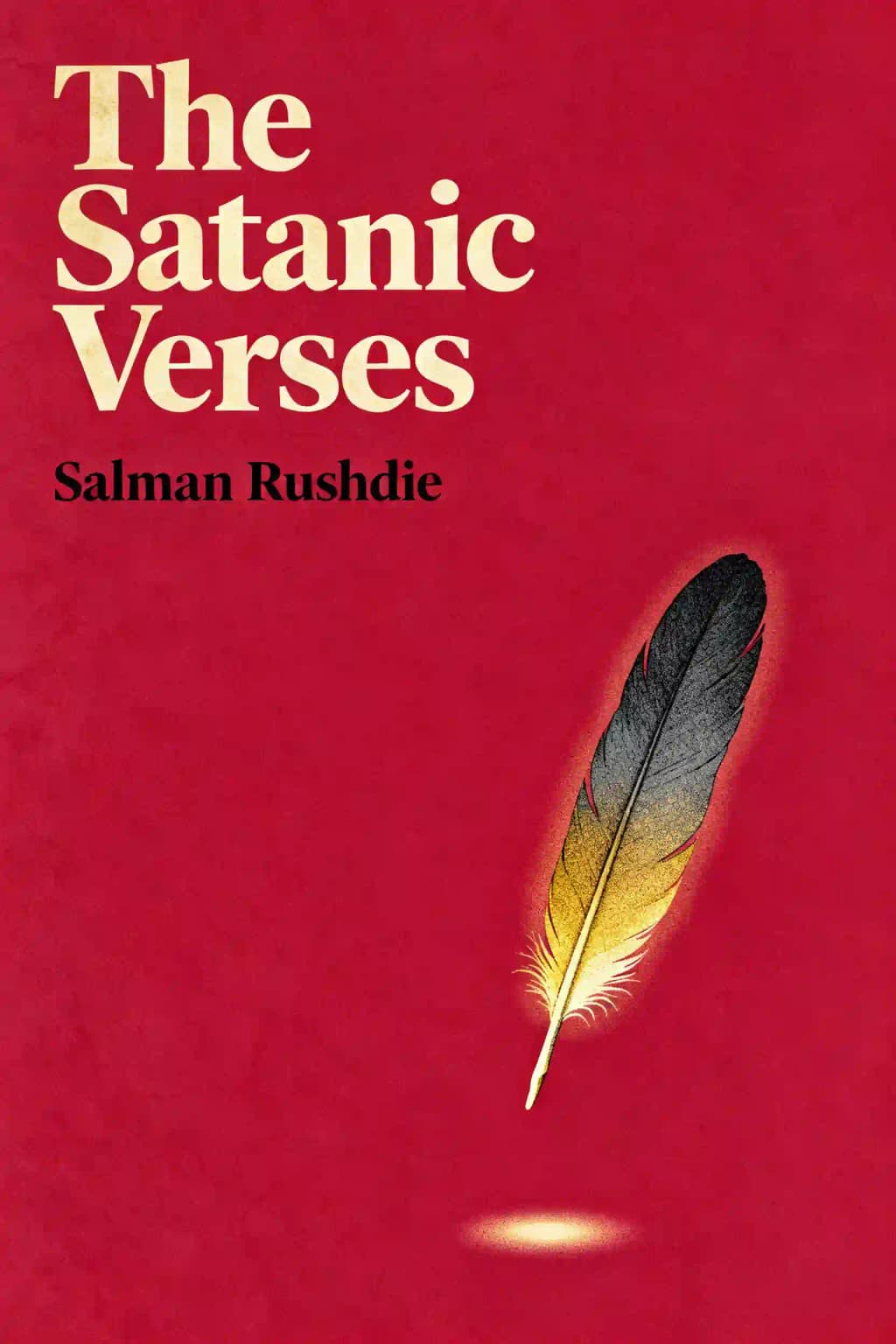
The Satanic Verses erupted into the world in 1988, igniting a firestorm that few books in history have matched. Salman Rushdie's fourth novel became infamous when Iran's Ayatollah Khomeini issued a fatwa calling for the author's death, forcing Rushdie into hiding for nearly a decade. Yet beyond the controversy lies a work of stunning literary achievement that won the Whitbread Award and was shortlisted for the Booker Prize. The novel has been championed by literary giants from Christopher Hitchens to Toni Morrison, who praised its "extraordinary scope and ambition." Even today, celebrities from Riz Ahmed to Zadie Smith cite it as a transformative reading experience. The book's exploration of migration, identity, and faith resonates powerfully in our globalized world, where questions of belonging and belief continue to shape both personal and political landscapes. What happens when angels fall from the sky? When faith collides with doubt? When identities fracture across cultures? These questions form the heart of Rushdie's masterpiece.
第2章
Falling Through the Clouds: Birth, Death, and Transformation
To be born again, first you have to die. This paradoxical statement opens The Satanic Verses, immediately establishing the novel's central theme of transformation. Gibreel Farishta and Saladin Chamcha plummet from an exploding jumbo jet, Flight AI-420, twenty-nine thousand feet above the English Channel. As they fall, they undergo bizarre metamorphoses - Chamcha becoming "cloudy" and hybrid, while Gibreel encounters the ghost of Rekha Merchant, a woman who committed suicide after he abandoned her.
Their miraculous survival sets the stage for the novel's exploration of rebirth and identity. Gibreel, a famous Indian film star who portrays deities in "theologicals," had recently recovered from a mysterious illness during which he lost his faith. His recovery began precisely when he accepted the void - the non-existence of God. To prove his point, he publicly consumed forbidden pork in the Taj hotel dining room, gorging on "the gammon steaks of his unbelief and the pig's trotters of secularism" while photographers captured the moment.
During this blasphemous feast, he met Alleluia Cone, an English mountain climber with "the colour and translucency of mountain ice." After a brief, intense affair, she returned to London, and Gibreel eventually followed, disappearing from India and boarding Flight AI-420 under his birth name, Ismail Najmuddin. His journey was driven partly by love for Allie but also by the "nocturnal retribution" of dreams that had begun after his pork feast - dreams in which he became the archangel Gibreel himself.
Saladin Chamcha, meanwhile, represents a different kind of transformation. Born Salahuddin Chamchawala in Bombay, he had methodically erased his Indian identity, cultivating a perfect BBC accent and reinventing himself as an Englishman. His carefully constructed persona - "handsome in a somewhat sour, patrician fashion" with a deliberately cultivated voice of "languid, almost lazy vowels" - had begun to betray him during his first visit home in fifteen years, when his speech unaccountably reverted to the Bombay lilt he'd so diligently erased.
Saladin's desire to escape India began in childhood, when his father, Changez Chamchawala, confiscated a wallet full of pounds sterling that young Salahuddin had found. By thirteen, he was obsessed with "that dream-Vilayet of poise and moderation," silently spelling out "ellowen deeowen London" and even praying for England's cricket team to defeat India. When his father offered him an English education, Salahuddin eagerly accepted despite his mother Nasreen's warnings about English uncleanliness.
The fall from the aircraft becomes a metaphorical rebirth for both men - but one that will lead them in radically different directions. Gibreel emerges with an apparent halo, while Saladin begins a grotesque transformation into a goat-like devil figure. Their intertwined destinies form the backbone of the novel's exploration of good and evil, faith and doubt, belonging and exile.
第3章
Dreams of Revelation: Mahound and the Birth of a Faith
In his dreams, Gibreel becomes the archangel Gabriel, witnessing and participating in the birth of a new religion in ancient Arabia. These aren't mere dreams; they continue precisely where they left off each time he wakes, as if someone merely "paused the video." Increasingly, he fears that perhaps he is the dream and the angel is real.
The narrative shifts to Mahound, a businessman-turned-prophet who climbs Cone Mountain on his fortieth birthday while the city of Jahilia celebrates below. Jahilia, a miraculous city built entirely of sand, sits at the intersection of great caravan routes. The merchant tribe that rules the city is called Shark, and its most powerful figure is Karim Abu Simbel, the Grandee of Jahilia, husband to the beautiful and fierce Hind.
Abu Simbel fears Mahound's monotheistic message of "one one one" in a city that worships three hundred and sixty stone gods clustered around the Black Stone. Among these deities is Allah, acknowledged to have overall authority but not particularly popular among the idol-worshippers. The three most powerful goddesses - Al-Lat, Manat, and Uzza - are especially beloved.
Calculating as always, Abu Simbel sets Mahound a test: would he compromise his monotheism by accepting the three goddesses as intermediaries? Mahound's disciples are horrified by the suggestion, but the Prophet, torn between purity of faith and pragmatic compromise, ascends Mount Cone to seek divine guidance.
In his trance-like state, Gibreel feels himself simultaneously watching and becoming the revelation, connected to Mahound by "a shining cord of light." When Mahound returns, he goes directly to the fairground where Abu Simbel shows him unexpected respect. There, Mahound recites verses acknowledging the three goddesses as "exalted birds, whose intercession is desired indeed." The astonished crowd falls to their knees while Khalid, one of Mahound's most devoted followers, flees in tears.
Later, Mahound realizes with horror that these verses were false. "It was the Devil," he declares. "The last time, it was Shaitan." Understanding he has been tricked by Satan disguised as Gibreel, he rushes back to Jahilia to expunge these "satanic verses" from the record forever. He stands before the statues of the Three and thunders new verses: "Shall He have daughters and you sons? That would be a fine division! These are but names you have dreamed of, you and your fathers. Allah vests no authority in them."
This episode - based on a controversial historical incident in Islamic tradition - forms the heart of the novel's exploration of revelation, authenticity, and the human desire for certainty in matters of faith. Through Gibreel's dreams, Rushdie suggests that revelation itself may be compromised by human desires and political calculations, raising profound questions about the nature of religious truth.
第4章
Strangers in Strange Lands: Migration and Belonging
After their miraculous survival, Gibreel and Saladin wash up on an English beach where they're discovered by Rosa Diamond, an eighty-eight-year-old Englishwoman who invites them into her home. When police arrive, they immediately identify Chamcha as an illegal immigrant despite his protests: "I'm British with right of abode." They arrest him, laughing at his claims, while Gibreel - who is actually in England illegally - is left behind with Rosa.
This incident highlights one of the novel's central themes: the experience of migration and the arbitrary nature of belonging. Saladin, who has devoted his life to becoming English, is rejected and dehumanized, while Gibreel, who has made no such effort, is accepted without question.
In police custody, Saladin undergoes a horrific physical transformation, growing horns, hooves, and thick hair all over his body. His metamorphosis into a devil figure seems to externalize the racist stereotypes projected onto him. When he's finally released, he finds refuge at the Shaandaar Cafe, run by the Bangladeshi Sufyan family in the immigrant neighborhood of Brickhall.
Meanwhile, Gibreel becomes trapped in Rosa Diamond's web of memories. She tells him stories of her past in Argentina, where she lived as the wife of Don Enrique Diamond, experiencing an unfulfilled capacity for passion. Her tales wrap around Gibreel like a web, holding him in her lost world of gauchos, heat-hazes, and romantic intrigues. Only after Rosa's death is Gibreel released from her spell, free to seek out Allie in London.
The novel vividly portrays the immigrant experience in Thatcher's Britain through the vibrant community of Brickhall. Muhammad Sufyan, a former schoolteacher turned cafe owner, quotes Lucretius and Ovid while discussing Saladin's transformation. His daughters, Mishal and Anahita, represent different responses to life between cultures - Mishal embracing hybridity and resistance, while Anahita gravitates toward her mother Hind's more conservative values.
Through these characters, Rushdie explores how migration fractures identity and forces reinvention. Saladin's attempt to become "more British than the British" is revealed as both futile and self-destructive. His transformation into a devil becomes a metaphor for how immigrants are demonized, but also for how this demonization can be reclaimed as a form of resistance. Young people in Brickhall begin wearing rubber devil-horns, and Saladin's image appears on protest banners. As Mishal tells him, he's become "an image white society has rejected for so long that we can really take it, occupy it, reclaim it and make it our own."
第5章
The Angel and the Devil: Love, Betrayal, and Vengeance
While Saladin suffers his demonic transformation, Gibreel struggles with his angelic one. He reunites with Alleluia Cone, but their relationship is complicated by his increasingly frequent hallucinations. He experiences London as a tropical city, seeing himself as an archangel sent to redeem it. When doctors diagnose him with paranoid schizophrenia, Allie commits to helping him recover, finding him more lovable in his vulnerable state.
Meanwhile, Saladin's marriage to Pamela Chamcha has fallen apart. After his presumed death in the plane explosion, she began an affair with his friend Jumpy Joshi. When Saladin calls from beyond the grave, Jumpy confesses that his friend is still alive, leading to a violent confrontation. Later, when Saladin appears at their home in his demonic form, Pamela refuses to acknowledge him, insisting her husband is dead despite the evidence before her.
As Gibreel's condition improves with medication, he returns to his film career with the help of producer S.S. Sisodia. However, his jealousy returns, subjecting Allie to nightly interrogations about her activities. When she discovers he's hired someone to follow her, she leaves him.
Saladin, consumed by bitterness over his transformation and Gibreel's failure to help him when he was arrested, plots revenge. Using his talent as "the Man of a Thousand Voices," he makes phone calls to both Allie and Gibreel - creating thirty-nine different characters. Allie receives calls from men claiming intimate knowledge of her body, while Gibreel hears from aristocrats, guttersnipes, and mock-sympathetic "friends" warning him about Allie's infidelity.
This psychological warfare drives Gibreel to madness. He destroys all Allie's cherished Himalayan mementos before disappearing. Saladin's revenge is complete, but at the cost of his own humanity. He has become the devil he appears to be.
The relationship between Gibreel and Saladin forms the novel's central dynamic - angel and devil, faith and doubt, idealism and cynicism. Yet Rushdie complicates this binary, showing how the "angel" can act with cruelty while the "devil" is capable of compassion. Their intertwined fates suggest that good and evil are not fixed categories but fluid states that exist within each person.
第6章
The Satanic Verses: Truth, Fiction, and Blasphemy
The "satanic verses" episode from Gibreel's dreams forms the novel's most controversial element. By fictionalizing an incident from Islamic tradition - in which the Prophet Muhammad was allegedly tricked by Satan into temporarily acknowledging pagan goddesses - Rushdie touched on deeply sensitive religious questions about revelation and authenticity.
In the novel, this incident becomes a meditation on the relationship between truth and fiction, between divine revelation and human interpretation. Mahound's struggle with the satanic verses parallels Gibreel's struggle with his own identity - is he an angel or merely a man having delusions? The uncertainty at the heart of faith becomes the novel's central concern.
Through characters like Baal, the satirical poet who hides in a brothel called The Curtain (a play on the meaning of "hijab"), Rushdie explores the power of fiction to challenge religious orthodoxy. Baal's final act of defiance - having twelve prostitutes impersonate Mahound's wives - represents the ultimate blasphemy, yet also raises questions about the relationship between sexuality and spirituality, between sacred and profane love.
The novel also explores how religious narratives are constructed and contested. Salman the Persian, one of Mahound's scribes, confesses to subtly altering the Prophet's revelations: "If Mahound recited a verse in which God was described as all-hearing, all-knowing, I would write, all-knowing, all-wise." These small changes went unnoticed, leading Salman to question the authenticity of the entire revelation: "It's one thing to be a businessman, another to be a prophet."
Through these narrative threads, Rushdie suggests that all sacred texts contain elements of human invention and interpretation. The "satanic verses" become a metaphor for the ambiguity at the heart of all religious truth claims - the possibility that what we take for divine revelation might be shaped by human desires and political calculations.
第7章
Miracles and Metamorphoses: The Limits of Belief
Throughout the novel, Rushdie explores the tension between faith and skepticism through parallel narratives of miraculous events and rational explanations. In one subplot, a young woman named Ayesha leads an entire village on a pilgrimage to Mecca, promising that the Arabian Sea will part for them to cross. This modern-day exodus divides the community between believers and skeptics.
Mirza Saeed Akhtar, whose wife Mishal joins the pilgrimage hoping to cure her cancer, represents the voice of rational doubt. He follows the pilgrims in his Mercedes, constantly offering logical alternatives: "Why not fly to Mecca? Why not take a boat?" But the pilgrims, led by the butterfly-covered Ayesha, continue their march toward the sea, sustained by faith alone.
When they finally reach the shore, the pilgrims walk into the waves and disappear beneath the surface. Witnesses claim they saw the waters part, while others insist they simply drowned. The ambiguity remains unresolved, with television crews recording only empty beaches and calm seas.
This ambiguity extends to the novel's treatment of Gibreel and Saladin's transformations. Are these supernatural events or symptoms of trauma and mental illness? When Saladin finally returns to human form, is it a miracle or simply the natural resolution of his psychological crisis? Rushdie refuses to provide definitive answers, instead exploring how belief shapes perception and how the miraculous exists in the eye of the beholder.
Even Gibreel's apparent halo is subject to multiple interpretations. Inspector Lime denies ever seeing it, while others insist on its reality. This tension between faith and skepticism runs throughout the novel, with characters constantly negotiating the boundaries between the natural and supernatural, between rational explanation and miraculous intervention.
第8章
London Burning: Dreams of Apocalypse
As racial tensions reach their breaking point in Brickhall, the novel builds toward an apocalyptic climax that interweaves political unrest with supernatural imagery. The arrest of Dr. Uhuru Simba, a charismatic black community leader and outspoken critic of police brutality, for the "Granny Ripper" murders serves as the spark that ignites long-simmering tensions. His subsequent death in police custody - officially ruled a heart attack but bearing signs of violence - transforms him into a martyr figure for the community. The incident exposes deep-seated institutional racism within London's police force, complicated by bizarre rumors of "witches' covens" among high-ranking officers who allegedly practice occult rituals targeting minority communities.
The situation deteriorates further when the actual Granny Ripper, a white man, is apprehended by a vigilant group of young Sikhs patrolling their neighborhood. The police's apparent reluctance to charge him - contrasted with their swift action against Simba - confirms the community's worst suspicions about systemic bias. This disparity in justice becomes the catalyst for widespread civil unrest, with protests evolving into full-scale riots. The police response is swift and brutal, deploying riot gear, water cannons, and aggressive tactics that only escalate the violence in Brickhall's narrow streets.
Gibreel Farishta chooses this moment of chaos to make his grand entrance, now completely consumed by his archangelic delusion. Wielding his trumpet Azraeel, he believes himself to be God's instrument of judgment, capable of manifesting people's deepest and darkest desires. His proclamation - "This is the judgment of God in his wrath, that men be granted their heart's desires, and that they be by them consumed" - echoes through the streets as he conjures supernatural flames in impossible colors: violet, green, and azure fire that requires no fuel to burn. The High Street becomes transformed into "a river the colour of blood," creating an apocalyptic tableau that merges religious imagery with urban destruction.
The burning Shaandaar Cafe becomes the focal point for the novel's climactic confrontation between Gibreel and Saladin Chamcha. Despite his previous bitterness and desire for revenge, Saladin demonstrates unexpected heroism by rushing into the inferno to save trapped residents. This selfless act sets the stage for a moment of profound moral choice: Gibreel, faced with his fallen enemy, chooses mercy over vengeance. In a scene rich with biblical imagery, he carries Saladin to safety through a miraculous pathway where the flames part "like the red sea" - a direct reference to the Exodus story that takes on new meaning in this contemporary context.
This apocalyptic sequence serves as a powerful culmination of the novel's major themes. The burning of Brickhall represents both literal political upheaval and a spiritual crucible where personal and collective transformations occur. Through this inferno, London itself undergoes a painful metamorphosis, suggesting that the path to a truly multicultural society requires passing through fire. The supernatural elements - Gibreel's angelic delusions, the mysterious flames, the parting inferno - blur the line between reality and miracle, suggesting that modern urban life contains its own kind of magic and mythology.
第9章
Returning Home: The Circle Completed
In the novel's final movement, Saladin returns to Bombay after receiving news that his father is dying. Despite their long estrangement, he feels an overwhelming need to reach his birthplace before it's too late. At the airport, he's struck with terror upon discovering his flight is on another Air India plane named Gulistan (twin to the destroyed Bostan, "the twin gardens of Paradise") - a symbolic echo of his original transformation-inducing flight that reinforces the cyclical nature of his journey.
This return journey completes the circle begun with his youthful flight from India, but now with profound differences. The Bombay he encounters is both familiar and strange, much like his own transformed identity. The city's chaos, its mixture of ancient and modern, Hindu and Muslim, wealth and poverty, mirrors the internal contradictions he has struggled with throughout his exile. Having tried and failed to become fully English - attempting to shed his accent, his mannerisms, even his name Salahuddin for the anglicized Saladin - he must now confront his origins and the father he rejected.
His homecoming represents a reconciliation not just with his father but with the hybrid, impure identity he had tried to escape. In his father's declining days, Saladin discovers that the stern patriarch he fled from has become vulnerable and human. Their reconciliation becomes possible precisely because both men have been transformed by time and experience. The grand house of his childhood, Scandal Point, becomes the site of this redemptive reunion, its crumbling grandeur a testament to the impossibility of preserving the past unchanged.
Meanwhile, Gibreel's story reaches its tragic conclusion with devastating finality. Despite his moment of redemption in saving Saladin during the Brickhall fire, he remains trapped in his delusions, unable to distinguish between reality and his angelic visions. His descent into madness accelerates, fueled by jealousy and religious fervor. His story suggests that some transformations cannot be reversed, that certain falls - like his loss of faith - leave permanent marks on the soul. The actor who once played gods and angels in Bollywood films finds himself unable to escape the divine role he has internalized, with tragic consequences.
Through these parallel journeys, Rushdie explores the possibility of redemption and the price of transformation. Saladin, who began as the devil figure, finds a measure of grace in accepting his hybrid identity - discovering that "impurity" might be a source of strength rather than shame. Gibreel, who appeared as an angel, discovers that even divine messengers are subject to human frailties and doubts. Their intertwined stories suggest that true redemption lies not in achieving some imagined purity but in embracing the complexity and contradictions of human existence.
第10章
Between Worlds: The Migrant Condition
The Satanic Verses ultimately reveals itself as a profound meditation on the migrant condition - on living between worlds, between identities, between beliefs. Through its kaleidoscopic narrative, jumping between contemporary London, ancient Arabia, and magical realist interludes, the novel captures the disorientation and possibility of displacement.
"The Satanic Verses celebrates hybridity, impurity, intermingling, the transformation that comes of new and unexpected combinations of human beings, cultures, ideas, politics, movies, songs," Rushdie would later write. "It rejoices in mongrelization and fears the absolutism of the Pure."
This celebration of impurity extends to the novel's form, which blends genres and registers - from satire to tragedy, from magical realism to political commentary. Like its characters, the novel itself is a hybrid creation, refusing to be contained within conventional boundaries.
In an age of hardening borders and resurgent nationalism, The Satanic Verses remains a powerful testament to the creative potential of migration. Through Gibreel and Saladin's transformations - painful, disorienting, but ultimately generative - Rushdie suggests that the migrant experience, with all its losses and confusions, can also be a source of new visions and possibilities.
The novel asks us to consider what happens when certainties fall away - when we can no longer be sure of our identities, our beliefs, or even the ground beneath our feet. In that vertiginous space, Rushdie suggests, we might discover not just terror but also freedom - the freedom to recreate ourselves beyond the constraints of tradition and authority, to imagine new ways of being human in a world of constant change.